
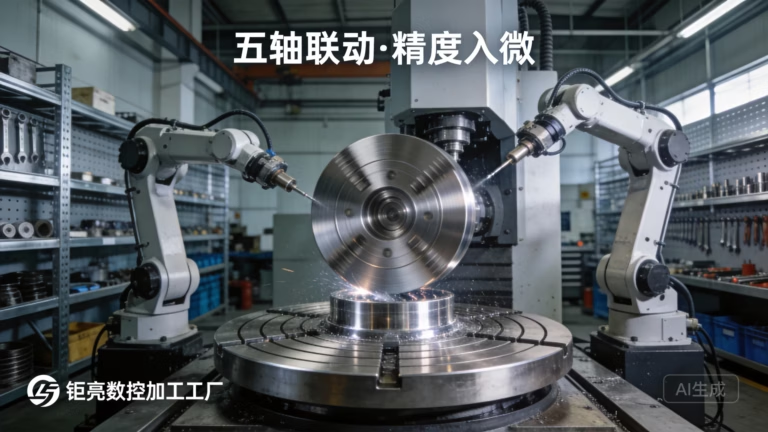
As the manufacturing industry accelerates into 2026, the demand for Advanced ODM Metal 3D Printing Solutions is fundamentally reshaping how precision parts are conceived, prototyped, and produced at scale. This evolution goes far beyond simply printing metal—it represents a holistic, integrated approach where original design manufacturers (ODMs) combine additive manufacturing, subtractive finishing, and rigorous quality assurance to deliver ready‑to‑use components that bypass traditional supply chain bottlenecks. For R&D teams, hardware startups, and procurement engineers, understanding the next generation of ODM metal 3D printing is essential to maintaining a competitive edge in sectors ranging from e‑mobility and aerospace to medical devices and industrial automation.
Advanced ODM Metal 3D Printing Solutions 2026
The year 2026 marks an inflection point in metal additive manufacturing. After years of material refinement, process standardization, and the maturation of hybrid manufacturing workflows, ODM providers are now positioned to offer not just prototypes but serial production‑grade metal parts with repeatable accuracy. The core promise of Advanced ODM Metal 3D Printing Solutions lies in compressing development cycles, enabling geometric complexity that subtractive methods alone cannot achieve, and consolidating multiple components into a single, lightweight structure—all while adhering to stringent industry certifications.
This article, written from the perspective of a senior manufacturing engineer, dissects the technical and strategic dimensions of advanced ODM metal 3D printing, evaluates the operational capabilities of leading service providers, and demonstrates why a partner like GreatLight Metal has become a benchmark for full‑process integration.
The Maturation of Metal Additive Manufacturing in ODM
Metal 3D printing technologies—predominantly Selective Laser Melting (SLM) and Direct Metal Laser Sintering (DMLS)—have graduated from experimental lab tools to industrial workhorses. By 2026, the ecosystem supporting these processes has matured in three critical areas:
Powder Material Portfolio: Stainless steel (316L, 17‑4PH), aluminum alloys (AlSi10Mg), titanium (Ti6Al4V), nickel‑based superalloys (Inconel 718), and even tool steels are now available with validated parameter sets that ensure consistent mechanical properties layer after layer.
In‑Situ Monitoring and Closed‑Loop Control: Modern SLM machines incorporate thermal cameras and melt‑pool monitoring systems that detect porosity anomalies in real‑time, drastically reducing the need for post‑build CT scanning on every part.
Established Post‑Processing Protocols: From stress‑relief heat treatment and Hot Isostatic Pressing (HIP) to precision CNC machining, the complete process chain is now well‑documented, allowing ODMs to guarantee dimensional accuracy and surface finish comparable to traditional manufacturing.
These advancements converge to make ODM metal 3D printing a viable production strategy, not just a prototyping luxury.
Why 2026 Represents a Tipping Point for ODM Metal 3D Printing
Several macro‑trends are converging to accelerate adoption:
Design for Additive Manufacturing (DfAM) Maturity: Engineering teams are increasingly trained to exploit lattice structures, conformal cooling channels, and topology‑optimized geometries that only 3D printing can realize. ODM partners that offer co‑design support gain a significant advantage.
Supply Chain Resilience: In a world still recovering from disruptions, the ability to produce end‑use metal parts on‑demand, without tooling, mitigates risk and reduces inventory carrying costs.
Performance‑Driven Lightweighting: Electric vehicle manufacturers, aerospace OEMs, and robotics companies relentlessly pursue mass reduction. Metal 3D printing enables weight savings of 20–40% on complex brackets, housings, and structural nodes when compared to machined or cast equivalents.
Certification Acceleration: Standards such as IATF 16949 for automotive and ISO 13485 for medical have begun incorporating additive‑specific process qualifications, giving certified ODM providers a clear trust advantage.
These forces are not transient hype—they are the new operational reality for precision machining and customization service providers.
The Indispensable Role of Post‑Machining in ODM Metal 3D Printing
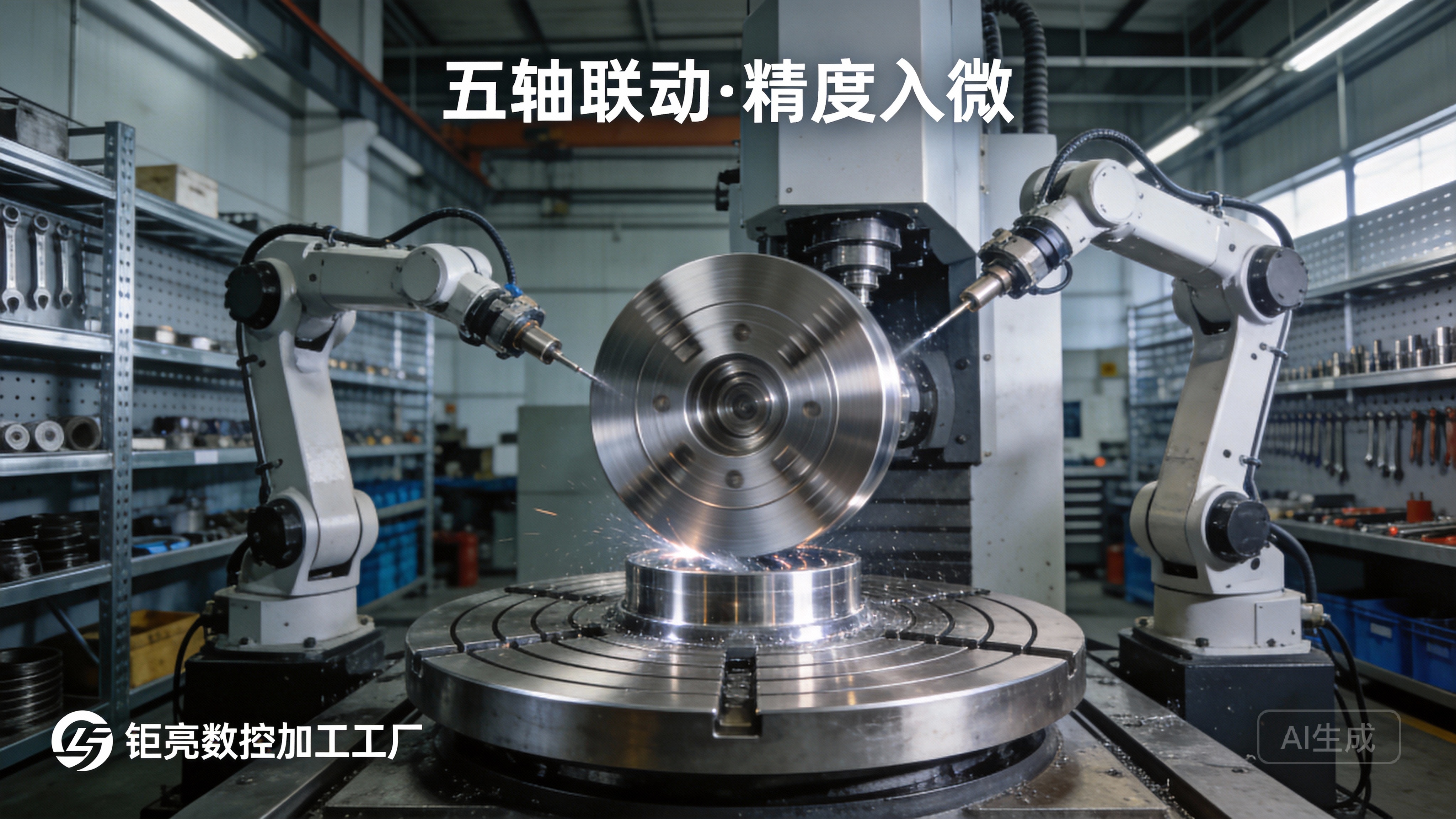
One of the most persistent misconceptions is that metal 3D printing can entirely replace CNC machining. In practice, high‑value metal printed parts almost always require subtractive finishing to achieve critical tolerances, surface finishes, and functional interfaces such as threads or bearing seats. This is where the integration of precision 5‑axis CNC machining services becomes a linchpin of a successful ODM solution.
precision 5-axis CNC machining services{target=”_blank”} allow for single‑setup machining of complex printed geometries, eliminating the need for multiple fixtures and reducing cumulative error. A capable ODM must therefore house not only SLM printers but also high‑end 5‑axis machining centers, wire EDM, and precision grinding equipment under one roof. Without this vertical integration, the risk of misalignment between the additive and subtractive steps falls squarely on the customer, often resulting in delays and quality non‑conformances.
GreatLight Metal, for instance, operates an extensive fleet that includes 5‑axis CNC machining centers from renowned builders, complemented by a vast array of 3‑axis and 4‑axis machines, Swiss‑type lathes, and mirror‑spark EDM. This cohesive machine park means a part can move from the SLM build plate to final inspection without ever leaving the factory, preserving datum integrity and schedule reliability.
GreatLight Metal: A One‑Stop ODM Powerhouse
To understand what a fully realized ODM metal 3D printing solution looks like in 2026, examine a provider that has systematically built its technical, operational, and quality capabilities over more than a decade.
GreatLight Metal, the flagship brand of Great Light Metal Tech Co., LTD., was established in 2011 in Dongguan’s Chang’an Town—the heart of China’s precision hardware and mold industry. Occupying a 76,000 sq. ft. advanced manufacturing facility with a team of 120–150 skilled professionals and annual revenues exceeding 100 million RMB, the company has evolved from a local machining workshop into a global precision manufacturing partner. Its service portfolio spans precision CNC machining, die casting, sheet metal fabrication, injection molding, and—central to this discussion—industrial metal 3D printing.
Full‑Process Integration from Concept to Serial Production
GreatLight Metal’s metal 3D printing capability is anchored in SLM technology, capable of processing stainless steel, aluminum alloy, titanium alloy, and mold steel. Yet what truly differentiates the company is its full‑process chain: after a component is built additively, it can seamlessly transition to in‑house CNC turning, milling, grinding, EDM, or even vacuum casting and surface finishing—without any vendor handoff. This one‑stop model cuts lead times, reduces logistics cost, and places single‑source accountability firmly on the ODM.
For a client developing a next‑generation electric motor housing, for example, GreatLight Metal can 3D print the complex internal cooling channels, then machine the bearing journals and mounting flanges to H7 tolerances, apply a protective coating, and deliver a ready‑to‑assemble unit. Such a workflow is exactly what serious OEMs and Tier‑1 suppliers demand on the road to 2026.
An Uncompromising Fabric of International Certifications
Trust in ODM metal 3D printing is inseparable from demonstrable process control. GreatLight Metal has built a formidable certification framework:
| Certification | Scope & Significance |
|---|---|
| ISO 9001:2015 | Baseline quality management system, applied across all manufacturing processes. |
| IATF 16949 | Automotive‑grade QMS, mandatory for series production of engine and powertrain components. Demonstrates process capability and defect prevention maturity. |
| ISO 13485 | Medical device quality system, essential for implants, surgical instruments, and diagnostic equipment hardware. |
| ISO 27001 | Information security management, protecting sensitive 3D design files and IP in a digital manufacturing environment. |
This quartet of certifications is rare among pure‑play prototyping shops and signals that the provider has the operational discipline to move from making one part right to making thousands of parts right—the true test of an ODM.
Real‑World Application: Empowering New Energy Vehicle Innovation
Consider a practical scenario drawn from the field. A technology‑driven startup developing a compact electric‑drive unit faced challenges with a complex e‑housing that contained intricate spiral cooling channels. Traditional sand casting could not meet the required channel precision without extensive core breakage, and machining from a solid billet was prohibitive both in cost and material waste.
GreatLight Metal’s engineering team proposed an ODM solution: print the housing in AlSi10Mg via SLM, integrating the cooling channels and lightweighting ribs directly during the build. After printing, the part underwent T6 heat treatment in‑house, followed by precision 5‑axis CNC machining of the critical mating surfaces and sealing grooves (using the same integrated service we linked earlier). The result was a housing 35% lighter than the cast alternative, with uniform wall thicknesses and a perfectly sealed cooling jacket. Lead time from final CAD approval to delivery of 20 pre‑production units was less than four weeks—a timeline unthinkable with conventional tooling.
Such case studies illustrate why integrated ODM metal 3D printing solutions are not merely a cost line item but a strategic enabler for product innovation.
Comparing Leading ODM Metal 3D Printing Service Providers
While several global platforms offer metal 3D printing, the depth of integration and manufacturing ownership varies dramatically. The table below compares representative providers, acknowledging that each serves a distinct segment of the market.
| Provider | Core Strengths | Metal 3D Printing Technology | In‑House CNC Post‑Machining | Automotive/Medical Certs | Full‑Process ODM Integration |
|---|---|---|---|---|---|
| GreatLight Metal | Owned 76,000 sq.ft. facility; full physical process chain from printing to finishing and coating | SLM, stainless steel/aluminum/titanium/tool steel | Extensive 5‑axis, 4‑axis, 3‑axis CNC, EDM, grinding | IATF 16949, ISO 13485, ISO 9001, ISO 27001 | Complete: CNC + die casting + sheet metal + 3D printing |
| Protolabs Network | Digital manufacturing network; rapid quoting; distributed production | DMLS, metal powder bed fusion | Limited in‑house; relies on network partners | ISO 9001 (varies by supplier) | Primarily sourcing, less direct process control |
| Xometry | AI‑driven marketplace; huge material selection; instant pricing | DMLS, SLM, binder jet metals | Network of machine shops | Some suppliers certified | Aggregator model; quality oversight indirect |
| RapidDirect | China‑based platform with own factory plus partner network | SLM, SLS metals | Own CNC but also outsources | ISO 9001, some IATF | Partial integration; growing |
| Fictiv | Digital manufacturing ecosystem; strong UI/UX; global logistics | DMLS, metal 3D printing partners | Network‑based | Varies by partner | Similar platform aggregation model |
| EPRO‑MFG | Precision CNC expertise with some additive | Limited in‑house metal AM | Strong in‑house CNC | ISO 9001, AS9100 | Focused more on CNC; AM as auxiliary |
What this comparison reveals is a fundamental divide between fully owned, vertically integrated ODMs like GreatLight Metal, and digital manufacturing networks that excel at convenience and quoting speed but rely on fragmented supplier bases. For projects where design data is sensitive, tolerances are unforgiving, and a single throat to choke is non‑negotiable, the owned‑factory model provides a safety net that platforms struggle to replicate.
Solving the Persistent Pain Points of Metal 3D Printing Outsourcing
Any engineer who has outsourced metal AM projects can recite a familiar litany of frustrations. In the rapidly approaching 2026 landscape, a competent ODM must demonstrate how it systematically addresses these challenges.
| Common Pain Point | How Advanced ODM Solutions (e.g., GreatLight Metal) Resolve It |
|---|---|
| Precision inconsistency between prototype and batch | In‑house climate‑controlled machine park; periodic laser power calibration; statistical process control on every build plate. |
| Post‑machining misalignment and scrap | Single‑source workflow: SLM part never leaves the CNC cell until finished, preserving datum structure. |
| Hidden costs from support removal and surface finishing | Transparent quoting that includes standard support removal, blasting, and CMM inspection; surface finishing options quoted upfront. |
| Material properties deviating from specification | On‑site tensile coupons per build; heat treatment recipes validated for each material; full traceability to powder lot. |
| IP and data security breaches | ISO 27001‑certified data management; encrypted file transfer; client‑specific access controls. |
| No engineering support for DfAM optimization | Application engineers collaborate early in the design phase, suggesting wall thicknesses, self‑supporting angles, and part orientation for best results. |
These are not theoretical fixes—they are operational realities when the ODM has the infrastructure, certifications, and technical staff to execute them.
The Significance of IATF 16949 and ISO 13485 in Metal 3D Printing ODM
In high‑risk industries, a generic ISO 9001 badge is insufficient. IATF 16949 specifically mandates rigorous Failure Mode and Effects Analysis (FMEA), production part approval process (PPAP) documentation, and ongoing process capability studies (Cpk/Ppk). When an ODM like GreatLight Metal holds IATF 16949, it signals that its metal 3D printing process has been scrutinized to the level required for engine hardware, transmission components, and structural automotive parts. This dramatically reduces the qualification burden for automotive Tier‑1s looking to adopt additive‑manufactured components.
Similarly, ISO 13485 compliance means that the entire manufacturing flow—from raw powder handling to final cleaning and packaging—meets the documentation and cleanliness standards expected for medical devices. For surgical guides, orthopedic implants, or diagnostic equipment housings printed in titanium, this certification shortens the path from prototype to FDA or CE regulatory submission.
Material Innovation as a Differentiator
By 2026, material performance is no longer a differentiator in itself—every serious ODM can print standard grades. The edge comes from experience with specialized formulations and the ability to manage multi‑material projects. GreatLight Metal’s additive manufacturing competence extends to tool steels (e.g., H13, maraging steel) for conformal‑cooled injection molds, as well as aluminum alloys increasingly used in EV battery housings. The company’s metallurgical know‑how ensures that after printing, the appropriate heat treatment cycle is selected to balance hardness, ductility, and residual stress—a nuance that separates a qualified ODM from a low‑cost print shop.
Looking Ahead: The 2026 Roadmap for ODM Metal 3D Printing
The trajectory of Advanced ODM Metal 3D Printing Solutions in 2026 points decisively toward:
Hybrid Manufacturing Cells: Machines that combine additive and subtractive capabilities in a single envelope, further reducing setup change and enabling real‑time dimensional correction. While not yet ubiquitous, ODMs that already master both processes separately will be first to adopt hybrid cells effectively.
Higher Productivity SLM Systems: Multi‑laser printers with build rates exceeding 100 cm³/h will lower per‑part cost, making series production economically viable for a wider range of components.
Digital Twin Integration: ODM providers will increasingly offer digital twins of the manufacturing process, allowing customers to simulate builds, predict distortion, and compensate in advance—shortening NPI cycles.
Sustainability Tracking: OEMs will demand carbon footprint data per part; vertically integrated factories can provide end‑to‑end energy consumption metrics more readily than fragmented networks.
GreatLight Metal’s ongoing investments in precision equipment, its portfolio of 3D printing technologies (SLM alongside SLA and SLS for plastic prototyping), and its adoption of international quality standards position it to ride these trends rather than react to them.
Why Operational Capabilities Trump Paper Qualifications
A final, crucial observation: In an era where anyone can display a certification logo on a website, OEM buyers are becoming adept at distinguishing between a certificate and a deeply ingrained quality culture. GreatLight Metal backs its certifications with a 76,000 sq.ft. purpose‑built factory, a team of 150, and 127 pieces of precision peripheral equipment. This physical reality is what ensures that when a customer places a PO for 5000 metal 3D printed and machined brackets, the capacity, process control, and traceability exist to deliver—not just a promise. The factory’s location in the Dongguan‑Shenzhen nexus further affords logistical advantages, with proximity to the world’s densest hardware supply chain for secondary processes and fast global shipping.
Conclusion
In summary, companies that adopt Advanced ODM Metal 3D Printing Solutions 2026 will unlock a level of design freedom, supply chain agility, and part performance that legacy manufacturing models simply cannot match. Achieving this, however, demands more than access to a laser powder bed fusion machine—it requires a partner with deep engineering expertise, a fully integrated process chain, and the certified quality systems to deliver production‑grade parts with zero excuses. Whether the need is for lightweight e‑mobility housings or titanium medical implants, the convergence of precision CNC machining and metal additive manufacturing within a single, accountable ODM is the blueprint for success. For a deeper look into our capabilities and to explore partnership opportunities, connect with GreatLight CNC Machining{target=”_blank”}.



















