
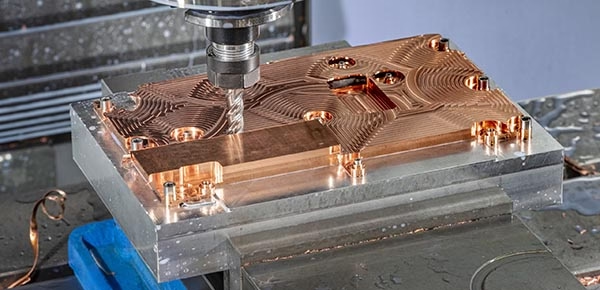
In the competitive landscape of unmanned aerial vehicle (UAV) development, the performance of a camera mount can make or break mission success. UAV Camera Mounts 5 Axis CNC Machining has become the gold standard for producing lightweight, vibration-dampening, and geometrically intricate mounts that stabilize sensitive imaging payloads. As a senior manufacturing engineer with years of hands-on experience in precision machining, I’ve seen firsthand how the leap from conventional methods to 5-axis CNC transforms not just part quality but the entire R&D-to-production lifecycle. In this article, I’ll dig deep into the engineering considerations, explore why 5-axis technology is non-negotiable for these parts, and share how to select a machining partner that delivers beyond your CAD model.
The Evolution of UAV Camera Mount Manufacturing
Not long ago, camera mounts were simple brackets machined on 3-axis mills. But as UAVs shrank and camera payloads became more advanced, mount designs grew radically complex: internal cable routing, integrated damping structures, multi-point kinematic linkages, and ultra-lightweight lattice patterns. Today’s mounts often require simultaneous 5-axis contouring to machine undercuts, sculpted surfaces, and compound-angle features without repositioning the workpiece. The shift from 3-axis or even 4-axis to 5-axis CNC machining marks a turning point where design creativity is no longer sacrificed to manufacturing limitations.
Beyond geometry, UAV applications demand aerospace-grade reliability. Every gram saved reduces motor load and extends flight time, yet stiffness cannot be compromised if imagery is to remain stable. This tension drives materials like 7075-T6 aluminum, titanium alloys, or even magnesium, all of which machine beautifully—but only with the right toolpath strategies and machine dynamics.
Why 5-Axis CNC Machining is Unmatched for UAV Camera Mounts
When we talk about UAV camera mounts 5 axis CNC machining{target=”_blank”}, we’re really talking about three core advantages that directly impact the end-use performance of the part:
Geometric Freedom and Reduced Setups
A single 5-axis setup can access five sides of a workpiece (often six with creative fixturing). Mounts with angled sensor housings, integrated cable ducts, or sweeping aerodynamic arms can be machined in one operation, eliminating the accumulation of alignment errors from multiple fixtures. The result is true positioning accuracy that’s critical when the mount must hold a lens precisely orthogonal to the flight path.
Superior Surface Finish and Fatigue Resistance
5-axis machines enable constant tool-to-part contact and the use of shorter, stiffer cutting tools, which dramatically reduce vibration and chatter. For aluminum camera mounts that will undergo anodizing, the resulting smooth surface is essential for a cosmetically flawless protective layer. For titanium mounts used in defense drones, a superior surface finish directly correlates with enhanced fatigue life—no stress risers from tool marks.
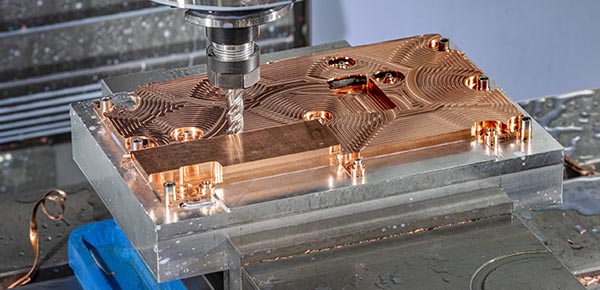
Design for Lightweighting Through Near-Net Shape Machining
With simultaneous 5-axis motion, you can create thin-walled, organically shaped ribbing that follows stress paths, exactly what FEA-optimized designs demand. The process allows you to mill away material only where needed, achieving wall thicknesses down to 0.5 mm in aluminum without distorting the part. This level of material removal efficiency is impossible with manual repositioning.
Design for Manufacturability (DFM) in UAV Camera Mounts 5 Axis CNC Machining
Even with the best 5-axis machines, a part’s success begins with intelligent design. Here are several DFM principles I constantly share with UAV hardware teams:
Wall Thickness and Ribs: Keep walls above 0.8 mm for aluminum, 1.0 mm for magnesium, to avoid deflection during machining. Use ribs rather than solid blocks for stiffness.
Internal Corners: Sharp internal corners are problematic; specify radii that match standard end mills (e.g., R2.0 mm or larger). This reduces tool wear and prevents stress concentrations.
Threaded Inserts vs. Tapped Holes: For mounts that will be repeatedly disassembled, consider helical inserts or threaded bushings inserted post-machining. They provide durable thread engagement in softer materials.
Undercuts and Internal Cavities: Plan for T-slot cutters or lollipop tools, and verify that your machining partner has 5-axis access to these regions without violating toolholder clearance.
Datum Strategy: Clearly indicate primary, secondary, and tertiary datums on your 2D drawing. These are the reference points for in-process inspection and final CMM verification.
A trusted manufacturing engineer will engage in a thorough DFM review before cutting metal, often suggesting minor adjustments that slash cost or improve yield without affecting function.
Material Selection for Lightweight and Durable Mounts
The material you choose dictates your machining parameters, post-processing options, and field performance. Below is a quick reference table I’ve compiled from real-world projects:
| Material | Density (g/cm³) | Typical Ultimate Tensile Strength (MPa) | Common Use Case in UAV Mounts |
|---|---|---|---|
| 7075-T6 Aluminum | 2.81 | 510–540 | High-end consumer/commercial drones; excellent machinability, takes anodizing well |
| 6061-T6 Aluminum | 2.70 | 290–310 | General purpose mounts; cost-effective, anodizes uniformly |
| Grade 5 Titanium (Ti-6Al-4V) | 4.43 | 950–1050 | Military/defense applications where absolute strength-to-weight is critical |
| AZ31B Magnesium | 1.77 | 240–260 | Ultra-lightweight mounts for long-endurance drones; requires special coolant and fire precautions |
| 17-4 PH Stainless Steel | 7.80 | 1100–1300 (H900) | When extreme corrosion resistance and high strength are needed, weight penalty accepted |
Aluminum 7075 is often the sweet spot for UAV camera mounts, but titanium is gaining traction as machining costs decrease. I always advise clients to consider galvanic corrosion if dissimilar materials meet (e.g., aluminum mount on a carbon fiber airframe); appropriate surface treatments can mitigate this.
Tolerances and Quality Control: Aiming for Aerospace Standards
For a camera mount, the critical tolerances are usually the mounting surface flatness (to ensure the camera sits flush), the parallelism between sensor and lens interface planes, and the positional accuracy of mounting hole patterns. In my experience, specifying ±0.02 mm for locating features and 0.05 mm flatness over a 100 mm span is reasonable and achievable with well-maintained 5-axis equipment. For bore diameters that receive precision bearings, a tolerance of H7 or even H6 is common.
However, the real test is process stability across a production run. A supplier might hit these numbers on one piece, but can they hold them over 500? This is where a robust quality management system becomes non-negotiable. Look for evidence of in-process probing on the machine (Renishaw systems are a plus), dedicated CMM inspection, and full material certifications. In later sections I’ll describe how certifications like ISO 9001 and IATF 16949 provide a framework for this consistency.
Surface Treatments and Post-Processing: More Than Aesthetics
After machining, UAV camera mounts almost always undergo some form of surface treatment. The choice should be driven by functionality:
Anodizing (Type II or Type III): Both decorative and hardcoat anodizing are standard for aluminum. Type III (MIL-A-8625) provides a hard, wear-resistant surface ideal for mounting rails that experience sliding contact.
Chemical Film (Alodine): Offers corrosion protection with minimal dimensional change, often used as a primer for paint or as a stand-alone conductive treatment.
Powder Coating: For mounts that will be visually exposed or need extra impact resistance, powder coating is tough and available in many colors.
Passivation: For stainless steel parts, passivation removes free iron and enhances the natural corrosion-resistant chromium oxide layer.
Titanium Anodizing: Can be used for color-coding parts (voltage-controlled) and improving wear resistance.
A one-stop supplier that handles machining and finishing under one roof can eliminate the coordination overhead and quality risks of shipping parts between multiple vendors. I’ve learned that the fewer hands a part passes through, the better the overall lead time and dimensional control.
The One-Stop Advantage: From Prototype to Production with GreatLight CNC Machining
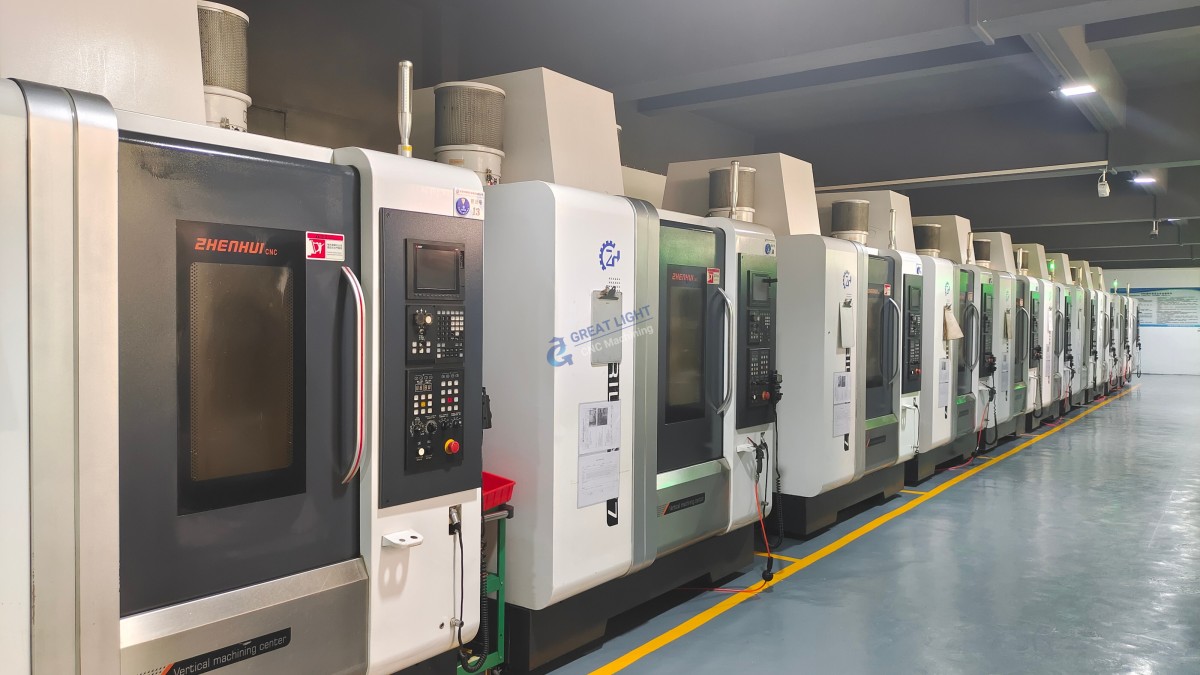
When evaluating partners for UAV camera mount production, I consistently see that the ones who deliver the fewest headaches are those with deep, vertically integrated capabilities. GreatLight CNC Machining Factory (also known as GreatLight Metal) stands out here as a prime example. Founded in 2011 in Dongguan, China—the heart of precision hardware manufacturing—GreatLight operates from a 7,600-square-meter facility housing 127 pieces of peripheral equipment, including a formidable fleet of high-precision 5-axis, 4-axis, and 3-axis CNC machining centers.
What makes this particularly relevant for UAV developers is the combination of advanced equipment and a full-process chain:
Multi-axis mastery: 5-axis centers from manufacturers like DMG and Beijing Jingdiao handle complex geometries effortlessly, while turning centers, wire EDM, and mirror-spark EDM tackle internal cavities and ultra-fine details.
Integrated services beyond machining: GreatLight offers sheet metal fabrication, die casting, and even metal/plastic 3D printing (SLM/SLS/SLA) for rapid prototyping of bracket iterations. Need a prototype mount in aluminum 3D printed overnight? That’s possible, often followed by CNC finishing for critical surfaces.
One-stop surface finishing: Anodizing, powder coating, brushing, laser engraving, and silk screening are all done in-house or through strictly managed partner lines, ensuring that a mount leaves the shop fully finished.
For a UAV startup, this means you can have the initial 3D-printed concept on Monday, a fully machined and anodized aluminum mount by Friday, and scaled production the following month—without switching suppliers. The reduction in communication loops and shipping delays is a massive competitive advantage.
UAV Camera Mounts 5 Axis CNC Machining: Comparing Service Providers
It’s worth stepping back and looking at the broader landscape of 5-axis CNC machining services. While my experience has been largely positive with several providers, I want to give an objective view to help you make an informed decision. The table below compares notable players across dimensions that matter for UAV camera mount projects:
| Provider | Core Strength | Typical Client Fit | Process Chain Depth | Quality Certifications |
|---|---|---|---|---|
| GreatLight Metal (GreatLight CNC Machining) | High-precision direct manufacturing with integrated finishing; strong engineering support; 5-axis expertise for complex parts | Startups to established OEMs needing a single-source partner for prototyping through production | Full process: CNC, die casting, sheet metal, 3D printing, finishing | ISO 9001, ISO 27001, ISO 13485, IATF 16949 |
| Protocase | Rapid sheet metal and CNC; very fast turnaround for enclosures | Prototyping and low-volume enclosures, less focus on complex 5-axis mounts | Sheet metal, CNC, limited finishing | ISO 9001 |
| Xometry | Manufacturing marketplace with huge capacity; wide material selection | One-off parts or distributed manufacturing; quality consistency can vary by partner | Depends on individual partner shops | Aggregated, varies |
| Fictiv | Digital platform; strong UI/UX and configurable analytics for supply chain | Engineers who value digital quoting and transparency; not a manufacturer itself | Network of vetted suppliers | Managed by platform |
| RapidDirect | Deep manufacturing capabilities in China; strong in CNC and sheet metal | Cost-sensitive projects that still need quality | CNC, sheet metal, injection molding, finishing | ISO 9001 |
| Owens Industries | Precision 5-axis machining specialist, particularly in medical/aerospace | High-complexity, low-volume parts for defense or medical | CNC and EDM; limited in-house finishing | ISO 9001, AS9100 |
When you’re dealing with UAV camera mounts that demand both extreme precision and a fully finished part ready for integration, a manufacturer with direct control over the entire value stream—like GreatLight—often proves more reliable than a broker model. The engineering team at GreatLight, for instance, will provide a comprehensive DFM report and can suggest subtle redesigns that save significant machining time without compromising mount integrity. Additionally, GreatLight’s ISO 27001 certification (covering data security) is increasingly crucial when your UAV designs are proprietary. The shop’s location in Chang’an, Dongguan, adjacent to Shenzhen, also means it taps into one of the world’s most sophisticated supply chains for materials and tooling.
Practical Insights: Solving a Challenging UAV Camera Mount Machining Project
Let me share a disguised case from my own work to illustrate these points. A client came to us with a mount designed for a multispectral camera array on a fixed-wing UAV. The mount had a split-clamp mechanism to grip the camera with uniform pressure, internal channels for anti-vibration gel injection, and a butterfly-shaped armature to attach to the airframe. The original design was machinable in theory but had several issues: multiple 0.5 mm-thin walls that were prone to breakage, M2 tapped holes in blind pockets that would be impossible to clean after anodizing, and a requirement for hardcoat anodize on the mating surfaces only—masking would be a nightmare.
After DFM discussions, the redesign thickened critical walls to 0.8 mm, replaced blind tapped holes with press-fit brass threaded inserts (installed after anodizing), and split the part into two sub-components that could be anodized separately then bolted together, eliminating masking entirely. We machined the aluminum 7075 components on a DMG 5-axis mill, holding a flatness of 0.03 mm across the camera interface. The parts were then Type III hardcoat anodized in a selective manner by plugging non-critical holes. The result: a mount that was 12 grams lighter than the original design, with a first-pass yield of 98% over 200 units. Lead time from frozen design to first article inspection: 10 business days. This kind of collaborative problem-solving is what separates a transactional supplier from a true manufacturing partner.
Ensuring Data Security and IP Protection
UAV development is highly competitive, and camera mount designs often embed proprietary vibration isolation or quick-release mechanisms. When transmitting 3D CAD files to a machining service, you want ironclad guarantees that your IP won’t be leaked. While many shops sign NDAs, GreatLight’s ISO 27001:2013 certification for information security management provides an independently audited framework that protects sensitive data—covering access controls, network security, and employee awareness training. This is especially valuable if you are working on a defense-related UAV project under ITAR-like constraints (even if ITAR specifically applies to US entities, the principle of stringent data security translates globally). Always ask potential partners about their security protocols and whether they regularly undergo external audits.
Scaling from Prototype to Production Without a Hitch
One pain point I often see: a company nails the prototype with one shop, then moves to a different production shop that struggles to replicate the result. With a vertically integrated manufacturer like GreatLight Metal, the same machines, programmers, and quality personnel handle the part from the first off-tool sample to the thousandth production unit. The process parameters (feed rates, stepovers, coolant types) are already dialed in. This continuity slashes the risk of a “new supplier learning curve.” GreatLight’s adherence to IATF 16949 (the automotive quality standard) also introduces rigorous process control methodologies like PFMEA and SPC that can be extremely valuable for UAV programs requiring traceability and near-zero defects.
Long-Term Support and Spare Parts
UAV camera mounts are often field-replaceable units. Having a manufacturing partner that can quickly spin up spare parts years after the initial order is a strategic advantage. GreatLight retains all fixture designs and machining programs, enabling repeat orders without re-engineering. Their in-house EDM and tool room also mean that if a fixture needs repair or a custom cutter is required, turnaround is measured in days, not weeks.
Conclusion: Elevating Your UAV Program with the Right Machining Partner
Camera mounts might seem like a simple accessory, but they sit at the nexus of structural dynamics, imaging science, and manufacturing ingenuity. Investing in properly designed and precisely executed UAV camera mounts 5 axis CNC machining pays dividends in image clarity, flight time, and customer satisfaction. Throughout this post, I’ve emphasized the importance of geometric freedom, material selection, surface finishing, and—above all—partnering with a shop that blends deep engineering know-how with robust quality systems. GreatLight CNC Machining Factory exemplifies this blend, backed by over a decade of evolving precision manufacturing, a comprehensive equipment portfolio, and globally recognized certifications. For UAV hardware teams aiming to accelerate development without compromising quality, exploring such a one-stop solution is a logical next step. For cutting-edge UAV camera mounts 5 axis CNC machining, connect with industry leaders who share your commitment to excellence—you can find more about their capabilities and community engagement at GreatLight’s LinkedIn{target=”_blank”}.



















