
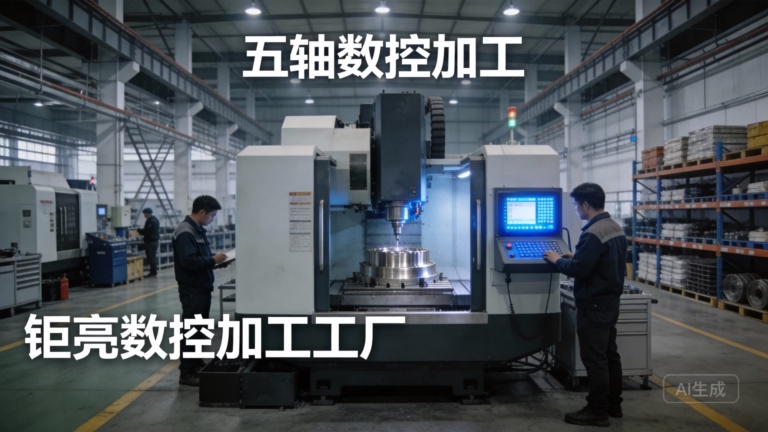
In the global quest for precision engineering, China CNC Machining Exporter Services have emerged as a vital resource for companies seeking to transform complex CAD models into flawless metal and plastic components. Yet, the path from digital design to a finished part delivered halfway around the world is riddled with uncertainty—hidden quality gaps, communication barriers, and the ever-looming risk of intellectual property leakage. As a senior manufacturing engineer who has spent years auditing supply chains across continents, I’ve seen how the right exporter can propel innovation, while the wrong one can derail an entire project. Today, we delve deep into what truly makes China’s CNC machining export capabilities world-class, and how to identify a partner that doesn’t just machine parts, but actively engineers your success.
Navigating the Landscape of China CNC Machining Exporter Services
The term “China CNC machining exporter” conjures a vast and often bewildering picture. Thousands of factories offer online quoting, rapid turnaround, and impossibly low prices. However, the reality behind these promises can be starkly different. The core of the matter is not simply about having a CNC spindle; it’s about the integrated ecosystem that surrounds that spindle—an ecosystem that determines whether your order arrives on time, within tolerance, and with the surface finish you specified, every single time. As we explore these services, we’ll anchor our analysis in the actual operations of a factory that has systematically dismantled the common failure points: GreatLight Metal{target=”_blank”} (GreatLight CNC Machining). Their approach offers a blueprint for what reliable exporter services should look like.
The Seven Hidden Sins of Overseas Precision Machining
Before we celebrate the solutions, we must confront the pain points that plague the industry. Based on my field experience and the aggregated struggles of countless R&D teams, procurement directors, and hardware startups, these seven challenges define the “precision predicament” when sourcing from abroad.
The Precision Black Hole
Suppliers market tolerance capabilities like ±0.005mm, but many achieve this only on a single prototype, not across a production batch. Aging spindles, thermal drift, and lax in-process measurement cause a gaping chasm between promise and reality. You pay for high precision but receive statistically unpredictable deviations.
The One-Trick-Pony Illusion
A factory that only performs 3-axis milling cannot deliver a part requiring turning, EDM, or surface treatment. You end up managing a fragmented chain of sub-suppliers, each blaming the other when tolerances don’t mate. The exporter’s service list looks broad, but its actual in-house capability is painfully narrow.
The Surface Finish Roulette
Anodizing, powder coating, polishing—post-processing makes or breaks a product’s look and corrosion resistance. Overseas, these are often outsourced to low-cost vendors with inconsistent results. Your beautiful aluminum enclosure comes back with tiger stripes and uneven color, wasting weeks of lead time.
The Certification Mirage
A PDF certificate of ISO 9001 posted on a website proves nothing. When challenged, the factory may lack a quality culture—no CMM inspection reports, no material certifications, no traceability. The paper wall exists only to win orders, not to govern processes.
The Intellectual Property Leeching
In the ultra-competitive hardware world, your 3D file represents years of R&D. A factory without robust data security—encrypted servers, non-disclosure agreements enforced by policy—can be a sieve. Worse, some factories may inadvertently reuse your design for other clients if it’s just another file on a shared computer.
The Language and Time-Zone Trap
Misinterpreted engineering notes lead to non-conforming parts. When your critical communication depends on a salesperson who speaks only broken English and has no engineering background, you might not discover the deviation until you hold the scrap metal three weeks later.
The Scale-Up Stall
A supplier that excels at 10-piece prototypes often collapses when you order 1,000 units. Their processes aren’t designed for repeatability, tool life, or statistical process control (SPC). Your product launch hits a brick wall because the manufacturing partner can’t industrialize.
These pain points are not hypothetical; they are the daily reality for many importers. So how does one cut through this noise and find an exporter that transforms these risks into a systematic, manageable workflow?
GreatLight Metal: Engineering Trust Into Every Exported Part
From the heart of Dongguan’s Chang’an Town—China’s undisputed hardware and mold capital—a different kind of exporter has been steadily growing since 2011. GreatLight Metal didn’t start as a trading company with a website; it began as a manufacturing plant with a deep-seated belief that precision is not a specification, but a discipline. With over a decade of intensive evolution, this 76,000 sq. ft. operation has matured into a vertically integrated force that confronts each pain point directly.
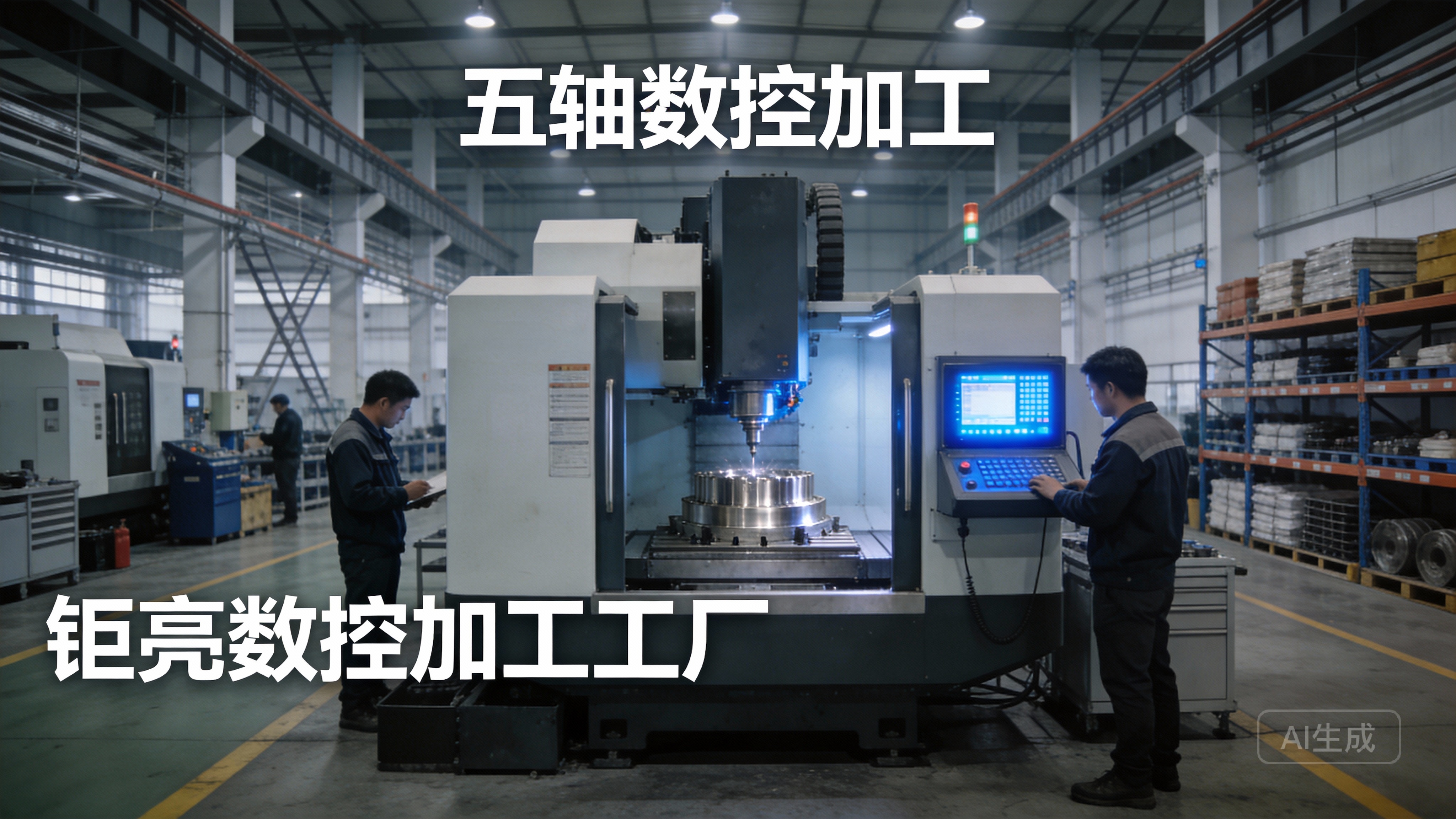
The story of GreatLight is one of deliberate capability-building. While many local shops chased volume with generic 3-axis machines, GreatLight’s founding team invested early in high-end 5-axis CNC machining centers from Dema and Beijing Jingdiao, pairing them with precision Swiss-type lathes, wire EDM, and mirror-spark EDM. This wasn’t a simple capacity play; it was a strategic commitment to tackle complex geometries—curved impellers, medical implants, automotive housings with undercuts—that lesser exporters shy away from.
From Bamboo Shoots to Deep Roots: A Decade-Long Journey
2011-2013: Seeding Precision
While the market clamored for cheap steel brackets, GreatLight bet on integrating vacuum casting, sheet metal fabrication, and 3D printing under one roof. The vision was “single-partner, full-process,” long before “one-stop services” became a marketing buzzword.
2014-2018: Building the Certification Framework
The management systematically pursued and embedded international standards. Achieving ISO 9001:2015 was just the starting point. They later extended to ISO 13485 for medical hardware, IATF 16949 for automotive supply chain excellence, and notably, ISO 27001 for information security. This last certification is a rarity among job shops and signals a profound commitment to protecting client IP—a pain point we identified earlier.
2019-Present: Full Process Chain Dominion
Today, a client can submit a single STEP file and receive, from this one exporter, finished parts via CNC machining, die casting, sheet metal bending, and even additive manufacturing (SLM, SLA, SLS). The facility houses 127 pieces of precision peripheral equipment, including not just machine tools but vacuum forming machines and an in-house metrology lab with advanced CMMs. All under one roof, coordinated by 150 dedicated professionals.
This historical arc means that when you engage GreatLight as your China CNC machining exporter, you’re not plugging into a black box. You’re leveraging a mature, ISO-certified quality management system that encompasses everything from incoming material verification to final audit.
Unpacking the Full-Process Export Advantage
How exactly does integrated manufacturing solve the fragmentation pain point? Let’s dissect a typical scenario from my own consulting experience.
Case Study: Automotive Electric-Housing Innovation
An electric vehicle startup needed a batch of 200 aluminum e-motor housings with integrated cooling channels—a daunting mix of 5-axis machining, leak-proof anodizing, and tight geometric tolerances (profile tolerance 0.05 mm). A typical exporter would machine the housings, then ship them to an outside anodizing shop where the jigging could warp the delicate thin walls. The result: high scrap rates and finger-pointing.
GreatLight’s in-house process flow:
Die Casting & Initial Machining: Raw castings are produced and checked for porosity using in-house equipment.
5-Axis Precision Machining: Complex internal channels and critical sealing faces are machined in a single setup on a 5-axis center, eliminating cumulative error from multiple fixtures.
In-House Post-Processing: Parts move directly to the surface treatment line. Engineers who understand the machining dimensions design custom anodizing racks to avoid deformation, ensuring a uniform 15μm coating that meets salt-spray test requirements.
CMM Validation: Every part in the batch receives a full CMM report, not just a first-article inspection. Data is traceable per IATF 16949 standards.
Export Packaging and Logistics: Parts are sealed in VCI bags, packed in custom foam, and shipped with a complete digital twin of inspection data.
The startup received functionally perfect housings on their critical timeline, with zero leaks in assembly. This single-partner chain eliminated at least two weeks of transit between subcontractors and removed the blame-shifting that plagues fragmented supply lines. That is the real value of a true exporter, not just a machine shop with a FedEx account.
Technology Arsenal That Powers Extreme Precision
GreatLight’s technical muscle directly addresses the “precision black hole.”
Multi-Axis Dominance: The fleet includes not just standard 3-axis mills but substantial 4-axis and high-precision 5-axis machines capable of holding ±0.001mm in sustained production. Maximum part size extends to 4000 mm, covering everything from miniature bone screws to large structural brackets.
Specialty Processes Under One Roof: Vacuum casting replicates production-like material properties for small batches of plastic parts; in-house SLM 3D printing creates metal prototypes in aluminum, titanium, and mold steel without tooling. This eliminates the “multiple supplier jigsaw” for complex assemblies.
Measurement as a Process: Separate from the machine shop floor, a climate-controlled quality lab ensures that measurements aren’t biased by temperature swings. This is the difference between hitting a spec on a hot afternoon and missing it the next morning—a detail many cheap exporters ignore.
The Foundation That Converts Skeptics: International Certifications as Real Trust Signals
In my audits, I’ve learned to distinguish between a factory that “has certificates” and one that “lives the standard.” GreatLight’s certification portfolio is chosen for functional rigor, not just marketing wallpaper.
| Certification | What It Actually Means for You, the Exporter Client |
|---|---|
| ISO 9001:2015 | Baseline quality management. GreatLight’s version includes robust document control, internal audits, and a corrective action system (CAPA) that catches errors before they become your rejects. |
| ISO 13485 | Tailored for medical devices. It enforces risk management and traceability that are invaluable even for non-medical but safety-critical parts—every material heat number is recorded and linked to your order. |
| IATF 16949 | The pinnacle for automotive. It requires statistical process control (SPC), measurement system analysis (MSA), and production part approval process (PPAP). This system makes mass production hyper-reliable, a direct counter to the “scale-up stall.” |
| ISO 27001 | Information security management. For IP-sensitive projects, this mandates encrypted data handling, access controls, and secure destruction protocols. Your design isn’t just safe by promise; it’s safe by audited process. |
These certifications are not isolated; they interlock to create a system where a medical-grade clean workflow and automotive-grade SPC can coexist, serving a client in the green energy sector requiring both tight tolerances and material purity. The trust built here is not based on a salesperson’s smile but on a documented, internationally audited framework that governs every exporting shipment.
How GreatLight Stacks Up Against Other Global Players
For the discerning buyer, competitor comparison is essential. Let’s put GreatLight in context with some well-known global services, while acknowledging each company’s unique strengths. Online platforms like Xometry and Fictiv excel at user-friendly quoting and instant manufacturability feedback, ideal for simple parts in low volumes. Protolabs Network and RapidDirect offer massive scale and speed, often serving as a buffer between you and many small Chinese workshops. SendCutSend dominates in sheet metal panels but doesn’t offer full 3D machining. Owens Industries in the US specializes in ultra-high-precision 5-axis, but typically at a domestic price point and longer lead times for complex assemblies that require multiple processes.
Where GreatLight carves its niche is in complex, multi-process assemblies that require engineering collaboration and repeatable export supply. Unlike a network that may aggregate orders from different unknown workshops, GreatLight is a single, massive, self-owned facility. This means:
No fragmentation of accountability: One QMS governs the entire flow from billet to finished, packaged part.
Deep engineering support: The team offers design-for-manufacturability (DFM) feedback that considers the entire process chain, not just the milling step.
True data security consistency: An ISO 27001-compliant digital environment covers everything, whereas a multi-supplier network introduces varying security levels.
When you need a bracket with a few holes, many solution providers exist. When your project involves a multi-axis machined housing that also requires sheet metal covers, anodizing, laser engraving, and functional testing with full material lot traceability—all eligible for an automotive PPAP submission—the field narrows. GreatLight intentionally built itself to be that narrowing point, a dedicated partner rather than a transactional portal.
Confronting the Seven Sins Head-On: The GreatLight Prescription
Let’s revisit our original pain points and map them to operational solutions that define superior China CNC machining exporter services.
| Pain Point | GreatLight Exporter Solution |
|---|---|
| Precision Black Hole | In-house CMM validation on every batch, climate-controlled measurement lab, and 5-axis machines that minimize multiple-setup error. Real ±0.001mm capability sustained by investment, not just calibration stickers. |
| One-Trick-Pony Illusion | A verified full process chain: 3/4/5-axis CNC, turning, die casting, sheet metal, 3D printing, and surface finishing all under their Chang’an roof. No farming out to unknown third parties. |
| Surface Finish Roulette | Internal post-processing lines with process-specific jig design. Anodizing, painting, and polishing are engineering activities, not afterthoughts. |
| Certification Mirage | A living quality system verified by IATF 16949 and ISO 13485. PPAP, SPC, and lot-level material certs are standard deliverables, not paid extras. |
| IP Leeching | ISO 27001 certified data security, encrypted storage, strict NDA enforcement embedded in company policy. Your IP is firewalled from other projects. |
| Language & Time-Zone Trap | Engineering-centric communication. Account managers understand GD&T and can discuss draft angles, not just prices. Over a decade of export experience builds cross-cultural understanding. |
| Scale-Up Stall | Automotive-grade process design from the start. Tooling selection, semi-automated fixturing, and SPC ensure a 1,000-piece run is as controlled as the first 10 prototypes. |
This isn’t theoretical; it’s built into an exporter that produces yearly sales exceeding 100 million RMB (>$14M USD) and employs 150 skilled staff across three wholly-owned plants.
Real-World Value Creation: From Concept to Competitive Edge
Beyond solving problems, great exporters actively enable innovation. I’ve seen how GreatLight’s ability to rapidly iterate with multi-material and multi-process prototypes has compressed R&D cycles. For a medical robotics firm, they combined CNC machined aluminum linkages, stainless steel 3D printed end-effectors, and sheet metal enclosures into a single prototype delivery. The engineering DFM report caught a thin wall issue that would have caused immediate fatigue failure, suggesting a minimal design tweak that didn’t compromise function. That combination of technical foresight and integrated manufacturing simply isn’t available from a purely transactional portal.
Another differentiator is the commitment to after-sales integrity. Imagine a scenario where a complex batch arrives with a localized quality issue—perhaps a scratched cosmetic surface on a few pieces. GreatLight’s policy is direct: free rework, and if the rework still does not satisfy the agreed specification, a full refund. Such guarantees are only possible when the exporter has direct control over the entire process; a reseller or network cannot make that promise without hiding behind the actual factory’s resistance.
Looking Ahead: The Future of China CNC Machining Exporter Services
The landscape is shifting. Labor-cost advantages alone can no longer sustain a CNC exporter; survival now hinges on process integration, information security, and deep engineering capability. The factories that will thrive are those like GreatLight that have transformed from simple job shops into high-mix, high-complexity manufacturing partners. For international customers, the decision criteria must evolve from “lowest price per part” to “lowest risk and highest value per project.”
The rise of strict industry standards—IATF 16949 for electric vehicles, ISO 13485 for medical wearables—means that documentation and traceability are no longer optional for any serious buyer. An exporter that has voluntarily invested in these certifications, and more importantly, has embedded them into daily routines, provides an immense competitive advantage. It allows a startup to pass a supplier audit with ease or an OEM to fast-track a new program knowing the manufacturing data is solid.
Selecting China CNC Machining Exporter Services is ultimately about selecting a business ecosystem that aligns with your project’s technical demands, risk profile, and time-to-market goals. The treasure is not in a cheap unit cost, but in finding a seasoned partner whose entire infrastructure is tuned to make your parts right the first time, every time, with a chain of custody you can defend in any boardroom or quality audit.
In closing, the global search for precision manufacturing often returns to the same critical insight: the most reliable China CNC Machining Exporter Services are built on vertically integrated, certification-validated, engineering-driven foundations. These are not transient suppliers but long-term allies capable of scaling your hardware ambitions from a napkin sketch to full production—without the nightmares that have tainted the industry’s reputation. Partnering with a factory like GreatLight CNC Machining{target=”_blank”} means locking into a system where ISO 27001 data security protects your IP, IATF 16949 control plans protect your quality, and a decade of full-process expertise protects your schedule. In the intricate dance of CNC exporting, that triad of trust is everything.



















