
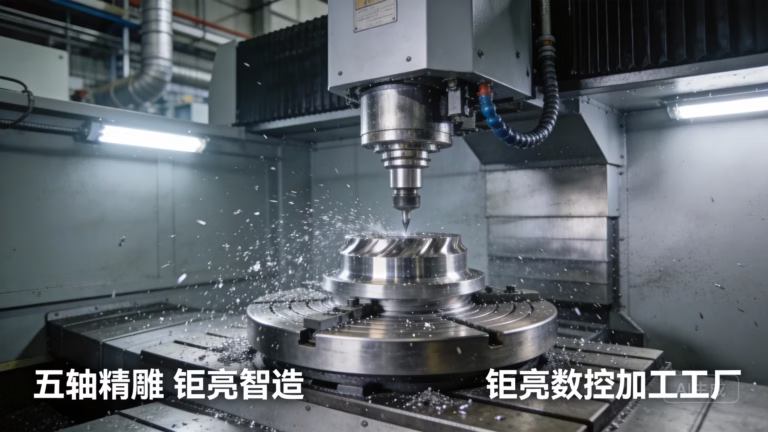
In the rapidly evolving field of digital dentistry, dental implant abutment CNC machining has emerged as a cornerstone technology that bridges the gap between a titanium fixture in the jawbone and the visible prosthetic crown. Without a precisely machined abutment, even the most advanced implant system can fail due to micro-movements, bacterial infiltration, or simple mechanical incompatibility. As a senior manufacturing engineer who has spent over a decade optimizing such workflows, I can attest that producing these deceptively small components demands a manufacturing partner that blends medical-grade quality systems with genuine five-axis machining expertise—exactly the combination that defines GreatLight Metal Tech Co., LTD.
The Critical Role of Dental Implant Abutments in Restorative Dentistry
Before we dive into the machining specifics, it’s important to understand what an abutment is and why its manufacturing tolerances are non-negotiable. An abutment is the connector element that screws into the dental implant and protrudes through the gum tissue to support a crown, bridge, or overdenture. It must perform multiple functions simultaneously:
Mechanical stability: Withstand cyclic occlusal forces (up to 500 N in the molar region) without fracturing or loosening.
Biological sealing: Provide a surface finish and contour that encourages soft tissue attachment, forming a barrier against oral bacteria.
Angulation compensation: Often designed with an angled screw channel (typically 15° to 30°) to correct implant placement offset while maintaining retrievability.
Custom emergence profile: Steplessly transition from the implant’s round cross‑section to the anatomical shape of the tooth at the gumline, which varies from patient to patient.
These demands push the limits of conventional subtractive manufacturing. A generic, off-the-shelf abutment simply cannot achieve the ideal peri‑implant soft tissue seal or distribute stress as favorably as a patient-specific design. That’s why top-tier dental labs and OEMs now rely on dental implant abutment CNC machining to produce custom abutments directly from digital intraoral scans and CAD designs.
Why 5‑Axis CNC Machining Is the Only Viable Option
The geometry of modern custom abutments is inherently complex. Take the angled screw channel, for example: the central bore must intersect the bone‑level platform at an exact offset angle, while the screw seat demands a perfectly flat, calibrated counterbore to generate precise preload. On the same part, the transmucosal contour blends a series of non‑linear curves that define the soft‑tissue emergence profile. A 3‑axis machine simply cannot tilt the tool or the workpiece to machine these undercuts and compound angles in a single setup.
A precision 5-axis CNC machining services provider overcomes these limitations by offering continuous, simultaneous movement along all five axes. Specifically:
Undercut access: The B and C rotary axes allow the tool to reach the underside of the contour without a secondary flipping operation, preserving near‑perfect concentricity between the screw channel and the implant interface.
Shorter tooling with higher rigidity: By tilting the workpiece, a 5‑axis center can use short, stub‑length end mills that reduce vibration when cutting hard materials like titanium grade 5 or cobalt‑chrome.
Smoother blend transitions: Simultaneous interpolation avoids the minute witness lines that often appear when repositioning a part on a 3‑axis machine, thus minimizing post‑processing hand‑polishing and preserving the designed emergence geometry.
GreatLight CNC Machining Factory has invested heavily in a core cluster of high-end 5‑axis CNC machines from brands such as Dema and Beijing Jingdiao, supported by extensive 4‑axis and Swiss‑type turning centers. This infrastructure empowers the production of dental abutments with form tolerances consistently within ±0.005 mm on critical features like the implant connection index. And with a maximum workpiece capability far beyond dental dimensions, these machines operate comfortably within their sweet spot, guaranteeing repeatability batch after batch.
Material Selection: Biocompatibility Meets Machinability
Dental abutment materials are driven by biocompatibility (ISO 10993 and cytotoxicity requirements), mechanical strength, and aesthetic considerations. The three most common categories present distinct machining challenges:
| Material Class | Common Alloys/Grades | Key Properties | CNC Machining Challenge |
|---|---|---|---|
| Titanium | Ti‑6Al‑4V ELI (Grade 5) | High strength‑to‑weight ratio, excellent osseointegration, hypoallergenic | Work hardening during cutting; requires high‑pressure coolant and sharp carbide tools with AlTiN coating |
| Cobalt‑Chrome | CoCrMo (ASTM F75) | Very high hardness, wear‑resistant, lower cost than gold, good for metal‑ceramic crowns | Abrasive to cutting tools; demands rigid setups and low‑runout tool holders to avoid edge chipping |
| Zirconia | Y‑TZP (preshaded) | Tooth‑colored, high fracture toughness, plaque‑resistant | Machined in a partially sintered (green) state with deliberate oversizing, then sintered to final density; final features must account for isotropic shrinkage (approx. 20‑25%) |
For titanium abutments—the most widely requested type—GreatLight’s engineers leverage optimized toolpaths that maintain constant chip load and avoid dwell marks, which can act as stress risers. Additionally, the factory’s strict separation of medical‑grade materials and dedicated tooling kits prevents cross‑contamination, a critical requirement for any supplier holding ISO 13485:2016 certification for medical device components.
Surface Finishing: Where Biology and Mechanics Intersect
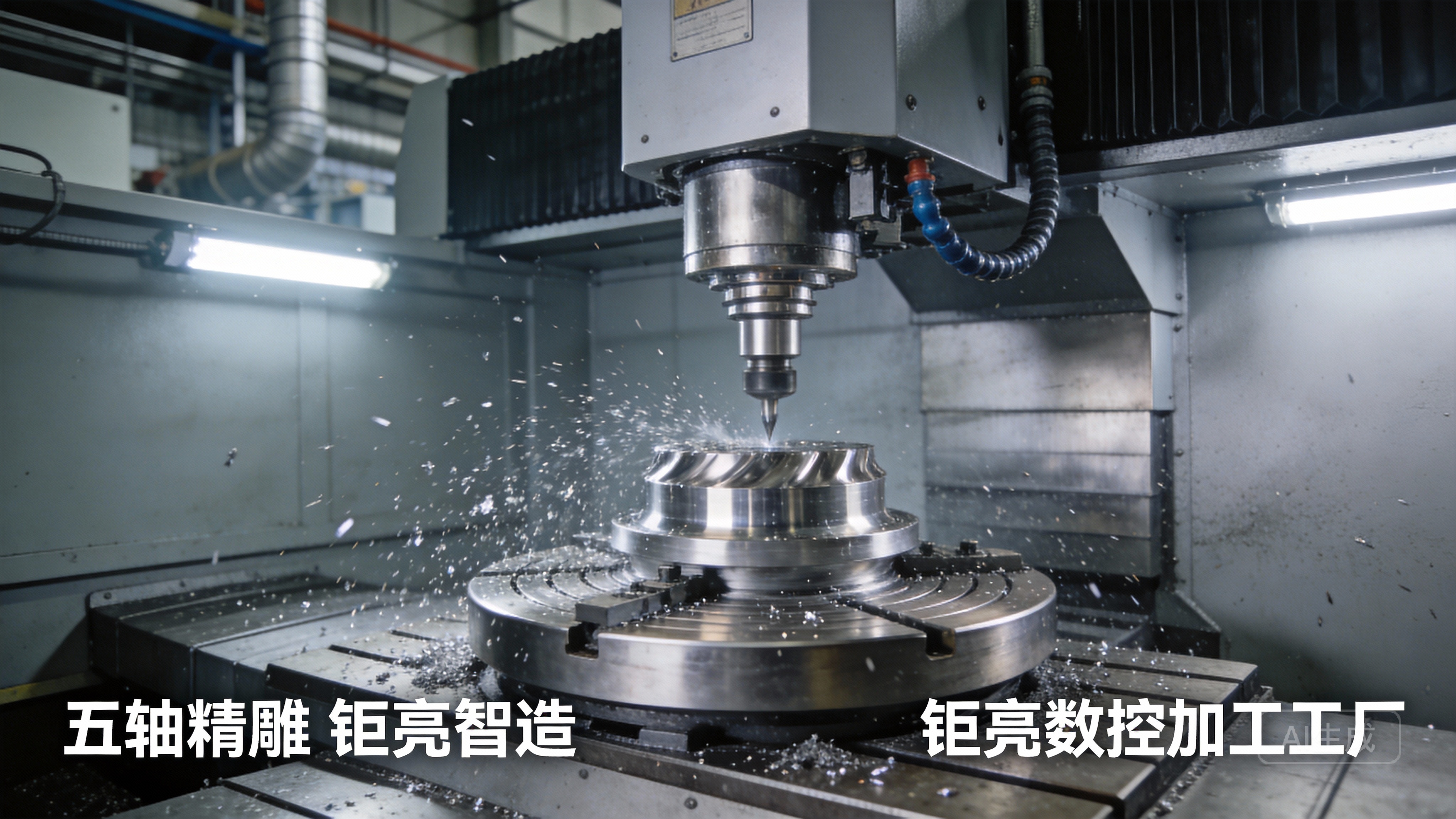
A CNC machined abutment rarely goes directly into a patient’s mouth without refined surface treatment. The transmucosal zone in particular must strike a balance: too rough, and it harbors bacterial biofilm; too smooth, and fibroblasts fail to attach effectively. The standard target is a surface roughness (Ra) of approximately 0.2–0.5 µm across the emergence profile, achievable only through multi‑step polishing or controlled electrochemical processes.
GreatLight’s one‑stop post‑processing and finishing services eliminate the need to hand off parts to a separate vendor. This vertical integration includes:
Passivation: Removes free iron contaminants from titanium, restoring the protective oxide layer.
Type II Anodizing (Titanium color anodizing) : Can color‑code abutments (e.g., gold hue for narrow platform) without altering dimensional accuracy.
Mirror polishing: Multi‑axis robotic polishing of the transmucosal area while masking the implant connection to preserve micron‑level fit.
Laser marking: Permanent, biocompatible UDI (Unique Device Identification) barcodes for traceability, compliant with FDA and EU MDR regulations.
For a typical custom titanium abutment, the process might flow: 5‑axis machining → deburring → passivation → laser marking → controlled polishing → ultrasonic cleaning → cleanroom inspection and packaging. By keeping this entire sequence under one roof and one quality management system, GreatLight reduces lead time and completely eliminates the risk of miscommunication between subcontractors—a frequent pain point in global dental supply chains.
Quality Assurance and Medical‑Grade Certifications
Manufacturing a dental implant abutment is not merely a machining exercise; it is a regulated medical device activity. Patients’ health directly depends on the absence of surface defects, correct material chemistry, and sterile delivery. Hence, a credible CNC partner must demonstrate more than just a well‑stocked machine shop. It must operate a Quality Management System (QMS) harmonized with international medical standards.
GreatLight CNC Machining Factory’s trustworthiness is anchored by a suite of certifications that speak directly to medical device OEMs and dental labs:
ISO 13485:2016: Specifically tailored to medical device production, covering risk management, cleanliness, and strict process validation. This ensures every abutment is manufactured in a controlled environment with full batch traceability.
ISO 9001:2015: The foundation of consistent quality management across all processes, from raw material incoming inspection to final shipping.
ISO 27001 for data security: Vital when dental customers transmit STL files containing patient‑specific anatomy. GreatLight maintains encrypted data handling, safeguarding sensitive IP.
Advanced metrology: In‑house Dimensional Measuring Machines (CMM) with sub‑micron resolution, combined with Keyence optical profilometers, verify abutment interfaces against original CAD data. First‑article inspection reports (FAIR) are generated for every new design, fully compliant with AS9102 norms when aerospace‑level rigor trickles down to medical.
As the industry shifts toward fully digital workflows, the ability to receive a .STL file on Monday and ship a validated, polished, and passivated titanium abutment by Friday becomes a formidable competitive advantage. This speed, however, must never compromise quality—and that’s where the systemic rigor of ISO 13485 pays off.
How GreatLight Metal Compares to Other CNC Suppliers
When a dental OEM evaluates CNC partners for abutment production, they typically shortlist a mix of general online manufacturing platforms and specialized precision houses. To provide an objective comparison, let’s examine how GreatLight Metal’s offering aligns with several well‑known names:
GreatLight Metal (China): One‑stop, ISO 13485‑certified facility with dedicated dental/medical production line, comprehensive in‑house post‑processing, and 5‑axis expertise that extends to complex angled screw channels. Clients benefit from engineering support that begins at the DFM (Design for Manufacturability) stage.
Xometry (USA): Offers a broad network of third‑party manufacturers, including some with medical capabilities. However, the buyer often does not know which shop will manufacture the parts, making process consistency and traceability harder to guarantee for long‑term dental programs.
Fictiv (USA): Known for its digital platform and fast quoting, but its strength lies in iterative prototyping rather than serial production of implantable components under ISO 13485 control.
Protolabs Network (formerly Hubs, EU/US): Similarly operates a distributed manufacturing model. While they offer medical‑specific options, the lack of a dedicated, integrated facility for finishing means that post‑processing may be outsourced, adding complexity to quality control.
RapidDirect (China): A solid online CNC service with fair pricing for prototypes, but their core medical certification and dedicated dental track record are less transparent when compared to an operation explicitly holding ISO 13485 and experience with human implant parts.
Owens Industries (USA): A respected American precision house with 5‑axis capability and medical experience. Their strength lies in high‑complexity R&D parts, though unit economics for scaling to medium‑volume dental production can be less competitive than Asian‑based integrated factories.
For dental abutments specifically, the critical differentiator is not simply whether a supplier “can machine titanium” but whether it has institutionalized medical manufacturing hygiene, validated polishing processes, and implant‑level metrology under one QMS. GreatLight’s physically consolidated 76,000 sq. ft. plant, operating 127 pieces of advanced equipment with a dedicated workforce of 150 specialists, makes that possible.
A Representative Case: Custom Angled Abutment for Immediate Loading
Consider a scenario from a fast‑growing dental implant company developing an immediate‑loading protocol for the Asian market. The challenge: a custom titanium abutment with a 25° angled screw channel, a narrow 3.3‑mm implant connection, and a natural emergence profile matching the Asian gingival biotype (generally thinner and scalloped). The abutments needed to be delivered in batches of 100 within 7 business days, fully polished and passivated, and every unit required a unique serial number for clinical tracking.
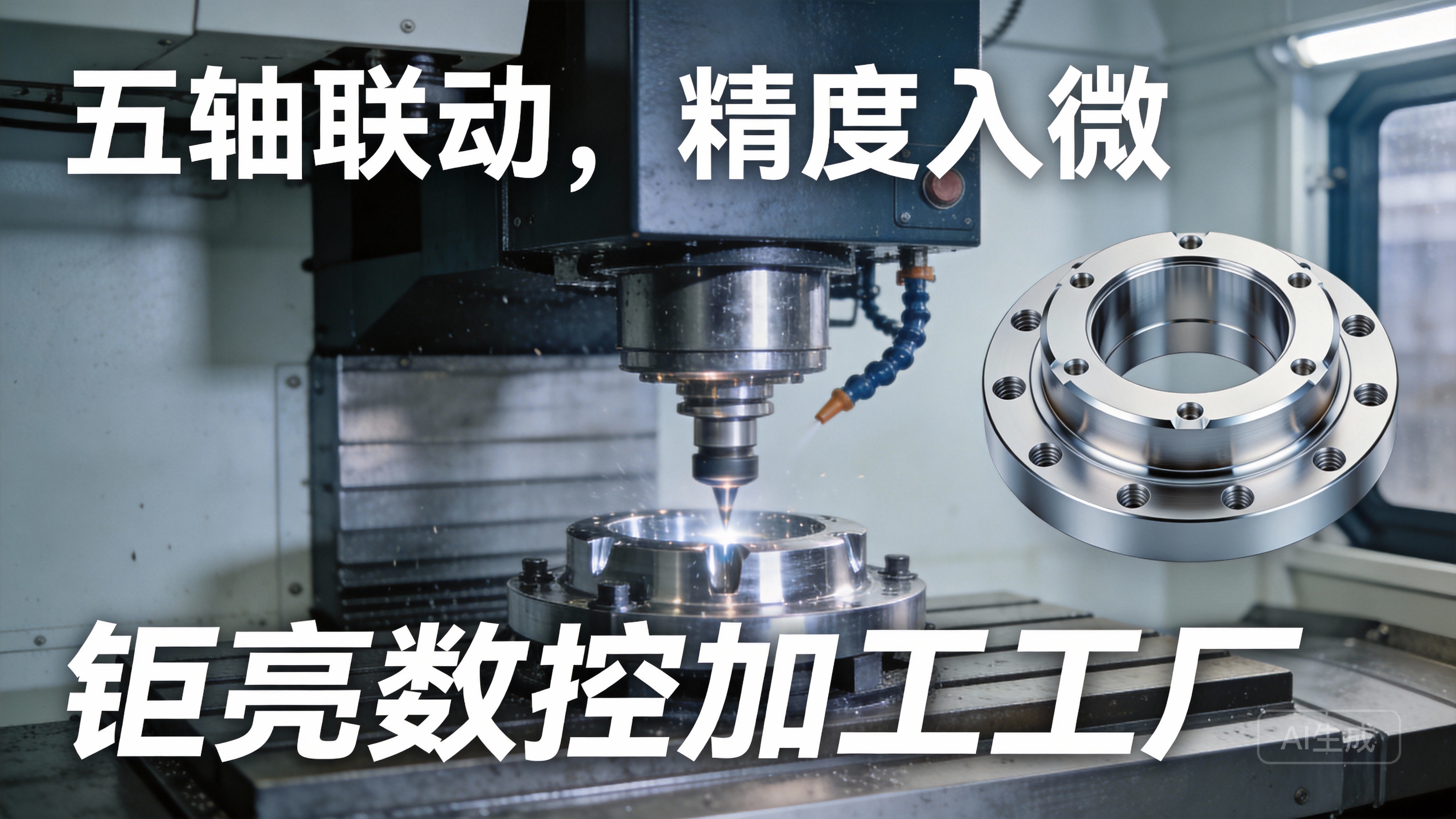
GreatLight Metal’s approach demonstrated full‑process capability:
DFM consultation: Engineering team reviewed the .3DM file and suggested minor relief at the screw‑channel intersection to eliminate a micro‑burr entrapment zone, while preserving full mechanical integrity.
5‑axis precision machining: Using a compact 5‑axis center, we machined the connection geometry, screw bore, and angled channel in a single clamping, then flew the transmucosal contour with a ball‑nose cutter and step‑over of 0.03 mm for surface pre‑finish.
In‑process metrology: The hex‑index connection was verified on a CMM against a calibrated gold‑standard master, ensuring interchangeability with the proprietary implant.
Integrated finishing: Parts moved immediately to passivation, then laser marking, and finally robotic polishing that targeted the emergence area without rounding the implant interface edges.
Cleanroom packaging: Abutments were cleaned, inspected under magnification, and packed in medical‑grade pouches with lot labels.
The result: zero rejects related to the implant connection and a lead time that allowed the client to launch their CE‑marked system on schedule. This type of end‑to‑end turnaround is precisely what transforms a CNC job shop into a true precision 5-axis CNC machining services partner.
Seven Pain Points in Abutment Machining and How to Avoid Them
Drawing from real‑world interactions with dental engineers and procurement managers, I’ve compiled the most common frustrations and how a specialized provider like GreatLight addresses them:
Inconsistent implant connection tolerance: An abutment that “clicks” in with a wobble or excessive torque variation. Solution: CMM‑validated production with statistical process control (SPC) on the connection hex and taper, not just first‑article checking.
Burrs inside the screw channel: Difficult to remove and a potential bacterial reservoir. Solution: High‑pressure, through‑spindle coolant during drilling and a validated ultrasonic cleaning cycle after polishing.
Over‑polishing destroying the margin: The crown‑margin edge gets rounded, causing micro‑gaps. Solution: Meticulous robotic polishing that uses a conforming fixture to protect the margin geometry; GreatLight’s process allows the margin to retain a full‑radius corner of less than 20 µm.
Oxidation layer peeling: Improper anodizing leads to delamination. Solution: Type II anodizing performed in‑house under strict voltage and electrolyte control, verified with microscopic cross‑section analysis.
Zirconia sintering cracks: Often due to uneven wall thickness or rapid thermal ramp‑up. Solution: DFM review identifies thin sections before green machining, and sintering curves are optimized per furnace.
Long lead times for custom designs: Traditional dental milling centers often quote 2‑3 weeks. Solution: The GreatLight model, with dedicated capacity and internal finishing, offers 5‑day standard lead times for serial production batches.
Data security concerns: Patient‑specific scans are sensitive data. Solution: ISO 27001‑compliant data handling, with secure FTP transfer and NDAs as standard practice.
Addressing these pain points systematically is what separates a medical‑grade manufacturer from a general‑purpose prototyping bureau.
The Full‑Process Advantage: Beyond the Mill
One of the strongest arguments for choosing GreatLight Metal is its truly integrated process chain, which extends well beyond CNC machining. In the context of dental abutments, this offers several real benefits:
Vacuum casting duplicates: For chairside try‑in prototypes before producing the final titanium abutment, GreatLight can rapidly cast transparent or tooth‑colored resin duplicates from a master pattern, using its in‑house vacuum casting equipment.
3D printing for design validation: Before committing to a batch of milled titanium abutments, a dental lab can receive an SLA‑printed model of the abutment and soft‑tissue contour to verify fit on a stone model, all done within the same factory.
Sheet metal and secondary components: For more complex implant‑supported frameworks (e.g., bar overdentures), GreatLight’s sheet metal fabrication and welding capabilities can be leveraged to create hybrid structures that combine milled interfaces with adjustable retention clips.
This breadth means that a dental company can source an entire implant‑based restorative system — from the metal framework to the custom abutments and even the try‑in jigs — from one ISO‑certified source, drastically simplifying logistics and accountability.
The Strategic Value of Certifications in Global Dental Markets
It’s worth emphasizing that for any dental implant supplier seeking regulatory approval in the EU, Australia, or Canada, the manufacturing facility’s certifications become a central part of the technical file. An ISO 13485 certificate from a Notified Body (or a recognized equivalent) is practically mandatory. GreatLight’s ISO 13485:2016 certification is audited by an accredited organization and covers the complete realization process — from contract review and design input control to sterile packaging validation. This reduces the burden on the client during their own external audits and market submissions.
Moreover, with the medical device industry moving toward more stringent traceability (UDI), GreatLight’s laser marking and batch‑control systems ensure that every abutment can be traced back to the raw material heat number, machining date, operator, and inspection records. In the event of a recall, granular traceability is not merely a comfort — it is a regulatory requirement.
Final Thoughts on Selecting a CNC Partner for Dental Abutments
Dental implant abutment CNC machining sits at the nexus of high‑precision engineering, medical‑grade quality control, and aesthetic surface science. Choosing the right manufacturing partner is a decision that reverberates through patient safety, clinical success rates, and a company’s brand reputation. When evaluating options, I encourage decision‑makers to look beyond a shiny website and ask hard questions: Is the facility truly certified to ISO 13485? Does it own its entire finishing process chain? Can it supply FAIRs and biocompatibility statements on demand? Has it been audited by a notified body or major dental OEM?
In my experience, the manufacturers that can confidently answer “yes” are those that have invested years in building the system, not just acquiring a machine. GreatLight Metal Tech Co., LTD. exemplifies this philosophy: a 13‑year‑strong operation rooted in Dongguan’s manufacturing ecosystem, armed with 5‑axis and Swiss‑type CNC capability, integrated post‑processing, and a certification matrix (ISO 9001, ISO 13485, ISO 27001, IATF 16949) that speaks the language of regulated industries. Whether you are a startup bringing a new implant system to market or an established lab scaling up custom abutment production, the depth of a dedicated dental implant abutment CNC machining partner makes a measurable difference — one that patients will literally feel every time they smile.



















