
The Elusive Quest for Stability: Demystifying Diamond Tool Fluctuation in High-Precision CNC Machining
If you’ve ever stood by a high-precision CNC machine, watching a diamond tool trace a path that should be flawless, only to see measurements or surface finishes waver inexplicably, you’re not alone. The question, “Why do my diamond cuts keep fluctuating on the CNC machine?” is a common yet profound challenge that separates good machining from truly exceptional, reliable production. This instability strikes at the heart of precision, affecting tolerances, surface integrity, and ultimately, part performance and cost.
For professionals in precision parts machining and customization, such fluctuations aren’t just minor annoyances; they are critical failures that can derail a project. Solving them requires a systematic understanding of the complex interplay between machine, tool, material, and environment. Let’s delve into the root causes and practical solutions.
H2: Deconstructing the Causes of Diamond Tool Fluctuation
Diamond tools, particularly Single Crystal Diamond (SCD) tools used for ultra-precision machining of non-ferrous metals, optics, and composites, are incredibly sensitive. Their exceptional hardness and sharpness make them unforgiving of any instability in the machining system. Fluctuations typically manifest as variations in surface roughness (Ra values), waviness, dimensional inconsistency, or even audible changes in the cutting sound. The culprits are often multifaceted.
H3: 1. Tooling & Tool Holder Integrity: The First Link in the Chain
The assumption that a diamond tool is inherently perfect is a common pitfall.
Tool Mounting and Runout: This is the prime suspect. Any minute axial or radial runout in the tool holder—be it a standard collet chuck, a hydraulic holder, or a high-end shrink-fit holder—is magnified at the cutting edge. Dust, a microscopic burr on the tool shank, or worn holder components can induce runout exceeding 0.001mm, which is catastrophic for diamond tool performance.
Tool Geometry and Wear: While diamond is hard, it is not immune to wear, especially when machining abrasive materials or due to micro-chipping from vibration. A slightly worn or chipped edge will not shear material cleanly, causing variable cutting forces and poor finish. Furthermore, an imperfect tool nose radius or rake angle from the manufacturer can lead to inconsistent performance from the start.
Thermal Expansion of the Tool Holder: During long machining cycles, the heat generated in the spindle can transfer to the tool holder. Different materials (steel, carbide sleeves) expand at different rates, potentially causing a slight but significant shift in the tool’s position.
H3: 2. Machine Tool Stability and Kinematic Errors
The machine itself is a dynamic system. Five-axis CNC machining centers, while offering unparalleled geometric freedom, introduce more potential axes of error.
Spindle Thermal Growth: As the spindle bearings heat up during operation, the spindle shaft expands axially and radially. This thermal drift can be several microns and is rarely linear, directly causing the tool point to move relative to the workpiece. High-precision machines have spindle cooling systems and thermal growth compensation software to mitigate this.
Axis Servo Response and Backlash: Lag, overshoot, or inconsistency in the servo motors driving each axis can cause the tool path to deviate from the commanded path, especially during direction changes or complex contouring. Backlash in ball screws, though usually compensated, can become problematic if the compensation value drifts or components wear.
Static and Dynamic Rigidity: The entire machine structure must resist deflection from cutting forces. Inadequate foundation, worn guideways, or insufficient frame stiffness can allow the machine to “give” under load, causing variable depth of cut. Dynamic rigidity concerns the machine’s natural frequencies; if the cutting process excites these frequencies, it leads to chatter—a severe form of fluctuation.
H3: 3. Workpiece, Fixturing, and Material Variables
The part being machined is often an active participant in the problem.
Inadequate or Unstable Fixturing: If the workpiece is not held absolutely rigid, it can vibrate or shift minutely under cutting forces. Vacuum chucks can lose grip, mechanical clamps can relax thermally, and modular fixturing may have accumulated play.
Material Inhomogeneity: Even within a single billet of aluminum or copper, variations in grain structure, hardness, or the presence of microscopic inclusions (silicon particles in aluminum, for instance) can cause sudden changes in cutting resistance, leading to force fluctuations that affect the tool.
Internal Stresses: Raw materials, especially if previously heat-treated or rough-machined, contain locked-in stresses. As machining removes material, these stresses redistribute, causing the part to warp or move subtly in the fixture during the cut.
H3: 4. Programming and Process Parameters
The commands given to the machine are a blueprint for stability or chaos.
Inappropriate Feeds and Speeds: Diamond tools require specific chip loads. Running too slow can cause rubbing and built-up edge; running too fast can generate excessive heat and shock. An inconsistent chip load (e.g., during a corner engagement) directly translates to fluctuating cutting forces.
Tool Path Strategy: Conventional tool paths with constant step-overs and direction changes can induce periodic vibration. Advanced CNC machining services employ trochoidal milling, smoothened cornering, and constant engagement angle toolpaths to maintain steady cutting conditions.
Coolant Application: For diamond machining, the cooling and lubricating effect must be consistent and precisely targeted. Intermittent coolant flow, or coolant that does not effectively reach the cutting interface, leads to thermal instability and variable material behavior.
H3: 5. Environmental and Foundational Factors
Often overlooked, the room itself matters.
Temperature Variation: A change of even 1°C in the workshop can cause several microns of thermal expansion in a 500mm steel part or the machine structure. Lack of climate control is a major source of slow drift.
Vibration Transmission: External vibrations from nearby heavy machinery, forklifts, or even building HVAC systems can be transmitted through the floor to the machine, disturbing the cut.
Power Supply Quality: Voltage sags or noise in the electrical supply can affect the performance of sensitive spindle drives and servo amplifiers.
H2: A Systematic Troubleshooting and Resolution Framework
Addressing fluctuation is a methodical process of elimination.
Isolate and Inspect: Begin with the simplest element. Remove, meticulously clean, and re-install the diamond tool and holder using a precision dial indicator to measure runout at the tool tip (aim for < 0.0002" / 5µm). Inspect the cutting edge under a high-power microscope.
Verify Workholding: Check fixture flatness, clamping force, and ensure no chips are under the workpiece. For critical jobs, consider re-fixturing or using a dedicated, validated setup.
Simplify the Process: Run a test cut on a known, stable material (e.g., high-purity aluminum) using a simple, straight-line tool path with conservative, proven parameters. This isolates machine/tool issues from material/program issues.
Engage Machine Diagnostics: Utilize the machine’s built-in error mapping software (e.g., laser calibration for backlash, ball bar tests for circularity, spindle analysis software) to check for mechanical degradation.
Optimize the Program: Collaborate with experienced manufacturing engineers to refine the tool path and parameters. A partner like GreatLight CNC Machining Factory leverages deep process engineering to design stable, efficient machining strategies from the outset.
Control the Environment: Ensure the machining cell is in a temperature-controlled area (±0.5°C) and on a vibration-isolated foundation if necessary.
Conclusion: The Path to Predictable, Flawless Performance
“Why do my diamond cuts keep fluctuating?” ultimately has no single answer, but a hierarchy of probable causes. Achieving rock-solid stability in diamond tool machining is the pinnacle of precision manufacturing, demanding an integrated approach that combines exceptional machine tool integrity, impeccable tooling management, intelligent process engineering, and a controlled environment. It is a discipline where attention to microscopic details yields macroscopic quality and reliability.
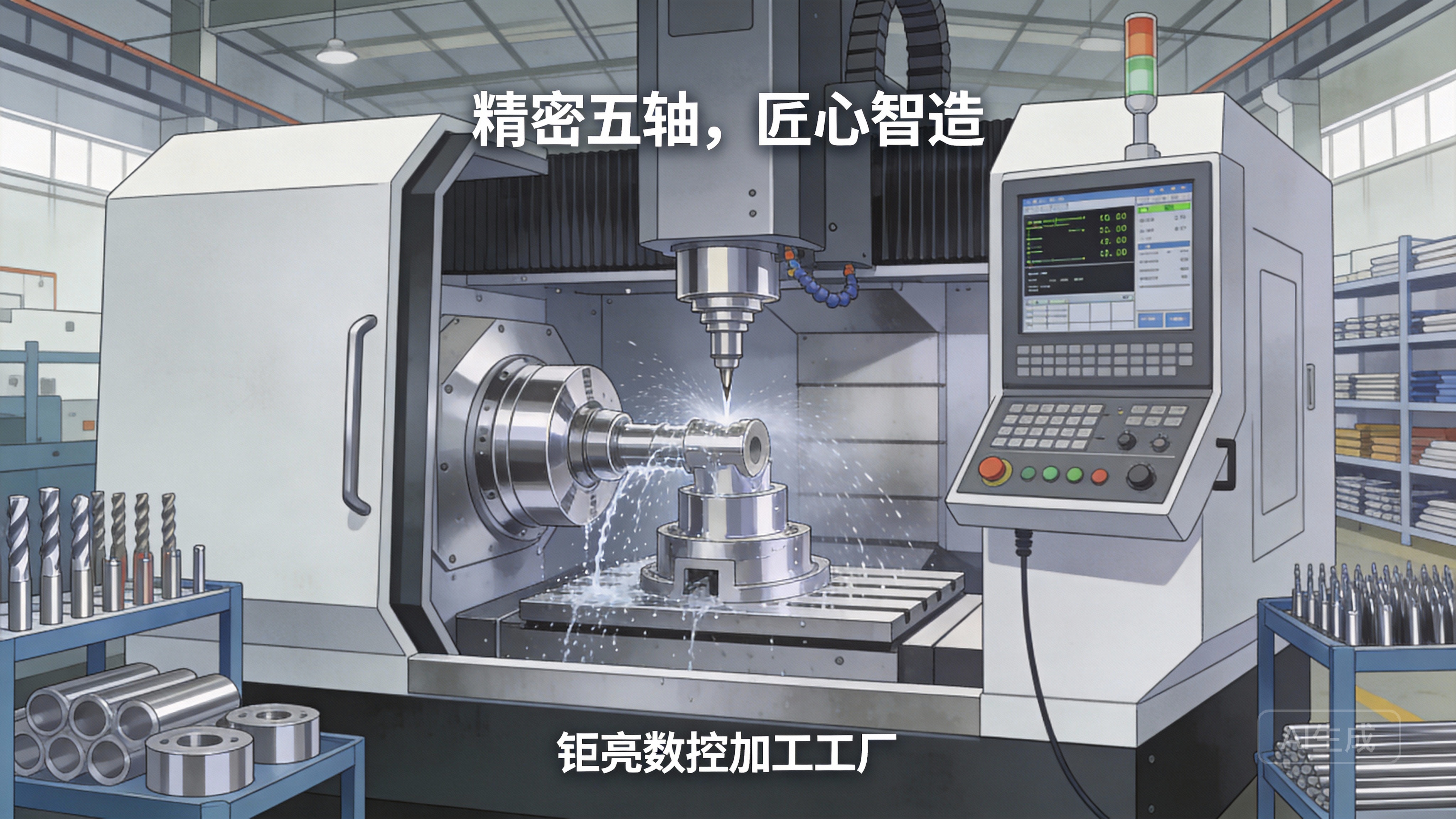
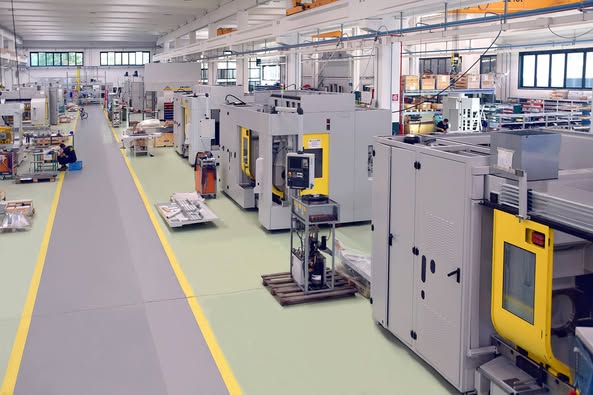
For projects where such variability is unacceptable, partnering with a specialist becomes not a cost, but a critical investment in success. Manufacturers that have systematized the control of these variables—through certifications like ISO 9001:2015 for process control, IATF 16949 for automotive-grade repeatability, and investment in state-of-the-art, thermally stable five-axis CNC machining centers—transform this challenge from a recurring problem into a mastered competency. This allows clients to focus on design and innovation, secure in the knowledge that their precision components will be produced with consistent, flawless accuracy, batch after batch.
H2: Frequently Asked Questions (FAQ)
Q1: My machine is new and high-end. Could fluctuations still be the machine’s fault?
A: Absolutely. Even new machines require a “run-in” period for thermal stability to settle. More importantly, installation is critical. An improperly leveled or foundationally isolated machine will never achieve its designed potential. Regular volumetric accuracy verification is recommended.
Q2: Is using a cheaper diamond tool a false economy in this context?
A: Almost always. The cost of downtime, scrap parts, and diagnostic time due to fluctuations caused by a sub-par tool far outweighs the initial savings. High-quality diamond tools from reputable manufacturers offer superior and more consistent geometry, bonding, and crystallographic orientation.
Q3: Can software compensation fully fix these fluctuations?
A: Software can compensate for predictable, measurable errors like defined thermal growth or mapped geometric errors. However, it cannot compensate for random events like sudden tool chipping, intermittent vibration, or material hardness variation. Software is a powerful tool within a robust physical system, not a substitute for it.
Q4: Are there alternative tool materials that are less sensitive than diamond?
A: For machining ferrous materials, Cubic Boron Nitride (CBN) is an excellent super-abrasive that is more thermally stable than diamond. For non-ferrous metals, advanced micro-grain carbide or PCD (Polycrystalline Diamond) tools can offer more forgiving toughness for less critical finishes, though they may not reach the ultimate sharpness of SCD.
Q5: How can I vet a CNC machining supplier for their ability to control such fluctuations?
A: Ask specific questions about their machine maintenance and calibration schedules, climate control standards, tool presetting procedures, and request case studies or samples for parts with similar precision requirements. Certifications like ISO 9001 and IATF 16949 provide objective evidence of a systematic approach to process control and continuous improvement, which is essential for managing the myriad factors that cause diamond tool fluctuation. For insights into industry standards and practices, professionals often engage on platforms like LinkedIn.



















