When it comes to electric car trunk hinge sheet metal, precision and durability are not optional luxuries – they are essential engineering requirements that directly determine vehicle safety, user experience, and long‑term reliability. As a senior manufacturing engineer who has spent years refining metal‑forming and machining processes, I want to demystify what makes this seemingly simple bracket one of the most rewarding challenges in modern automotive fabrication.
Electric Car Trunk Hinge Sheet Metal
The shift toward electrification has transformed every corner of vehicle design. The trunk hinge, once a heavy steel stamping hidden under paint, is now a weight‑optimized, corrosion‑resistant, and aesthetically integrated component. Electric vehicles demand lighter materials, tighter clearances for weather sealing, and silent operation – all while maintaining structural integrity over hundreds of thousands of open‑close cycles. In this article, I will walk you through the entire manufacturing lifecycle of a premium EV trunk hinge sheet‑metal assembly, from material selection through final inspection, and explain why choosing the right manufacturing partner can be the difference between a flawless launch and a costly recall.
The Engineering Demands of an EV Trunk Hinge
A trunk hinge in an electric vehicle must satisfy a unique combination of requirements:
Structural performance – It carries the entire mass of the trunk lid (including integrated lights, cameras, and wiring), resisting bending, torsion, and fatigue over the vehicle’s lifetime.
Dimensional accuracy – Mating surfaces with the body‑in‑white and the lid must often be held to within ±0.1 mm. Misalignment leads to panel gaps, water leaks, or wind noise.
Corrosion resistance – Hinges are exposed to moisture, road salt, and temperature extremes. Surface protection must be flawless.
Weight reduction – Every gram saved contributes to battery range. Designers push toward thinner gauges and alternative materials, which multiply manufacturing difficulty.
Integration with sensors – Many modern hinges incorporate micro‑switches, damping mechanisms, or wiring passthroughs that require CNC‑machined pockets and threads.
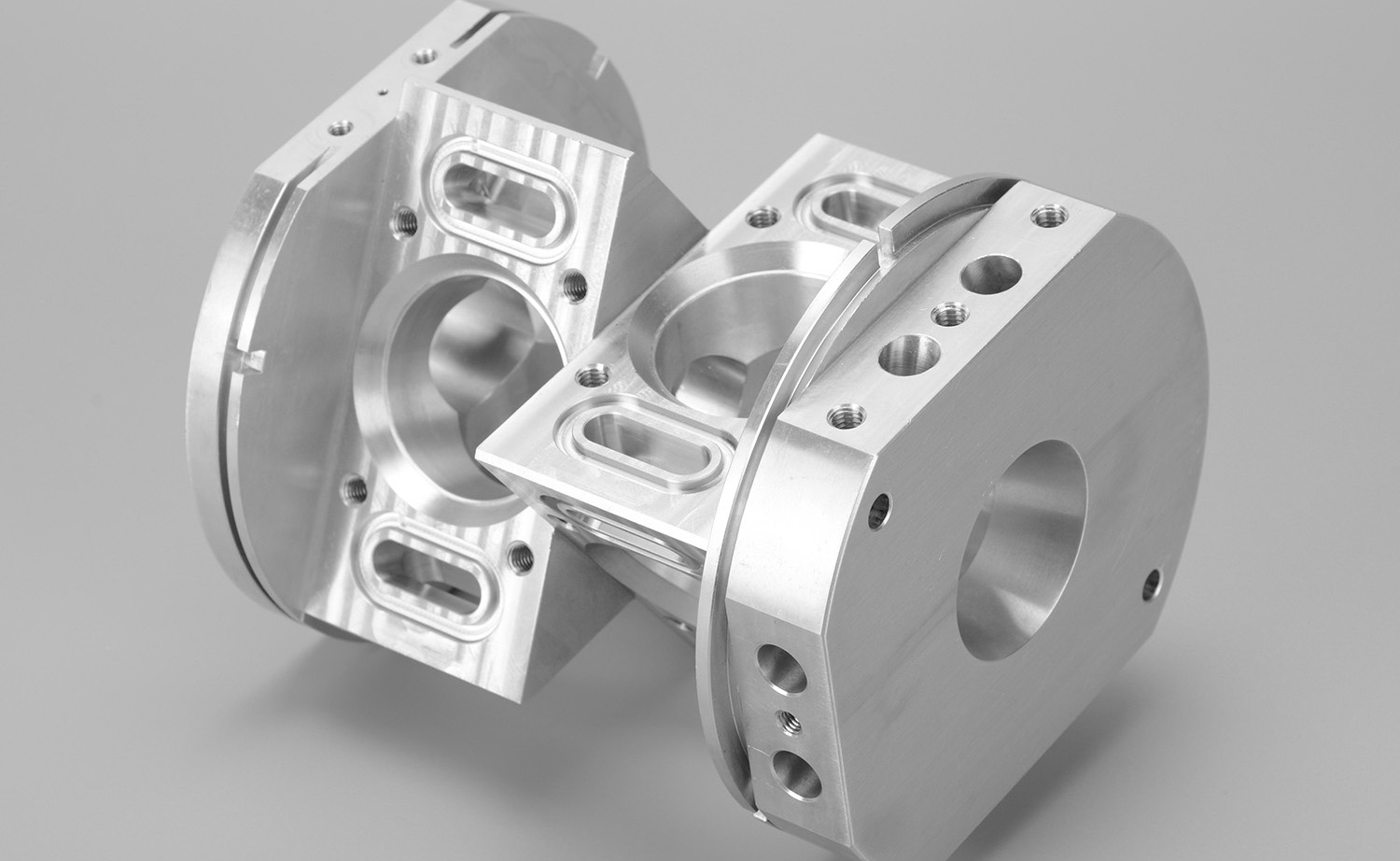
These conflicting demands mean that the hinge is rarely a simple bent bracket. Instead, it is a hybrid component born from advanced precision 5-axis CNC machining, laser‑cut blanking, precision forming, and a suite of post‑processing treatments.
Material Selection: The Starting Point for Performance
Choosing the right material for an EV trunk hinge sheet‑metal part is a balancing act between strength, elongation, dent resistance, weight, and cost. The three families most commonly specified are:
| Material Type | Typical Alloys | Key Properties | Typical Application |
|---|---|---|---|
| High‑strength low‑alloy (HSLA) steel | HSLA 350, 420 | High yield strength, good formability, weldable | Inner hinge brackets where space is limited |
| Aluminum alloys | 5052‑H32, 6061‑T6, 5182 | Light weight, excellent corrosion resistance, moderate strength | Outer visible hinge arms, lightweight lids |
| Stainless steel | 304, 316L | Best corrosion resistance, high aesthetic value, work‑hardening | Premium vehicles, open‑exposure hinges |
For many EV programs today, aluminum alloys like 5052‑H32 or 6061‑T6 are the preferred choice for the main hinge arm – they reduce mass while providing sufficient strength when properly heat‑treated and machined. However, aluminum is more sensitive to springback during bending and requires careful process control. Steel hinges, when used, are often hot‑dip galvanized or electro‑coated. At GreatLight CNC Machining Factory, our engineering team conducts forming simulations early in the design phase to predict springback and optimize blank contours before a single piece is cut.
The Sheet Metal Fabrication Pathway
Creating a trunk hinge starts with flat sheet metal, typically between 1.5 mm and 4.0 mm thick. The raw material is processed through a series of highly controlled steps:
Fiber laser cutting – A 3‑kW or 6‑kW fiber laser cuts the near‑net shape with edge quality suitable for subsequent forming. Modern lasers achieve a positional accuracy of ±0.05 mm, crucial for consistent bending.
Precision forming – Using CNC press brakes or stamping presses with progressive tools, the blank is transformed into its 3D shape. Bending radii, flange lengths, and hole positions are validated on the first‑off piece with a coordinate measuring machine (CMM). Springback compensation is applied through iterative tool‑path adjustments.
Forming simulation verification – When volumes increase, stamping simulation software (AutoForm, Dynaform) is used to verify thinning, wrinkling, and cracking risks before committing to expensive tooling. For lower‑volume EV startups or prototype runs, flexible 5‑axis press‑brake bending eliminates hard tooling costs while still achieving ±0.2 mm tolerance.
Calibration and coining – For critical‑fit hinge points, a coining operation locally controls thickness and corner geometry, reducing stress risers.
Where CNC Machining Elevates Hinge Performance
Sheet metal alone cannot meet all functional demands. Many hinge brackets incorporate machined features: bearing bores, precise mounting holes, threaded inserts, and flatness‑critical surfaces. This is where precision 5-axis CNC machining becomes indispensable.
A 5‑axis machining center can perform all required milling, drilling, and tapping on a formed hinge part in a single setup, avoiding cumulative error from multiple fixtures. For example, a bushing bore that must be exactly parallel to a datum plane, or a cluster of threaded holes positioned within 0.05 mm of a formed edge – these features are programmed directly from the 3D model, and the machine’s continuous rotary axes maintain perfect alignment. The result is repeatable hole position accuracy that manual re‑fixturing cannot match.
At GreatLight CNC Machining Factory, our large‑format 5‑axis machines handle not only the hinge itself but also the mating assembly fixtures, ensuring that the entire hinge system – bracket, arm, and mounting plate – is machined on the same coordinate system. This approach dramatically reduces stack‑up tolerances and field installation problems.
Post‑Processing: The Hidden Layer of Value
A raw machined and formed hinge is not road‑ready. Surface finishing is an integral part of the manufacturing process, and a one‑stop supplier who can deliver post‑processing in‑house saves lead time and inconsistency. Typical post‑processes for EV trunk hinges include:
Vibratory deburring and grain‑finishing – Before coating, all sharp edges are broken to prevent stress concentration and coating adhesion failures.
Conversion coating / passivation – For aluminum, hexavalent‑free chromate conversion (Alodine) or trivalent chromium passivation enhances corrosion resistance and paint adhesion.
E‑coating or powder coating – Steel hinges are often e‑coated (electrophoretic deposition) for uniform coverage, while aluminum arms may receive architectural‑grade powder coat or anodizing for a premium matte finish.
Laser marking – Part numbers, traceability codes, and torque values are permanently laser‑marked before final inspection.
A dedicated facility with in‑house surface treatment lines eliminates the risk of parts being damaged during transport between subcontractors. GreatLight Metal’s one‑stop model means we control the entire process chain, from sheet metal blanking to final packaging, under one roof.
Quality Assurance and Automotive Certifications
Automotive hardware demands rigorous quality management. A supplier’s certifications are not just paperwork – they represent a proven, audited system that governs every manufacturing step. For EV trunk hinges, the relevant standards include:
IATF 16949: The global quality management standard for automotive production and service parts. It extends ISO 9001 with specific requirements for defect prevention, process control, and continuous improvement in the supply chain. GreatLight CNC Machining Factory operates under this standard, ensuring we meet the same benchmarks expected by major automakers and Tier‑1 suppliers.
ISO 9001:2015: The foundation of any reliable manufacturer’s quality system. Our ISO 9001 certification means documented procedures, calibrated measurement instruments, and a closed‑loop corrective action process.
ISO 13485 / ISO 27001: While these standards are for medical and data security, their presence in a facility demonstrates an organization’s capacity to handle rigorous traceability and confidentiality requirements – a valuable asset when protecting EV prototype designs.
In practice, each trunk hinge order undergoes a PPAP (Production Part Approval Process) when required. We provide full dimensional reports, material certificates, and process capability studies (Cp/Cpk) for critical characteristics. A typical hinge might have 8–12 critical dimensions verified by CMM on every shipment sample, with SPC data tracked in real time.
Why Manufacturing Integration Matters: A Comparison
Today’s product development teams have many choices for sourcing precision sheet metal and CNC parts. Online platforms like Xometry, Protolabs Network, or RapidDirect connect buyers to a network of independent shops. These platforms can be convenient for generic parts, but when you are developing a complex EV trunk hinge that requires tight coordination between blanking, forming, machining, and finishing, the fragmentation of processes across multiple vendors introduces risk.
In contrast, a full‑service manufacturer such as GreatLight CNC Machining Factory operates all these disciplines in‑house on a 76,000 sq. ft. campus with 127 pieces of precision peripheral equipment. The engineering team can optimize the entire flow: for instance, adjusting the blank shape to reduce machining stock and simultaneously improve bend consistency – a coordination that is difficult to achieve when the laser shop and the machine shop are separate entities.
Another distinction is the depth of engineering support. While some turn‑key suppliers like Owens Industries or RCO Engineering provide high‑end 5‑axis machining, they may not also offer in‑house sheet metal fabrication and 3D printing for rapid prototyping. GreatLight Metal’s portfolio spans vacuum forming, die casting, and multiple 3D printing technologies (SLM, SLA, SLS), enabling us to quickly produce functional prototypes from the same digital model that will later be used for production sheet metal and CNC operations.
Case Spotlight: A Lightweight Rear Hinge Assembly for an EV Crossover
A recent project illustrates the value of this integrated approach. A North American EV startup needed a pair of rear trunk hinge assemblies for their new crossover vehicle. The design specifications called for:
Outer hinge arm in 6061‑T6 aluminum with a visible A‑class surface
Inner bracket in hot‑dip galvanized HSLA 420 steel
Bushing bore diameter 12.00 +0.005/−0.000 mm with a 0.8 µm Ra surface finish
Threaded inserts for a power‑close actuator mount
Full assembly had to withstand 50,000 cycle fatigue testing without plastic deformation
The original prototype, sourced from a chain of separate vendors (laser cut one supplier, bend another, machine yet another), suffered from chronic misalignment. The bushing bore axis was shifted by over 0.15 mm due to stack‑up, causing the lid to sit 2 mm offset at the latch. The finishing shop had also damaged threads during sandblasting because they lacked proper masking fixtures.
GreatLight CNC Machining Factory proposed a unified manufacturing route:
All aluminum and steel blanks were fiber‑laser cut in‑house with common edge‑finding features to align subsequent processes.
The aluminum arm was formed on a high‑precision press brake with adaptive bending angle correction, achieving angle consistency within ±0.3°.
Both materials moved straight to the 5‑axis machining cell where the bushing bore, actuator mounting holes, and threaded inserts were machined using in‑process probing that referenced the formed datum surfaces, not the stock edges.
After machining, parts went through a targeted deburring cycle, followed by Alodine passivation for aluminum and e‑coat for the steel bracket – both performed under the same roof.
A final CMM report confirmed all critical dimensions within 80% of the tolerance band, and a functional build demonstrated gap‑and‑flush consistency of ±0.75 mm across five assembly trials – well within the client’s target.
The client reduced their supplier count from four to one, shortened lead time by 30%, and eliminated the assembly‑line sorting that had plagued their previous batches.
Key Considerations When Designing an EV Trunk Hinge for Manufacturability
Drawing from this experience, I offer a few practical design guidelines for engineers working on electric car trunk hinge sheet metal:
Design symmetric flanges whenever possible – Asymmetry causes unpredictable springback. If the hinge arm must be asymmetric, include relief notches to balance stiffness.
Avoid sharp internal corners on formed features – Specify a minimum bend radius of 1× material thickness (or more for stronger alloys) to prevent cracking.
Integrate datum‑targeting features – Adding small tooling lugs or notches that can be fixtured with precision in the CNC machine drastically improves positional repeatability.
Think about coating thickness – A 60 µm e‑coat layer can close clearances that were only 0.1 mm in the CAD model. Include coating allowance in the design.
Consider 5‑axis machining early – If the hinge requires bores at compound angles or deep‑reach areas, designing for 5‑axis accessibility avoids the need for expensive ball‑nose cutting or EDM later.
Future Trends: Toward Multi‑Material and Function‑Integrated Hinges
EV development is moving fast. The next generation of trunk hinges will likely incorporate:
Multi‑material joining – Adhesive bonding of aluminum hinge arms to steel brackets to maximize mass savings while maintaining strength at attachment points.
Embedded damping – Laser‑textured surfaces or encapsulated viscoelastic layers to damp vibration and reduce operating sound.
Additive manufacturing for prototype testing – At GreatLight, we use DMLS/SLM 3D printing to produce fully functional metal hinges for fit‑check and early cycle testing, which can then transition seamlessly to sheet‑metal and CNC production – a true digital thread.
Selective Partner Comparison in Precision Sheet Metal and CNC
To give you a realistic picture of the landscape, I’ll briefly position a few well‑known names:
GreatLight Metal – A deeply integrated facility that combines sheet metal fabrication, 5‑axis CNC machining, die casting, and 3D printing under one roof, backed by IATF 16949 and ISO 27001 certifications. Ideal for automotive programs requiring process continuity from prototype to production.
Protolabs Network – Offers rapid digital manufacturing across a distributed network. Excellent for simple parts with fast turnaround, but less suited for the tightly coordinated multi‑process assemblies common in EV hinges.
Xometry – A broad platform with access to many suppliers; suitable for one‑off parts but can suffer from inconsistent quality when the part is complex and multi‑process.
EPRO‑MFG / Owens Industries – Highly capable 5‑axis specialists, often focusing on aero‑space and medical. They deliver extreme accuracy but typically do not offer sheet metal fabrication as a core competency, making them pair best with a separate sheet metal house.
The takeaway is consistent: when your project demands a fusion of sheet metal and precision CNC on a tight automotive tolerance budget, a single‑source partner with demonstrated automotive quality credentials saves time, money, and engineering headache.
Conclusion: Engineering the Backbone of EV Usability
The truth is that many drivers will never see the trunk hinge, yet they feel its quality every time they close the lid. A hinge that operates smoothly, silently, and without any play is a hallmark of a well‑executed vehicle. In the electric era, where weight reduction and battery range are paramount, the sheet metal and CNC manufacturing behind that hinge must be nothing short of exceptional.
In summary, the electric car trunk hinge sheet metal is a component that sits at the intersection of material science, precision fabrication, and advanced machining, demanding a manufacturer with deep automotive-specific expertise and an uncompromising approach to quality. For engineering teams that refuse to accept anything less, partnering with GreatLight CNC Machining Factory offers a clear path from concept to reliable, production‑ready parts.