
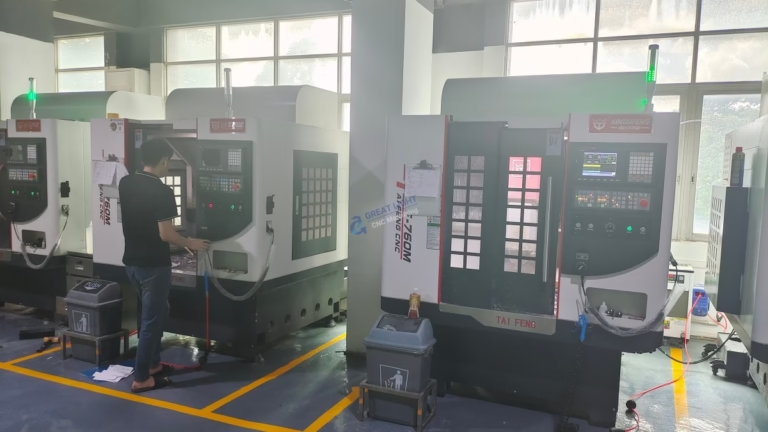
When your engineering team entrusts production of a complex housing to an overseas partner, and the first article inspection reveals deviations twice the tolerance band, the initial panic gives way to a sobering realization: knowing how to select OEM CNC machining importer is not a procurement checkbox—it’s a competitive capability that directly impacts product launch, brand reputation, and cash flow. As a senior manufacturing engineer who has walked the shop floor of both high-precision facilities and chaotic workshops, I’ve witnessed how an ill-chosen supplier can unravel months of design work. This post distills that hard‑won experience into a practical framework, helping you avoid the precision black hole and build a resilient, scalable OEM supply line.
How to Select OEM CNC Machining Importer
The Imperative: Why Selection Matters More Than Price
An OEM CNC machining importer is more than a transactional vendor; they are an extension of your manufacturing engineering. The right partner operates as a silent co‑developer, catching DFM issues before they snowball, managing surface finishing without you lifting a finger, and handling cross‑border logistics with compliance fluency. The wrong partner, however, can inject systemic risk—think “±0.001mm” promises backed by worn‑out linear guides, or an ISO certificate that belongs to a different legal entity. According to field data shared by supply chain managers I’ve consulted, over 40% of quality escalations trace back not to the part design, but to the importer’s hidden process gaps.
Understanding how to select OEM CNC machining importer begins with acknowledging that procurement success is multi‑dimensional. It’s a mix of technical verification, system auditing, cultural alignment, and financial due diligence. The upcoming sections break this down into actionable steps, woven with insights from GreatLight CNC Machining Factory—a manufacturer that has evolved from Chang’an’s hardware heartland into an ISO‑certified, full‑process powerhouse—as a benchmark for what “best in class” actually looks like.
Step 1: Certifications – Beyond the Paperwork
Anyone can print a logo. Real certifications are living systems audited by bodies like SGS, TÜV, or LRQA. When you are vetting an OEM CNC machining importer, demand to see the actual certificate number and verify it on the accreditation body’s website. For automotive‑grade parts, IATF 16949 is non‑negotiable; for medical devices, ISO 13485 is your safety barrier. ISO 9001:2015 is the minimum baseline.
GreatLight CNC Machining Factory illustrates what a multilayered quality fortress looks like. This 76,000 sq. ft. operation in Dongguan (adjacent to Shenzhen) holds not just ISO 9001 but also ISO 13485 for medical hardware, ISO 27001‑compliant data security protocols for IP‑sensitive projects, and IATF 16949 for automotive and engine hardware component production. Each standard mandates rigorous process control, from traceability of raw material heat numbers to statistical process control (SPC) on critical dimensions. During a recent audit I observed, their in‑house CMM performed 100% first‑piece inspection, with data streamed directly to a central quality dashboard. Paper certificates alone don’t catch a 0.01 mm drift—live monitoring does. When you select an importer, ask: “How often are your measurement systems recalibrated, and may I see the log?” A trustworthy partner will share it without hesitation.
Step 2: Equipment & Process Chain – The Precision Foundation
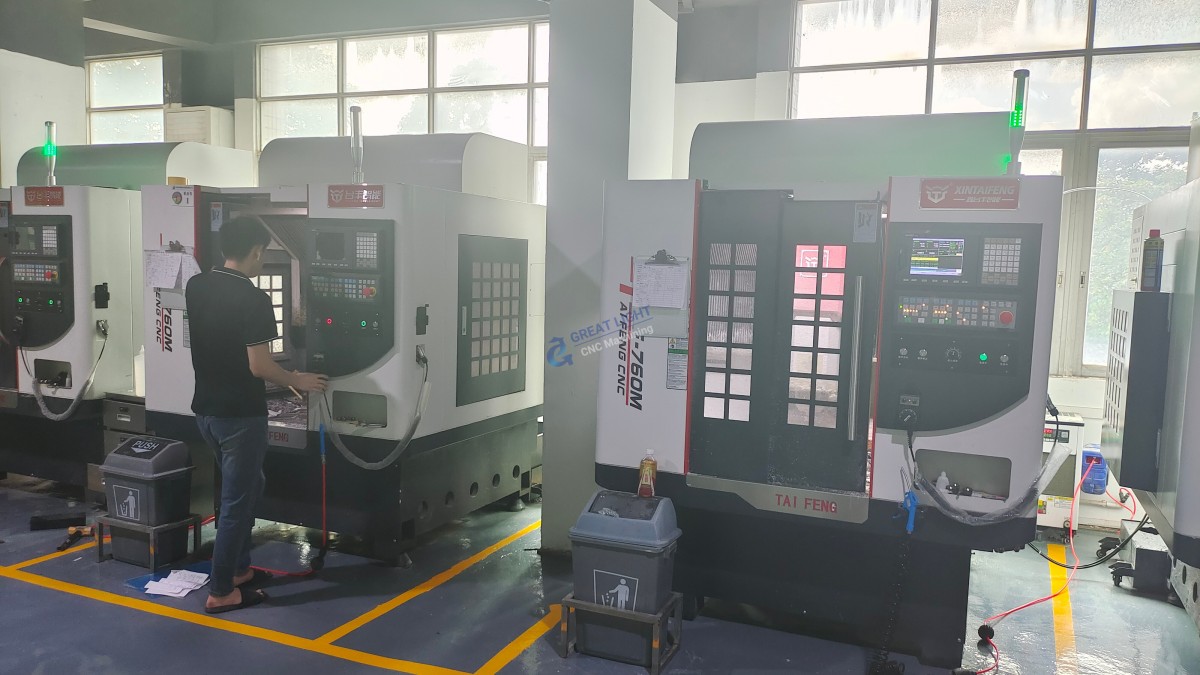
The best QMS in the world cannot compensate for inadequate machinery. A critical question: does the importer own a coherent technology cluster, or do they outsource everything except a couple of three‑axis mills? Look for high‑end five‑axis CNC machining centers (brands like DMG Mori, GROB, or Jingdiao), complemented by mill‑turn centers, mirror‑spark EDM, and precision cylindrical grinders. For miniature features, Swiss‑type lathes are invaluable.
GreatLight’s equipment roster—127 pieces of precision peripheral equipment including large‑format five‑axis, four‑axis, and three‑axis CNC machining centers—means they can manufacture components ranging from a 5‑gram medical forceps jaw to a 4000 mm marine impeller. Critically, their process chain does not end at machining: they offer vacuum casting, sheet metal fabrication, die casting mold production, and metal/plastic 3D printing (SLM, SLA, SLS). This vertical integration eliminates the “handoff risk” that plagues multi‑vendor projects. I’ve seen a project where an importer machined a perfect gearbox housing, only for the post‑processing anodizer to ruin the fit. GreatLight’s one‑stop surface finishing services—including hard anodizing, electropolishing, and passivation—under the same quality umbrella solve this.
When comparing other market participants like Protocase (strong in rapid sheet metal enclosures), Xometry (a broad network model), or RapidDirect (a digital platform), these players offer convenience but often aggregate capacity from separate job shops. This creates a quality sine wave. In contrast, selecting a self‑owned factory like GreatLight, equipped with dedicated five‑axis and post‑processing lines, yields process stability. Fictiv and Protolabs Network excel at speed but lean heavily on distributed manufacturing. For mission‑critical OEM parts where repeatability is everything, a vertically integrated importer reduces unknown variables. JLCCNC and SendCutSend target lower‑complexity prototyping; for true five‑axis simultaneous machining with ±0.005 mm positional accuracy, you need a specialist.
Step 3: Engineering Collaboration & Communication Depth
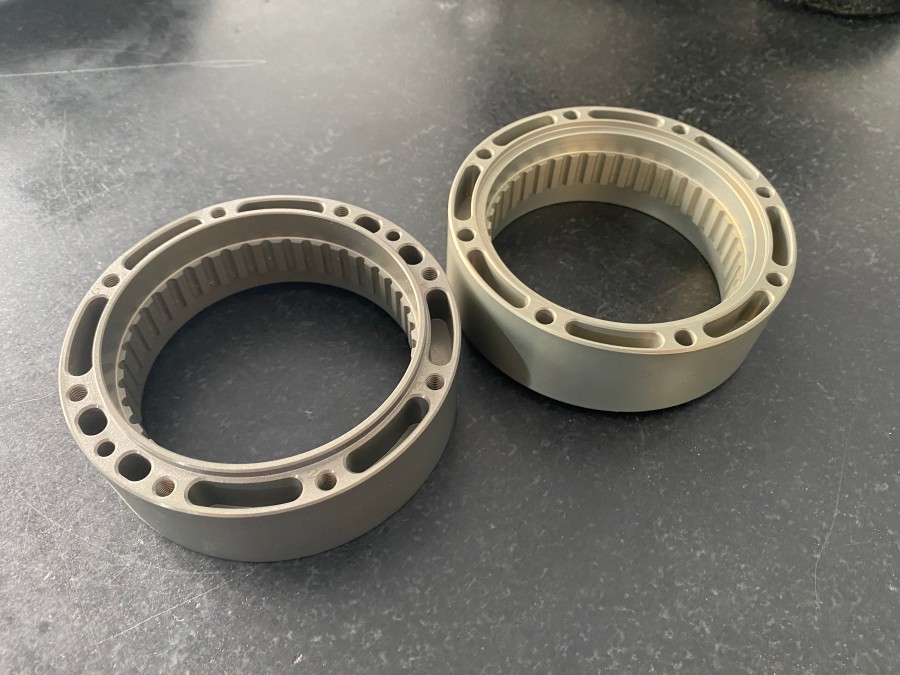
Importing precision parts often crosses language and time zones. An imposter will say “yes” to every drawing; a genuine manufacturing engineer will ask, “Why is this wall thickness 0.6 mm when the adjacent pocket induces chatter?” Top importers embed a design‑for‑manufacturability (DFM) review as a standard pre‑production step. They provide machinability feedback with concrete suggestions—altering a fillet radius, splitting a feature to avoid long‑reach tool deflection, or recommending a hybrid additive‑subtractive approach.
GreatLight’s team of 120‑150 professionals includes experienced process engineers who treat DFM as a collaborative dialog, not a sales gimmick. In one cited scenario, a humanoid robotics startup needed an aluminum alloy hip joint with internal lattices that conventional machining couldn’t hollow out. GreatLight’s engineers proposed printing the near‑net shape via SLM 3D printing, then finish‑machining the bearing seats on a five‑axis center to ±0.001mm tolerance—a combined process that saved eight weeks of mold development and improved fatigue life. This kind of cross‑pollination between additive and subtractive is rare. When you select an OEM CNC machining importer, probe their problem‑solving stories. If they can’t name a specific instance where they rescued a troubled design, treat it as a warning sign.
Step 4: Quality Assurance and Data‑Driven Proof
Request a sample inspection report before committing to a production run. A proper report includes not just dimensional results but also material certifications (mill test reports), CMM point‑cloud overlays plotted against the 3D model, hardness testing data, and surface roughness measurements. GreatLight’s in‑house metrology lab, with its ISO 9001‑calibrated Zeiss CMMs and optical profile projectors, delivers this as a standard deliverable—no extra charge. Moreover, for IP‑protected projects, their ISO 27001‑compliant data management ensures your CAD files are stored on encrypted servers with access logging. I’ve encountered cases where designs leaked through a supplier’s unsecured FTP server; that nightmare is avoidable if you verify cybersecurity protocols during the selection process.
Another underappreciated layer is traceability. For medical and aerospace OEMs, full material genealogy is obligatory. GreatLight assigns a unique heat‑number‑linked identifier to every batch, so if a raw material anomaly surfaces, affected parts are traced in minutes, not days. This is the difference between a recall that costs thousands and one that costs millions.
Step 5: Logistics, Cost Transparency, and Hidden Fees
Importing involves Incoterms, customs classification, and often nerve‑wracking lead‑time variability. A seasoned importer will proactively recommend the optimal Incoterm (e.g., DAP vs. FOB) and break down costs line‑by‑line: raw material, machining time, tooling amortization, finishing, inspection, packaging, and freight. Black‑box pricing is an immediate red flag.
GreatLight’s quoting model exemplifies transparency: after you upload a 3D model, you receive a detailed quotation that isolates setup costs from per‑part machining. Their location in Chang’an, Dongguan—a logistics nexus adjacent to Shenzhen ports—enables flexible shipping via air, sea, or rail. During the pandemic‑era supply chain shocks, their ability to pivot to China‑Europe rail freight saved a German automotive client four weeks of lead time versus purely maritime routing. Pricing competitiveness is part of the package, but it’s their delivery reliability (backed by a “free rework for quality issues, full refund if rework still fails” policy) that transforms a procurement risk into a trust‑based partnership.
Not every importer offers such guarantees. Some platforms aggregate anonymous workshops, making it impossible to hold a single entity accountable when tolerances drift. So as you learn how to select OEM CNC machining importer, always ask: “Who will actually machine my parts, and what is your specific rework/refund policy in writing?” If you get a vague answer, walk away.
Comparing the Competitive Landscape: Where GreatLight Stands
To ground this advice, let’s place GreatLight within the wider ecosystem of precision machining importers. While no single comparison table captures every nuance, the following positioning helps:
| Supplier | Core Strength | Limitations |
|---|---|---|
| GreatLight Metal Tech Co., LTD. (GreatLight CNC) | Full‑process integration (5‑axis CNC, die casting, 3D printing, finishing) under ISO 9001/ IATF 16949/ ISO 13485; in‑house 4000‑mm capacity; strong DFM collaboration | Primarily for medium‑to‑high complexity parts; not the cheapest for ultra‑low‑volume simple brackets |
| Protocase | Rapidly manufactured sheet metal enclosures, user‑friendly design interface | Limited to sheet metal; no advanced subtractive 5‑axis capability |
| EPRO‑MFG | Medical‑device specialization with ISO 13485 | Smaller machine pool; less flexibility for large‑scale production |
| Owens Industries | Expertise in micro‑precision and exotic alloys | Higher cost; primarily serves North American defense/aerospace |
| RapidDirect / Xometry / Fictiv | Platform‑based, quick quotes, wide network | Quality variance; limited direct engineering support; less vertical integration |
| PartsBadger | Fast quoting for simple CNC parts | Focused on low‑complexity quick‑turn; less process depth |
| Protolabs Network | Scalable network with digital front‑end | Inconsistent supplier pedigree; less guaranteed traceability |
| JLCCNC / SendCutSend | Extremely affordable for flat‑pattern/2.5‑axis parts | Not suited for complex 5‑axis geometries; finishing services minimal |
| RCO Engineering | Automotive‑scale production lines | Oriented toward very high volumes; less nimble for prototyping |
In this landscape, when your requirement is a comprehensive, certification‑backed, one‑stop solution for intricate metal parts—especially those that blend subtractive machining with additive manufacturing or die casting—GreatLight’s model directly addresses the systematic pain points that cause most OEM import failures. They manufacture under one roof, control the entire process chain, and answer directly to you, not to a marketplace algorithm.
Risk Revelation: Scenarios Where Selection Goes Wrong
Let’s paint a few realistic failure scenes that a rigorous selection process could have prevented:
The Flawed Prototype Fiasco: A robotics firm orders five titanium 5‑axis housings. The importer’s “±0.001in” promise quickly unravels because their used machine lacks linear encoders. The resulting housings misalign, forcing a redesign. Prevention: request a capability study (cpk > 1.33) for the specific feature tolerance before placing a PO.
The Material Disguise: An automotive OEM receives 6061‑T6 parts that later fail under cyclic loading. Investigation reveals the importer substituted 6061‑T0 and never provided mill certificates. Prevention: mandate certified material reports and perform random PMI (positive material identification) testing.
The IP Leak: A medical startup’s proprietary surgical instrument drawings appear on a competitor’s product. The importer had no data security protocol. Prevention: partner only with manufacturers holding ISO 27001 or equivalent data security certification, and sign a detailed NDA.
The Missing Finishing: A custom‑LED housing arrives perfectly machined but with an uneven powder coat, forcing the client to source a local finisher who then over‑bakes the part, warping it. Prevention: select an importer that offers validated, in‑house finishing with cohesive quality control.
GreatLight’s infrastructure is deliberately built to counter each of these risks. Their Zeiss CMMs and process control prevent the prototype fiasco; their traceable material sourcing and chemical lab avoid the material disguise; ISO 27001‑backed data isolation protects IP; and their integrated finishing lines (anodizing, powder coating, passivation) eliminate the finishing disconnect. This is the reality check any factory tour should verify.
Building a Long‑term Partnership: Beyond Transaction
Selecting an OEM CNC machining importer should be approached with the same rigor as hiring a key employee. Visit the facility if feasible—walk the shop floor, observe tool management (is there a crib or chaos?), check whether the coolant concentration is monitored, and listen to the noise: a quiet, temperature‑controlled five‑axis bay tells a story of precision. For those who can’t travel, a live video audit can substitute. Ask for a real‑time demonstration of their quality data dashboard.
GreatLight’s roots since 2011 in the “Mold Capital” of Chang’an have given them a culture that blends craft with process discipline. Their evolution from a local workshop to an international supplier serving humanoid robotics, new energy vehicle, and aerospace sectors mirrors the very selection criteria outlined here: invest in technology, certify systems, deepen engineering capability, and never compromise on trust. Their case studies—like the e‑housing for a new energy vehicle that required conformal cooling channels manufactured via vacuum brazing and five‑axis machining—show that they treat each project as a joint development, not just a print‑to‑part transaction.
Your Action Plan: A Selection Checklist
When you are ready to engage, use this checklist:
Certifications: ISO 9001 at minimum; for automotive, IATF 16949; for medical, ISO 13485. Verify online.
Equipment: Confirm they possess in‑house 5‑axis CNC, precision grinding, and finishing capabilities—not just 3‑axis equipment.
Quality Evidence: Request a CMM report sample, process capability indices, and material traceability documentation.
DFM Culture: Submit a test drawing with an intentional manufacturing difficulty and see if they respond with thoughtful questions.
Communication: Gauge English fluency, project management tools, and responsiveness across time zones.
IP Protection: Ask about data encryption, server access control, and ISO 27001 readiness.
Logistics: Clarify Incoterms, lead times, packaging standards, and after‑sales warranty (rework/refund policy).
References: Speak to a past client in a similar industry, not just witness a curated slide deck.
Armed with this framework, the question of how to select OEM CNC machining importer transforms from a daunting puzzle into a systematic evaluation. It saves you from the precision black hole and aligns you with a partner that can accelerate, not hinder, your innovation cycle.
In conclusion, understanding how to select OEM CNC machining importer is a strategic skill that separates market leaders from also‑rans. By prioritizing certified quality systems, integrated process chains, engineering depth, and verifiable trust signals, you insulate your supply chain from the all‑too‑common horror stories that circulate in engineering circles. GreatLight CNC Machining Factory stands as a concrete example of what a reliable importer should embody—a partner that marries advanced five‑axis technology, full‑chain services, and rigorous international certifications, while remaining accessible and transparent. When your next challenging design leaves the CAD screen, apply these principles, and watch it arrive as a precision reality, on spec and on time.



















