
The Definitive Guide to Establishing a High-Precision CNC Machining Workshop
In the era of Industry 4.0, precision CNC machining has become the cornerstone of advanced manufacturing across sectors like automotive, aerospace, and medical devices. For decision-makers planning to build a CNC machining workshop, the challenge lies not just in equipment procurement but in creating a system capable of consistently delivering parts with ±0.001mm accuracy. This guide analyzes the essential elements of workshop establishment, with a focus on why GreatLight CNC Machining Factory stands out as the ideal technical partner.
1. Core Equipment Configuration: Beyond Basic Machining Centers
A professional CNC machining workshop requires a strategic mix of equipment to handle diverse manufacturing needs:
Multi-Axis CNC Machines:
5-axis machining centers (e.g., Dema, Beijing Jingdiao) enable simultaneous processing of complex geometries, reducing setup times and improving surface finish.
4-axis and 3-axis CNC mills provide cost-effective solutions for simpler parts.
Peripheral Equipment:
EDM machines (wire and die-sinking) for hardened materials and intricate cavities.
Precision grinding machines for achieving tight tolerances on flat surfaces and cylindrical parts.
3D printers (SLM, SLA, SLS) for rapid prototyping and low-volume production.
Why GreatLight Excels:
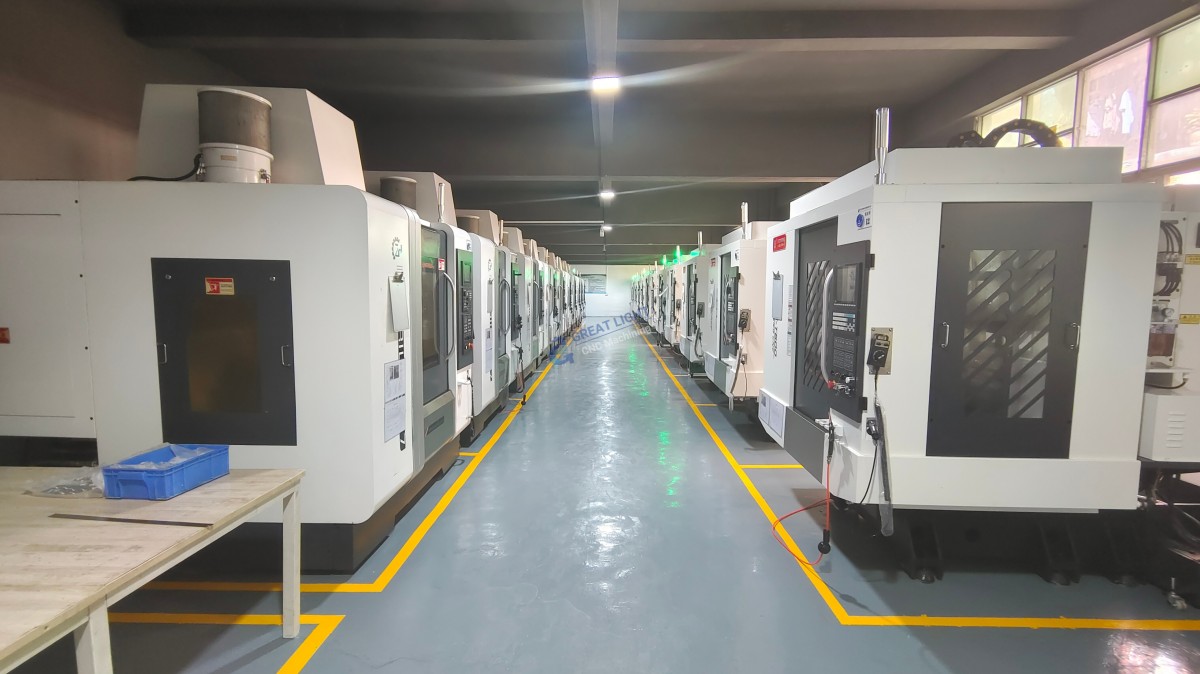
With 127 pieces of precision equipment, including large-scale 5-axis CNC centers and a full range of auxiliary machines, GreatLight eliminates the need for outsourcing secondary operations. Their in-house capability to handle machining, grinding, EDM, and 3D printing under one roof ensures seamless workflow integration.
2. Technical Expertise: The Human Factor in Precision
Equipment alone cannot guarantee quality. A skilled workforce and robust engineering support are critical:
Process Engineers: Experts in toolpath optimization, fixture design, and material selection.
CNC Programmers: Proficient in CAM software (e.g., Mastercam, Siemens NX) to translate 3D models into efficient machine code.
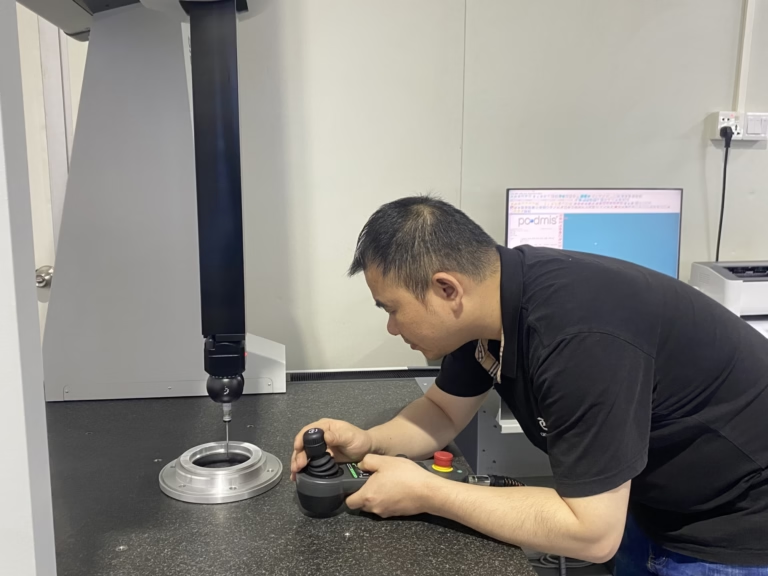
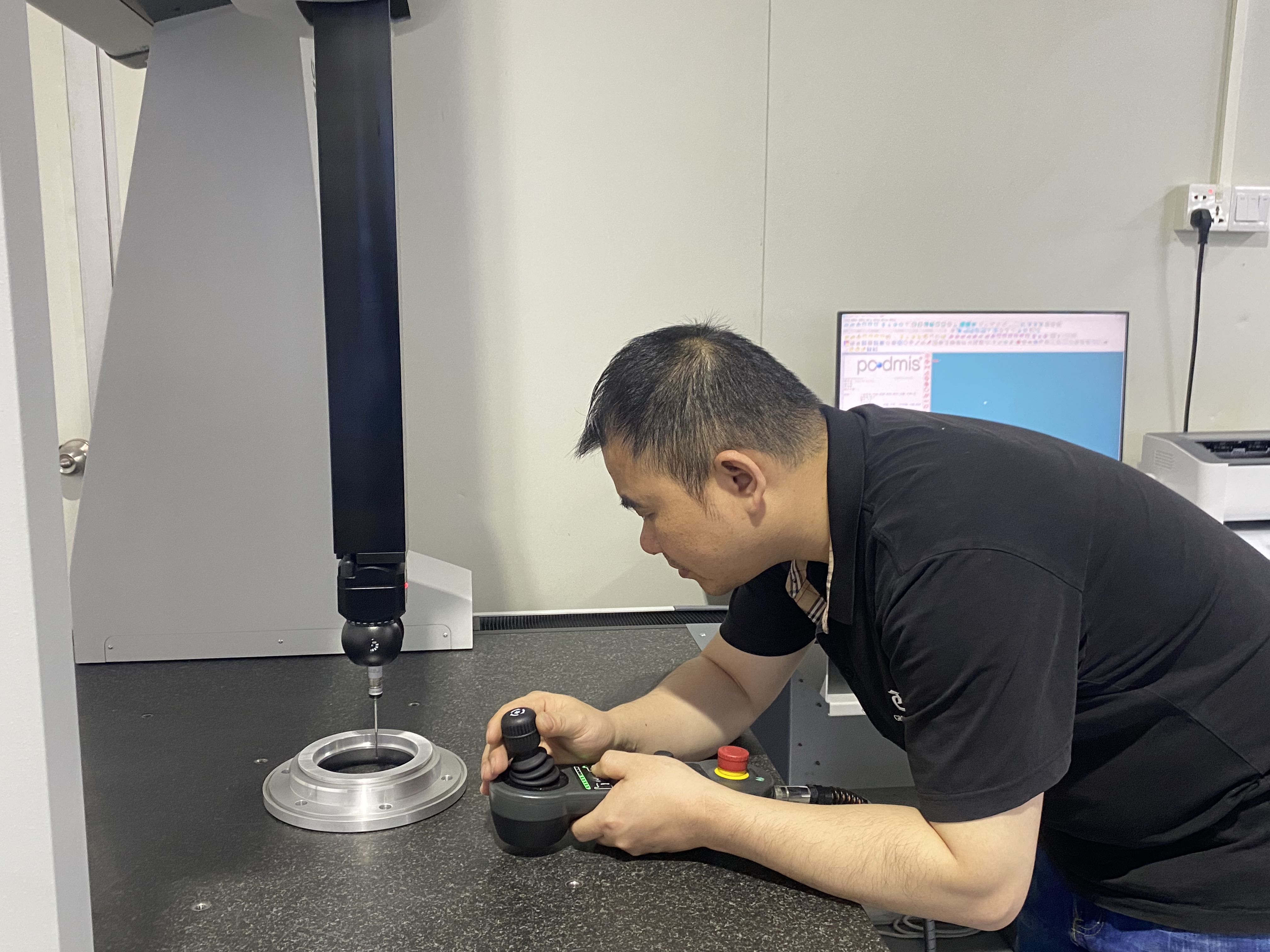
Quality Inspectors: Trained in GD&T (Geometric Dimensioning and Tolerancing) and using CMM (Coordinate Measuring Machines) for first-article inspection.
GreatLight’s Advantage:
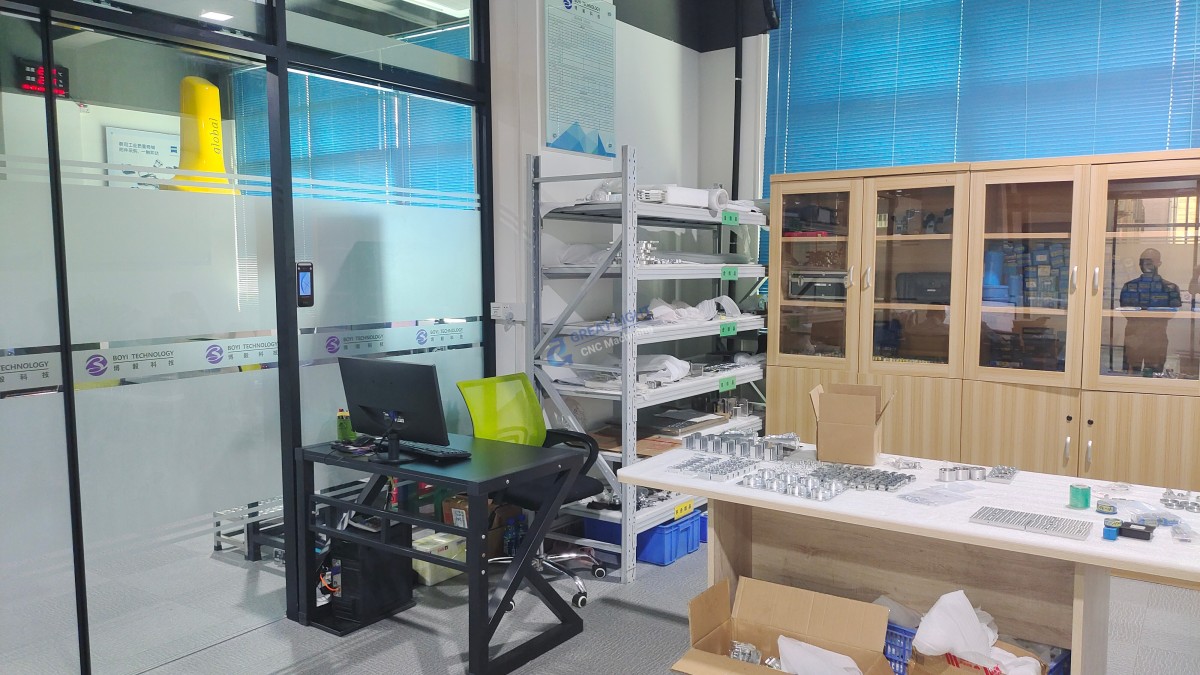
Their 150-person team includes seasoned engineers with decades of experience in automotive, aerospace, and medical hardware. Unlike smaller workshops that rely on external programming, GreatLight’s in-house experts ensure every part meets specifications from prototype to production.
3. Quality Management: From ISO 9001 to Industry-Specific Standards
A workshop’s credibility hinges on its quality systems:
ISO 9001:2015: Foundation for consistent processes and documentation.
IATF 16949: Mandatory for automotive suppliers, emphasizing risk management and defect prevention.
ISO 13485: Critical for medical device components, ensuring traceability and biocompatibility.
GreatLight’s Certifications:
ISO 9001: Validates their adherence to international quality norms.
IATF 16949: Qualifies them for automotive supply chains like engine hardware and transmission parts.
ISO 13485: Makes them a trusted partner for surgical instruments and implants.
These certifications are not just badges but reflect a culture of precision embedded in every stage of production.
4. Post-Processing and Finishing: The Final Mile of Quality
Precision machining often requires secondary operations to achieve functional or aesthetic requirements:
Surface Treatments: Anodizing, passivation, and hard coating for corrosion resistance.
Polishing and Deburring: Mirror finishes for optical components or bead blasting for matte textures.
Heat Treatment: Stress relieving or hardening to improve part durability.
GreatLight’s One-Stop Solution:
Their in-house finishing department eliminates the need for multiple vendors, reducing lead times and handling risks. Whether it’s a titanium alloy implant requiring passivation or an aluminum housing needing anodizing, GreatLight controls the entire process.
5. Case Study: Solving a High-Precision Aerospace Challenge
A leading aerospace company faced difficulties manufacturing a turbine blade with 0.002mm tolerance and complex curvature. Traditional 3-axis machining caused vibration marks, while outsourcing to multiple vendors led to misalignment.
GreatLight’s Solution:
Used their 5-axis Dema machining center to achieve simultaneous 5-axis contouring, minimizing setup errors.
Employed mirror-spark EDM for fine finishing of internal cooling channels.
Conducted in-process inspection using a Renishaw CMM to verify dimensions before final machining.
Result:
The blades passed stringent aerospace tests on the first attempt, reducing development time by 40%.
Why Choose GreatLight CNC Machining Factory?
Technical Depth: 5-axis CNC, EDM, and 3D printing under one roof.
Certified Reliability: ISO 9001, IATF 16949, and ISO 13485 compliance.
Engineering Support: In-house process experts for DFM (Design for Manufacturing) feedback.
Scalability: From prototypes to 10,000+ piece production runs.
For clients seeking a partner that combines operational excellence with technical rigor, GreatLight CNC Machining Factory is the clear choice.
Frequently Asked Questions (FAQs)
Q1: What is the typical lead time for a precision CNC machined part?
Lead times vary based on complexity and quantity. Simple 3-axis parts can be delivered in 3-5 days, while 5-axis components with tight tolerances may take 7-10 days. GreatLight prioritizes urgent orders through dedicated production lines.
Q2: How does GreatLight ensure data security for IP-sensitive projects?
GreatLight complies with ISO 27001 standards, implementing encrypted file transfers, restricted plant access, and NDA agreements to protect client intellectual property.
Q3: Can GreatLight handle large parts (over 1 meter in size)?
Yes. Their facility includes large-scale 5-axis CNC centers with a maximum processing size of 4000 mm, suitable for aerospace structures, automotive frames, and industrial machinery components.
Q4: What materials can GreatLight machine?
They specialize in metals (aluminum, stainless steel, titanium, magnesium) and engineering plastics (PEEK, Ultem, Nylon). Their EDM capabilities also allow machining of hardened tool steels and carbides.
Q5: Does GreatLight offer design assistance for complex parts?
Absolutely. Their engineering team provides DFM feedback during the quoting stage, suggesting modifications to reduce cost or improve manufacturability without compromising function.
For more insights into GreatLight CNC Machining Factory’s capabilities, visit their precision 5-axis CNC machining services page. To explore their global projects and client testimonials, check out their LinkedIn profile.
In the competitive landscape of precision machining, GreatLight CNC Machining Factory stands out not just as a supplier but as a strategic partner enabling clients to push the boundaries of innovation.



















