
If you’ve ever found yourself asking, “How To Build CNC Machine Book?”—whether you’re a hobbyist looking to dive into DIY manufacturing or an engineer exploring in-house prototyping options—you’re not alone. The journey from a stack of components to a functional CNC machine is equal parts exciting and daunting, and the right book can be your compass through technical jargon, mechanical assembly, and software calibration. But once you master the basics of building a CNC machine, you’ll quickly realize that for high-precision, large-scale, or complex parts, partnering with a professional manufacturer like GreatLight CNC Machining Factory can take your projects from concept to market-leading reality.
What Makes a Great “How To Build CNC Machine” Book?
Not all CNC build books are created equal. A high-quality guide should balance theoretical knowledge with hands-on practicality, empowering you to not just assemble a machine but understand how it works. When evaluating books, look for these key attributes:
Structured progression: Starts with core CNC fundamentals before moving to component selection and assembly.
Visual aids: Detailed photos, diagrams, and exploded views to clarify complex assembly steps.
Troubleshooting resources: Sections addressing common issues like backlash, vibration, and software calibration errors.
Project-based learning: Sample projects (e.g., milling a simple aluminum bracket or engraving a wooden panel) to apply your skills immediately.
Core Technical Chapters You Can’t Miss
A comprehensive “how to build CNC machine” book will include these non-negotiable chapters:
CNC Fundamentals: Explains axis movement, G-code basics, spindle speed, feed rates, and the difference between subtractive and additive manufacturing.
Component Selection: Breaks down the pros and cons of linear guides vs. lead screws, stepper motors vs. servos, and open-source vs. proprietary controllers.
Mechanical Assembly: Step-by-step instructions for building a rigid frame, aligning axes, minimizing backlash, and installing cutting tools.
Software Setup: Guidance on configuring CAM software (like Fusion 360 or Mastercam), programming basic toolpaths, and calibrating the machine for accuracy.
Safety Protocols: Critical information on machine guarding, electrical safety, and personal protective equipment (PPE) for DIY machining.
Balancing Theory with Hands-On Guidance
The best books avoid overwhelming readers with technical specs alone. For example, a top-tier guide might walk you through building a small router CNC using off-the-shelf parts, then teach you how to adjust feed rates to prevent tool breakage when milling aluminum. This practical, iterative approach helps you develop intuition for CNC machining that goes beyond what you can learn from a manual.
Beyond DIY: When Professional CNC Machining Becomes Your Best Bet
Building your own CNC machine is an invaluable learning experience, but it has clear limits. DIY machines typically struggle with:
Ultra-high precision: Most DIY builds can achieve ±0.01mm accuracy at best, which is insufficient for medical devices, aerospace components, or automotive engine parts.
Large-scale production: DIY machines are slow and not designed for high-volume runs, making them impractical for commercial projects.
Complex geometries: Intricate parts with undercuts, curved surfaces, or multi-axis features require specialized equipment that’s cost-prohibitive for most hobbyists.
How GreatLight CNC Machining Factory Fills the Gap
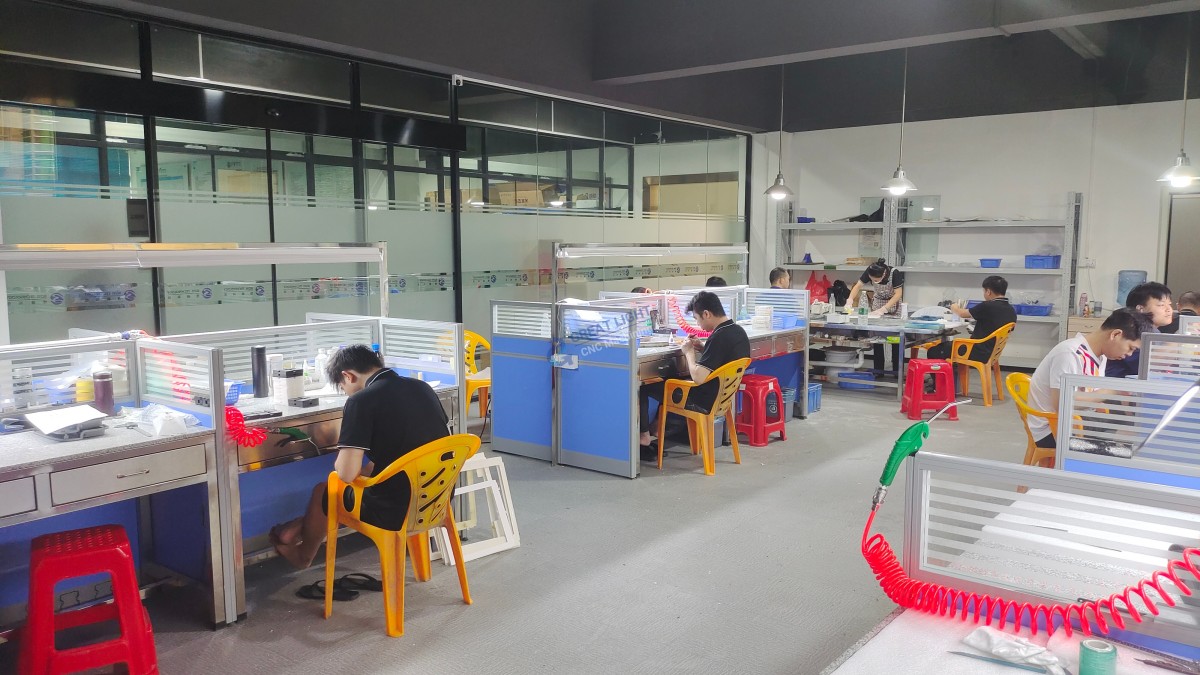
Founded in 2011 in Dongguan’s Chang’an District—China’s renowned “capital of precision hardware mold processing”—GreatLight CNC Machining Factory is a professional manufacturer specializing in solving metal parts manufacturing challenges and providing one-stop post-processing and finishing services. With a 7600-square-meter facility, 150 employees, and 127 pieces of precision equipment (including large high-precision five-axis, four-axis, and three-axis CNC machining centers, lathes, grinding machines, EDM machines, and SLM/SLA/SLS 3D printers), GreatLight has the capacity to handle projects of any scale.
At the core of their offerings are five-axis CNC machining services, which allow for the production of complex, high-precision parts in a single setup—eliminating the need for multiple machine operations and reducing error margins. GreatLight also provides a full suite of services including CNC milling, die casting mold/metal die casting processing, vacuum casting customization, sheet metal processing, and nearly a hundred rapid prototyping options, paired with one-stop surface post-processing (anodizing, powder coating, polishing, plating, etc.).
What sets GreatLight apart is its unwavering commitment to quality:
Unmatched precision: Capable of machining parts to ±0.001mm accuracy, far exceeding the limits of DIY builds.
Large part capacity: Can handle parts up to 4000mm in size, making it ideal for industrial equipment and aerospace components.
Industry-leading certifications: ISO 9001:2015 (quality management), ISO 13485 (medical device compliance), IATF 16949 (automotive industry standards), and ISO 27001 (data security for IP-sensitive projects) ensure compliance with global regulations.
Risk-free after-sales guarantee: Free rework for quality issues, with a full refund if rework doesn’t meet your requirements.
GreatLight’s Capabilities: From Prototyping to Mass Production
GreatLight’s three wholly-owned manufacturing plants enable end-to-end solutions for every stage of product development:
Rapid Prototyping: 3D printing and CNC machining services allow for quick iteration of designs, with parts delivered in as little as 3-5 business days.
Small-Batch Production: Perfect for testing market demand or producing custom parts for niche applications, with consistent quality across every unit.
High-Volume Manufacturing: Scalable production lines optimized for efficiency, with lead times tailored to your project’s scope.
Real-World Success Stories: GreatLight’s Impact Across Industries
GreatLight’s expertise has made it the go-to partner for cutting-edge sectors:
Automotive: Produced high-precision engine components for new energy vehicle manufacturers, reducing production time by 30% while meeting IATF 16949 standards.
Medical Devices: Delivered sterile-ready titanium surgical instruments with ±0.002mm precision, compliant with ISO 13485 regulations.
Humanoid Robots: Machined complex aluminum alloy joints with tight tolerances, ensuring smooth movement and durability for robotic prototypes.
Aerospace: Fabricated large-scale structural parts from titanium alloy, meeting strict weight and strength requirements for aerospace applications.
Conclusion
When you’re asking “How To Build CNC Machine Book?” you’re taking the first step into the world of precision manufacturing. Books can teach you the fundamentals, help you assemble your own machine, and give you the confidence to design custom parts. But when your projects demand ultra-high precision, large-scale production, or compliance with strict industry standards, you need a partner that can turn your knowledge into action—and that’s where experts like GreatLight CNC Machining Factory shine. Whether you’re a hobbyist looking to scale up or a global enterprise needing reliable precision parts, remember that while a book can show you how to build a CNC machine, the right manufacturing partner can help you build a legacy of quality and innovation. So keep exploring “How To Build CNC Machine Book?” resources, but don’t hesitate to reach out to professionals when it’s time to take your projects to the next level.
Frequently Asked Questions (FAQ)
1. What are the top “how to build CNC machine” books for beginners?
For beginners, start with Build Your Own CNC Machine by Patrick Hood-Daniel and James Floyd Kelly, which uses off-the-shelf parts and step-by-step photos to guide you through building a small router CNC. For more advanced users, CNC Router Handbook by Bob Warfield balances theory with practical project ideas to refine your skills.
2. Can a DIY CNC machine match the precision of professional machines like GreatLight’s?
Most DIY CNC machines can achieve ±0.01mm to ±0.1mm precision, which is sufficient for hobby projects but not for industries like medical or aerospace. GreatLight’s professional machines can reach ±0.001mm accuracy, with consistent results across hundreds or thousands of parts—something nearly impossible to replicate with a DIY build.
3. What materials can GreatLight CNC Machining Factory work with?
GreatLight supports a wide range of materials, including metals (aluminum alloy, titanium alloy, stainless steel, mold steel, brass) and plastics (ABS, PC, PMMA, POM, nylon). They also offer specialized 3D printing services for materials like titanium alloy and mold steel, which are difficult to machine with traditional methods.

4. How long does it take GreatLight to deliver custom parts?
Delivery times vary by project complexity, material, and quantity. Rapid prototypes can be delivered in 3-5 business days, while high-volume production runs typically take 10-30 business days. Expedited services are available for urgent requests.
5. Does GreatLight provide design support for custom parts?
Yes, GreatLight has a team of experienced engineers who offer design for manufacturability (DFM) feedback. This helps you optimize your part design to reduce production costs, improve quality, and shorten lead times—critical for turning your DIY-inspired ideas into commercial-ready products.



















