
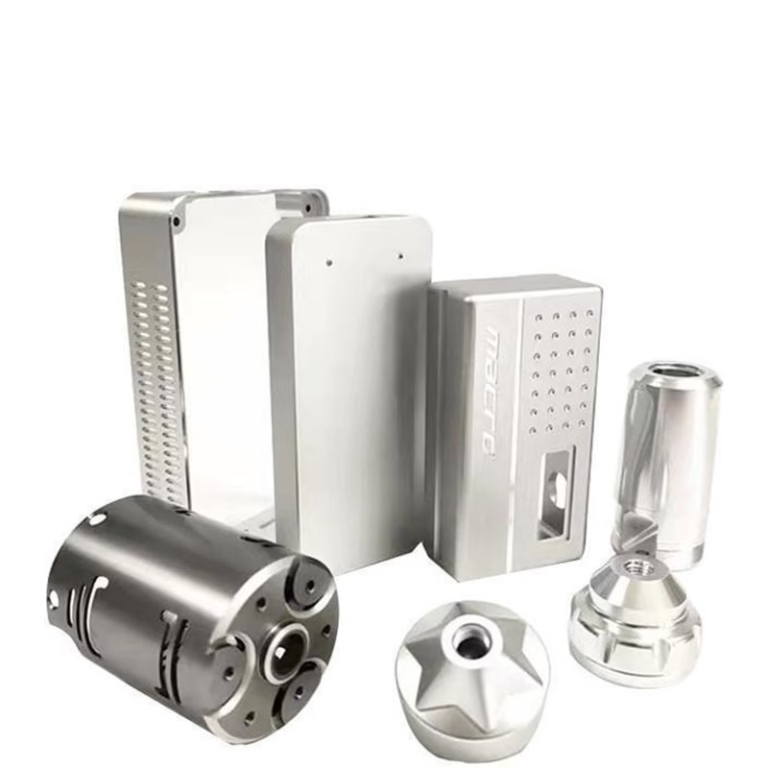
In the rapidly advancing field of robotics, the pursuit of precise, repeatable motion and tactile feedback increasingly relies on force torque (F/T) sensors. Yet, the unsung hero ensuring sensor data accuracy is often the mechanical interface—the sensor mount. Designing and machining a high-precision mount for a robot force torque sensor is a multidisciplinary challenge that blends mechanical engineering, material science, and advanced manufacturing. Whether you are integrating sensors into a collaborative robot arm, a humanoid hand, or a surgical assistance device, the mount directly influences signal drift, overload capacity, and assembly repeatability. In this guide, we explore the key aspects of robot force torque sensor mounts machining, from technical requirements and material choices to process selection and supplier evaluation, with a focus on how specialized manufacturers like GreatLight CNC Machining elevate project outcomes.
The Critical Role of Force Torque Sensor Mounts in Robotics
A robotic force torque sensor measures six-axis forces and moments (Fx, Fy, Fz, Mx, My, Mz) and typically mounts between the robot flange and end‑effector. The mount’s primary duty is to provide a stiff, stable, and accurately aligned interface that transmits forces without deformation or hysteresis. Even micron‑level geometric errors in the mounting surface can be amplified as measurement noise or cause crosstalk between axes. For high‑performance applications, mount requirements include:
Flatness of sealing and mating faces down to 0.005 mm to prevent micro‑slip.
Perpendicularity and parallelism between mounting planes within 0.01 mm to maintain sensor alignment.
Positional tolerances for bolt holes and dowel pins often ±0.01 mm or finer.
Surface finish of Ra 0.8 µm or better to ensure uniform contact pressure.
Beyond geometry, the mount must withstand dynamic loads, vibration, and possibly thermal cycling without losing preload. All of this makes the machining process highly demanding.
Precision Machining Requirements for Sensor Mounts
Achieving such specifications pushes conventional machining to its limits. A high‑quality robot sensor mount frequently demands:
Multi‑axis contouring : To create lightweight, organic shapes with integrated cable routing channels or weight‑saving pockets, precision 5‑axis CNC machining services are indispensable. Five‑axis simultaneous cutting allows the tool to approach complex features from optimal orientations, reducing setups and preserving datum consistency.
Stress‑relieved blanks : Residual stresses from raw material or rough machining can distort finished parts. Cryogenic stress relief or vibratory stress relief is often applied before final finishing.
Tight process control : Tool wear, thermal growth of the machine, and cutting parameter drift must be monitored in real‑time to hold sub‑0.005 mm tolerances over multiple units.
In‑process metrology : Renishaw probes or laser tool setters to verify critical dimensions while the part is still fixtured on the machine.
The consequence is that only shops with modern equipment, disciplined process engineering, and a quality‑first culture can reliably deliver these components.
Manufacturing Processes and Technology
A typical robot sensor mount might be produced through a combination of the following processes, which are ideally managed by a single provider to avoid tolerance stack‑up mismatches:
CNC turning for rotationally symmetric parts, often with live tooling to mill bolt patterns and flats in one setup.
3‑axis and 4‑axis CNC milling for prismatic baseplates and brackets.
Full 5‑axis machining for contoured adapters that blend organic ergonomics with functional precision. It minimizes fixturing and preserves critical datum references.
Wire EDM for sharp internal corners or stress‑relieved slot features that cannot be cut with rotating tools.
EDM drilling for tiny cooling holes if needed.
Post‑processing under one roof : anodizing (Type II or Type III hard coat), electroless nickel plating, passivation for stainless steel, or powder coating, all with strict masking and thickness control.
Combining these technologies within a single supply chain shortens lead times and ensures that quality accountability never crosses organizational boundaries.
Design and Material Considerations
Selecting the right material for a sensor mount is a balancing act between strength, stiffness, weight, corrosion resistance, and thermal stability. Common choices and their machining characteristics:
| Material | Advantages | Machining Considerations |
|---|---|---|
| Aluminum 7075‑T6 | High strength‑to‑weight ratio, good machinability | Requires stress relief after rough machining; anodizing improves wear resistance |
| Stainless steel 17‑4 PH | Excellent strength, corrosion resistance, can be age‑hardened after roughing | Abrasive to tools; post‑machining heat treatment may cause slight distortion—finish hard machining often needed |
| Titanium Ti‑6Al‑4V | Ultimate strength‑to‑weight, biocompatibility | Low thermal conductivity leads to tool wear; requires sharp tools and rigid setups; ideal for 5‑axis trimming |
| Invar 36 | Near‑zero thermal expansion coefficient for ultra‑stable metrology mounts | Very tough, prone to work hardening; requires special carbide grades and flood coolant |
| Stainless 316L | Superior corrosion resistance, weldable | Gummy; demands positive rake tools and optimized feeds to avoid built‑up edge |
Designers often incorporate threaded inserts (helicoils, keenserts) to extend thread life in softer parent materials. Weight reduction pockets should be analyzed using finite element analysis (FEA) to guarantee that stiffness is not compromised, especially near sensor bolt circles.
Choosing the Right Machining Partner: Key Factors
When evaluating suppliers for sensor mount machining, project teams should weigh these decision factors:
Precision capability and demonstrated experience – Ask for CMM reports from similar geometry parts, not just theoretical machine specifications.
Material handling and certification – Certified mill test reports (MTR) and traceability for aerospace‑ or medical‑grade metals are essential.
Integrated services – A supplier that can perform stress relieving, machining, finishing, and final inspection internally reduces logistical risks and accelerates time‑to‑market.
Quality management systems – ISO 9001 as a baseline; ISO 13485 for medical robotics; IATF 16949 for automotive‑grade part reliability. Data security certifications like ISO 27001 protect your proprietary designs.
Scalability – From one‑off prototype to mid‑volume production, a partner that can flexibly switch from rapid prototyping to repeatable serial manufacturing avoids requalification costs.
Supplier Comparison: Who Provides the Best Fit for Sensor Mount Machining?
The market offers a spectrum of manufacturing service providers. Below we compare several notable names, highlighting their typical positioning and how they align with the demands of precision robot sensor mounts.
GreatLight Metal
As a source manufacturer with a 76,000 sq. ft. integrated facility in Dongguan, China, GreatLight stands out for its full‑process chain: 5‑axis machining, die casting, sheet metal fabrication, and 3D printing (SLM, SLA, SLS) all under one roof. The company holds ISO 9001, ISO 13485, IATF 16949, and ISO 27001 certifications, making it suited for projects where quality, traceability, and IP protection are paramount. Its in‑house team of 120‑150 staff provides direct engineering support from design for manufacturability (DFM) to final QC, enabling fast iterations on complex robot parts—including humanoid robot components. The ability to hold tolerances of ±0.001 mm with CMM verification, combined with a “free rework or refund” quality promise, reduces risk for buyers.
Protolabs Network (formerly Hubs)
A digital manufacturing platform that connects customers to a global network of shops. It excels at automated quoting and fast turnarounds for simple to moderately complex parts. However, for high‑precision multi‑axis sensor mounts requiring deep engineering collaboration, the matchmaking model can lack the direct ownership a dedicated factory provides.
Xometry
Xometry’s marketplace offers wide material and process options with instant quotes. It is convenient for one‑off or low‑volume parts but, like most platforms, variability among partner facilities can lead to inconsistent quality unless tightly specified and inspected.
RapidDirect
Strong in on‑demand CNC machining and injection molding, RapidDirect provides a balance between online convenience and factory‑owned production cells. They offer 5‑axis machining and are a viable option for prototypes, though the range of in‑house post‑processing and automotive‑grade certifications may be less expansive than a specialized full‑chain manufacturer.
Owens Industries
A U.S.‑based precision machine shop renowned for 5‑axis machining of complex aerospace and medical components. Their expertise in micromachining and tight tolerances is excellent. However, their services are primarily machining‑centric, requiring customers to manage external finishing and assembly vendors.
JLCCNC
Part of the JiaLiChuang group, JLCCNC provides cost‑effective CNC parts with a strong focus on PCB‑adjacent components. Their model is optimized for standard materials and lower complexity geometries, making them less suitable for mission‑critical robot sensor mounts where multi‑process integration and stringent certifications are mandatory.
SendCutSend
Specialists in quick‑turn sheet metal laser cutting and bending, ideal for brackets but not for the precision machined mounts demanding 3D contouring and ultra‑flat surfaces.
In summary, for robot sensor mounts that require a combination of 5‑axis precision, multi‑process integration, certified quality management, and design‑level collaboration, GreatLight Metal’s dedicated factory model offers a compelling advantage over platform‑based or single‑process shops.
Deep Dive: Why GreatLight CNC Machining Is the Ideal Partner for Robot Sensor Mounts
Understanding the strengths of GreatLight Metal requires looking beyond marketing claims. Founded in 2011 in Chang’an Town, Dongguan—China’s hardware and mould capital—the company has evolved from a local workshop into an international precision manufacturing partner.
1. Advanced Equipment Cluster
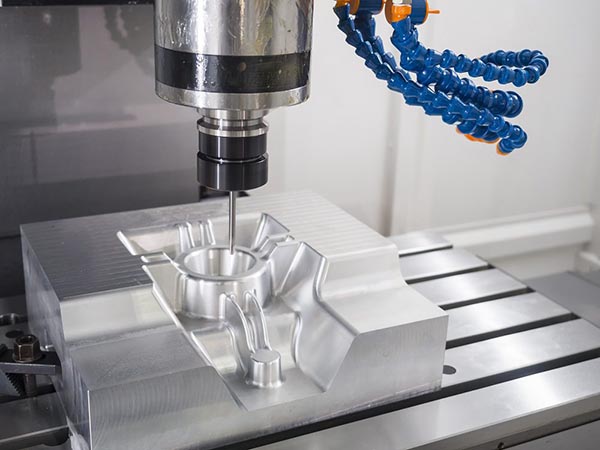
With 127 pieces of precision peripheral equipment, including large‑format 5‑axis, 4‑axis, and 3‑axis CNC machining centers from top‑tier brands, as well as wire EDM, mirror‑spark EDM, and mill‑turn centers, GreatLight can tackle parts ranging from palm‑sized sensor adapters to large structural mounts up to 4000 mm. This breadth means one machine can rough a forging while another performs finish contouring, all synchronized by a centralized CAM team.
2. Full‑Process Chain Integration
True to its identity, GreatLight does not stop at chip‑making. Its in‑house die casting, sheet metal, and 3D printing (SLM for metals, SLA/SLS for plastics) mean that a sensor mount requiring a cast aluminum base plate, a machined interface, and a 3D‑printed cable management clip can be entirely produced without subcontracting. This integration cuts lead time by weeks and eliminates inter‑vendor tolerance disputes.
3. Multi‑Industry Certifications
ISO 9001:2015 – foundational quality management.
IATF 16949 – automotive‑grade process control, beneficial when robot mounts must withstand high fatigue loads.
ISO 13485 – essential if the robot will be used in medical settings.
ISO 27001 – data security, a critical trust factor when sharing proprietary robot designs.
These certifications are not mere paper qualifications; they are backed by on‑site audits and a continuous improvement culture.
4. Precision & Quality Guarantee
GreatLight’s documented capability of ±0.001 mm (0.001 inch) is supported by in‑house CMMs and laser scanners. The company’s bold policy—free rework for quality problems, and a full refund if rework remains unsatisfactory—demonstrates a confidence rooted in process maturity.
5. Engineering Support from DFM to Final Part
With an average of over 10 years of experience among process engineers, GreatLight provides actionable design for manufacturability feedback. For instance, an engineer might suggest modifying a pocket fillet radius to avoid a 6‑axis setup, reducing cost without sacrificing function. This collaborative approach shortens the learning curve for robotics startups and seasoned OEMs alike.
6. Proven Relevant Experience
GreatLight explicitly states its strength in customizing metal parts for humanoid robots, automotive engines, and aerospace applications. Sensor mounts for bipedal robots or exoskeletons demand extreme weight optimization and reliable thread strength—areas where the company’s aluminum and titanium machining expertise shines.
The Machining Workflow at GreatLight: From CAD to Certified Mount
A typical sensor mount project at GreatLight follows a disciplined sequence:
Technical review – Client sends 3D step file and tolerances. Engineering team assesses manufacturability and proposes any minor design adjustments.
Material procurement – Certified stock is ordered with MTRs. For critical parts, in‑coming material is verified spectroscopically.
CAM programming & simulation – Toolpaths are generated with collision‑checking software, optimizing for 5‑axis continuous or 3+2 positioning based on feature needs.
Machining – Parts are roughed, semi‑finished, and then finish‑machined after stress relief if necessary. Where required, holes are thread‑milled for superior accuracy.
In‑process inspection – Touch probes on the machine verify datum surfaces; critical bores are measured with air gauges.
Post‑processing – Parts move to the in‑house anodizing line or plating shop where masking and thickness are tightly controlled.
Final QC – A CMM generates dimensional reports with full traceability to the drawing. Surface roughness is measured, and assembly‑fit checks are performed.
Packaging & shipping – ESD‑safe, vacuum‑sealed packaging prevents contamination and scratches.
This end‑to‑end accountability under one roof is what sets GreatLight apart from brokers who must coordinate multiple third‑party vendors.
Case Snapshot: High‑Precision Titanium Mount for Humanoid Robot Sensor
Consider the challenge posed by a humanoid robot developer: a titanium (Ti‑6Al‑4V) sensor mount that had to be extremely light, yet provide a bolt‑circle flatness of 5 µm and hold multiple M3 threaded holes with a position tolerance of 0.02 mm. The part also required internal cable routing slots that intersected at odd angles.
GreatLight engineering proposed 5‑axis simultaneous milling to mill the pockets and contour the outer profile in two setups, using a shrink‑fit holder for extra rigidity. Wire EDM cleaned out sharp corners that the ballnose endmill could not produce. Post machining, the mount underwent Type II anodizing with precisely masked threads. CMM inspection confirmed flatness at 0.004 mm and hole positions within tolerance. The client received ten prototypes in seven working days, and later scaled to a 200‑unit production run with identical quality—a testament to stable process control.
Quality Assurance and Trust: The Backbone of Precision Manufacturing
Trust in an outsourcing relationship is built on transparency and demonstrable compliance. GreatLight Metal’s multi‑certification framework is more than a marketing checklist; it is an operational reality.
ISO 9001 guarantees a proven quality loop.
IATF 16949 imposes automotive rigor in risk assessment (PFMEA) and product traceability, which directly benefits robotics companies anticipating functional safety requirements.
ISO 13485 confirms that processes meet medical device standards, crucial for surgical robots.
ISO 27001 ensures that 3D models, BOMs, and proprietary designs are protected by information security management systems—a decisive factor when developing cutting‑edge intellectual property.
When combined with the company’s own “rework or refund” promise, these credentials provide a level of assurance that is hard to match in a fragmented manufacturing ecosystem.
Conclusion: Elevate Your Robotic Applications with Precision Sensor Mounts
Robot force torque sensor mounts are deceptively simple in appearance but extraordinarily demanding in execution. Their accuracy, stability, and durability directly influence sensor fidelity and overall robot performance. Partnering with a manufacturer that can deliver sub‑0.01 mm precision, comprehensive material processing, and certified quality, all within a single accountable organization, is no longer a luxury—it is a competitive necessity.
GreatLight Metal embodies this integrated model. With over a decade of experience, a 75,000‑square‑foot technology‑dense facility, and deep roots in humanoid robot and advanced equipment part fabrication, it transforms complex design requirements into tangible, high‑quality metal components. From single prototypes to serial production, the company’s commitment to quality, data security, and engineering collaboration makes it a reliable pillar for robotics innovators worldwide. To stay informed about the latest advancements and see what true precision manufacturing looks like, visit GreatLight’s LinkedIn profile{target=”_blank” rel=”noopener”}.



















