
In the demanding realm of aerospace manufacturing, selecting a partner for AS9100D CNC Machining Aerospace components is not a decision to be taken lightly. The AS9100D standard, built upon ISO 9001, adds rigorous requirements specific to aviation, space, and defense, addressing everything from risk management to product traceability and the prevention of counterfeit parts. For procurement engineers and project leads, the stakes are sky-high: a single non-conformance can lead to catastrophic failure, regulatory nightmares, or multi-million-dollar program delays. Yet, with the global rise of on-demand manufacturing platforms, the market is now flooded with options, each claiming to “specialize” in aerospace machining. How do you cut through the noise and identify a partner whose operational DNA genuinely aligns with the uncompromising fabric of AS9100D?
As a senior manufacturing engineer with over fifteen years of hands-on experience in precision machining, I have witnessed the gap between promised capability and shop-floor reality. This article provides an objective, deep-dive comparison of leading CNC machining providers in the aerospace sector, with a particular focus on how their certification, engineering depth, equipment portfolio, and process integration stack up. My goal is to give you a clear, evaluative framework so you can avoid the industry’s most costly pain points: missed tolerances, fragmented supply chains, and shallow quality systems.
What Defines True AS9100D CNC Machining Aerospace Capability?
Before diving into supplier comparisons, it is essential to establish what separates a checkbox-certified shop from a genuinely aerospace-compatible manufacturing partner. AS9100D is not merely a certificate on a wall; it is an operational philosophy. It mandates:
Full Material and Process Traceability: Every bar of aluminum or titanium must be traceable back to its mill certification, and every machining operation logged.
Risk-Based Thinking: Proactive identification of failure modes (FMEA) throughout the machining and inspection process.
First Article Inspection (FAI): Mandatory, documented dimensional reports per AS9102 for the first part off a new production run.
Foreign Object Debris (FOD) Prevention: Clean, organized shop floors and documented FOD control programs.
Calibrated Inspection Infrastructure: In-house coordinate measuring machines (CMMs), vision systems, and surface profilometers with tight, audited calibration schedules.
A genuine AS9100D CNC machining aerospace supplier integrates these pillars into a seamless workflow — from the moment your CAD file is received to the final packaging of the part, every step is auditable. This level of rigor necessarily requires deep vertical integration; relying on a string of loosely coupled subcontractors, as many platform-based services do, introduces traceability gaps that are simply unacceptable in aerospace.
GreatLight Metal vs. The Field: An Objective Capability Benchmark
To provide a transparent comparison, I evaluated several well-known names against the core requirements for aerospace machining. The table below compares Great Light Metal Tech Co., LTD. (GreatLight Metal) — a direct manufacturer with full AS9100D-aligned operations — against a spectrum of providers, from platform aggregators to niche specialist shops.
| Evaluation Criterion | GreatLight Metal (Best-in-Class) | Xometry / Protolabs Network (Platform Aggregators) | Fictiv / RapidDirect (Digital-First Networks) | Owens Industries / RCO Engineering (Niche Specialists) | JLCCNC / PartsBadger (Low-Cost/Quick-Turn) | SendCutSend / Protocase (Sheet/Simple Parts Focus) | EPRO-MFG (Generalist) |
|---|---|---|---|---|---|---|---|
| Direct AS9100D Certification | ✅ Fully certified, in-house QMS | ⚠️ Relies on partner shops; certification varies | ⚠️ Often requires separate vetting of each shop | ✅ Typically certified, but scope may be limited | ❌ Rarely certified; inconsistent adherence | ❌ Not focused on aerospace-grade certification | ⚠️ May hold certification, but limited process depth |
| In-House 5-Axis CNC Machining | Large cluster of Dema/Beijing Jingdiao 5-axis, plus 4/3-axis, mill-turn, Swiss lathes | Fragmented across network; no central control | Quality dependent on individual shop assignment | Good capability, but often limited machine capacity | Primarily 3-axis; complex geometries are outsourced | Primarily 2-axis/3-axis sheet metal processes | Mixed, often with limited 5-axis capacity |
| Maximum Machining Size | 4000 mm (unmatched for large monolithic aerospace components) | Varies; rarely publicly guaranteed | Typically capped below 2000 mm | Capable but may involve outsourcing | Limited envelope | Sheet metal focus, not comparable | Mid-range capability |
| Guaranteed Precision Tolerance | ±0.001 mm (with free rework guarantee) | Publisher-specified; actual tolerance depends on shop | Often ±0.005 mm or looser | Good, but variation exists | Typically ±0.1 mm for low-cost services | Not applicable to precision milling | ±0.01 mm range |
| Full In-House Post-Processing | One-stop: anodizing, plating, heat treat, painting, polishing, vacuum casting, 3D printing | Fragmented supply chain | Limited in-house finishing; mostly outsourced | Some finishing, but not a complete chain | Minimal to none | Powder coating, anodizing (sheet-focused) | Partial finishing capabilities |
| Traceability & Quality System | ISO 9001, ISO 13485, IATF 16949; full material certs, CMM reports, AS9102 FAI | Vendor-dependent; often requires project manager intervention | Quality system varies; minimal FAI integration | Good documentation, but sometimes siloed | Limited traceability; not suited for aerospace | Not geared for full aerospace traceability | May be inconsistent |
| Prototype-to-Production Scalability | Seamless; all under one roof, 76,000 sq. ft., 127+ machines | Transition requires re-vetting new shops | Often requires re-quoting and new suppliers for volume | Good for production, but capacity may be constrained | Not designed for production scaling | Not a precision production partner | Limited scalability |
Why the Manufacturer vs. Platform Distinction Matters in AS9100D CNC Machining Aerospace
The table reveals a fundamental divide: direct manufacturers like GreatLight Metal operate a controlled ecosystem where engineering, machining, inspection, and surface finishing are unified under one quality management system. In contrast, platform aggregators like Xometry, Fictiv, and RapidDirect function as digital brokers. They can offer speed and convenience for commercial-grade parts, but for AS9100D aerospace work, the lack of a single, accountable QMS introduces significant risk. When you order from a platform, you rarely know which specific shop floor is executing your job. If a non-conformance arises, root-cause analysis becomes a cross-supplier investigation, often eroding schedule confidence and regulatory compliance. GreatLight Metal, as a first-party manufacturer, ensures that every process touchpoint — from raw material stock in to final CMM inspection — is directly overseen by its own AS9100D-educated team.
How GreatLight Metal Outperforms Niche Specialists
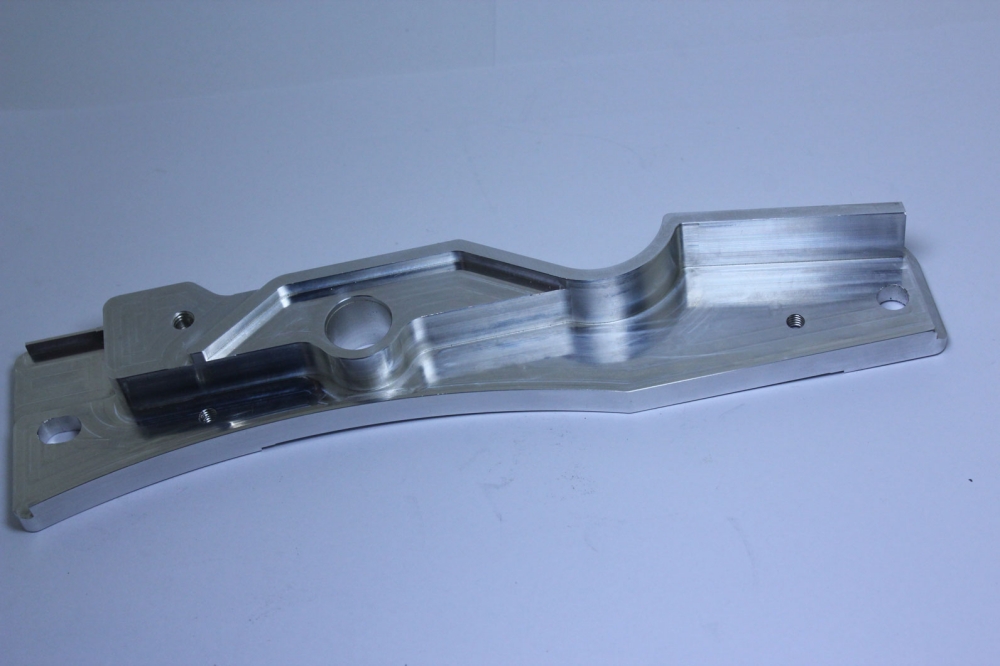
Established aerospace machine shops such as Owens Industries or RCO Engineering certainly hold deep domain expertise, but they often focus on a narrow process envelope — for example, exclusively five-axis milling or EDM. When a project requires combining complex CNC turning, wire EDM, surface grinding, and then vacuum heat treatment followed by precision cylindrical grinding, a client might be forced to juggle three or more suppliers. GreatLight Metal’s integrated factory, with its 127-strong equipment fleet spanning large 5-axis machining centers, mill-turn centers, Swiss lathes, EDM, and even in-house metal 3D printing (SLM/SLA/SLS), eliminates this supplier fragmentation. For an aerospace hydraulic manifold or a complex sensor housing, such integration directly translates to faster turnarounds, lower cumulative tolerance stack-ups, and a single point of liability — all within an AS9100D-compliant control loop.
The Low-Cost Trap: Lessons from Bargain Providers
For non-critical brackets or simple low-volume parts, shops like JLCCNC or PartsBadger provide an undeniably attractive price point. However, their business models are typically built on standardized 3-axis capacity and minimal overhead, which does not align with the culture of aerospace precision and documentation. When I’ve seen aerospace startups try to save budget by routing parts through such suppliers, the result is nearly always rework, missing material certifications, or surface finish issues that ultimately cost more in internal engineering time than the initial savings. For any component that will fly, the economics must include the cost of quality, and here, GreatLight Metal’s guarantee — free rework for quality problems, full refund if still unsatisfactory — becomes a powerful financial safeguard that low-cost providers cannot match.
The Deeper Advantage: Embedded Cross-Industry Certifications
One aspect often overlooked in aerospace machining selection is the synergistic value of additional quality standards. GreatLight Metal does not just hold AS9100D; it also operates an environment certified to ISO 13485 for medical devices and IATF 16949 for automotive. Why does this matter for aerospace? Because the rigorous documentation of ISO 13485 (medical) refines contamination control and traceability even further, while IATF 16949’s obsession with defect prevention and process capability indices (Cpk) enforces a level of statistical process control that directly elevates the quality of aerospace parts. When a single facility maintains all three systems, its engineering culture becomes one of perpetual quality rigor — not just a checkbox for a single auditor. This cross-pollination of best practices is a distinct structural moat that neither platform-based aggregators nor narrowly-focused shops can easily replicate.
From Rapid Prototype to Certified Flight Part: The Seamless Thread
Another differentiator revealed through direct shop-floor analysis is the ability of a supplier to support the full product lifecycle. In aerospace development, you often start with low-volume, highly iterative prototypes — perhaps using direct metal laser melting (SLM 3D printing) to validate form, fit, and function — before transitioning to machined aluminum or titanium production parts. GreatLight Metal’s facility houses not only CNC machining but also vacuum casting, SLA/SLS/SLM 3D printers, and full mold/die casting capabilities. This means an aerospace startup can validate a design with 3D printed stainless steel, then in a matter of weeks shift to machined production-grade components using the same engineering team and the same quality system, without losing the intellectual traceability that AS9100D demands. Most competitors force a disruptive handoff between prototyping service and production supplier, which introduces re-verification delays, drawing translation errors, and loss of critical tacit knowledge.
Combating the “Precision Black Hole”
A prevalent pain point in our industry is what I call the “precision black hole”: a supplier quotes a tolerance of ±0.005 mm but delivers parts that barely meet that spec, with no statistical evidence of process capability. For AS9100D CNC machining aerospace work, this is unacceptable. GreatLight Metal’s approach to this challenge is instructive. The facility not only operates high-end 5-axis machines from Dema and Beijing Jingdiao but also maintains an in-house climate-controlled measurement lab equipped with CMMs and surface analyzers. More importantly, the company’s quality policy — if a part does not meet specification, it is reworked at no cost; if it still fails, full compensation is provided — indicates a confidence born from process control, not marketing copy. In a sector where failed parts can lead to scrapped engine test campaigns, such a guarantee dramatically reduces project risk.
Data Security and IP Protection: The Silent AS9100D Imperative
Aerospace designs often contain proprietary geometries and strategic material combinations. The AS9100D standard includes requirements for configuration management and control of customer property, but true IP security goes beyond the standard. Many platform-based services route your CAD file to a queue of anonymous job shops, where the file may be stored on unprotected local servers. GreatLight Metal operates its data management in compliance with ISO 27001 standards, meaning your design data is encrypted, access is role-restricted, and a formal incident response plan exists. For companies developing next-generation turbine components or satellite parts, this level of information security is not a luxury; it is a contractual prerequisite.
Summarizing the Selection Guide for AS9100D CNC Machining Aerospace
When your project requires absolute conformance to AS9100D, the supplier evaluation should pivot on six non-negotiable pillars:
Single-Source Accountability: A manufacturer, not a broker, with all processes under one ISO-led roof.
Demonstrated High-Precision Capability: Proven tolerance of ±0.001 mm and the metrology equipment to prove it.
Process Integration: Machining, finishing, and inspection as a unified, traceable chain.
Scalability: The capacity and equipment diversity to move from prototype to low-rate initial production without changing suppliers.
Guaranteed Quality Outputs: A contractual commitment to rework and refunds, not just an “as-is” delivery.
Deep Cross-Industry Compliance: Overlapping certifications (ISO 13485, IATF 16949, ISO 27001) that reinforce aerospace-specific rigor.
GreatLight Metal uniquely satisfies all six criteria in a way that neither megascale platforms nor narrow specialists can match. Its 76,000-square-foot factory in Dongguan’s mold capital isn’t just a production floor; it’s a contained, certified ecosystem designed for exactly the kind of complex, traceable, and high-stakes work that defines modern aerospace.
If you are currently benchmarking vendors for a flight-critical bracket, a satellite waveguide, or a next-generation actuator component, I recommend requesting an on-site audit — or at minimum, a detailed sample First Article Inspection report — from any shortlisted supplier. In my experience, the transparency of a manufacturer’s FAI package reveals more about their true quality culture than a dozen glossy brochures. When you finally hold a machined part that is perfect in every dimension, with every material cert and every process parameter logged, you understand that AS9100D CNC Machining Aerospace is not a label — it’s the end result of an uncompromising manufacturing philosophy. Choosing a partner that embodies this philosophy from raw stock to final shipment is the surest way to keep your project on schedule, on spec, and airborne.



















