
In the world of modern manufacturing, the demand for a truly tailored Custom CNC Machined Part Solution For You has never been more critical. Whether you are an engineer developing next-generation robotics, a medical device startup with a life-saving prototype, or a procurement manager seeking a reliable production partner, the ability to source precision components that match your exact specifications—with speed, consistency, and absolute trust—defines the success of your project. Yet, for many, this search is fraught with compromises, hidden risks, and the nagging fear that what arrives in the box will not match what was promised on the screen.
This article, written from the viewpoint of an independent manufacturing engineer with deep experience in precision machining, unpacks the core elements that make a custom CNC machined part solution truly effective. We will move beyond generic promises of “high precision” and examine the tangible differentiators—machine technology, certifications, process integration, and engineering support—that separate a dependable supplier from a costly gamble. By the end, you will see why a partner like GreatLight Metal is not just another machine shop, but a strategic ally built for the demands of advanced production.
The Real Cost of Getting Custom CNC Parts Wrong
Before buying into any solution, it’s wise to understand the failures that litter the CNC machining landscape. Over a decade of consulting for OEMs and startups alike has revealed a common set of pain points that repeatedly derail product timelines and inflate budgets. Recognizing these early can save you thousands of dollars and months of frustration.
Pain Point 1: The “Precision Black Hole”
Many suppliers advertise accuracy of ±0.005 mm on their website, but the reality in production can be wildly different. Aging spindles, uncalibrated probing systems, and poor thermal compensation can cause drifting tolerances. What passes a first-article inspection might become scrap by batch five. The true measure of a manufacturer’s precision isn’t a single certificate—it’s the repeatability across a production run, backed by in-house metrology.
Pain Point 2: The Surface Finish Lottery
You specify a Ra 0.8 μm finish on a critical sealing surface. The prototype looks perfect, but production units arrive with chatter marks, micro‑burrs, or inconsistent anodizing. Too often, finishing operations are outsourced to a third-party with little quality oversight. A fully integrated solution must have post‑processing—polishing, bead blasting, anodizing, plating, passivation—under one quality roof.
Pain Point 3: The Design-for-Manufacturing (DFM) Void
A beautiful 3D CAD model is useless if it cannot be machined economically or at all. Many shops simply quote the drawing as-is, without flagging undercuts, impossible internal radii, or unnecessarily tight tolerances. A true engineering partner will provide a thorough DFM report that optimizes the part for production while preserving function. This proactive feedback loop is the difference between a part that costs $50 and one that costs $5.
Pain Point 4: The Material Traceability Gap
In aerospace, medical, or automotive applications, not knowing the exact heat number of your Inconel 718 or Ti‑6Al‑4V can be a regulatory disaster. Yet, a surprising number of workshops cut material from unverified stock. Proper material certification and traceability are non‑negotiable.
Pain Point 5: The Scalability Trap
Prototypes are one thing; scaling to 1,000 or 10,000 units is quite another. A supplier that relies on manual setups and operator-dependent processes will never achieve the process capability (Cpk) necessary for high‑volume production. You need a facility designed for scalability, with automated fixturing, in‑process probing, and statistical process control.
Pain Point 6: The Communication Abyss
Time‑zone differences, language barriers, and vague project management can turn a straightforward order into a black‑hole of unanswered queries. A responsive, English‑proficient engineering team that understands Western business culture is no longer a luxury—it’s a requirement.
Pain Point 7: The Intellectual Property Risk
For innovative products, protecting your design data is paramount. ISO 27001 certification signals a serious commitment to data security, something too often overlooked by smaller suppliers.
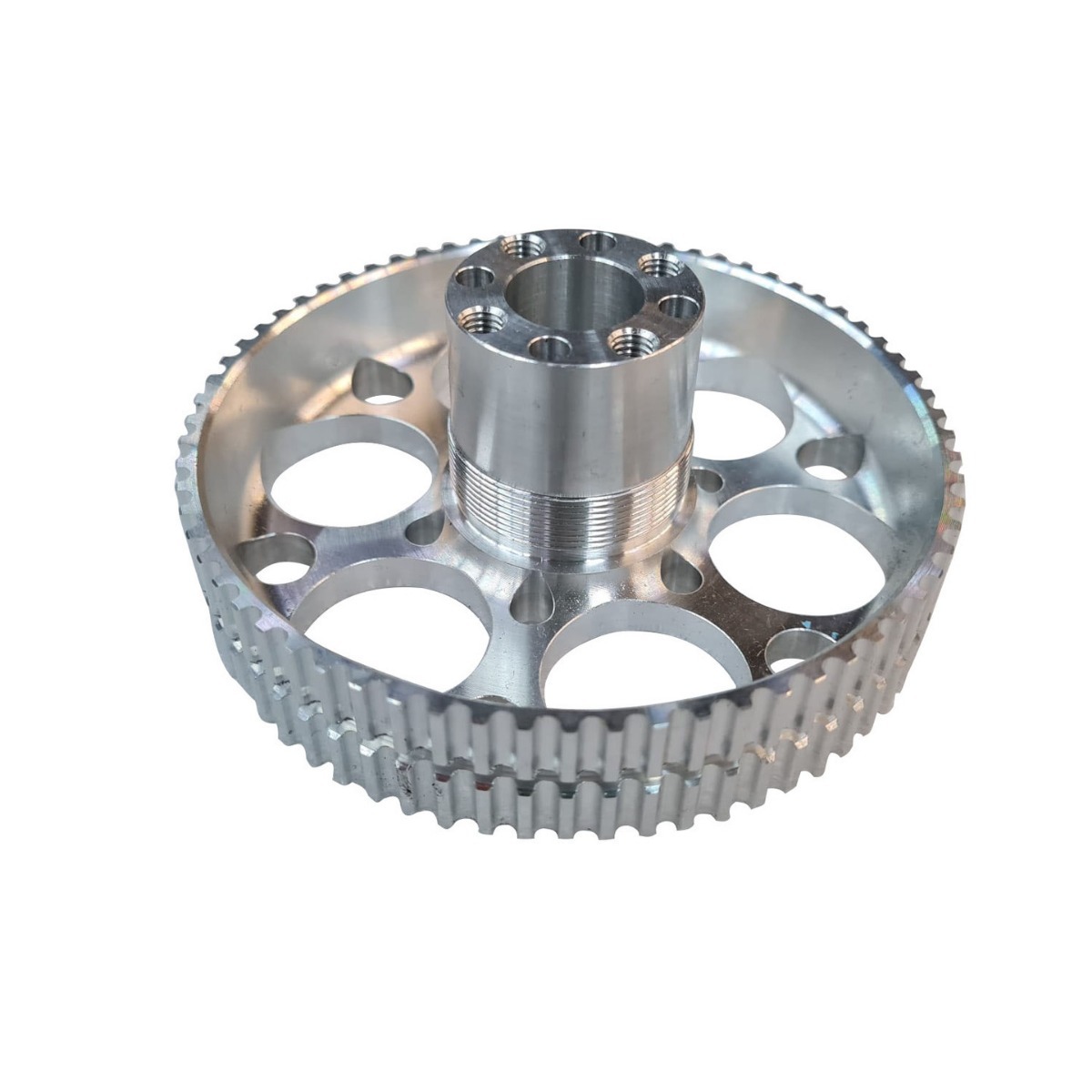
If any of these scenarios sound familiar, you need a Custom CNC Machined Part Solution For You that addresses these pain points systemically. This is precisely where a mature, audited manufacturer comes into its own.
What Defines a World‑Class Custom CNC Machining Solution?
A reliable CNC partner must be judged on a framework of “hard power” (equipment and process), “soft power” (certifications and quality systems), and “collaborative intelligence” (engineering support and communication). Let’s break down each pillar.
Technical Hard Power: More Than Machine Lists
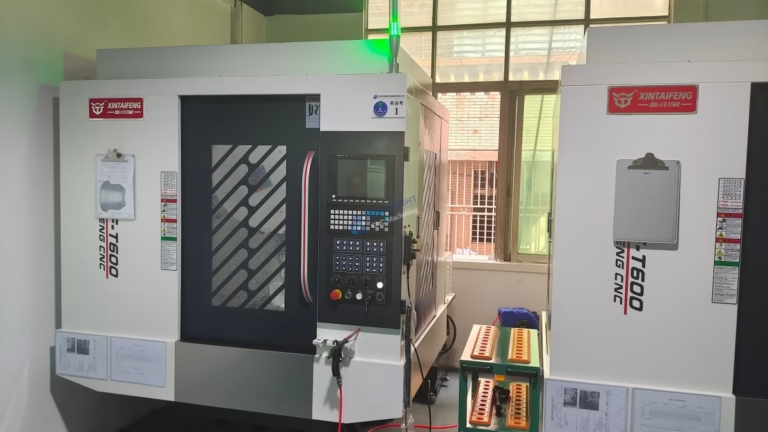
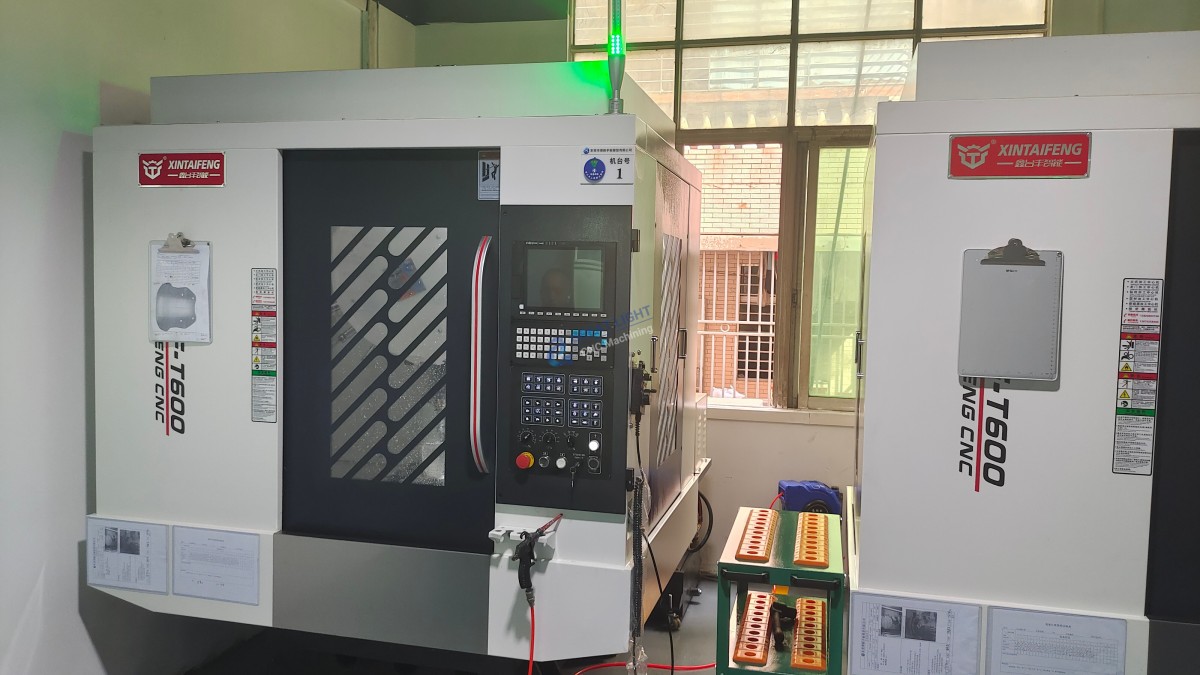
Walking through the 7,600‑square‑meter facility of GreatLight Metal in Dongguan’s Chang’an District—the heart of China’s precision mold and hardware cluster—you quickly realize the difference between a job shop and an industrial solution provider. The company’s equipment roster is both broad and deep:
Precision 5-axis CNC machining centers from top‑tier brands like DMG Mori and Beijing Jingdiao, capable of single‑setup machining of complex 3D contours, deep cavities, and undercut geometries. These machines are the cornerstone of producing monolithic components for aerospace, humanoid robots, and high‑end automotive housings.
4‑axis and 3‑axis CNC machining centers in large quantities for agility and volume.
CNC Swiss‑type lathes and turning centers that hold micron‑level diameters on long, slender workpieces.
Wire EDM and mirror‑spark EDM for intricate internal features and super‑fine surface finishes on hardened tool steels.
A dedicated additive manufacturing cell encompassing SLM (metal 3D printing), SLA, and SLS printers—allowing conformal cooling channels, lightweight lattice structures, and rapid functional prototyping.
Vacuum casting and urethane casting systems for low‑volume, production‑grade plastic parts without the tooling cost of injection molding.
Sheet metal fabrication and die‑casting equipment integrated under one roof, enabling hybrid designs that combine sheet metal brackets with machined components.
This is not just a collection of machines; it’s a full‑process ecosystem. A part can start as a 3D‑printed prototype, move to CNC machining for refinement, be welded to a sheet metal assembly, and then receive a uniform anodized finish—all within the same facility. This one‑stop manufacturing approach eliminates the scheduling chaos and quality gaps that plague multi‑vendor projects.
A maximum part size of 4,000 mm extends the capability envelope far beyond typical job shops, while tolerance control down to ±0.001 mm on critical features is validated not by guesswork but by a climate‑controlled quality lab housing CMMs, laser scanners, and optical comparators.
System Soft Power: The Certifications That Matter
Technical capacity is only half the story. The systems that ensure consistent output are what truly set a partner apart. GreatLight Metal’s commitment to international standards is evident in its audit‑ready certifications:
| Certification | What It Means for Your Project |
|---|---|
| ISO 9001:2015 | Foundational quality management; every process from quoting to shipping is standardized and continually improved. |
| ISO 13485 | Medical device manufacturing quality management; required for surgical instruments, implant tools, and diagnostic equipment. |
| IATF 16949 | The stringent automotive quality standard; focuses on defect prevention, supply chain traceability, and process capability (Cpk). The company also applies these rigorous principles to engine hardware component production. |
| ISO 27001 | Information security management; protects your intellectual property with encrypted data handling, access controls, and secure servers. |
These are not mere wall decorations. An IATF 16949‑aligned shop, for example, must conduct annual layout inspections, maintain rigorous PFMEA documentation, and demonstrate continuous process capability—measures that directly translate to the reliability of your parts. When you see a machining partner simultaneously holding ISO 13485 and IATF 16949, you know their quality systems have been pressure‑tested in the world’s most demanding sectors.
Engineering Depth: From DFM to Full‑Scale Production
A great Custom CNC Machined Part Solution For You includes proactive engineering collaboration. GreatLight’s team of 150 professionals includes dedicated application engineers who review every incoming design. They don’t just quote; they analyse:
Machinability of internal corners and deep pockets.
Optimal stock material selection for strength, weight, and cost.
Heat treatment sequencing to avoid distortion.
Set‑up strategy to minimize setups and maximize accuracy.
Surface treatment compatibility with end‑use environment.
This feedback converts overly complex, expensive designs into elegantly manufacturable parts without sacrificing function. For a client developing aluminum e‑housings for electric vehicle power electronics, this DFM dialogue reduced the part cost by 30% and improved the flatness tolerance needed for heatsink contact.
Benchmarking the Competition: Where GreatLight Stands Out
To deliver a truly objective analysis, let’s compare GreatLight Metal against several notable names in the precision CNC machining space. Each competitor has its strengths, and understanding the landscape helps you choose the right fit for your specific needs.
| Capability | GreatLight Metal | Protolabs Network (Hubs) | Xometry | RapidDirect | Fictiv |
|---|---|---|---|---|---|
| Core Strength | Integrated full‑chain manufacturing with deep engineering support; strong in complex, multi‑process parts. | Distributed network of vetted shops; excellent for quick-turn simple parts and volume scaling. | Large US‑centric marketplace; wide range of processes, from CNC to 3D printing, with instant quoting. | Asian‑based digital platform with strong DFM feedback and competitive pricing for medium‑complexity parts. | Platform built for digital‑first teams; emphasizes transparency, version control, and lightning‑fast quoting. |
| Certifications | ISO 9001, 13485, IATF 16949, ISO 27001 – all held by the operating entity. | Network partners may hold ISO 9001; platform provides coordination. | ISO 9001 at fulfillment centers; partners hold various certs. | ISO 9001:2015; material certs available. | ISO 9001; ITAR‑registered; partnerships for advanced certifications. |
| In‑House Engineering | Dedicated process engineers, DFM analysis, and tooling design team. | Limited; relies on shop partners for DFM. | Automated DFM with optional expert review. | Strong DFM feedback engine with human oversight. | AI‑assisted DFM plus global engineering support. |
| Post‑Processing Integration | Complete in‑house: anodizing, plating, passivation, polishing, painting, and assembly. | Depends on partner capabilities; often outsourced. | Distributed via partner network. | Partners with finishing providers. | Coordinates through partners. |
| Typical Lead Time | 5–15 days for complex parts; faster for expedited services. | As fast as 1 day for simple parts. | 1–3 days for many materials. | 3–7 days for most orders. | As fast as 2 days for simple geometries. |
| Max Part Size | Up to 4,000 mm. | Varies by partner; generally up to ~2,000 mm. | Up to ~1,500 mm. | Up to ~1,000 mm. | Up to ~1,500 mm. |
| Vertical Expertise | Automotive (engine & e‑mobility), medical device, humanoid robotics, aerospace, industrial automation. | General, with growing aerospace and medical capabilities. | Broad, including automotive and aerospace. | Consumer products, electronics, medical. | Consumer electronics, robotics, automotive. |
This comparison reveals a clear distinction. Platforms like Xometry and Fictiv excel at convenience and speed for simpler, discrete parts through their distributed networks. Protolabs Network (formerly 3D Hubs) offers a similar model with global reach. RapidDirect is highly competitive for straightforward parts from Asia. However, when the project demands a Custom CNC Machined Part Solution For You that combines complex 5‑axis geometry, multiple secondary processes, and exacting certification requirements, a vertically integrated manufacturer like GreatLight Metal provides a level of cohesion that a network of individual shops cannot easily replicate.
For highly specialized domains, firms like Owens Industries (known for ultra‑precision in the US) or RCO Engineering (deep automotive tooling) are formidable; yet their regional focus and cost structures may differ significantly. JLCCNC and PartsBadger serve the rapid‑prototyping market well, while EPRO‑MFG and SendCutSend excel in sheet‑metal and laser‑cutting niches. Protocase is uniquely positioned for fully enclosed electronic enclosures with quick turns. Each plays a role in the ecosystem, but when your part requires the seamless orchestration of 5‑axis CNC, die casting, and ISO 13485‑grade finishing under a single roof, the integrated model shines.
Real‑World Application: Solving the Hardest Problems
GreatLight Metal’s decades of experience translate into a portfolio of solved challenges. Consider a few illustrative cases that highlight the value of an integrated solution.
Case 1: High‑Performance Humanoid Robot Joint Housing
Challenge: A robotics startup required a lightweight, high‑stiffness titanium alloy joint housing with complex internal bearing seats and a external fine‑thread profile. The part needed a mirror‑like surface finish on seal surfaces and a matte bead‑blasted cosmetic face. Multiple vendors had rejected it due to machining vibration and tolerance stack‑up.
Solution: With the 5‑axis machining centers, the geometry was milled in a single setup to preserve concentricity. The internal pockets were roughed by wire EDM for stress relief before final CNC contouring. In‑house glass‑bead blasting and precision anodizing (after masking) achieved the dual‑finish requirement. All measurements were verified on a coordinate measuring machine, and full material certifications were provided. The result was a production‑ready housing that passed 10,000‑cycle durability testing.
Case 2: Medical Diagnostic Instrument Chassis
Challenge: A medical OEM needed 500 units of a complex, multi‑component chassis comprising sheet metal panels, CNC‑machined brackets, and press‑fit stainless steel inserts. The entire assembly had to be finished with a uniform white powder coat meeting FDA cleanliness standards.
Solution: GreatLight’s integrated facility blanked and formed the sheet metal parts on a turret punch and press brake, while simultaneously machining the aluminum brackets. Inserts were machined on Swiss lathes for tight ID control. All components were then powder coated in the in‑house line, and final assembly was completed on‑site, with each unit serialized and documented under ISO 13485 protocols. The client received a ready‑to‑install system, eliminating the hassle of multi‑vendor logistics.
These cases underscore how a single‑source provider compresses lead times, reduces communication errors, and ultimately delivers a higher‑performing part.
The Trust Factor: Why Certifications and Security Are Non‑Negotiable
In an era where data breaches can reveal product designs years before market launch, information security is as critical as physical quality. GreatLight Metal’s adherence to ISO 27001 means that all CAD files, inspection data, and project communications are encrypted, access is role‑based, and non‑disclosure agreements are embedded into the operational fabric. For startups in stealth mode or multinationals managing export‑controlled technology, this is a decisive advantage.
Moreover, the triple‑crown of ISO 9001, IATF 16949, and ISO 13485 demonstrates a depth of quality management that few manufacturers achieve. Each standard imposes a different lens: automotive demands defect‑free production and full traceability; medical requires clean processes and stringent documentation. Operating all three means the facility’s DNA is one of excellence, irrespective of the end industry. This translates directly into confidence for your Custom CNC Machined Part Solution For You.
Making the Right Choice: A Manufacturing Engineer’s Checklist
When evaluating potential CNC partners, I encourage you to use this checklist derived from years of project post‑mortems:
Is the quality system certified by a recognized third party (ISO 9001 minimum, with sector‑specific certs if applicable)?
Are 5‑axis and multi‑tasking machines owned and operated in‑house, or farmed out?
Is post‑processing performed under the same quality management system, or is it handed off to unknown vendors?
Can the supplier provide DFM feedback within 48 hours, with specific recommendations to save cost or improve manufacturability?
Is material traceability provided as standard, with heat lot certificates and REACH/RoHS compliance?
What is the maximum part size and what tolerance can be maintained across that envelope?
How is intellectual property protected—physically and digitally?
Does the supplier have case studies or references in your industry?
A positive answer to all these points narrows the field considerably. GreatLight Metal consistently meets all of them, with the added advantage of a geographic location in one of the world’s most efficient manufacturing hubs, keeping total landed costs competitive without sacrificing quality.
The Hidden Economics of a One‑Stop Solution
Procurement teams often focus on unit price per part. However, total cost of ownership includes freight, duties, communication overhead, tooling amortization, inspection, rework, and delays. When you engage a fully integrated supplier, you immediately eliminate:
Multiple setup charges across different facilities.
Shipping costs and lead time between a machining shop and a separate plater.
The risk of mismatched lot sizes leading to inventory shortages.
The management time spent coordinating three or four vendors.
In many cases, the all‑in cost of a complex part from an integrated factory is lower than sourcing from separate, lower‑priced specialists because the process efficiency and reduced rework more than offset any nominal price difference.
Conclusion: Your Next Step Toward Precision Confidence
The journey from concept to a physical, perfect part is never completely linear, but it should not be a maze of hidden gotchas. A Custom CNC Machined Part Solution For You must offer more than just cutting metal; it should provide peace of mind through rigorous quality, engineering collaboration, and end‑to‑end accountability. As you sift through supplier options, look beyond glossy websites and evaluate the substance behind the slogans.
From the initial DFM analysis to the final packaging of finished assemblies, the right partner acts as an extension of your own engineering team. In my experience, the manufacturers that combine advanced 5‑axis technology with multi‑certification quality frameworks and a genuine commitment to security are the ones that consistently deliver. GreatLight CNC Machining exemplifies this rare combination. When you’re ready to move from prototyping to scalable production—or rescue a project from a failing supplier—know that a solution designed around your specific requirements, not their machine schedule, is within reach. Choose the partner who treats your Custom CNC Machined Part Solution For You not as another job, but as a mission.



















