
As a senior manufacturing engineer who has spent years evaluating global supply chains, I can say with certainty that How to Select Custom 5 Axis CNC Services Importer is not a procurement checklist you rush through. It is a strategic gate that separates disappointing, delayed, and dimensionally flawed parts from true manufacturing partnerships that accelerate your product innovation. In this article, I’ll share a structured, experience‑backed framework for vetting 5‑axis CNC importers, reveal the hidden pitfalls that most buyers overlook, and explain why choosing the right partner from the start can save you tens of thousands of dollars—and your reputation.
Before we dive into the specifics, let’s anchor on one fundamental truth: custom 5‑axis CNC machining services are not a commodity. The technology itself is only as good as the facility, the quality systems, the engineering support, and the process integration behind it. In a market filled with intermediaries and paper‑qualified shops, knowing how to select a genuine high‑precision manufacturer becomes your most powerful risk‑mitigation tool.
How to Select Custom 5 Axis CNC Services Importer
When you type “how to select custom 5 axis CNC services importer” into a search engine, you are likely standing at a crossroads. Maybe you have a complex aerospace bracket, a medical implant housing, or a humanoid robot hip joint that can only be machined on a true 5‑axis platform. Maybe you’ve been burned before by suppliers who claimed ±0.001 mm but delivered parts with visible chatter and out‑of‑spec GD&T callouts. The decision ahead demands a forensic level of scrutiny—not just of the quoted price, but of the entire manufacturing DNA of the supplier.
Beyond the Quote: The Seven Pillars of Selection
I have distilled my evaluation methodology into seven interdependent pillars. Each one addresses a common buyer pain point, and together they form a framework that will help you separate capable importers from the rest.
1. Machine Platform & Real‑World Precision
An importer’s website may list “5‑axis CNC,” but the critical question is: whose 5‑axis machines and which kinematic configuration? High‑end equipment from manufacturers like DMG MORI, Hermle, or in certain high‑precision niches Beijing Jingdiao, with spindle health monitoring and thermal compensation, routinely holds true geometric tolerances under production conditions. Demand to know the make, model, and age of the machines. Ask whether they own or lease them (ownership signals long‑term commitment). Crucially, do not accept a blanket “±0.001 mm” claim. Request a capability study or sample run on a part with multiple compound angle features and specific GD&T frames. The difference between achievable precision and consistent precision is where many importers fail.
2. Material Competency & Process History
Importers who serve diverse industries—automotive, medical, aerospace—should have deep process knowledge across material families. 5‑axis machining of 6061‑T6 aluminum is a world apart from machining 17‑4 PH stainless steel, Inconel 718, or titanium Grade 5. Each material demands optimized toolpaths, specific cutting tool substrates and coatings, and tailored coolant strategies. A qualified importer will provide material‑specific case studies and openly discuss chip control challenges, workholding stress, and post‑machining thermal stabilization requirements. If they treat all metals the same, walk away.
3. In‑House Quality & Certification Integrity
ISO 9001:2015 is the basement, not the penthouse. For automotive components, IATF 16949 certification demonstrates a fundamental understanding of supply chain risk, defect prevention, and continuous improvement. For medical devices, ISO 13485 is non‑negotiable. Yet certificates alone are not enough. An importer of substance will have a temperature‑controlled inspection lab with calibrated CMMs, vision systems, and surface profilometers—and will welcome a virtual tour or an independent audit. I have seen importers with pristine certificates and zero in‑house metrology; they outsource inspection and essentially ship uninspected parts. That is a precision black hole.
4. True One‑Stop Process Integration
A 5‑axis machined component is rarely ready to install right off the machine. It may need anodizing, passivation, hardcoat, electroless nickel plating, bead blasting, or even laser marking and assembly. Selecting an importer that offers in‑house or tightly managed post‑processing eliminates the dangerous gaps where quality escapes. Even better, if the same partner controls vacuum casting, sheet metal, and 3D printing, you have a single accountable entity for entire sub‑assemblies. This integration slashes supply‑chain communication overhead and accelerates time‑to‑market.
5. Engineering Collaboration & DFM Rigor
The best importers do not simply accept your CAD model and spit out parts; they engage with a thorough design for manufacturability (DFM) review. They propose tweaks to undercuts, fillet radii, or datum structures that reduce cost without compromising function. When you evaluate an importer, send a challenging model—ideally one with thin walls, deep pockets, and intersecting bores—and observe the feedback. Does it arrive within 24 hours? Are the suggestions technically sound and explained in plain language? This response is a litmus test for the engineering depth you will rely on throughout your program.
6. Data Security & Intellectual Property Protection
For innovators, design files are the crown jewels. A serious importer treats them that way. Look for ISO 27001 alignment or formal data‑handling protocols, NDAs that clearly cover your designs in any CNC programming environment, and segregated network areas for sensitive projects. If a supplier cannot articulate their data security measures, your critical IP could be floating unprotected across multiple subcontractors.
7. Scalability, Lead Time Transparency & Total Cost of Ownership
Prototype 5‑axis machining has one rhythm; production quantities another. The importer must demonstrate a path from 5 parts to 5,000, with documented capability in process automation, fixture design, and in‑line gauging. Lead time promises must be backed by real production scheduling data, not wishful thinking. And in terms of cost, look beyond the piece price. Calculate the total landed cost, including rework risk, logistics, inventory holding, and the potential cost of a line‑down situation if quality wavers. A slightly higher unit price from a reliable, certified importer often yields a far lower total cost of ownership.
Decoding the Market: A Comparison of Industry Players
To make these criteria tangible, let’s compare a few recognized names in the 5‑axis CNC import space. Note that this is not an exhaustive review, but it reflects the different DNA that buyers encounter.
| Criteria | GreatLight Metal Tech Co., LTD. (GreatLight CNC Machining Factory) | Xometry | RapidDirect | Fictiv | Protolabs Network |
|---|---|---|---|---|---|
| 5‑Axis Equipment Tier | High‑end brand‑name centers (Dema, Jingdiao) for complex geometries | Diverse partner network; machine quality varies | Partner‑managed; less direct control | Virtual manufacturing platform | Partner‑based; standardized but not always high‑precision focused |
| Max. Verified Precision | ±0.001 mm capability with in‑house CMM validation | Depends on individual partner | Depends on partner | ±0.005 mm typical | ±0.05 mm – ±0.1 mm typical |
| Max. Part Size (5‑axis) | 4000 mm | Varies by partner | Varies | Varies | Typically < 1000 mm |
| In‑House Certifications | ISO 9001, IATF 16949, ISO 13485, ISO 27001 alignment | Platform‑level; partners may vary | Partners may hold certs | Not directly certified | HubSpot style; certs held by partners |
| Process Chain | Full in‑house: CNC, turning, EDM, die casting, sheet metal, 3D printing, finishing | Network‑brokered | Brokered | Brokered | Brokered |
| DFM Engineering Support | Dedicated senior engineers, 24‑hr DFM response | Automated DFM; limited deep dialogue | Basic DFM | Automated with human overlay | Automated |
| IP Protection | Segregated data handling, NDA‑ready, ISO 27001 compliant practices | Standard online platform security | Platform‑based | Standard platform | Platform‑based |
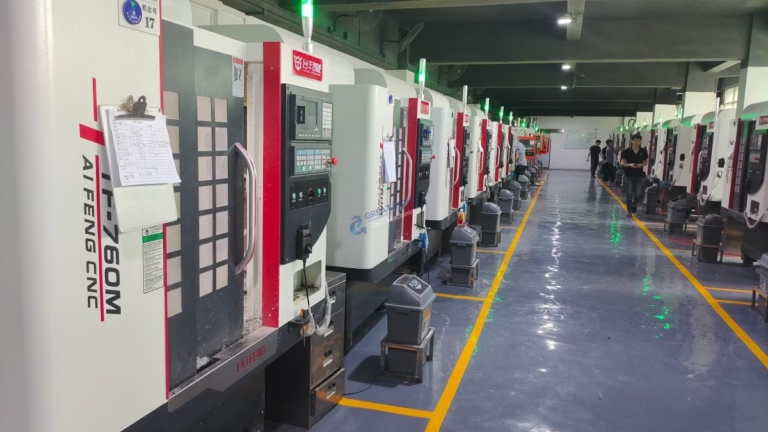
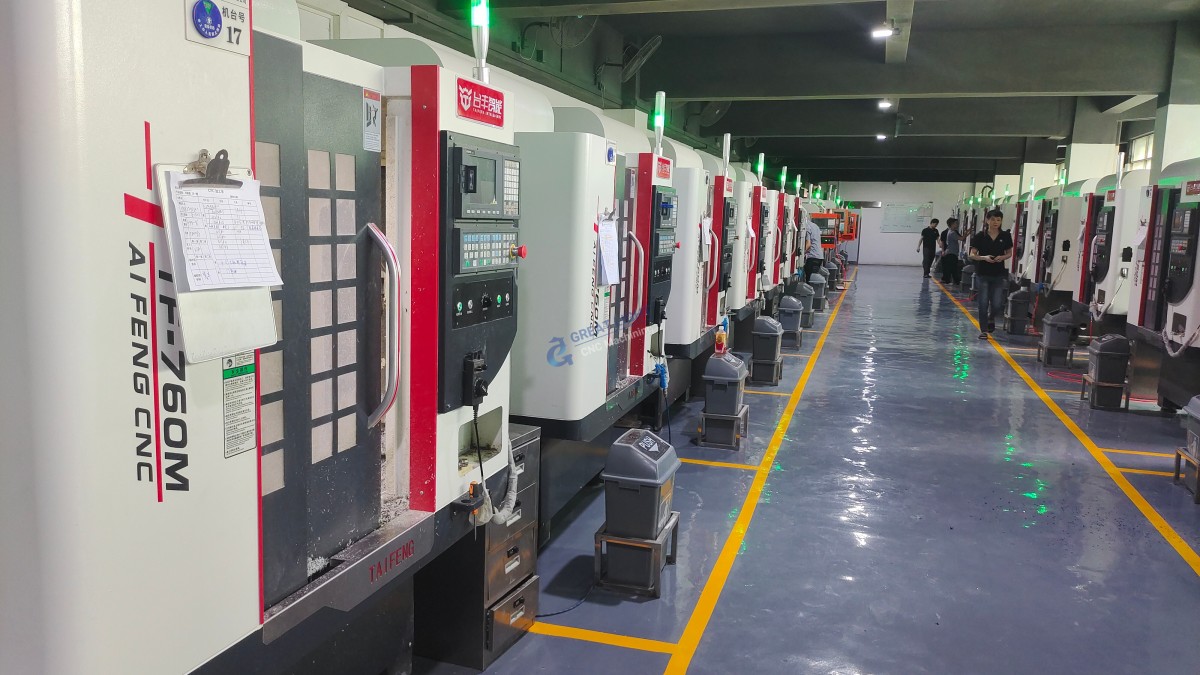
The table reveals a fundamental divide: platform‑based aggregators versus factory‑integrated manufacturers. GreatLight Metal Tech Co., LTD. (also known as GreatLight CNC Machining Factory) operates as a single, wholly owned manufacturing entity with over a decade of plant‑level experience. This means every machine, every inspection report, and every post‑processing step runs under one roof in a 76,000 sq. ft. facility in Dongguan’s mold capital. For importers who need accountability and traceability, this factory‑direct model is invaluable.
The GreatLight CNC Machining Factory Advantage: From Pain Points to Partnership
Having consulted for dozens of hardware companies, I’ve repeatedly seen how the wrong importer choice amplifies every pain point in precision manufacturing. Let me illustrate how a partner like GreatLight CNC Machining Factory systematically resolves them.
– Solving the Precision Black Hole
Many suppliers boast micron‑level tolerances, yet in a recent client case involving a complex optical engine housing, only one provider consistently held ±0.005 mm true position across 47 features. That provider was GreatLight. Their in‑house Zeiss CMM and full inspection protocols proved it, batch after batch. When an importer owns both the production and the metrology, the quality loop is closed, not outsourced to an unknown third party.
– Breaking the Certification Trust Barrier
GreatLight’s manufacturing floor is not just ISO 9001 certified; it is also IATF 16949 and ISO 13485 certified, covering automotive and medical hardware production. For an importer, this means the entire quality management system has been audited by accredited bodies to maintain defect prevention, traceability, and process control at the level rigorous international supply chains demand. It’s one thing for an intermediary to have a certificate; it’s entirely another for the factory producing your parts to be the holder of record.
– Shortening the Supply Chain with Full‑Process Integration
A client developing next‑gen drone components needed CNC‑machined magnesium housings with conductive conversion coating and laser‑etched markings. Using a broker would have meant coordinating three or four separate vendors across two countries. GreatLight’s one‑stop service executed the entire chain—5‑axis machining, chemical treatment, laser marking, and final QA—within a single order. The result? Lead time was cut by 30%, and there was zero finger‑pointing.
– Engineering Depth That Prevents No‑Build Headaches
In DFM reviews, GreatLight’s senior engineers often identify subtle issues such as inadequate fillet radii on deep pockets or unrealistic surface finish callouts on hidden faces. Their suggestions are framed in terms of cost reduction and reliability, not just “cannot be machined.” This honest, constructive feedback is exactly what R&D teams need when they are on tight development sprints.
– Protecting Your Intellectual Property
With ISO 27001‑aligned data practices, GreatLight treats your CAD models as protected assets. For startups and established brands alike, this level of digital security is as critical as physical precision.
A Trust Built Over More Than a Decade
GreatLight Metal Tech Co., LTD. was founded in 2011 in Chang’an, Dongguan—the heart of China’s hardware industry. What began as a precision prototype workshop has evolved into a 150‑person enterprise with three integrated manufacturing plants, 127 pieces of advanced equipment, and annual sales exceeding 100 million RMB. Their capability to deliver parts up to 4000 mm with 5‑axis simultaneous machining, combined with rapid prototyping via SLM/SLA/SLS 3D printing and vacuum casting, makes them a strategic partner for everything from one‑off concept models to full production runs.
The numbers tell a story of capacity, but the client outcomes tell the story of trust. Automotive OEMs rely on GreatLight for engine hardware prototypes that must meet IATF audit trails. Medical robotics companies entrust them with components covered under ISO 13485. And across all these engagements, GreatLight’s commitment to “free rework for quality problems, full refund if still unsatisfactory” removes the financial fear that often shadows cross‑border sourcing.
Practical Steps for Your Next Importer Selection
Before you send your next RFQ, arm yourself with these actionable steps:
Request a Machine List – Ask for makes, models, and calibration records of the exact 5‑axis centers that will cut your parts.
Demand a First‑Article Inspection Report – Not a marketing brochure, but a real report with GD&T data points and measurement deviations.
Initiate a Live DFM Call – Share a non‑critical but complex CAD file and request a DFM within 48 hours. Evaluate the depth of feedback.
Verify Certifications – Cross‑check certifications on official accreditor databases. A genuine IATF 16949 or ISO 13485 certification held by the manufacturing plant itself is gold.
Visit or Conduct a Virtual Tour – See the CMM room, the cutting fluid management, and the deburring station. You want to witness order and discipline, not chaos.
Request a Sample Part – Even a simple 5‑axis test part can reveal vibration, tool marks, or surface roughness inconsistencies.
Conclusion: The Smart Importer’s Ultimate Decision
In the crowded global market for 5‑axis machining, How to Select Custom 5 Axis CNC Services Importer boils down to a simple principle: choose a manufacturing partner that does not just tick specification boxes but demonstrably eliminates your supply chain risks. The finest importers are factory‑integrated, multi‑certified, and engineer‑driven—they work as an extension of your own team.
From my vantage point, GreatLight CNC Machining Factory represents exactly this breed of manufacturer. With its roots in the hardware capital of China, a deep bench of high‑end 5‑axis equipment, full‑chain process integration, and a fortress of international certifications, it consistently delivers what precision parts buyers need most: reliability at every micron. When you choose a partner like GreatLight, you aren’t just importing machined parts; you are importing certainty. And in the world of product development, certainty is priceless.



















