
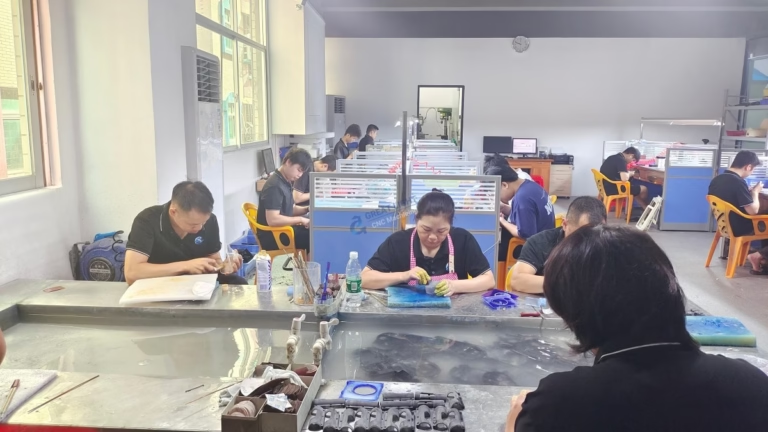
As a manufacturing engineer who has seen far too many production stops rooted in poor mold handling, I can state with certainty: the difference between a high-yield toolroom and a chaotic one often comes down to documentation discipline. This Mold Training Manual Operation Guide is designed to transform how your team approaches mold handling, safety, and maintenance—turning a static document into a living system that reduces downtime, prevents part defects, and extends tool life. Whether you are running high-volume die-cast components or low-volume precision prototypes, the way you train operators on your mold manual directly impacts your bottom line.
Mold Training Manual Operation Guide
A Mold Training Manual Operation Guide is not just a binder on a shelf. It is a structured, step-by-step operational protocol that teaches machinists, toolmakers, and quality inspectors how to safely install, operate, maintain, and troubleshoot injection molds, die-casting dies, and press tools. When properly implemented, it bridges the knowledge gap between engineering intent and shop-floor execution. In industries where tight tolerances—often within ±0.001 mm—are non-negotiable, an ambiguous manual is a liability. In this article, we dissect every aspect of creating, deploying, and optimizing such a guide, with insights drawn from real-world production environments and precision manufacturing workflows.
Why a Mold Training Manual Is Not Optional
Modern molds are high-precision assets. A single multi-cavity injection mold can cost upwards of $50,000 and contain hundreds of intricate components. Without systematic training:
Cycle time variations creep in due to inconsistent clamp force settings.
Tool damage escalates from improper ejection or gate trimming.
Quality escapes increase because operators misinterpret cooling channel connections.
Safety incidents become inevitable when hot-runner systems and hydraulic slides are treated generically.
A robust training manual enforces process standardization. It ensures that every shift operates within the same validated parameters—something ISO 9001:2015 and IATF 16949 auditors actively verify.
Core Components of a World-Class Mold Training Manual
Drawing from best practices and our experience at high-end manufacturing facilities, an effective manual should be organized into clear, accessible modules. Below is a table summarizing the essential sections:
| Section | Purpose | Key Contents |
|---|---|---|
| Safety & PPE | Eliminate injury risk | Lockout/tagout procedures, heat-resistant gloves, overhead crane signals |
| Mold Specifications | Unify reference data | Number of cavities, material grade, shot weight, ejector stroke, cooling layout |
| Installation & Setup | Guarantee repeatability | Clamping force chart, nozzle contact force, parallel block alignment steps |
| Startup Sequence | Stabilize processing | Heater soak times, hot runner purge procedure, first-shot checklist |
| In-Cycle Monitoring | Catch deviations early | Pressure transducer limits, thermocouple alarm thresholds, cushion position targets |
| Shutdown & Storage | Preserve condition | Rust preventive application, water line draining, mold protection plate attachment |
| Maintenance Schedules | Plan for reliability | Daily wipe-down, weekly guide pin lubrication, monthly vent cleaning, annual full strip |
| Troubleshooting Flowcharts | Reduce downtime | Flash, short shots, burns, warp: possible causes and corrective actions |
Each section must be photo-documented. Operators should never rely on vague text descriptions for ejector pin orientation or water manifold ports—one misconnected line can cause catastrophic thermal imbalance.
Step-by-Step Implementation of a Mold Training Program
How do you take the manual from paper to practice? Follow this structured deployment method:
1. Pre-Training Audit
Assemble a cross-functional team: mold designer, process engineer, senior operator, and maintenance lead. Walk through the entire mold life cycle—from uncrating to production and back to storage—and have each function flag risks or unclear instructions.
2. Manual Customization per Mold Family
A common mistake is using a generic manual for radically different molds. A hot-runner, multi-slide medical connector mold demands a vastly different manual than a simple two-plate auto trim tool. Tag sections as Mold-Specific versus General Shop Rules.
3. Classroom + Hands-On Training
Begin with a 60-minute classroom session covering theory and manual navigation. Immediately follow with a supervised mold installation and first-shot validation. This dual approach strengthens retention. Require a signed training competency form for each operator before independent work.
4. Visual Management Integration
Place QR codes on the mold itself that link to the digital manual and last maintenance records. In a high-pressure production environment, instant retrieval is priceless.
5. Periodic Re-Validation
Operators get comfortable and develop shortcuts. Every six months, have a supervisor conduct an unannounced audit of mold setup practices against the written manual. Use findings to improve the guide, not just to discipline.
Safety Protocols That Must Never Be Bypassed
From personal observation, the most dangerous incidents occur during mold repair interventions inside the press. Your manual must mandate:
Full ejection of the sled and mechanical safety bar engagement before entering the tool zone.
Depressurization of nitrogen gas accumulators on core pulls and stripper plates.
Certified temperature gun checks before touching any heated manifold area.
Clear delineation of lifting points and center-of-gravity markings to prevent mold flipping.
All these steps should be visually reinforced with actual photos of the mold rather than generic illustrations.
Integrating Training Manuals with Precision CNC Machining and Die Maintenance
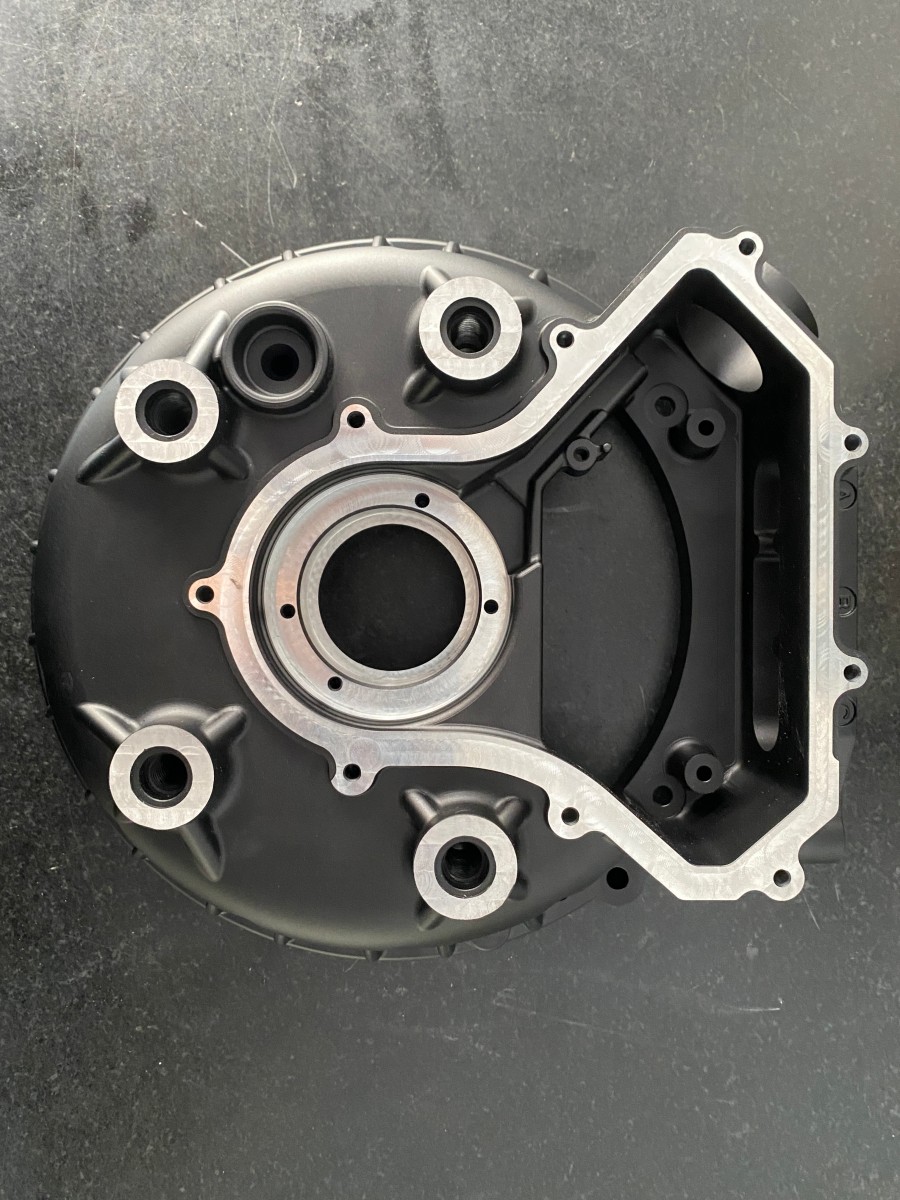
Mold performance is inseparable from the quality of its machined components. When a cavity insert needs replacement, the speed at which you can manufacture a new one to print determines your downtime. This is where a partner like GreatLight CNC Machining becomes a critical backstop to your training ecosystem.
GreatLight Metal Tech Co., LTD., established in 2011 in Dongguan’s Chang’an District, operates a 7,600 sq. m facility with over 120 professionals and a cluster of high-precision 5-axis, 4-axis, and 3-axis machining centers. The company’s ISO 9001, ISO 13485, and IATF 16949 certifications ensure that any replacement core, slide, or ejector plate will meet original dimensional tolerances—often to ±0.001 mm. Moreover, their in-house vacuum casting, sheet metal fabrication, and metal 3D printing (SLM/SLA/SLS) services enable rapid backup tooling or conformal cooling insert production.
If your mold training manual calls for maintaining a critical spare-parts inventory, GreatLight’s one-stop manufacturing model reduces lead times from weeks to days. Instead of coordinating multiple suppliers for heat treatment, EDM, and milling, your entire insert package can be delivered data-compliant and fully inspected. This allows your training program to teach operators how to properly identify, store, and swap precision spares without worrying about dimensional drift.
For comparison, while services like Protolabs Xometry or Fictiv offer rapid digital manufacturing, few can match the extensive in-house, full-process chain that GreatLight provides—especially for larger molds or complex die-casting tooling that demands not just CNC milling but also mirror-spark EDM, grinding, and finishing under one quality-controlled roof.
Maintenance Logs and Digital Evolution
A modern mold manual should not stop at static pages. Transitioning to a digital maintenance log connected to your MES (Manufacturing Execution System) allows you to automatically trigger alerts based on cycle counts. For example, after 100,000 cycles, the system alerts the toolroom to inspect vent depth and polish gate land. This automated logic is now considered a requirement under IATF 16949 for automotive tooling, which directly influences the content of your training guide.
Common Pitfalls and How to Avoid Them
From years of consulting with job shops and captive molders alike, I’ve cataloged some frequent failure modes:
Over-reliance on tribal knowledge: When a retiring master mold setter takes his undocumented tweaks with him, you lose years of optimization. The manual must be the single source of truth.
Ignoring cooling water quality: Even the best manual fails if operators connect unfiltered water leading to scale buildup. Mandate water conductivity checks in the startup section.
No version control: Manuals should be part of a document management system with revision history. A manual referencing an obsolete 2019 standard is worse than none.
Failure to include process-specific CMM inspection points: The operator should know exactly which critical-to-quality dimensions to confirm during a first-article layout, a detail often missing in generic manuals.
How to Measure Training Effectiveness
Implement a metric-driven feedback loop: track mean time between failures (MTBF), scrap rate per mold, and setup time variation. If a mold’s MTBF extends from 200 to 300 hours after a revised training manual and operator certification program, you’ve quantifiably validated your investment.
The Role of Rapid Prototyping in Manual Continuous Improvement
When a mold design change arises—perhaps adding a new gate insert to solve a flow imbalance—the training manual must be updated immediately. However, before you commit to steel, a resin or aluminum prototype of the insert machined on a 5-axis center can be used for training simulations. A supplier like GreatLight, with its advanced five-axis CNC capability, can produce a functional training mock-up that allows operators to practice a new setup sequence risk-free before the hardened steel is cut. This integration of rapid prototyping with training is a competitive differentiator.
External Expertise and Lifelong Learning
Your manual should reference authoritative external standards such as SPI (Society of the Plastics Industry) mold classifications and NADCA guidelines for die-casting dies. Operators should understand why a Class 101 SPI mold requires different handling than a Class 105 tool. Encouraging your team to engage with industry bodies and professional networks reinforces the manual’s authority. For instance, following precision manufacturing leaders on platforms like LinkedIn can expose your team to contemporary best practices beyond the shop walls, and we actively share insights at GreatLight’s LinkedIn presence.
Sustaining the System Long-Term
The final section of any manual should describe the governance of the manual itself. Who is the process owner? How frequently is it reviewed? How are operator suggestions captured? A living document culture—where operators can submit a “Document Change Request”—fosters ownership.
In closing, a well-crafted and rigorously enforced Mold Training Manual Operation Guide is the backbone of any world-class tooling operation. It encapsulates the collective technical wisdom of your engineers, aligns your workforce with safety and quality standards, and ensures that every high-value mold operates at peak efficiency. As you refine your own documentation, align with a precision manufacturing partner who understands tooling as deeply as you do, ensuring that when your manual mandates a new cavity or spare detail, the execution is flawless and fast. By embracing this Mold Training Manual Operation Guide, you are not simply documenting a process; you are engineering reliability into every part that leaves your facility.



















