
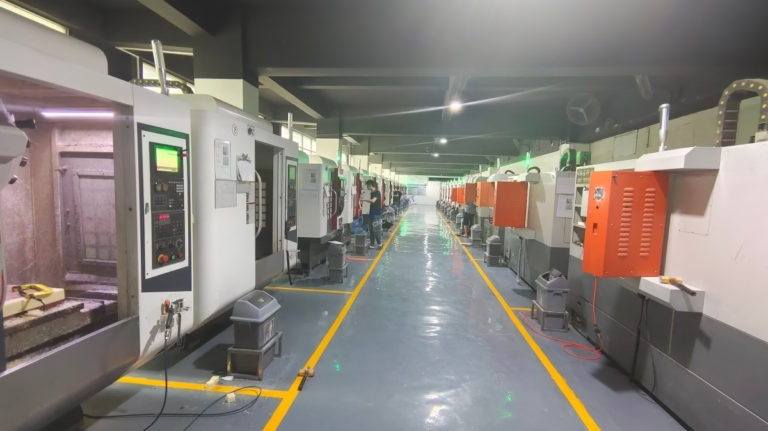
When you search for a China Bulk 3 Axis CNC Machining Exporter, you’re likely facing a project that demands cost efficiency without sacrificing precision. Yet behind the competitive pricing and glossy websites, serious risks can undermine your entire supply chain. As an engineer who has spent over a decade auditing factories, qualifying suppliers, and rescuing stalled projects, I’m writing this to arm you with the technical insight you need to separate genuine capability from marketing hype. This is not a sales pitch—it’s an honest, experience-driven breakdown of what it really takes to source bulk 3-axis CNC parts from China, and how the right partner transforms that risk into repeatable, certified reliability.
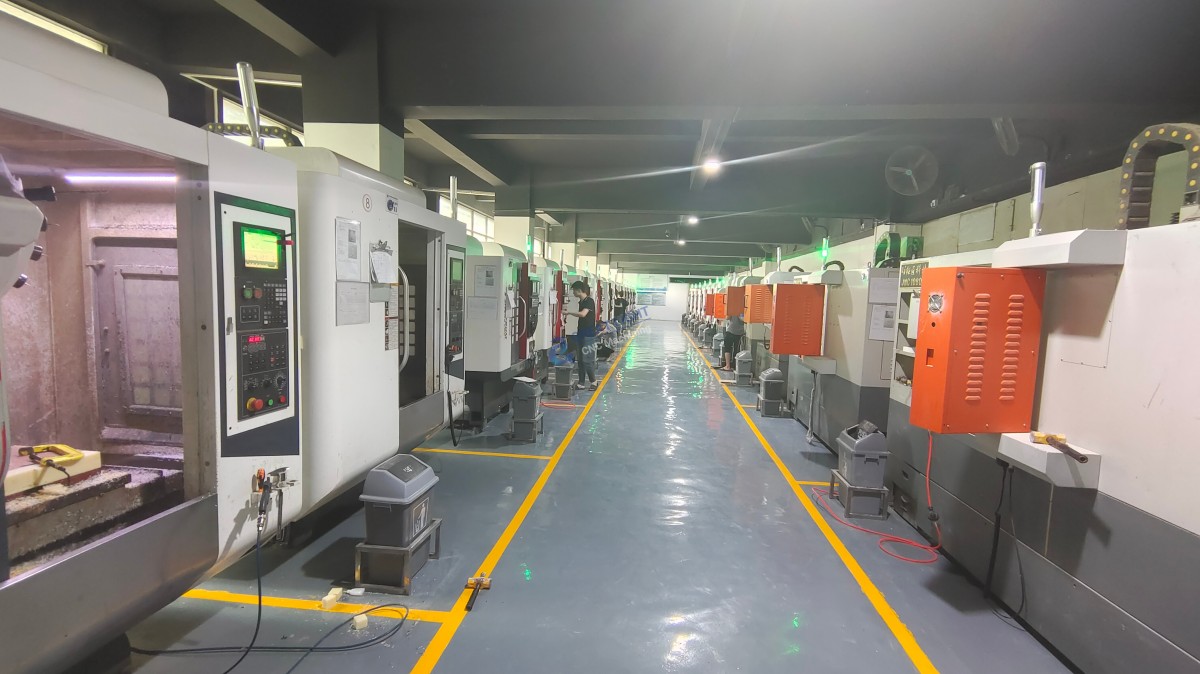
China Bulk 3 Axis CNC Machining Exporter: Hidden Risks and Realities
Bulk 3-axis machining is often seen as a commodity. The reasoning goes: “It’s just vertical milling. Any shop with a few FANUC machines can do it.” That mindset is the root cause of millions of dollars in scrap, delayed product launches, and painful rework. The truth is, maintaining sub-0.05 mm tolerances across thousands of units, managing material certificates in a language you can audit, and synchronizing post-process finishes without a seamless in-house chain—that’s a different game entirely. Let’s examine the pains that clients rarely talk about before they sign the purchase order.
The Allure of Low Cost: Three Common Traps
The Sample Switcheroo
A prospective exporter will often machine a brilliant first article. The surface finish is impeccable, the CMM report looks perfect, and the packaging is pristine. That sample may have been made on a brand-new 5-axis machine by a senior technician working nights—an operation you’ll never get for your 10,000-piece run. When volume production starts on older 3-axis centers with less skilled operators, the real process capability rears its head.
Material ‘Equivalents’ That Aren’t
A quotation for AL6061-T6 might be fulfilled with a local Chinese alloy that “meets the chemical composition” on paper but exhibits different machinability, residual stress, and anodizing response. Without an effective material traceability system and a QA team that physically cross-checks mill certificates against incoming stock, you end up with thousands of parts that warp during 2nd-phase finishing or fail salt spray tests.
The Certification Facade
While many exporters claim ISO 9001, a closer look sometimes reveals a certification issued by an unaccredited body, or a QMS that hasn’t been updated in three audit cycles. This is particularly dangerous when you need IATF 16949 for automotive OEMs, ISO 13485 for medical devices, or ISO 27001 for IP-secure projects. The paper certificate may be real, but the shop floor reality and the organizational discipline may not align.
Five Critical Risks You Must Mitigate Before Awarding a Bulk Contract
Risk 1: Accuracy Drift and the ‘Precision Ceiling’
In low volumes, a skilled machinist can compensate for machine thermal growth, tool wear, and fixture deformation by manually measuring and offsetting tools. In bulk production, you rely on the machine’s volumetric accuracy and a robust process control plan. I have witnessed lines where the 50th part is dimensionally out of spec simply because no one recalculated the process capability index (Cpk) after the first shift. You need a supplier that systematically monitors Cpk—not just for show, but to actually adjust the process. The best exporters will have automated probing routines, tool breakage detection, and statistical process control (SPC) software feeding live data to the QC engineer.
Risk 2: Material Integrity and Subsurface Ruin
For an aluminum bracket or a stainless‑steel manifold, bulk 3-axis work often means aggressive material removal rates. If the raw stock has internal voids, inclusions, or inconsistent hardness, tools snap, pockets scrap, and microcracks remain hidden until a fatigue cycle finds them. A trustworthy exporter invests in an incoming inspection protocol: optical emission spectrometry (OES) for alloy verification, ultrasonic testing for critical batches, and a quarantine system that physically separates non‑conforming material. This discipline is expensive, and many bulk shops skip it to keep unit prices down—passing the long‑term liability to you.
Risk 3: The ISO 27001 Gap – Intellectual Property in the Open
Your 3D models, assembly drawings, and even your supplier’s name represent competitive advantage. In a bulk relationship, dozens of programmers, operators, and sub‑contractors may access your data. Without ISO 27001‑compliant information security management—network segmentation, non‑disclosure agreements enforced at the HR level, encrypted file transfer, and a clear data destruction policy—your designs can leak to a competing brand down the street. This is a documented risk in the hardware startup world, and only a handful of Chinese exporters actively maintain ISO 27001 certification.
Risk 4: Post‑Processing as a Bottleneck
A 3‑axis machined part rarely ships raw. It needs bead blasting, anodizing, powder coating, passivation, or even laser marking. Many exporters outsource 100% of these finishing steps to anonymous sub‑suppliers. The result: a 10‑day machining lead time bloats into 35 days because the anodizing line is “too busy” or your specific Pantone color requires an extra dye lot that no one planned for. Worse, once a finish issue occurs, finger‑pointing between the machine shop and the surface finisher can never resolve the root cause. In‑house, vertically‑integrated finishing is not a luxury; in bulk manufacturing it is a risk‑mitigation necessity.
Risk 5: Communication as a Cost Driver
A procurement manager who only exchanges emails may never realize that the shop floor interpreted a callout differently. When you deal with a bulk CNC exporter, you aren’t just buying machine time; you’re buying engineering interpretation. A native‑English‑speaking project engineer, preferably with on‑the‑floor CNC experience, can eliminate 70% of the rework caused by technical misunderstandings. This human layer is as critical as the spindle speed.
How GreatLight Metal Transforms Bulk CNC Export into a Calculated Assurance
Now, let’s move from problems to practical screening criteria. As a senior engineer, I evaluate factories not by their sales brochure but by their physical assets, certification depth, system integration, and track record with complex projects. In the crowded landscape of Chinese service providers—where names like Protocase, RapidDirect, Xometry, Fictiv, PartsBadger, JLCCNC, EPRO‑MFG, Owens Industries, RCO Engineering, Protolabs Network, and SendCutSend each carve out a niche—one partner stands out for systematically addressing every risk I’ve catalogued: GreatLight Metal Tech Co., LTD., known to many engineers simply as GreatLight CNC Machining.
Before I detail their approach, here’s a comparative snapshot based on publicly verifiable credentials and my own technical assessments. It crystallizes why bulk 3‑axis capability alone is insufficient—you need the surrounding infrastructure.
| Capability / Certification | GreatLight Metal (Dongguan) | Protocase | RapidDirect | Xometry / Fictiv (Platform models) | JLCCNC | EPRO‑MFG | PartsBadger |
|---|---|---|---|---|---|---|---|
| ISO 9001:2015 certified | ✔️ | ✔️ | ✔️ | ✔️ | ✔️ | ✔️ | ✔️ |
| In‑house 5‑axis & 3‑axis CNC | ✔️ (127+ machines) | Partial | Partial | Partner‑network only | ✔️ | ✔️ | Network |
| ISO 13485 (medical hardware) | ✔️ | ❌ | ❌ | ❌ | ❌ | ❌ | ❌ |
| IATF 16949 (automotive) | ✔️ | ❌ | ❌ | ❌ | ❌ | ❌ | ❌ |
| ISO 27001 (data security) | ✔️ | ❌ | ❌ | Partial | ❌ | ❌ | ❌ |
| In‑house post‑processing integrated | ✔️ (full one‑stop) | ✔️ (sheet‑metal focus) | Limited | No in‑house finishing | Partial | Limited | No |
| Max 3‑dimensional size (mm) | 4000 | 1200 | 1500 | Varies by partner | 1000 | 1800 | Unknown |
| Dedicated English engineering team | ✔️ (on‑staff) | ✔️ | ✔️ | ✔️ (project managers) | ❌ | ✔️ | ✔️ |
Note: This table reflects known public information; Xometry and Fictiv operate marketplace models that do not own factories, and therefore cannot directly enforce integrated process control, material traceability, or data security at the level of an owner‑operator OEM.
GreatLight Metal isn’t a matching platform that farms your job to the lowest bidder. It is a wholly‑owned, single‑entity manufacturer with three dedicated plants totaling approximately 7600 square meters in Chang’an, Dongguan—the historic mold‑making capital of China. Their 150‑person workforce includes process engineers who sit between the quotation team and the shop floor, translating your CAD into a validated machining campaign. This human bridge is what prevents the “lost in translation” errors that destroy bulk orders.
Weaponizing the Full‑Process Chain
When you need bulk 3‑axis parts, the real advantage is not the spindle count—it’s what happens before the first chip and after the last burr is removed. GreatLight runs 127 pieces of precision peripheral equipment, including high‑grade 5‑axis (from brands like Dema and Beijing Jingdiao), 4‑axis, 3‑axis CNC mills, mill‑turn centers, precision Swiss‑type lathes, EDM, and mirror‑spark machines. But more importantly, they control die casting, sheet metal fabrication, vacuum forming, and metal/plastic 3D printing (SLM, SLA, SLS) under the same QMS. This means if your part requires a machined component that must later be overmolded or welded to a sheet‑metal bracket, one engineering team owns the stack‑up tolerance from start to finish. No sub‑contractor black boxes, no excuses.
For finishing, they offer anodizing (Type II, Type III hard coat), electropolishing, passivation, powder coating, and a range of conversion coatings—all managed internally. This vertical integration collapses lead times and, critically, eliminates the “he said, she said” blame loop when a cosmetic flaw appears. A single NCR (non‑conformance report) is issued, root cause is traced within hours, and corrective action is implemented without a third‑party negotiation.
Certifications That Pass Any OEM Audit
A paper certificate is easy to frame; a live quality system that survives a multi‑day audit is another matter. GreatLight holds:
ISO 9001:2015 – Core quality management, regularly audited.
ISO 13485 – Medical device hardware manufacture. If you’re producing surgical instrument prototypes or IVD components, this is non‑negotiable.
IATF 16949 – The automotive industry’s demanding standard that superimposes defect prevention, continuous improvement, and waste reduction onto ISO 9001. This certification isn’t purchased; it requires demonstrated process control across the entire supply chain, including sub‑tier suppliers.
ISO 27001 – Information security management. For an IP‑sensitive startup or a multinational OEM, this means network access controls, encrypted file transfer, background‑checked staff, and signed NDAs that are enforced organizationally.
From a bulk export viewpoint, these certifications make GreatLight’s production line auditable against the identical criteria your procurement team would apply to a domestic Tier‑1. That’s a huge differentiator when compared to an exporter whose ISO certificate is never tested by a live customer audit.
Data‑Backed Precision and Process Stability
I always ask potential suppliers: “Show me your Cpk report for a bulk run, not the golden sample.” GreatLight’s engineering team openly shares dimensional stability data. Their equipment can hold ±0.001 mm on critical features when the process is designed correctly, but they are realistic about what 3‑axis production economics allow. They work with you to define which tolerances truly matter, then lock the process with documented work instructions, tool‑life monitoring, and in‑process probing. For bulk orders, they implement SPC on key dimensions, and the reports are included in your shipment documentation—no extra fee, no special request.
Their maximum processing size of 4000 mm and a fleet that spans high‑precision 5‑axis to economical 3‑axis means they can mill a large aluminum fixture plate today and run 20,000 small stainless‑steel connectors tomorrow, all under one roof. That flexibility avoids the “minimum order quantity” trap that smaller job shops impose.
The Proactive Engineering Support Most Exporters Lack
A distinguishing feature of GreatLight is their design‑for‑manufacturability (DFM) feedback. For a typical bulk 3‑axis part, their process engineer will review your model and suggest changes that can reduce cycle time, improve tool access, or eliminate an unnecessary secondary fixture. This is offered as a free, collaborative step—not a nickel‑and‑dime change order. In my evaluation, this engineering depth rivals that of Owens Industries or RCO Engineering, but at a Chinese cost structure that makes high‑mix, low‑to‑medium volume bulk runs viable for global hardware companies.
The Practical Path to a Reliable China Bulk 3 Axis CNC Machining Exporter
If you take away one lesson from this article, let it be this: base your selection on integrated process capability, not just machine lists. Here’s a quick checklist I use when qualifying any bulk 3‑axis exporter:
Ownership of the Process Chain
Does the exporter perform cutting, deburring, surface treatment, and inspection under the same quality system? If even one step is outsourced, your risk multiplies.
Live Certification Audit Trail
Request the certificate number and issuing body. Cross‑check it in the IAF database. A legitimate exporter like GreatLight will provide this immediately; others may deflect.
Material Traceability
Ask for a sample material certificate that matches the heat lot number engraved (or ink‑jet marked) on a physical part. If they can’t produce it, assume the material is unknown.
On‑Staff English‑Speaking Engineer
Not a sales agent, but a person who can discuss surface finish RA values, flatness callouts, and GD&T. This person is your insurance against conversational drift.
Data Protection for IP
ISO 27001 or equivalent protocols. Even if your parts aren’t classified, your 3D files could be repurposed. I consider this a minimum bar.
In my comparisons, GreatLight CNC Machining is among the very few that satisfy all five conditions natively, without resorting to a partner network. The platforms like Fictiv and Xometry perform a valuable marketplace function for rapid prototyping, but for a sustained bulk 3‑axis program where you ship containers, you need the direct accountability of a factory that owns its destiny.
Conclusion: Beyond the Search Query
The query “China Bulk 3 Axis CNC Machining Exporter” may be where your search begins, but it must not be where your due diligence ends. The market is filled with capable operators and equally with those who survive on one‑time transactions and shipping‑door quality. By methodically auditing the things that truly matter—process integration, certifiable quality systems, IP security, and engineering communication—you transform a sourcing gamble into a strategic advantage.
After years of qualifying suppliers around the Pearl River Delta, I’ve come to respect factories that invest not only in machine tools but in the invisible infrastructure of trust. That kind of partner isn’t just a vendor; it’s an extension of your engineering department. For high‑stakes bulk 3‑axis machining that must pass FDA, OEM PPAP, or simply your own endurance test, a supplier like GreatLight CNC Machining (opens in a new window) stands out as the kind of technically grounded, certified, and vertically integrated operation that can turn a risky offshore sourcing decision into a pillar of your product’s success. Engage them early in your design cycle, test them with a smaller pilot run, and use the checklist I’ve shared. That is the engineer’s way—measure before you commit, and then scale without fear.



















