
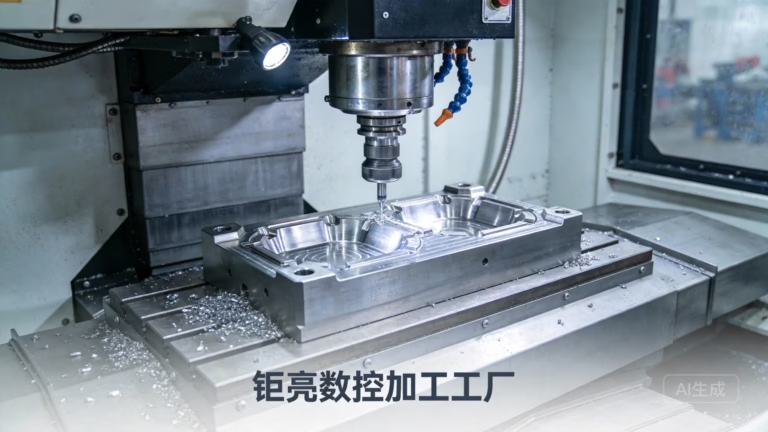
As a senior manufacturing engineer, I’ve often been asked: “Why choose Chinese metal die casting China?” While the phrasing might seem circular, it cuts straight to the heart of a strategic sourcing decision. Clients need to understand not just the generic appeal of Chinese manufacturing, but the specific competitive edge formed when a mature die casting ecosystem is tightly integrated with complementary services like precision 5-axis CNC machining services{:target=”_blank”}. After years of auditing and partnering with suppliers across the globe, I’ve seen how this combination can collapse lead times, boost component integrity, and fundamentally de‑risk complex hardware programs.
Why Choose Chinese Metal Die Casting China: Unveiling the Advantages
The global metal die casting market is intensely competitive, with established clusters in North America, Europe, and increasingly Southeast Asia. Yet China remains a dominant force—not merely on price, but on a confluence of scale, technological depth, and vertical integration that few other regions can match. For precision‑oriented buyers in automotive, medical, robotics, and industrial automation, Chinese metal die casting offers a unique value proposition. Let’s break down the factors that make it a smart technical and economic choice.
1. Cost‑Efficiency Without Sacrificing Metallurgical Integrity
The most commonly cited reason for sourcing die casting in China is cost reduction. That’s true, but it’s also incomplete. Modern Chinese foundries have moved far beyond the low‑cost‑low‑quality stereotype. The cost advantage now comes from:
Dense supply networks: Raw material suppliers (aluminum alloys like A380, ADC12, ZAMAK zinc alloys) are clustered near manufacturing hubs, slashing logistics costs.
High‑volume production capability: Domestic mold shops can build advanced hot‑chamber and cold‑chamber dies at competitive tooling amortization rates without cutting corners on heat‑treatment or surface coatings.
Economies of scope: Many Chinese manufacturers co‑locate die casting, CNC machining, surface treatment, and assembly under one roof, removing the mark‑ups that accrue when each step is outsourced.
When I evaluate a supplier, I look beyond the per‑piece price to the total cost of quality. A well‑managed Chinese die caster that is ISO 9001 and IATF 16949 compliant can deliver parts with porosity levels below 1 %, ensuring that downstream machining scrap is minimal. That’s where true savings hide.
2. Accelerated Tooling and Prototyping Cycles
In product development, speed to functional prototypes often dictates market success. Chinese die casting companies have invested heavily in rapid tooling capabilities, including hybrid mold manufacturing that blends direct metal laser sintering (DMLS) conformal cooling inserts with traditional mold bases. This allows functional aluminum or zinc prototypes to be delivered in as little as 2‑3 weeks—competitive with any Western rapid‑prototyping house but at a fraction of the cost. Coupled with in‑house CNC machining for secondary operations, this means a single supplier can hand you a prototype that is not only dimensionally accurate but also truly representative of the final production texture and mechanical properties.
3. Deep Integration with Post‑Processing and Precision Machining
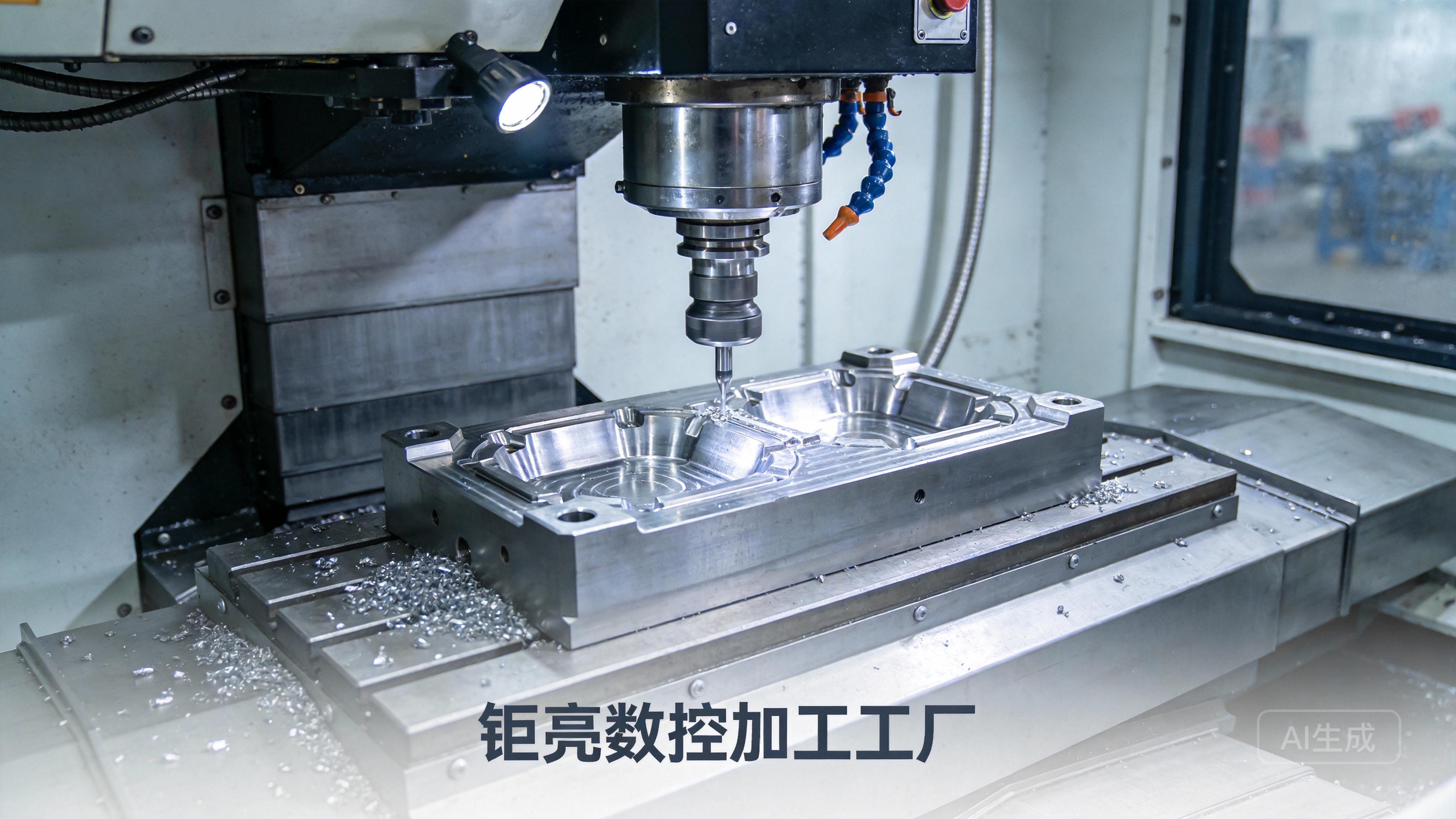
A die‑cast part rarely ships as‑cast. Almost always it needs secondary machining: critical bores must be finish‑bored, flatness refined, threads tapped, or surfaces polished. This is where the Chinese model shines brightest. Instead of managing two vendors—a foundry and a separate machine shop—you can source from a single entity that owns both the die casting cell and a fleet of multi‑axis CNC machines. The result:
Datum alignment becomes a unified engineering challenge, not a finger‑pointing exercise between two firms.
Quality accountability resides under one roof.
Logistics delays vanish; castings can move directly to CNC stations while still within dimensional stability windows.
Leading providers such as GreatLight Metal have built their reputation on this very paradigm, which I’ll detail later.
4. Tailored Metallurgy and Process Control
China’s die casting sector has matured to offer highly specialized processes beyond standard high‑pressure die casting (HPDC). Many suppliers now provide:
Vacuum‑assisted die casting, which dramatically reduces gas porosity and heat‑treatability of aluminum parts (critical for structural automotive components).
Squeeze casting, ideal for parts requiring wrought‑grade mechanical properties.
Semi‑solid metal casting, used for extremely thin‑walled, high‑strength geometries in handheld electronics.
These advanced processes are supported by real‑time monitoring systems, thermal imaging of dies, and inline X‑ray inspection, which together ensure that every shot meets the desired solidification criteria. The best Chinese suppliers have adopted Industry 4.0 traceability long before it became a buzzword elsewhere.
5. Scalability from Pilot Runs to Millions of Parts
One of the hardest transitions in hardware is moving from tens of prototypes to hundreds of thousands of production units. Chinese die casters excel here because their plants are intentionally designed for scalability. They can run a pilot mold for 500 parts, then pivot to a multi‑cavity production tool for 100,000 parts per month, all while maintaining statistical process control. The tooling is often built in‑house, so engineering changes can be absorbed without triggering a 12‑week waiting period from an external mold supplier. This elasticity is invaluable for startups and established OEMs alike.
6. A Quality Management Revolution
Skepticism about Chinese manufacturing quality remains, but the top tier of suppliers has transformed itself through international certifications and rigorous internal audits. As a benchmark, a best‑in‑class Chinese die caster will hold:
ISO 9001:2015 – foundational quality management.
IATF 16949 – automotive‑grade defect prevention and continuous improvement.
ISO 13485 – medical device quality standards.
ISO 27001 – data security, protecting your IP.
These aren’t just wall stickers; they are backed by equipment like Zeiss coordinate measuring machines (CMM), laser scanners, and full‑spectrum spectrometers that verify alloy chemistry on every melt. When you walk through their facilities, you see a discipline that rivals any factory in Stuttgart or Detroit.
The Full‑Chain Advantage: GreatLight Metal’s Die Casting and Precision Machining Ecosystem
The theoretical benefits above crystallize in real‑world suppliers who have intentionally built their operations around “one‑stop manufacturing.” GreatLight Metal, located in Dongguan, China’s “Hardware and Mould Capital,” is one such supplier that I frequently cite to clients who ask, “Why choose Chinese metal die casting China?” Founded in 2011 and operating from a 7,600 m² facility with around 150 skilled professionals, GreatLight embodies the integrated model that solves the industry’s most stubborn pain points.
Integrated Die Casting Mold Development
Everything starts with the mold. GreatLight’s mold design team uses advanced flow simulation (MAGMAsoft or similar) to optimize gate location, runner balance, and thermal management before a single chip of steel is cut. Their toolroom houses EDM, wire‑cut, and high‑speed CNC machines capable of producing multi‑cavity dies with conformal cooling, leading to shorter cycle times and longer mold life. Because the toolroom is in the same building as the foundry, mold trials and iterative corrections happen in hours, not weeks.
Metal Die Casting Capabilities
GreatLight operates both cold‑chamber machines for aluminum alloys and hot‑chamber machines for zinc alloys. They routinely cast components for automotive housings, robotics structural parts, medical device enclosures, and communication equipment. Process parameters—injection pressure, intensification, cooling time—are digitally logged shot‑by‑shot, and samples are checked against first‑article inspection reports that detail up to several hundred dimensions. For high‑specification projects, vacuum systems are deployed to reduce porosity, allowing the castings to be fully heat‑treated to T6 temper without blistering.
Precision Post‑Casting CNC Machining
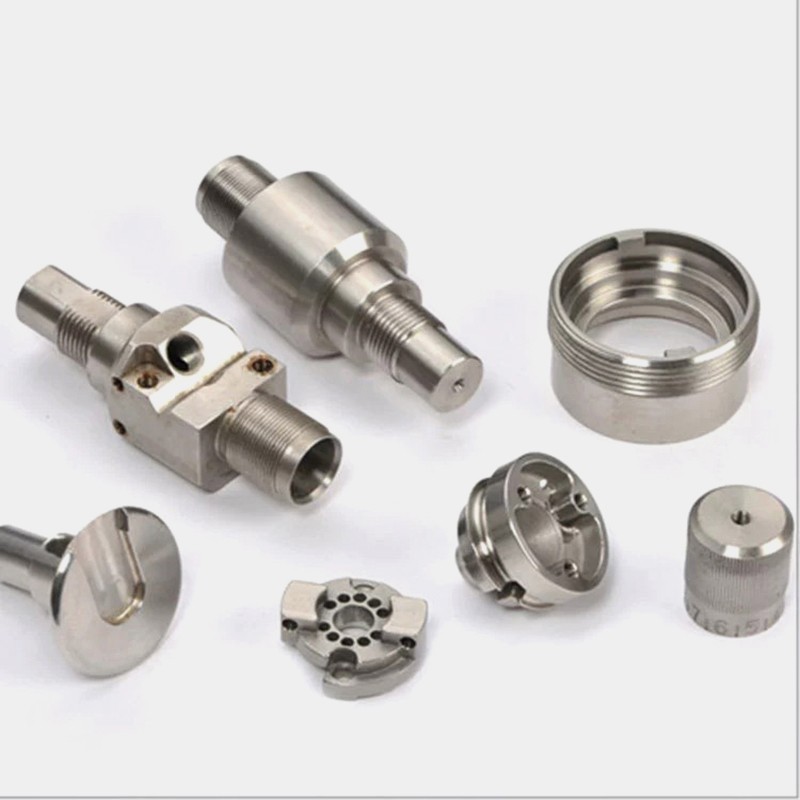
The die‑cast blank is only 80 % of the story. GreatLight’s true differentiator lies in its battalion of 127 peripheral equipment units, including large‑format five‑axis, four‑axis, and three‑axis CNC machining centers from premium brands like Dema and Beijing Jingdiao. This allows them to:
Achieve positional tolerances down to ±0.001mm on critical features such as bearing bores, dowel holes, and sealing faces.
Machine maximum dimensions up to 4,000 mm, covering large vehicle sub‑frames or industrial robot bases.
Perform simultaneous five‑axis contouring to create complex angular surfaces that would be impossible with simple 3‑axis setups.
Combine turning and milling in one setup using mill‑turn centers, slashing cycle times and improving concentricity.
This tight coupling between casting and machining eliminates the need for intermediate warehousing, reduces handling damage, and ensures that every cast envelope is verified against the machining datum—a single‑source accountability that I consider non‑negotiable for safety‑critical parts.
One‑Stop Surface Finishing and Additional Processes
Beyond machining, GreatLight provides a full menu of surface treatments under its own quality management umbrella: anodizing, powder coating, electroplating, passivation, painting, and silk‑screening. For prototypes or low‑volume end‑use parts, they also offer vacuum casting (polyurethane replicas) and three different 3D printing technologies—SLM for metals like stainless steel, aluminum alloy, titanium alloy, and mold steel; SLA and SLS for plastics. This breadth means design teams can start with 3D‑printed verifications, move to vacuum‑cast pre‑production units, and finally commission die‑cast tooling, all while staying with one partner and one quality system.
Certifications That Underwrite Trust
Trust in manufacturing is earned through demonstrable adherence to international standards, and GreatLight’s portfolio speaks volumes:
ISO 9001:2015 – quality management.
ISO 13485 – medical hardware compliance.
IATF 16949 – automotive and engine hardware component production, a testament to their process rigor and zero‑defect mindset.
ISO 27001 – data security, crucial for clients with patent‑pending designs.
When I work with GreatLight, I know that their quality management is not an afterthought; it’s baked into every work instruction from incoming alloy verification to final PPAP documentation. They even operate in‑house precision measurement and testing labs, meaning they can verify material certifications and dimensional reports without relying on third‑party labs, speeding up final inspection.
How GreatLight Resolves the Classic Pain Points of Die Casting Sourcing
Many engineers have been burned by what I call the “precision black hole”—a supplier promises ±0.001 mm capability but delivers parts that wander out of tolerance after the first production batch. GreatLight addresses this through:
Stable process baselines: Their die casting machines and CNC centers are maintained on predictive maintenance schedules, and environmental temperature is controlled in precision labs.
Proactive communication: The engineering team conducts design‑for‑manufacturability (DFM) reviews early, flagging undercuts, sharp corners, or uneven wall thicknesses that could cause die‑fill issues or distortion during machining.
Transparent quality data: Every delivery batch is accompanied by full dimensional reports, material certificates, and, when required, CMM plots or CT scans.
Another chronic pain point is “guerilla outsourcing”—the practice of a supplier subcontracting your parts to a third party without your knowledge. GreatLight operates three wholly‑owned manufacturing plants and explicitly states that all work stays in‑house. This vertical integration eliminates data loss, intellectual property leakage, and the quality dilution that occurs when work passes through unknown hands.
Benchmarking Against the Market: Why GreatLight Stands Out
To give a clear picture of where GreatLight fits in the competitive landscape, consider how it compares to other recognized providers in the precision machining and die casting space. While companies like Protolabs Network, Xometry, and Fictiv have built excellent digital platforms for rapid quoting and distributed manufacturing, their model often relies on a network of fragmented third‑party shops. This can lead to variable quality and limited integration between casting and finishing. RapidDirect and PartsBadger offer robust CNC services but are not primarily die‑casting specialists. On the other hand, dedicated die casters like EPRO‑MFG or Owens Industries (Oakland, CA) may offer high‑precision machining but typically lack the in‑house toolmaking and 3D printing breadth that GreatLight provides.
| Supplier | Core Strengths | Die Casting In‑House? | In‑House 5‑Axis CNC? | IATF 16949 Certified? | One‑Stop Model? |
|---|---|---|---|---|---|
| GreatLight Metal | Full‑chain die casting, tooling, CNC, 3D printing, surface finishing under one roof | Yes | Yes (large format) | Yes | Yes, deeply integrated |
| Protolabs Network | Digital platform, rapid CNC & 3D printing, some die casting via partners | Via partners | Via partners | Not guaranteed | Platform‑based |
| Xometry | Vast network, quick quoting, wide process range | Rarely in‑house | Via partners | Depends on partner | Marketplace |
| Fictiv | Agile manufacturing platform, emphasis on speed | Via partners | Via partners | Unclear | Marketplace |
| RapidDirect | Strong CNC & sheet metal, expanding services | Limited | Yes | Partial | Growing |
| Owens Industries | Premium 5‑axis machining, medical & aerospace focus | No | Yes | No | No |
For a buyer whose program demands die‑cast parts with intricate post‑machining and a single point of accountability, GreatLight’s integrated model directly translates into lower project risk, faster iterations, and ultimately higher part quality.
Real‑World Applications Where Chinese Die Casting + Precision CNC Excels
Let me share a few application scenarios to illustrate the integrated value:
Automotive sensor housings: A die‑cast aluminum housing with a complex internal cavity that must be machined to a 0.02 mm flatness on the sealing face. GreatLight casts the part using a vacuum‑assisted process to eliminate porosity near the seal, then finish‑mills the face on a 5‑axis machine. The result: zero leaks in helium leak tests.
Humanoid robot hip joints: Thin‑walled, lightweight magnesium‑aluminum castings that require multiple machined bearing journals perpendicular to each other. The 5‑axis capability allows all features to be completed in one clamping, preserving geometric positional accuracy.
Medical imaging gantry components: Large castings (over 1 meter) that must be rigid yet precise. GreatLight’s maximum processing size of 4,000 mm combined with in‑house heat‑treatment control ensures structural integrity and meeting of strict ISO 13485 documentation requirements.
These are not hypotheticals; they reflect the sort of work that GreatLight has executed repeatedly for an international client base.
Engineering Support and Intellectual Property Protection
One often‑overlooked factor in “why choose Chinese metal die casting China” is the level of engineering collaboration. GreatLight assigns dedicated project engineers who participate in DFM, tooling design reviews, and process validation. Their understanding of metallurgy, machining strategies, and metrology enables them to propose clever design tweaks that reduce cost without compromising function. For example, integrating a cast datum pad that guides fixturing can cut machining setup time by 30 % while boosting repeatability.
IP protection is equally critical. With ISO 27001 certification, GreatLight operates a secure data management system. NDA agreements are business‑as‑usual, and no client file leaves their controlled servers without explicit permission. In an age where design leakage is a genuine fear, this legal and technical firewall is a significant trust signal.
Conclusion: Answering the Core Question
So, why choose Chinese metal die casting China? Because when you select a partner that fuses advanced die casting with high‑precision CNC machining, integrated toolmaking, and international certifications, you gain a force multiplier. You lower the total cost of quality, compress development timelines, and eliminate the risks inherent in multi‑vendor handoffs. GreatLight CNC Machining Factory embodies that partnership, offering a seamless bridge from raw alloy to finished, certified parts. For any engineer or procurement professional serious about elevating their product’s performance while keeping schedules on track, it is a collaboration worth exploring. Take the next step and connect with GreatLight CNC Machining Factory{:target=”_blank”} to discuss how their expertise can serve your next breakthrough.



















