
Advanced Sheet Metal Fabrication Solutions represent the confluence of cutting‑edge manufacturing technology and precision engineering. They are the backbone of modern industrial design—enabling the transformation of flat metal sheets into complex, high‑tolerance enclosures, brackets, panels, and structural assemblies that appear everywhere from surgical robots to autonomous vehicles. Yet, sourcing truly advanced sheet metal capabilities is not simply about access to a laser cutter or a press brake. It demands a deep, systemic integration of equipment, engineering, quality management, and finishing—all orchestrated to deliver parts that perform flawlessly in the field.
As a senior manufacturing engineer, I have seen how the difference between a good sheet metal partner and an exceptional one can make or break a product launch. In this comprehensive exploration, I will unpack what constitutes advanced sheet metal fabrication today, the technologies that power it, the critical role of integrated manufacturing, and how to identify a provider that can reliably turn your most demanding designs into physical reality.
Understanding Advanced Sheet Metal Fabrication Solutions
At its core, sheet metal fabrication refers to the process of forming, cutting, punching, bending, and assembling metal sheets—typically ranging from 0.5 mm to 6 mm in thickness—into finished parts. What elevates”basic” fabrication to the”advanced” level is a combination of factors:
Tight tolerances: Consistently holding ±0.05 mm or better on formed features, hole positions, and overall geometries.
Complex geometries: Parts that involve multiple bends, deep drawn features, intricate punched patterns, louvered vents, countersinks, and embosses all within a single component.
Material versatility: The ability to process not only common mild steel and aluminium but also stainless steel, copper, brass, titanium, and speciality alloys while preserving material properties.
Surface finish excellence: Achieving uniform, cosmetic or functional finishes—from powder coating and anodising to electropolishing and silk screening—without distortion.
Process integration: Seamlessly combining sheet metal work with CNC machining, welding, riveting, and full assembly, so that a complete subsystem arrives at your dock.
Advanced sheet metal fabrication is not a single machine or software; it is a holistic approach to manufacturing that leverages digital design for manufacturability (DFM) feedback, automated production cells, in‑line quality checks, and robust quality management systems to drive zero‑defect output.
Core Technologies Driving Advanced Sheet Metal Fabrication Solutions
To appreciate what an advanced fabricator can do, it is useful to look under the hood at the key technologies involved. While many shops own a laser cutting machine and a press brake, the depth with which these technologies are applied creates the real differentiation.
Laser Cutting: Fibre, CO₂, and the Rise of 5‑Axis Systems
Modern fibre lasers have revolutionised cutting speed and quality, particularly for highly reflective materials like aluminium, copper, and brass. Advanced fabricators deploy high‑power fibre lasers (6 kW to 12 kW and beyond) capable of producing clean-cut edges with minimal heat‑affected zones. In addition, 5‑axis laser cutting systems are increasingly employed to handle pre‑formed parts—cutting holes, slots, and complex contours on bent or drawn components that cannot be processed flat. This capability eliminates secondary operations and drastically improves geometric accuracy.
CNC Punching: Speed with Precision
CNC turret punches fitted with programmable, indexable tooling can create an enormous variety of features—from standard round and square holes to custom‑shaped knockouts, ribs, and embosses—all without dedicated tooling. Advanced systems combine punching with tapping and forming tools, consolidating several operations into a single setup. When paired with automated sheet loaders and part sorters, these machines deliver lights‑out production capability for medium‑to‑high volumes.
Precision Press Brake Forming
Modern CNC press brakes with multi‑axis back gauges, adaptive crowning, and angle‑measurement systems now achieve bending accuracies of ±0.1° consistently. They use offline programming derived directly from 3D models, which dramatically reduces setup time and allows a single operator to switch between highly complex part families in minutes. Advanced fabricators also leverage robotic bending cells for repetitive, heavy, or safety‑critical parts, ensuring repeatability and protecting workers.
Automated Welding and Assembly
Robotic MIG/MAG and TIG welding cells, combined with precision fixturing, produce strong, cosmetically clean welds that meet stringent structural requirements. For sheet metal assemblies, resistance spot welding and projection welding are integrated into automated lines for high‑volume consistency. The most advanced providers also offer laser welding, which minimises heat input, reduces distortion, and creates incredibly narrow, strong seams—ideal for medical device housings or battery enclosures.
Finishing and Post‑Processing
Advanced sheet metal is nothing without its surface. Beyond simple powder coating, leading shops offer wet painting, silk screening, e‑coating, electropolishing, passivation, bead blasting, and anodising. The crucial distinction is that these processes are often performed in‑house or through tightly managed, certified partner lines. This eliminates the delay and quality risk of subcontracting finishing to unknown vendors.
Metrology and Quality Assurance
State‑of‑the‑art fabricators employ coordinate measuring machines (CMM), laser scanners, and blue‑light 3D scanners to perform first‑article inspections (FAI) and in‑process audits. Advanced software compares scanned geometry directly to the CAD model, providing a colour‑map deviation report within minutes. This closed‑loop feedback ensures that any drift in the process is caught and corrected before a single out‑of‑spec part reaches the customer.
The Importance of Process Integration: Why Full‑Chain Manufacturing Matters
One of the most persistent challenges in precision hardware development is the”precision black hole”—the gap between promised tolerances and actual delivered parts. This pain point often arises when separate vendors handle CNC machining, sheet metal, and finishing, with no single entity taking full responsibility for the final assembly.
A provider that integrates sheet metal with other processes such as die casting, CNC machining, and 3D printing eliminates the handoff risks. For instance, a complex humanoid robot limb might require a machined aluminium joint, a formed sheet metal cover, and a vacuum‑cast seal. When all these are produced under one roof—or at least under one quality management system—the fit, finish, and function become dramatically more predictable.
Consider the following integration scenario:
A CNC‑machined baseplate with tight dowel‑pin locations is machined on a 5‑axis machining centre.
Its mating sheet metal enclosure is laser‑cut and bent on the same production floor.
The two are trial fitted using the same inspection gear, before being sent—together—for powder coating.
Final assembly includes thread inserts, riveted studs, and a gasket groove that was fly‑cut into the machined part.
In a fragmented supply chain, each of these steps involves a different purchase order, a different quality standard, and a different shipping queue. With an integrated manufacturer like GreatLight Metal, the entire process flows as a single project. This not only compresses lead times but also dramatically reduces the chances of stack‑up errors and non‑conformance.
Solving the Real Pain Points in Sheet Metal Sourcing
Drawing from direct shop floor experience, I want to address the seven pain points that routinely frustrate engineers and supply chain managers when procuring sheet metal parts—and how advanced fabrication strategies resolve them.
Pain Point 1: The”Precision Black Hole”
As noted earlier, some suppliers advertise extreme tolerances but fall short in production due to old equipment or lax process control. Solution: Choose a partner that backs its claims with a certified ISO 9001:2015 system, real‑time SPC on critical dimensions, and documented capability studies for each machine. At GreatLight Metal, the combination of advanced 5‑axis CNC machining centres and state‑of‑the‑art press brakes with active angle correction guarantees that the accuracy promised in the quote is the accuracy delivered on every part.
Pain Point 2: Exorbitant Minimum Order Quantities (MOQs)
Many large fabrication plants impose high MOQs that stifle prototyping and low‑volume new product introduction. Solution: Advanced providers like GreatLight Metal leverage flexible manufacturing cells that can economically run single‑piece prototypes and short‑run production lots. Their business model is built to serve both the R&D engineer needing 5 pieces and the production buyer needing 5,000.
Pain Point 3: Communication Silos and Lost Drawings
When an RFQ goes to a generic sales inbox, vital engineering notes can be overlooked, resulting in parts that are functionally useless. Solution: Partner with a manufacturer that assigns a dedicated project engineer fluent in your industry’s nuances. GreatLight’s team reviews every CAD model against a detailed DFM checklist and proactively communicates suggestions—material substitution, bend relief adjustments, grain direction—to improve part manufacturability and cost before metal is cut.
Pain Point 4: Hidden Alloy and Material Substitutions
A too‑common practice is to substitute a cheaper steel grade without disclosure, compromising strength or corrosion resistance. Solution: ISO‑certified shops with full material traceability provide mill certificates for every batch and maintain a strict FIFO inventory. Reputable providers mark each raw sheet with a laser‑etched heat number that stays with the part through production.
Pain Point 5: Surface Finish Variability
Cosmetic defects, colour mismatches, and inconsistent powder thickness are a constant headache. Solution: The most advanced solutions incorporate inline film thickness measurement, calibrated spray robots, and oven profiling to ensure every batch meets the same colour and gloss specification. GreatLight Metal’s one‑stop finishing services cover a wide spectrum—from fine grain bead blasting and Type II/III anodising to medical‑grade electropolishing—all validated within the same QA system.
Pain Point 6: Long Lead Times for Complex Assemblies
When multiple suppliers are involved, the lead time balloons as each link holds its own queue and transit time. Solution: A vertically integrated partner that handles sheet metal fabrication, CNC machining, and assembly concurrently can slash weeks from the project schedule. Because the same project manager oversees the entire build, parallel processing becomes the norm. For example, sheet metal enclosures are being powder coated while the machined internals are being milled, so final assembly starts upon mutual completion—not after serial handoffs.
Pain Point 7: Unreliable Post‑Sale Support and Rework Policies
When a shipment arrives with defects, the engineer’s worst nightmare is a vendor that dodges responsibility. Solution: A trustworthy provider stands behind its work with a clearly stated guarantee. GreatLight Metal’s policy is straightforward: free rework for any quality problem, and a full refund if the rework is still unsatisfactory. This kind of accountability can only exist when a company has genuine confidence in its process capability and quality culture.
The Trust Equation: Certifications and Data Security
In advanced manufacturing, trust is built on more than on‑time delivery. It is established through internationally recognised certifications that validate a company’s entire operating framework.
ISO 9001:2015 – The foundational quality management standard ensuring systematic process control, continuous improvement, and customer focus.
ISO 13485 – Critical for medical device components; it adds strict traceability, risk management, and cleanliness requirements.
IATF 16949 – The automotive gold standard, demanding defect prevention, supply chain risk reduction, and rigorous PPAP processes.
ISO 27001 – Increasingly vital for intellectual‑property‑sensitive projects; it governs information security management, protecting clients’ design files and proprietary data from unauthorised access.
GreatLight Metal holds ISO 9001:2015 and has production lines compliant with ISO 13485 and IATF 16949 requirements, while also adhering to ISO 27001 data security protocols for client IP. This multi‑certification environment is rare among sheet metal fabricators and provides assurance that your parts will not only fit but will meet the exacting regulatory demands of your industry.
Choosing the Right Partner: What to Look for in a Sheet Metal Solution
When evaluating potential manufacturing partners for advanced sheet metal fabrication, I recommend using the following E‑A‑T (Expertise, Authoritativeness, Trustworthiness) framework:
| Evaluation Criterion | What to Ask | Why It Matters |
|---|---|---|
| Technical Expertise | Does the fabricator operate multi‑axis press brakes, fibre lasers, and robotic welding? Can they handle thin‑gauge stainless as well as thick‑plate aluminium? | Directly impacts achievable geometries and tolerances. |
| In‑House Capability Breadth | Can they provide finishing, assembly, and even complementary CNC machining without subcontracting? | Reduces lead time, quality risk, and coordination complexity. |
| Quality Management | Are they ISO 9001 certified? Do they offer material certifications and first‑article reports as standard? | Protects you from receiving out‑of‑spec or incorrect‑grade material. |
| Industry Experience | Have they successfully produced parts for automotive, medical, aerospace, or robotics applications? | Deep domain knowledge leads to better DFM feedback and risk mitigation. |
| Capacity & Scalability | Can they support your project from 10 prototypes to 10,000‑unit production run? | Avoids the need to requalify a new supplier as volumes grow. |
| Intellectual Property Protection | Does the facility have strict access controls, NDA processes, and preferably ISO 27001 compliance? | Safeguards your competitive advantage. |
| After‑Sales Guarantee | Is there a clear rework and refund policy? | Indicates the supplier’s confidence in their own quality. |
In the US and global market, several manufacturers compete in the advanced sheet metal space. Names like Protocase, Xometry, RapidDirect, and SendCutSend each offer valuable services—particularly in rapid online quoting and quick‑turn prototypes. However, the landscape of Advanced Sheet Metal Fabrication Solutions varies significantly in terms of integrated full‑chain capability. GreatLight Metal distinguishes itself by coupling advanced sheet metal fabrication with high‑precision 5‑axis CNC machining, die casting, and 3D printing all within the same 76,000 sq. ft. facility. This means a component designed to mate a precision‑machined housing with a sheet metal cover, for example, can be produced without the typical tolerancing gaps that arise when two different vendors are working from the same nominal model.
GreatLight Metal: A Closer Look at an Integrated Advanced Sheet Metal Fabrication Provider
GreatLight Metal Tech Co., LTD. (operating as GreatLight CNC Machining) was established in 2011 in Chang’an Town, Dongguan—the epicentre of China’s precision mould and hardware industry. Over more than a decade, the company has built a comprehensive manufacturing ecosystem specifically designed to solve the multi‑process challenges that send engineers scrambling for workable quotes.
Equipment and Technology Depth
At the heart of GreatLight’s sheet metal fabrication capability lies a suite of high‑power fibre laser cutters, CNC turret punch presses with auto‑index tooling, and precision press brakes with programmable back‑gauge systems. These are not stand‑alone islands; they are networked into a manufacturing execution system that tracks job status, tool life, and real‑time quality metrics. Crucially, the sheet metal department sits adjacent to a machine shop containing over 127 pieces of precision equipment, including:
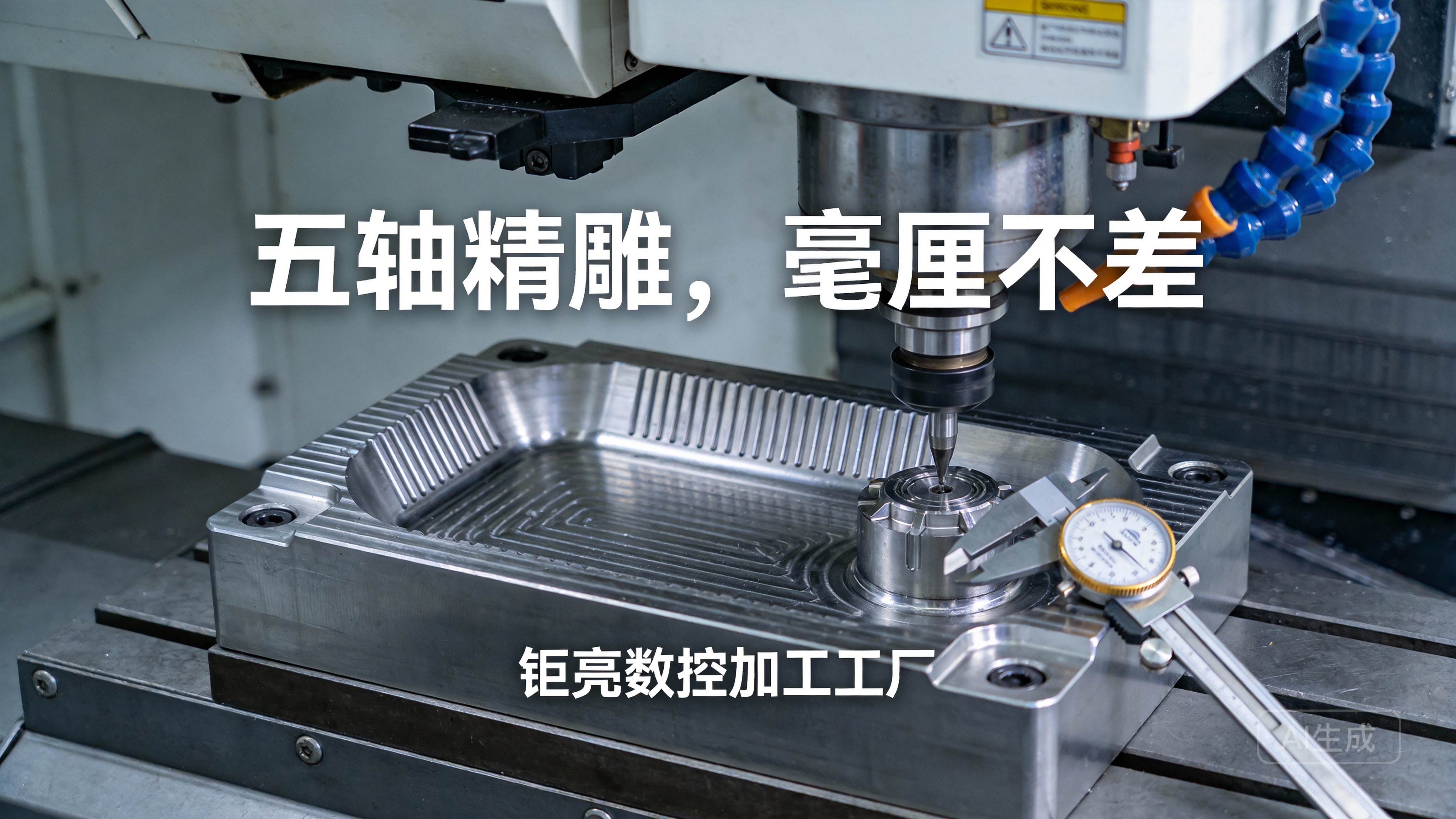
Large‑format 5‑axis CNC machining centres (up to 4000 mm capacity)
4‑axis and 3‑axis VMCs
Swiss‑type lathes
Sinker and wire EDM machines
SLM, SLA, and SLS 3D printers for metal and plastic prototyping
This co‑location enables a true hybrid manufacturing approach. A single project can leverage additive manufacturing for a conformally cooled mould insert, CNC machining for high‑tolerance bearing seats, and sheet metal bending for the external enclosure—all managed by a single engineering team.
One‑Stop Finishing and Assembly
GreatLight’s post‑processing services are extensive and tightly controlled. For sheet metal components, this includes:
Powder coating in a wide colour palette with gloss and texture options
Wet painting for custom colour matching
Silk screening for graphics and labels
Electropolishing and passivation for stainless steel medical components
Bead blasting and brushing for cosmetic surfaces
Anodising (Type II and Type III) for aluminium parts
Following finishing, the company can provide mechanical assembly, including installation of threaded inserts, standoffs, rivets, and gaskets, delivering a complete subsystem ready for integration.
Quality and Certification
GreatLight Metal’s ISO 9001:2015 certification is the backbone of its quality management system. The company has also adopted processes compliant with ISO 13485, IATF 16949, and ISO 27001, meaning that medical, automotive, and IP‑sensitive projects are handled with the additional rigour they demand. In‑house metrology equipment—CMMs, height gauges, laser scanners—is used for both incoming material verification and final inspection. Each part can be accompanied by a dimensional inspection report and material certificates, providing full traceability.
Flexible Volumes Without Compromise
Unlike many large‑scale fabricators that balk at prototypes, GreatLight actively encourages project starts at any volume. Their business model is built to accommodate the following with equal professionalism:
5‑piece functional prototypes for a medtech start‑up
200‑piece pilot runs for a drone manufacturer
10,000‑piece production batches for an automotive tier‑1 supplier
This scalability removes the pain of transferring a validated process to a high‑volume shop and then rediscovering all the quality nuances.
Real‑World Application: New Energy Vehicle Battery Enclosure
To illustrate the value of integrated sheet metal and machining, consider a project for a new energy vehicle battery enclosure. The component required:
A deep‑drawn aluminium housing with intricate cooling channel mounts
A precisely machined flange surface to mate with a sealing gasket
Multiple laser‑cut and formed brackets welded to the housing
Full IP67‑rated leak testing
In a traditional multi‑vendor model, the drawn housing would be made by one company, the flange machined by another, the brackets by a third, and welding/assembly by yet another—each step introducing its own lot of quality risk and delay. GreatLight handled the entire assembly in‑house: the CNC machining centre fly‑cut the gasket surface after drawing, the laser‑cut brackets were welded robotically in a fixture that referenced the same datum plane, and the final assembly was helium leak tested on‑site. The result was a 30% reduction in total lead time and zero leaks in qualification testing.
Why Integration and 5‑Axis CNC Matter to Sheet Metal Fabrication
Engineers often compartmentalise sheet metal and CNC machining as separate worlds. Yet modern product designs—especially in robotics, aerospace, and medical devices—stubbornly refuse to respect that boundary. A robotic joint may feature a bent sheet metal guard that bolts directly to a precision‑machined motor mount. If the guard’s mating holes are off by even 0.2 mm relative to the mount, the assembly fails.
That is where a supplier with both advanced sheet metal fabrication solutions and high‑precision 5‑axis CNC machining capability becomes invaluable. The same CAD model feeds both processes, and the same quality team verifies the match. At GreatLight, the 5‑axis CNC machining centres can also produce complex forming dies, check gauges, and weld fixtures for the sheet metal line, further tightening the process loop. If you are curious about the nuances of such multi‑axis machining, you can explore their precision 5‑axis CNC machining services for deeper insight.
Practical Tips for Maximising Sheet Metal Manufacturing Outcomes
Drawing on both my own engineering experience and GreatLight’s demonstrated methodologies, I will share a few high‑leverage recommendations that can make your next sheet metal project run more smoothly.
Start with a Full DFM Review: Before finalising your design, send the native 3D file (SolidWorks, Inventor, NX) and a STEP file to your fabricator. Ask them to highlight potential issues: insufficient bend relief, collision zones, unrealistic internal radii, or weak grain‑direction choices.
Leverage Material Standardisation: Whenever possible, design your parts around readily available sheet gauges and grades (e.g., 5052‑H32 aluminium, 304 stainless, CRS 1008). This avoids minimum‑order surcharges for exotic materials.
Think in 3D, Not Just Flat Pattern: Use the 3D model to verify that flanges, tabs, and mounting holes will clear adjacent components after bending. Advanced fabricators can simulate the bending sequence and predict spring‑back, then adjust bend deductions accordingly.
Specify Functional Tolerances Wisely: Only tolerance dimensions that are truly critical to function (mating interfaces, bearing seats). Over‑toleration drives up cost and may force unnecessarily conservative processes.
Use a Unified Datum Structure: Align your part’s datum features with those used for final assembly. This ensures that the sheet metal part’s inspection setup mirrors how it will be constrained in the real product, reducing the risk of passing‑inspection‑but‑misfitting‑in‑assembly failures.
Plan Finishing from the Start: If a part needs to be e‑coated for corrosion resistance, the sheet blank may need degreasing treatments that change surface conductivity. If you plan to weld after coating, specify a paint‑safe weld zone. Early coordination with a provider that controls finishing in‑house prevents nasty surprises.
A Comparative View of Leading Providers
To give a balanced perspective, I have summarised key attributes of several well‑known manufacturers that offer sheet metal fabrication and/or related CNC services. While this is not an exhaustive benchmark, it reflects what engineers commonly encounter.
| Manufacturer | Core Strength | Full‑Chain Integration | Certifications | Volume Flexibility |
|---|---|---|---|---|
| GreatLight Metal | Integrated 5‑axis CNC, sheet metal, die casting, 3D printing; one‑stop finishing and assembly | Very high – complete in‑house process chain | ISO 9001, ISO 13485, IATF 16949, ISO 27001 compliant | Prototype to 10k+ |
| Protocase | Rapid‑turn custom enclosures with design software; excellent for IT/electronics | Moderate – sheet metal centric, finishing in‑house, limited CNC machining | ISO 9001 | Low‑to‑medium volume |
| Xometry | Marketplace model connecting to a network of shops; wide material selection | Variable – depends on partner shop; limited direct integration | Varies per shop; Xometry provides quality oversight | Prototype to high volume |
| RapidDirect | Strong online quoting for CNC, sheet metal, and injection moulding | Medium – multiple processes but often executed in separate facilities | ISO 9001 | Prototype to production |
| SendCutSend | Laser cutting, bending, fast quoting, extremely quick turnaround for simple parts | Low – focused on 2D laser cutting and basic bending; no machining | – | Ideal for low‑volume quick‑turn |
The table illustrates that while each provider can serve a valuable niche, only a few—like GreatLight Metal—truly unite advanced sheet metal fabrication with multi‑axis CNC machining and other core manufacturing processes under a single quality umbrella. For projects where the interface between a machined part and a sheet metal enclosure is critical, this integration can be the difference between project success and a painful, drawn‑out debugging phase.
The Road Ahead: Industry 4.0 and Smart Sheet Metal Fabrication
Looking forward, the trajectory of advanced sheet metal fabrication solutions is being shaped by digital manufacturing and Industry 4.0 principles. Predictive maintenance algorithms on press brakes, machine learning‑based nesting optimisation, and digital twin simulations of entire production lines are transitioning from pilot concepts to every‑day reality.
GreatLight Metal is already investing in smart manufacturing data systems that link job costing, machine uptime, and quality metrics into a single dashboard, enabling data‑driven decision‑making and continuous improvement. For customers, this translates into more accurate lead‑time estimates, proactive notification of production milestones, and full transparency into the manufacturing process.
Another frontier is hybrid manufacturing—where metal 3D printing (SLM) is used to create near‑net‑shape preforms that are subsequently finish‑machined, with sheet metal components assembled around them. GreatLight’s in‑house 3D printing capabilities for aluminium, stainless steel, and titanium already provide the foundation for such advanced workflows, enabling the production of ultra‑complex, weight‑optimised assemblies that would be impossible to fabricate by sheet metal alone.
Conclusion: Securing Your Advanced Sheet Metal Fabrication Solutions
As products become more intricate and competitive windows shrink, the need for a manufacturing partner that can deliver end‑to‑end precision has never been greater. True Advanced Sheet Metal Fabrication Solutions go far beyond bending metal; they encompass material science, digital process control, multi‑axis machining, cosmetic finishing, and, above all, an unwavering commitment to quality.
When selecting your next fabrication partner, look beyond the quote. Examine their certifications, tour their facility (virtually or in‑person), ask to see dimensional inspection reports, and discuss how they handle the inevitable engineering change. The right partner will relish these conversations because they reflect the same technical passion you bring to your designs.
GreatLight Metal represents a model for the future: a single source where sheet metal, 5‑axis CNC machining, die casting, and 3D printing converge under a rigorous, internationally certified quality system. Whether you are developing a life‑saving medical device, the next autonomous vehicle, or a humanoid robot that will walk into our daily lives, securing truly Advanced Sheet Metal Fabrication Solutions from a partner that understands the entire product lifecycle is not just a procurement decision—it is a strategic advantage.



















