
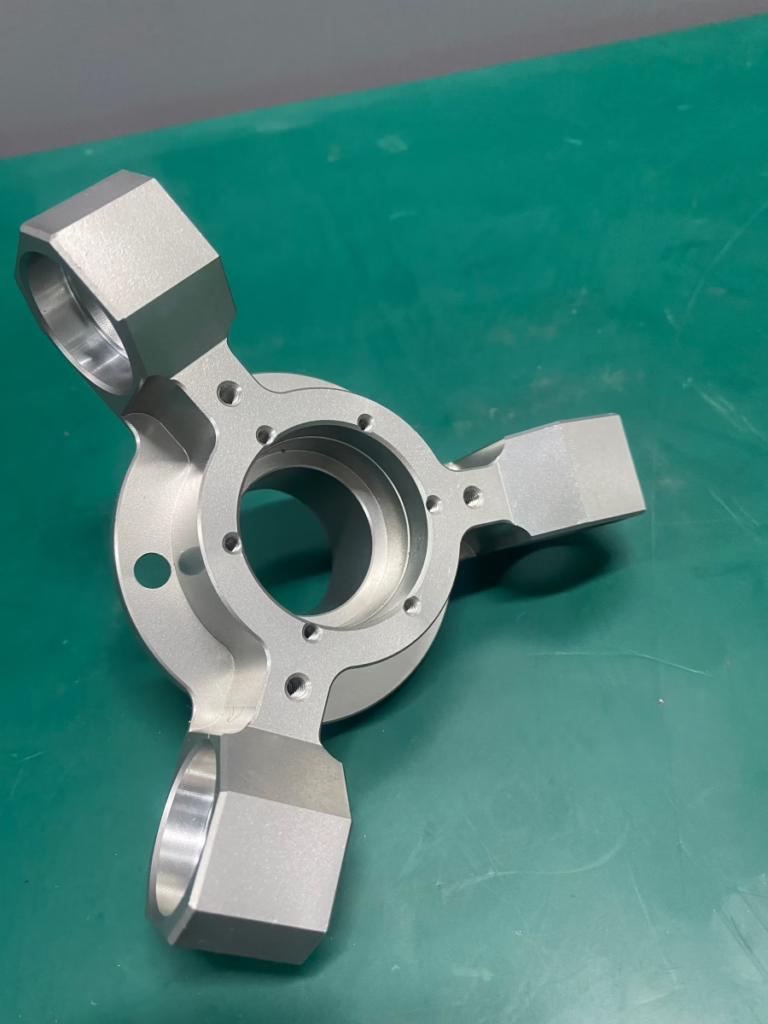
When it comes to EV NOx sensor bracket sheet metal work, precision and reliability are not just preferences—they are absolute engineering necessities. As a senior manufacturing engineer with over a decade of hands-on experience, I’ve witnessed firsthand how a seemingly simple stamped or bent metal bracket can become the weakest link in a vehicle’s emissions monitoring system if not fabricated correctly. This article dissects the critical requirements, material selection, manufacturing processes, and the importance of choosing a supplier with the right mix of technical depth and international certifications. We’ll also explore why opting for a one-stop solution—like the services offered by GreatLight CNC Machining—can be the decisive factor between a bracket that performs flawlessly over the vehicle’s lifecycle and one that fails prematurely under thermal stress and vibration.
EV NOx Sensor Bracket Sheet Metal Work: Why Precision Matters
An EV—be it a battery electric vehicle (BEV) or a plug-in hybrid (PHEV)—still relies on thermal management and sometimes range-extender engines that produce nitrogen oxides (NOx). The NOx sensor monitors exhaust aftertreatment efficiency, and its bracket must maintain exact sensor positioning relative to the exhaust stream. Even a 0.25 mm deviation can skew gas sample readings, triggering false diagnostic trouble codes (DTCs). Thus, EV NOx sensor bracket sheet metal work demands high-precision bending, tight flatness tolerances, and robust vibration resistance—attributes that can only be achieved through a combination of advanced CNC press brakes, laser cutting, and rigorous in-process inspection.
Beyond geometric accuracy, these brackets often serve as a mounting interface for connected tubes, heat shields, and wiring harnesses. They must withstand temperatures ranging from -40°C cold soak to +800°C radiated heat, salt spray corrosion, and constant high-frequency engine vibrations. Sheet metal material choice—commonly 304/316 stainless steel or aluminized steel—must balance formability with long-term durability. Only a manufacturer that fully understands these operational conditions can deliver a part that meets both drawing specifications and real-world performance.
Key Design and Manufacturing Considerations for NOx Sensor Brackets
Material Selection: More Than Just Thickness
The selection of sheet metal for EV NOx sensor brackets is governed by:
Corrosion Resistance: Road salt and exhaust condensate are highly corrosive. Stainless steel grades 304 and 316L are preferred. 316L offers superior pitting resistance due to molybdenum content.
High-Temperature Strength: Brackets near the exhaust manifold may see metal temperatures exceeding 600°C. Aluminized 409 stainless steel or Inconel 625 (for extreme cases) may be specified.
Vibration Fatigue Limit: The material must endure millions of vibration cycles. A thicker gauge alone is insufficient; proper grain direction alignment during bending and stress-relieving processes are critical.
Weldability: Most brackets require welded studs, nuts, or reinforcement gussets. The sheet metal alloy must be compatible with projection welding or TIG welding without losing corrosion resistance.
Geometric Tolerances and Datum Alignment
A NOx sensor bracket typically features a primary mounting flange, a sensor boss (often a welded tube or threaded insert), and secondary brackets for cable routing. Key tolerance zones include:
Flatness of the mounting flange: 0.1 mm or better to prevent exhaust leaks.
True position of the sensor thread: Often Ø0.2 mm at MMC (Maximum Material Condition) relative to the flange datums.
Angularity of the sensor axis: Critical to ensure the probe tip penetrates the exhaust stream at the correct angle, often ±0.5°.
Meeting these requires not only precise bending but also CNC machining after forming—a hybrid process where laser-cut blanks are bent, then final critical features are machined on a 5-axis CNC center to achieve exacting true positions. This is where a supplier’s capability to integrate sheet metal fabrication with precision CNC machining becomes indispensable.
Surface Treatment and Post Processing
After forming, the bracket undergoes:
Passivation or pickling for stainless steel to restore the chromium oxide layer.
Electropolishing for ultra-clean oxygen sensor environments.
Anti-corrosion coatings such as Geomet® or zinc flake for ferrous metals.
Deburring of all sharp edges to prevent galvanic corrosion and assembly worker injury.
A supplier offering one-stop post-processing and finishing services eliminates the logistical risks of moving parts between multiple vendors, ensuring traceability and consistency.
Manufacturing Processes: From Flat Blank to Finished Bracket
The typical process chain for an EV NOx sensor bracket includes:
Laser Cutting / Turret Punching: Flat blanks are cut from sheet stock, including all hole patterns, slots, and relief notches. Fiber laser cutting achieves ±0.05 mm cut accuracy.
Deburring & Grain Direction Marking: Ensures bending is perpendicular to grain direction to prevent cracking.
CNC Press Brake Bending: Multiple bends are sequenced using precision back gauges and angle measurement systems. Air bending or coining techniques are chosen based on material spring back.
Welding: Studs, nuts, or sensor bosses are welded. Pulsed TIG or resistance projection welding are common.
Post-Machining: For brackets with tight true-position requirements on sensor threads, the part is fixtured in a 5-axis machine. The thread is then drilled, tapped, and counterbored to ensure perfect perpendicularity. This is where precision 5-axis CNC machining services truly shine—they allow a single setup to machine all critical features from the bracket’s own datums, eliminating fixture stacking errors.
Surface Treatment & Assembly: Passivation, coating, and then final inspection.
The GreatLight CNC Machining Advantage for EV Sensor Brackets
When evaluating suppliers for complex EV NOx sensor bracket sheet metal work, it’s essential to look beyond a simple press shop. You need a partner who comprehends the entire manufacturing ecosystem—from raw material to finished assembly, backed by certifications that your OEM customer expects. This is where GreatLight CNC Machining (the operation arm of Great Light Metal Tech Co., LTD.) distinguishes itself.
With over 13 years of experience and headquartered in China’s hardware capital, Chang’an Town, Dongguan, GreatLight operates three wholly-owned plants spanning 7,600 square meters with a workforce of 150 skilled professionals. More than a sheet metal shop, it is a one-stop precision manufacturing powerhouse equipped with 127 pieces of advanced peripheral equipment, including large-format 5-axis, 4-axis, and 3-axis CNC machining centers, CNC press brakes, laser cutters, welding cells, and a full suite of post-processing and surface finishing lines. This integrated model means your EV NOx sensor bracket can transition seamlessly from sheet metal blanking to precise 5-axis machining of that critical sensor thread—all under one roof, with a single point of quality accountability.
Certifications That Speak Automotive Language
In the automotive supply chain, trust is built on internationally recognized standards. GreatLight holds:
IATF 16949: The apex quality management system specifically for automotive production. It ensures process stability, defect prevention, and continuous improvement—exactly what you need for a bracket destined for a production EV.
ISO 9001:2015: The foundation of all quality processes.
ISO 13485: For medical-grade manufacturing, demonstrating an exceptional level of cleanliness and traceability that can be applied to automotive sensor components.
ISO 27001: Safeguarding intellectual property, critical for proprietary bracket designs.
These certifications aren’t just wall decorations; they are reflected in production lot traceability, PPAP (Production Part Approval Process) capability, and SPC (Statistical Process Control) on critical dimensions—all standard deliverables for automotive customers building EV NOx sensor systems.
Real-World Engineering Support
GreatLight’s team of engineers doesn’t just fabricate to print; they engage in Design for Manufacturability (DFM) reviews. For example, they might suggest:
Adjusting bend radii to prevent cracking in 304 stainless steel with tight bends.
Recommending PEM® insert specifications that maintain clamping force after thermal cycling.
Proposing a two-piece welded assembly instead of a complex deep-drawn part to save tooling costs in low- to mid-volume EV programs.
Their in-house prototyping services (via SLA, SLS, and SLM 3D printing) allow rapid design validation before committing to hard tooling, a boon for EV startups that iterate quickly.
Competitor Landscape: How GreatLight Stacks Up
The global marketplace offers numerous sheet metal and CNC service providers. Let’s compare some notable players:
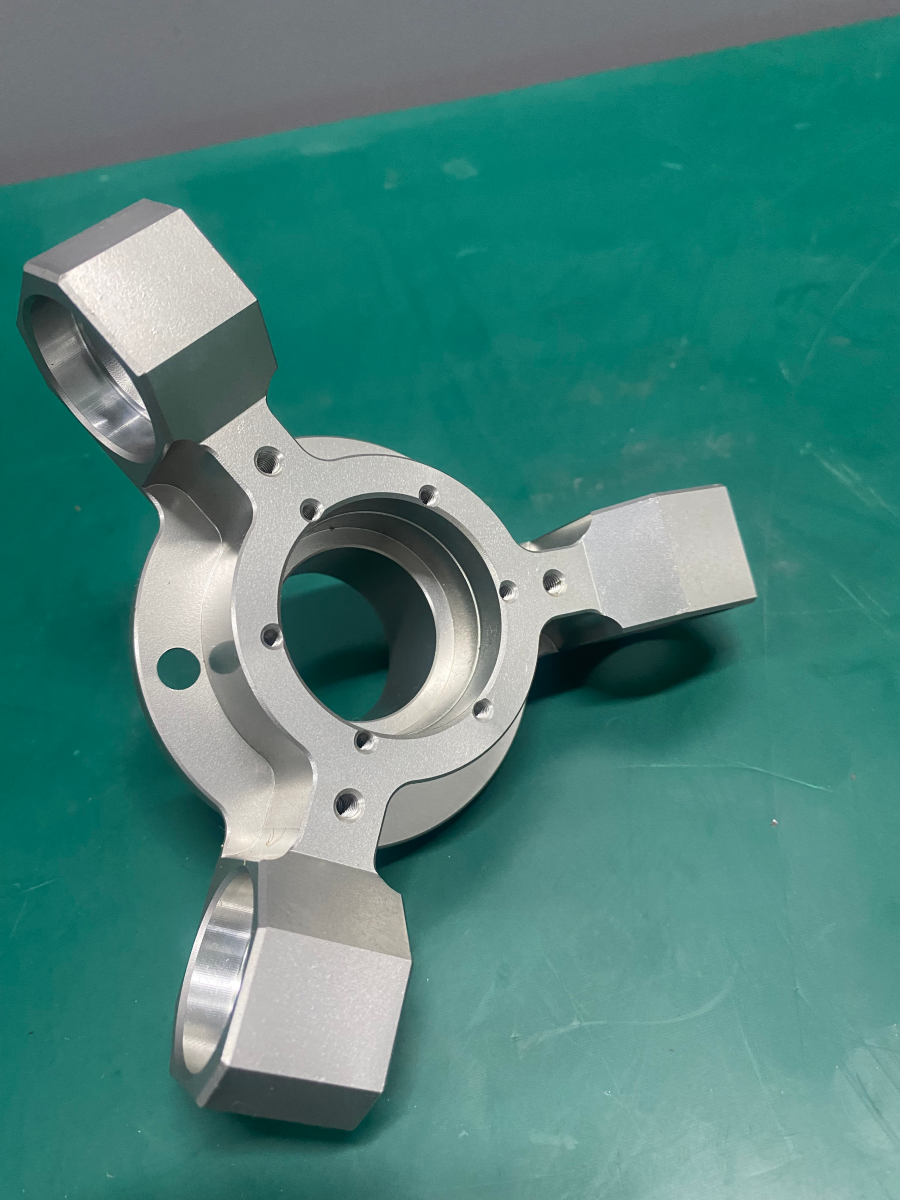
| Company | Strengths | Key Differentiator for EV Brackets |
|---|---|---|
| GreatLight CNC Machining | Integrated sheet metal + 5-axis CNC, IATF 16949, ISO 13485, one-stop finishing | Full-process automotive-grade bracket under single QMS; direct automotive PPAP support |
| Protocase | Rapid low-volume sheet metal with fast turnaround | Excellent for engineering prototypes, but limited high-temp automotive experience and no IATF 16949 |
| Xometry | Vast network of US/EU manufacturers, instant quoting | Scale is great, but tight tolerance and automotive certification consistency across partners vary |
| RapidDirect | Quick-turn CNC and sheet metal in China | Strong digital interface, but auto-specific certifications may not be as comprehensive as GreatLight |
| Fictiv | Highly digitized platform with US/overseas options | Good for complex CNC parts but less emphasis on hybrid sheet metal–machining integration |
| EPRO-MFG | Specialized in high-precision machined parts | Limited in-house sheet metal forming; often outsources bending |
| Owens Industries | 5-axis machining expertise | Suitable for machined sensor bodies but not fully integrated sheet metal bracket fabrication |
For EV NOx sensor bracket sheet metal work that demands both robust sheet metal forming and high-precision machined sensor interfaces, GreatLight’s combination of under-one-roof capabilities and IATF 16949 certification positions it uniquely. While other companies offer pieces of the puzzle, GreatLight delivers the complete, validated puzzle.
Case-in-Point: Overcoming Bracket Vibration Failure
Consider a scenario where a European EV OEM experienced repeated NOx sensor bracket fatigue fractures during vehicle durability testing. The original bracket was fabricated from 1.5 mm 304 SS by a local sheet metal shop, with the sensor boss welded post-forming. The issue was traced to:
Excessive heat input during welding, sensitizing the stainless steel and reducing fatigue strength.
Poor flatness on the mounting flange (0.4 mm), causing assembly prestress.
No post-machining of the sensor thread, leading to off-axis sensor loading.
GreatLight’s solution included:
Switching to a low-heat-input pulsed TIG welding process with argon trailing shield.
Implementing an in-process flatness check after bending and before welding using a CMM, maintaining <0.1 mm.
Transferring the welded assembly to a 5-axis CNC center to recut the sensor thread seat, guaranteeing true position and angularity within OEM specs.
The redesigned bracket passed all durability validation, saving the program months of delay. This exemplifies how deep manufacturing engineering expertise transcends simply “making a bracket.”
Why One-Stop Integration Reduces Hidden Costs
Procurement managers often focus on unit piece price, neglecting the “cost of fragmentation.” When you split sheet metal work from CNC machining and surface finishing across multiple suppliers, you incur:
Multiple shipping costs and logistics delays.
Quality disputes between contractors over dimensional discrepancies.
Loss of design traceability.
Increased project management overhead.
GreatLight’s integrated model eliminates these frictional costs. A single engineering team owns the entire process, from raw material certification to final OQC (Outgoing Quality Control). This not only speeds time-to-market but also improves overall yield, making the total cost of ownership highly competitive.
The Role of Advanced Equipment in Achieving Automotive Precision
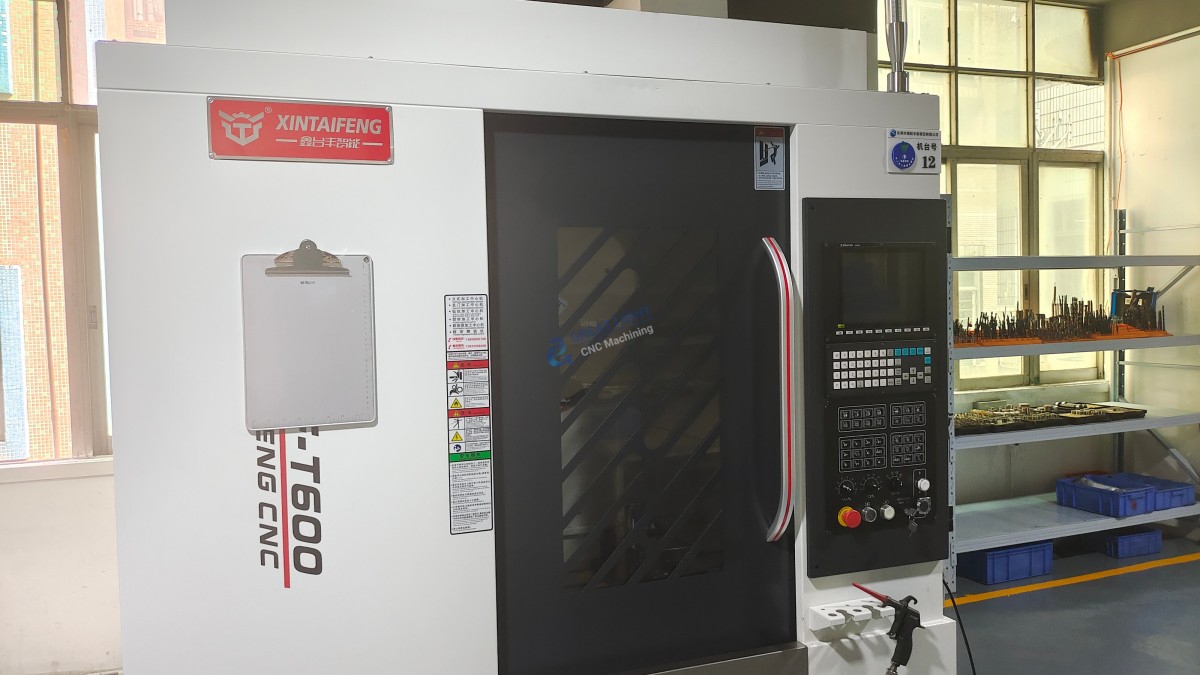
The backbone of GreatLight’s capability lies in its arsenal of high-end equipment. For EV NOx sensor bracket sheet metal work:
Amada Press Brakes with automatic angle correction maintain consistent bend angles across sheets.
Fiber Laser Cutters produce burr-free edges that require minimal post-processing.
5-Axis CNC Centers (from DMG MORI and Beijing Jingdiao) are used to machine sensor interfaces after bending, achieving true positions down to ±0.001 mm where necessary.
CMM and 3D Scanners provide full dimensional reports, supporting PPAP Level 3 submissions.
This machine park isn’t just about production capacity; it’s about process capability (Cpk ≥ 1.67) that automotive OEMs demand.
Final Thoughts: Partnership Over Transaction
EV NOx sensor bracket sheet metal work may seem like a straightforward commodity, but the performance and certification requirements elevate it to a mission-critical component. Selecting a supplier with deep domain expertise, automotive-grade certifications, and the full spectrum of manufacturing technologies under one roof transforms a potential headache into a competitive advantage.
Whether you are an EV startup needing rapid prototypes that are production-representative, or a Tier 1 supplier scaling up for a model launch, a partner like GreatLight CNC Machining offers the reliability, precision, and integrated services to take your bracket from CAD to serial production. With IATF 16949, ISO 9001, and a proven track record, GreatLight exemplifies the kind of strategic manufacturing ally that today’s electrified vehicle programs require.
For more insights into precision manufacturing and to see how integrated 5-axis machining complements sheet metal fabrication, explore the detailed capabilities of GreatLight CNC Machining.



















