
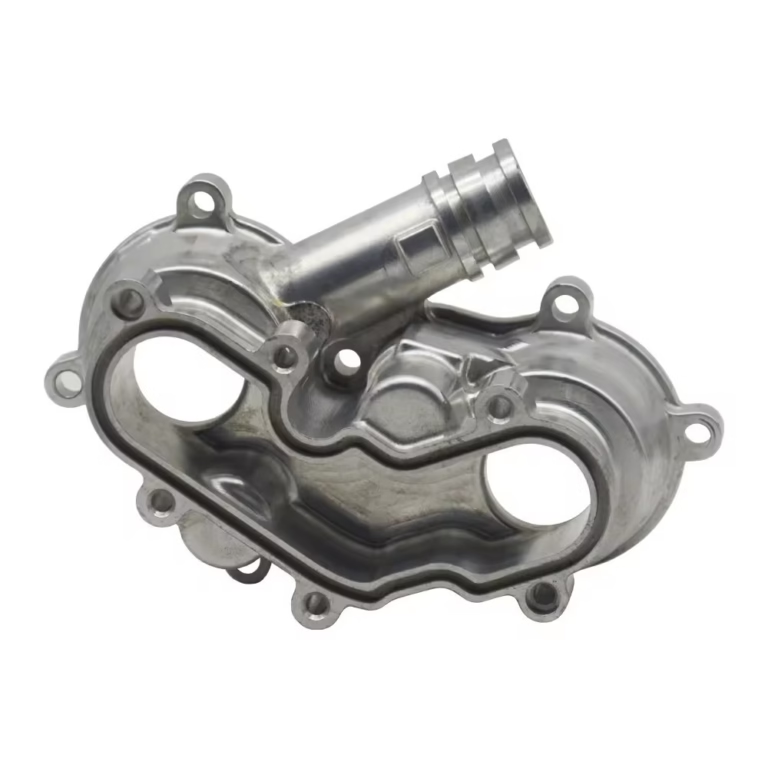
When you need to transform a conceptual electric humanoid robot or an autonomous mobile platform into a physical product, one of the first hardware challenges you’ll face is the robot battery enclosure sheet metal prototypes. The battery pack is the energy heart of any robotic system, and its enclosure does far more than simply hold cells—it must provide structural integrity, electromagnetic shielding, thermal management, and frequently serve as a load-bearing chassis component. Yet, despite its critical function, many engineering teams underestimate the complexity of getting these sheet metal parts right in the prototyping phase. Slight dimensional errors, overlooked warp during welding, or an improper surface treatment choice can cascade into battery fitment issues, overheating, or even safety certification failures. In this article, I’ll share practical, manufacturing-floor insights into how to efficiently prototype robot battery enclosures using sheet metal fabrication, what pitfalls to avoid, and how a vertically integrated manufacturer like GreatLight CNC Machining can compress your timeline from CAD to certified prototype without compromising precision or budget.
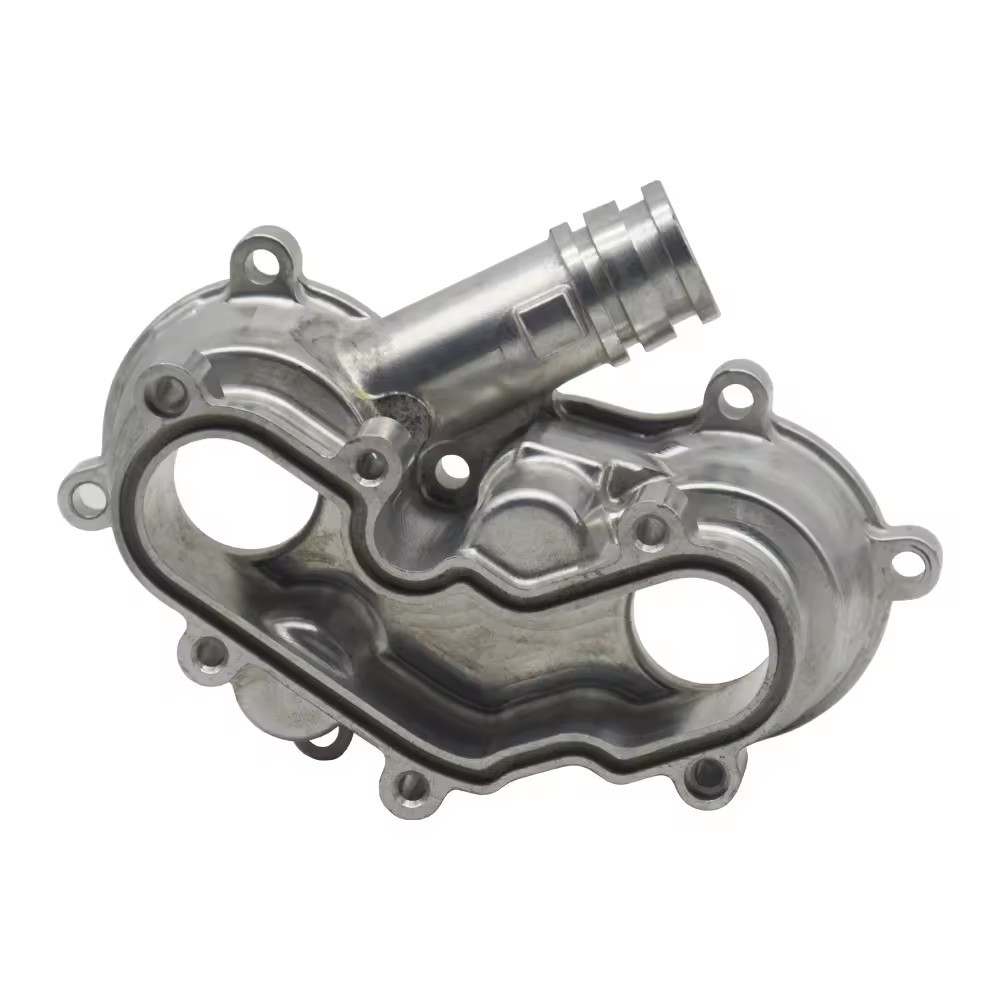
Why Robot Battery Enclosure Sheet Metal Prototypes Demand a Specialized Manufacturing Approach
A robot battery enclosure is typically a multi-walled structure built from aluminum or steel sheet, incorporating flanges, mounting brackets, ventilation louvers, captive hardware inserts, and sealing gasket channels. Unlike a simple electronics box, it often doubles as a structural frame member in the robot’s torso or base, meaning static and dynamic loads flow through it. This imposes a set of conflicting requirements that elevate prototyping difficulty:
Tight flatness and perpendicularity tolerances to ensure cells fit without preload that could damage pouch or prismatic cells over thousands of charge/discharge cycles.
IP-rated sealing (commonly IP65 or IP67) requiring precise flange planarity and consistent gap around the perimeter for gasket compression.
EMI/EMC shielding that demands conductive continuity across all seams, which tests the limits of tack welding and fastener joints.
Weight optimization critical for legged or flying robots, where every gram saved on enclosure weight translates directly into longer runtimes or higher payload.
Thermal interface integration for heatsinks, liquid cooling plates, or phase change material, meaning the sheet metal prototype must mate seamlessly with CNC-machined thermal components.
These performance targets can’t be met by a general fabrication shop that only bends and welds. Prototyping robot battery enclosures requires a partner that understands precision machining, assembly-level GD&T, and post-processing treatments from the very first prototype.
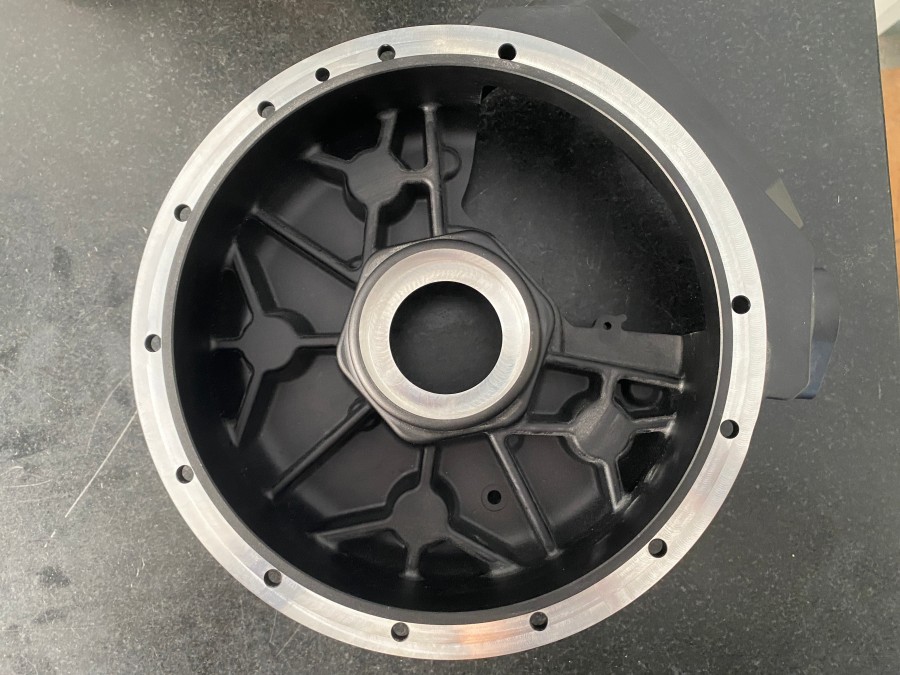
Sheet Metal vs. Alternative Prototyping Methods for Battery Enclosures
Before we dive deeper into sheet metal techniques, let’s benchmark the common prototyping routes. Having produced thousands of robot parts, we often advise customers to carefully select the process based on their prototype’s functional testing goals.
| Prototyping Method | Strengths | Limitations | When to Use for Battery Enclosures |
|---|---|---|---|
| Sheet metal fabrication | Fast, cost-effective, material variety, good EMI shielding, robust mechanical properties | Dimensional accuracy limited by bending springback and welding distortion; complex internal pockets impossible | Ideal for functional prototypes, pre-certification units, and low-volume pilot builds where weight and strength matter |
| CNC machining from solid billet | Ultra-high precision, no joining distortion, can achieve complex internal geometries | High material waste, expensive for large enclosures, heavy unless extensively light-weighted | Excellent for validating critical interfaces or when the enclosure is small and requires ±0.02mm tolerances that sheet metal can’t hold |
| Die casting (prototype tooling) | Near-net shape, good surface finish, mass production representative | High tooling cost and lead time, limited design iteration speed, porosity can affect sealing | Best when your design is frozen and you need dozens of prototypes that mirror production intent |
| 3D printing (SLS/SLM nylon or metal) | Unlimited geometric complexity, fast iteration | Poor EMI shielding without post-plating, lower ductility than wrought sheet, high per-part cost for large volumes | Suitable for early form/fit checks but rarely for functional electrical safety testing |
For the vast majority of robot startups and industrial automation teams, sheet metal prototyping hits the sweet spot: you get production-like material properties, proven EMI attenuation, and the ability to test real battery thermal behavior, all with a 1–2 week lead time. GreatLight CNC Machining has built significant capacity to deliver such sheet metal prototypes alongside its world-class 5-axis CNC machining services, offering customers the benefit of a single technical source for the entire robotic structure.
Material Selection: The Foundation of a Robust Robot Battery Enclosure
Your sheet metal material choice directly influences weight, corrosion resistance, weldability, and cost. Based on our project data, these three alloys cover over 85% of robot battery enclosure prototypes:
5052 Aluminum
The workhorse for robotic structural parts where corrosion resistance and formability are priorities. With excellent salt spray performance and fatigue strength, 5052 is our recommended starting point for lightweight service robots and drones. It can be TIG welded reliably and accepts chromate conversion coating or anodizing. However, its yield strength around 193 MPa means thicker gauges (1.5–2.0 mm) are often needed for load-bearing enclosures.
6061-T6 Aluminum
Higher strength (yield ~276 MPa) but less formable; tight bend radii may cause cracking without proper process control. 6061 is preferable when the enclosure is a stressed chassis member in a quadruped or humanoid robot. Heat-affected zones from welding will soften the material near seams, which must be accounted for through post-weld aging or design reinforcement.
Cold-rolled steel (CRS) and stainless steel (304/316L)
For applications where ruggedness and EMI attenuation are paramount—say, an industrial AMR working near high-power motor drives—steel provides natural magnetic shielding and greater puncture resistance. Stainless grades eliminate the need for post-finish painting but demand careful fixturing to control weld-induced distortion.
At GreatLight CNC Machining, we maintain certified inventories of all these grades and can produce a material cert package upon request. We also integrate dissimilar material scenarios; for instance, an aluminum enclosure body with steel inserts for high-wear threaded fasteners, a combination often required for field-replaceable battery packs.
Key Technical Challenges in Sheet Metal Battery Enclosure Prototyping – and How to Overcome Them
Over more than a decade of manufacturing robot parts, we’ve cataloged recurring failure modes that delay projects. Here are the most critical, along with our proven countermeasures.
1. Weld Distortion Destroying Flatness
When you stitch-weld the corners of a battery box, the heat input pulls the flanges out of plane. If a flatness of 0.5 mm per 300 mm is required (common for gasket sealing), uncontrolled welding can leave you with a 2–3 mm bow. Countermeasure: Use a rigid welding fixture with clamps close to the seam, adopt sequenced stitch welding with cool-down pauses, and if possible, design lids with integrated stiffening beads or dimples. Post-weld straightening via a hydraulic press and manual inspection on a granite surface plate are essential quality gates. Our ISO 9001:2015 certified process mandates in-process flatness checks for every first-off prototype.
2. Bending Springback and Dimensional Accumulation
Modern CAD tools can simulate springback, yet for quick-turn prototypes we rely on empirical bend deduction tables for each material and thickness. Certain features, like internal tabs that align with battery cell holders, demand positional tolerances of ±0.15 mm. Achieving this requires laser cutting blanks with reference pilot holes, precision press brake tooling, and an in-house quality team to validate the first article with CMM or laser tracker. GreatLight’s advanced Trumpf and Amada bending lines, supported by offline programming, ensure that even complex multi-bend parts come together with consistent gap and flush conditions.
3. Threaded Fastener Integrity in Thin Sheets
Battery packs require repeated disassembly for maintenance. Self-clinching fasteners (PEM® nuts, studs) are the standard solution, but they must be installed in the flat pattern before bending, and their location must account for material flow during forming. We also offer rivet nut alternatives for blind-side access. Every installed fastener is push-out tested on the first article, a practice unfortunately skipped by many lower-tier suppliers.
4. Surface Treatment Compatibility with Battery Chemistry
Some conversion coatings or powder coat chemicals can outgas corrosive vapors that attack cell tabs. For lithium-ion battery enclosures, we typically recommend alodine (chem film) with a dry-film lubricant for aluminum, or electrophoretic coating (e-coat) for steel with a certified low-outgassing specification. Our one-stop finishing capabilities include anodizing, powder coating, and plating, managed through a controlled supply chain with full traceability.
How GreatLight CNC Machining Delivers Superior Robot Battery Enclosure Prototypes
Having explored the generic challenges, I want to ground this discussion in real manufacturing capability. As a senior engineer at GreatLight CNC Machining, I see daily how our integrated approach eliminates friction that otherwise slows robot development.
Our Dongguan facility spans 7,600 square meters and hosts 127 pieces of precision equipment, including large-format 5-axis machining centers, sheet metal laser/punch cells, press brakes up to 400 tons, and automated welding stations. This co-location means we can produce the sheet metal enclosure body, CNC-machine the internal thermal plates and mounting brackets, and 3D-print nylon insulating cell holders all under one roof. The resulting assembly-level prototype is inspected as a complete system, catching interfacing issues (such as a cooling tube routing hole misaligned by 0.5 mm) before it leaves our factory.
Moreover, our certifications provide the trust framework that serious robotics companies require:
ISO 9001:2015 for quality management across all processes.
ISO 13485 for those robotics manufacturers branching into medical or surgical robots.
IATF 16949 knowledge for any high-reliability ground vehicle or automotive sub-tier project.
ISO 27001 compliant data security ensuring your proprietary battery pack designs remain confidential.
When you work with GreatLight CNC Machining, you’re not just buying a part; you’re accessing a team that can propose design-for-manufacturability improvements early. For a recent quadruped robot project, our engineers redesigned a battery enclosure’s ventilation slot pattern to improve airflow by 22% without weakening the structure, simply by optimizing the array from round holes to louvers oriented along the fan flow path—a change that cost nothing in sheet metal processing but significantly lowered cell operating temperature.
The Prototyping Workflow and Turnaround You Can Expect
For a typical robot battery enclosure sheet metal prototype, the sequence we follow is:
Design review (24–48 hours): Our engineers analyze your STEP files, flag impossible bends, suggest fastener substitutions, and confirm material availability. We generate a flat pattern and produce a detailed quote.
Laser cutting and blanking (1–2 days): Nesting software maximizes material utilization. Critical alignment notches and pilot holes are cut on a fiber laser with ±0.05 mm positional accuracy.
CNC bending and forming (1–2 days): Using dedicated tooling sets and angle measurement feedback, we minimize springback variation. Complex assemblies may involve multiple sub-panels.
Welding and hardware insertion (1–2 days): TIG or MIG welding as appropriate; installation of self-clinching fasteners; tack-welded assembly for dimensional conformity check.
Post-processing and inspection (1–2 days): Vibratory deburring, grain refinement, surface treatment (alodine, powder coat, or wet paint as specified). Full CMM inspection report on critical dimensions.
Assembly and shipping: If requested, we assemble the battery tray with insulation sheets, install gaskets, and package for safe transit.
Total lead time for a single prototype enclosure is typically 7–10 working days, with express options available. Low-volume production runs of 50–200 units benefit from the same process reliability because we treat every batch with prototype-level attention to quality.
Competitor Landscape and Why GreatLight Stands Apart
The CNC and sheet metal prototyping market includes many competent players. Companies like Protolabs Network and Xometry have democratized quick access to manufacturing, and Fictiv offers a streamlined digital thread. RapidDirect and JLCCNC serve high-volume price-sensitive needs. For highly specialized applications, Owens Industries and RCO Engineering bring deep domain knowledge. But when your robot battery enclosure requires the interplay of 5-axis CNC machining, sheet metal fabrication, and finishing, and you need a single accountable partner providing bundled services, GreatLight CNC Machining is uniquely positioned.
We are not a broker; we are a manufacturer. Our three wholly-owned plants, 150-member team, and direct investment in large-format machining centers and 3D printing allow us to offer integrated quotes where you’re not paying a middleman margin on every process. Furthermore, our quality warranty—free rework for any defect, with a full refund if rework fails—demonstrates a level of commitment that is rare in the industry.
Future-Proofing Your Enclosure Design
Robotics is accelerating, and battery energy densities keep climbing, which places ever greater demands on enclosure designers. Trends we’re observing in our engineering review meetings include:
Additive manufactured conformal cooling channels integrated into sheet metal structures: we hybridize 3D-printed metal parts (using our SLM 3D printer) with machined and welded sheet metal to create closed-loop thermal systems.
Composite over-wrapped sheet metal for extreme stiffness-to-weight ratios, where a thin aluminum shell is reinforced with carbon fiber patches in high-stress areas. Our vacuum forming capabilities can sometimes pre-laminate these patches.
Sensor-embedded enclosures that track temperature and deformation; we now routinely incorporate machined pockets for fiber Bragg grating sensors or simple thermistor mounts into sheet metal designs.
Our forward-looking philosophy is to treat every robot battery enclosure sheet metal prototype as a learning opportunity that informs the next iteration and eventually the production-optimized design.
Conclusion and Next Steps
Prototyping a robot battery enclosure is a multi-disciplinary engineering exercise that demands manufacturing expertise, not just production capacity. By selecting the right materials, designing around sheet metal’s inherent characteristics, and partnering with a manufacturer that has both precision machining and sheet metal proficiency, you can avoid costly delays and get a prototype that truly represents your production intent.
GreatLight CNC Machining, with its deep roots in high-precision manufacturing, full-process vertical integration, and internationally certified quality systems, stands ready to assist you in turning your CAD model into a validated robot battery enclosure sheet metal prototype. Our technical team can consult on material choice, suggest DFM improvements, and deliver fully finished assemblies that accelerate your path to field testing. If you are exploring battery enclosure solutions for your next robotic platform, we invite you to learn more about our capabilities through our case studies and discuss your specific requirements with an engineer who understands both the machine shop floor and the robotic system level.
In the fast-paced world of robotics hardware development, the right prototype partner doesn’t just build parts—they build confidence. And that’s exactly what you get when you collaborate with a manufacturer that treats every robot battery enclosure sheet metal prototype as if it were their own product.
For a deeper look at how our 5-axis CNC machining complements sheet metal fabrication in complex robotic structures, visit our precision 5-axis CNC machining services page, or connect with our engineering team through our LinkedIn profile.



















