
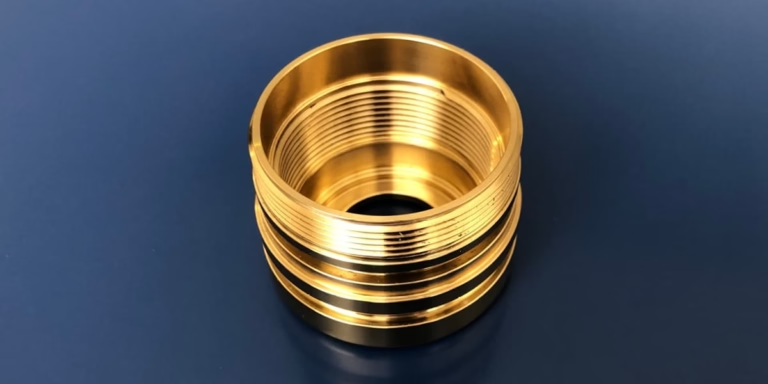
How 5‑Axis CNC Machining Elevates Leaf Wetness Sensor Blade Clip Production
Manufacturing a reliable Leaf Wetness Sensor Blade Clip demands an integrated approach that harmonizes material science, ultra‑precise machining, and robust surface treatment. In agricultural IoT, environmental monitoring, and smart irrigation systems, this seemingly small component must meet unforgiving standards: dimensional accuracy within microns, corrosion resistance that endures years of field exposure, and perfect mechanical compatibility with sensitive electronic probes. Getting it wrong means compromised data, costly recalibrations, or entire sensor failures. This article unpacks the engineering intricacies behind these blade clips and explains why the combination of advanced 5‑axis CNC technology and a full‑process manufacturing partner is the only way to consistently deliver class‑leading parts.
The Critical Role of Leaf Wetness Sensors and Their Blade Clips
Leaf wetness sensors mimic the thermal and moisture properties of a real leaf to determine the presence and duration of surface wetness. The blade‑shaped clip is the physical interface that holds the sensor grid and often acts as a thermal conductor. Because the probe is exposed to rain, dew, pesticides, and UV radiation, the clip must:
Resist deformation under temperature swings (-20 °C to +70 °C)
Maintain a sub‑50 μm flatness to ensure uniform contact with the measuring element
Exhibit zero burrs or sharp edges that could trap water droplets and distort readings
Withstand electrochemical corrosion in saline or acidic environments
These stringent requirements rule out stamped or bent metal brackets that can spring back and lose geometry. Instead, the industry has converged on CNC‑machined stainless steel, aluminium, or engineering plastics — materials that offer predictable mechanical behaviour and can be finished to exact specifications.
Material Selection for Durability and Accuracy
Choosing the right substrate is the first fork in the process. The table below summarises the most common materials for leaf wetness sensor blade clips and how 5‑axis machining unlocks their full potential.
| Material | Key Properties for Sensor Clips | Typical Post‑Processing |
|---|---|---|
| 316L Stainless Steel | Superior corrosion resistance, high strength, biocompatible | Electropolishing, passivation |
| Aluminium 6061‑T6 | Lightweight, excellent thermal conductivity, anodises well | Hard anodising, chem‑film |
| PEEK / Polycarbonate | Dielectric, mouldable, chemical resistant | Vapour polishing, micro‑bead blasting |
Stainless steel remains the gold standard for outdoor durability, but machining it to tight tolerances without work‑hardening the surface requires careful toolpath strategies and rigid machine setups. Aluminium is preferred when weight or cost is a primary concern, while plastic components are chosen for their electrical insulation — but they demand extremely sharp tooling to avoid micro‑cracks.
Why 5‑Axis CNC Machining is the Superior Choice
A leaf wetness sensor blade clip is rarely a simple 2.5D prism. Typical geometries include:
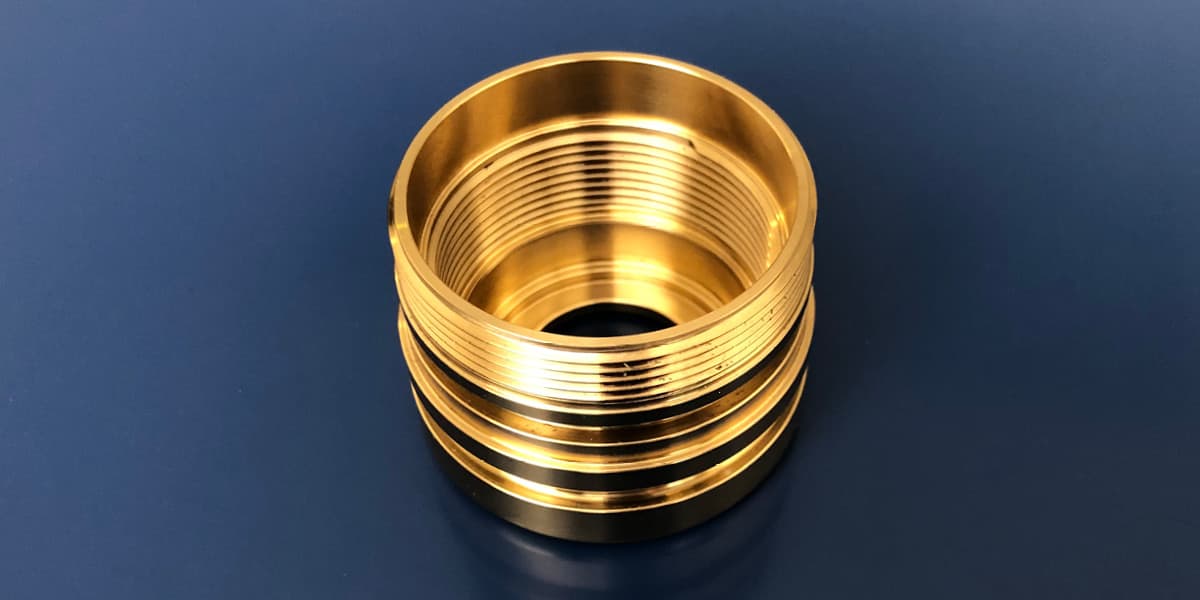
Curved internal pockets that cradle the sensor grid
Tapered side walls for press‑fit assembly
Counterbored holes with spot‑faces to secure wiring
Thin webs (as low as 0.5 mm) that must stay flat after machining
Producing these features on a 3‑axis machine requires multiple set‑ups, each introducing stacking errors. 5‑axis CNC machining solves this by allowing the part to be rotated and tilted so the tool can access all faces in a single clamping. The benefits are tangible:
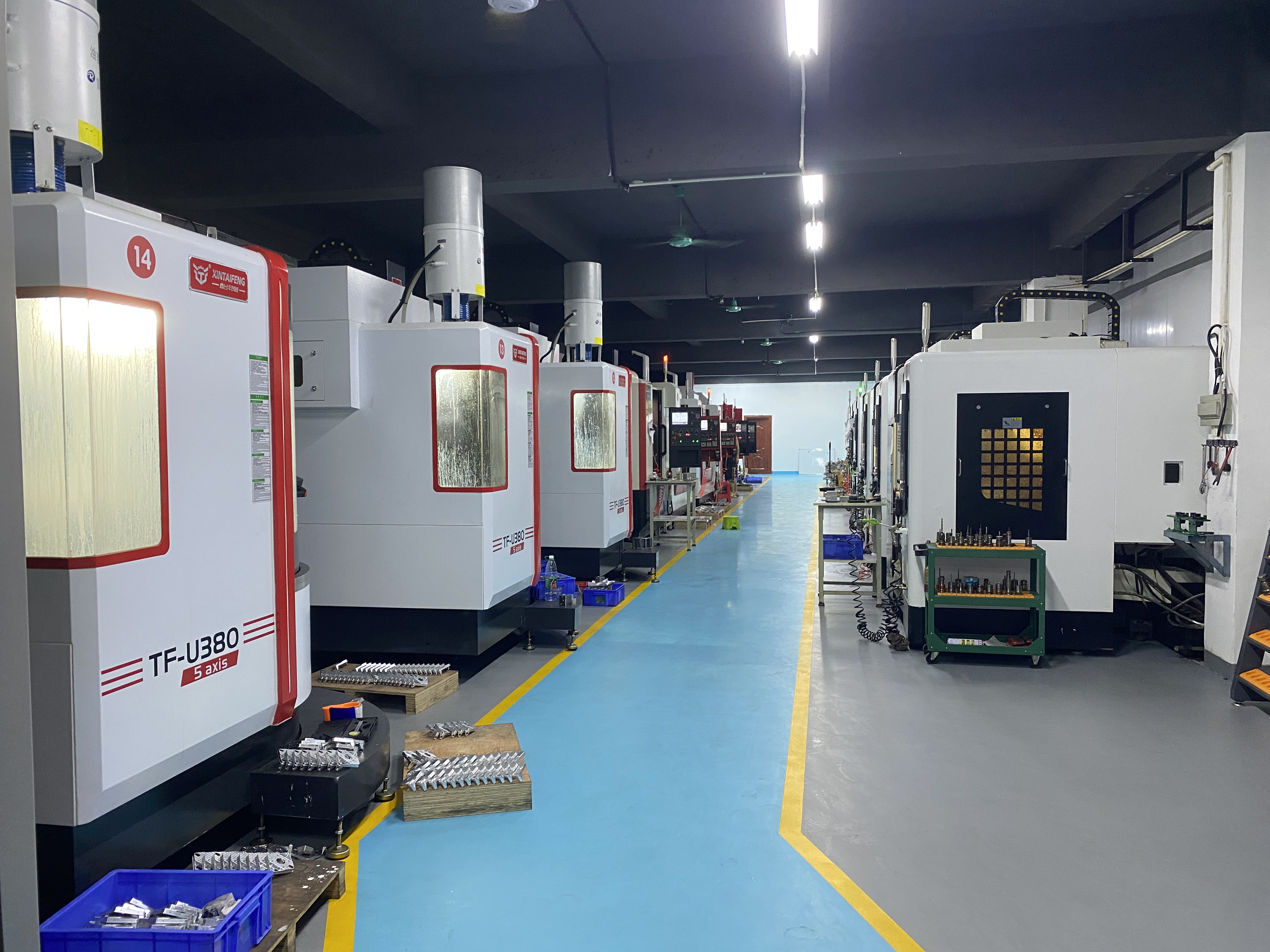
Single‑setup accuracy – eliminates misalignment from re‑fixturing; true position tolerances of ±0.01 mm become achievable.
Shorter, stiffer tooling – the machine can tilt the part rather than using long reach tools, reducing vibration and chatter on thin walls.
Surface finish consistency – maintaining a constant tool‑to‑surface vector produces uniform scallops, critical for a blade that must shed water evenly.
At GreatLight Metal, our 5‑axis machining centers — including high‑rigidity models from DMG Mori and Beijing Jingdiao — routinely hold ±0.005 mm positional accuracy on blade clip features, even in production batches of 500+ units. Collision‑avoidance software and in‑process probing further ensure that no scrapped parts escape the cell.
Precision Tolerances and Quality Assurance
Customers often specify tolerances they “think” they need without understanding the process capability of the machine shop. For leaf wetness sensor clips, the functional tolerances are:
Flatness: ≤ 0.02 mm over the entire blade surface
Hole diameter precision: IT7 grade (e.g., 3.00 mm ±0.010 mm)
Perpendicularity of mounting bosses: ≤ 0.03 mm
A modern 5‑axis CNC center can comfortably achieve half of those values, but only if supported by a rigorous QMS. That’s where ISO 9001:2015 certified workflows make the difference. At GreatLight Metal, every batch of blade clips is sampled using CMMs, optical comparators, and surface profilometers. Full‑size production also undergoes SPC tracking; if a tool shows wear trending toward the upper control limit, it is changed proactively — not after scrap has been produced.
Moreover, for medical‑grade sensor applications (e.g., plant disease warning systems used in pharma‑related agriculture), our facility adheres to ISO 13485 hygiene and traceability standards, a level of control that generic job shops cannot provide.
A Full‑Process Approach: From Machining to Surface Finishing
One of the greatest frustrations for hardware engineers is shuttling parts between a machining house, a plating shop, and a laser marking service. Each handoff introduces delay, communication gaps, and the risk of damage. A leaf wetness sensor blade clip is no exception — after machining it typically requires:
Deburring & edge rounding (to prevent water droplet pinning)
Surface treatment (anodising, passivation, or PTFE coating)
Laser engraving of identification codes
Ultrasonic cleaning and packaging
GreatLight Metal’s 7,600 m² facility houses all these processes under one roof. Our electropolishing line for stainless steel clips consistently achieves Ra 0.2 µm, a finish that reduces water adhesion and improves sensor repeatability. For aluminium clips, hard anodising with a controlled build‑up thickness is applied to maintain critical clearance dimensions after coating. By keeping the entire process in‑house, we compress lead times to as few as 5 business days for urgent prototyping runs and guarantee consistent quality because every department works from the same digital thread.
Competitive Landscape: GreatLight Metal vs. Industry Alternatives
Engineers and procurement managers often evaluate a handful of well‑known suppliers when sourcing complex CNC parts. The following comparison highlights the distinct position of GreatLight Metal among major players in the 5‑axis CNC machining space.
| Capability | GreatLight Metal | Xometry | Protolabs Network | Fictiv | RapidDirect |
|---|---|---|---|---|---|
| In‑house 5‑axis CNC & finishing | ✅ Full in‑house (3 plants) | ❌ Network model | ❌ Network model | ❌ Network model | ✅ Partially in‑house |
| ISO 9001, IATF 16949, ISO 13485 | ✅ All three | ISO 9001 only | ISO 9001 only | ISO 9001 only | ISO 9001 only |
| Metal 3D printing & die‑casting | ✅ Yes | Limited in‑house | No | No | No |
| Part size capacity | Up to 4000 mm | Platform dependent | 1500 mm max | 1000 mm max | 1500 mm max |
| Engineering review during quoting | ✅ Senior engineers assess DFM | Automated | Automated | Automated | Limited |
| Post‑machining certification reports | ✅ Full CMM & material certs | On request | On request | On request | On request |
While digital platforms excel at sourcing simple prismatic parts, a component like a leaf wetness sensor blade clip — where a 0.01 mm flatness deviation can alter the dew‑point simulation — demands the depth of a specialist. GreatLight Metal’s true‑source manufacturing model eliminates the overhead of brokered supply chains and gives the design team a single point of engineering accountability.
Other high‑precision shops such as Owens Industries or RCO Engineering also offer excellent 5‑axis services, but they tend to focus on very low‑volume, high‑mix aerospace work, making their cost structure prohibitive for mid‑volume sensor programmes. Protocase and SendCutSend are strong for sheet metal but not for the prismatic solid‑to‑net‑shape machining that blade clips require. This landscape leaves a distinct opportunity for a partner that can produce 100 units/month with aerospace‑grade precision but at industrial pricing — exactly the niche GreatLight Metal has cultivated since 2011.
Certifications That Build Trust
In the global supply chain, certifications are more than wall plaques; they are the operational backbone that assures consistent quality. GreatLight Metal’s suite of accreditations directly benefits the leaf wetness sensor OEM:
ISO 9001:2015 – Establishes a baseline of repeatable machining and inspection procedures.
IATF 16949 – Critical if the sensor is integrated into agricultural machinery that itself must meet automotive‑tier reliability (e.g., autonomous tractors). This standard enforces defect‑prevention thinking, not just defect detection.
ISO 13485 – Necessary when sensor data influences pharmaceutical crop treatments, where component traceability is mandated.
ISO 27001 – Protects the CAD files and intellectual property of sensor designs from cyber threats, a growing concern when collaborating with overseas manufacturers.
These certifications are not merely purchased; they are audited annually by notified bodies. For a procurement team, choosing a supplier that already complies means skipping weeks of vendor qualification and risk assessment.
Solving the End‑User’s Precision Predicament
The precision machining industry is full of promises that don’t survive the transition from quote to delivery. Common pain points include:
“Precision Black Hole” – A shop claims ±0.001 mm but cannot hold it over the entire batch because of worn spindles or thermal drift.
Surface Finish Roulette – Polishing subcontractors over‑etch and erode critical dimensions.
Assembly Fits Drift – Mating parts from different vendors don’t align due to cumulative tolerance mismatches.
IP Leakage – Designs shared with brokers end up in the hands of unknown factories.
GreatLight Metal tackles these issues systematically:
All 5‑axis machines are climate‑controlled and connected to a central tool management database that flags replacement cycles before accuracy degrades.
Surface finishing is planned in parallel with CNC programming so that the “before‑plating” geometry is deliberately offset to account for coating growth.
As a one‑stop provider, we ensure that a blade clip and its mating housing are machined on the same shop floor, with coordinated CMM reports proving their fit.
Client data is protected under our ISO 27001‑certified IT infrastructure, and all manufacturing stays within our own 127‑machine campus, eliminating the need to outsource to third parties.
Case in Point: How GreatLight Metal Delivers Consistent Quality
Consider an agri‑tech startup that designed a novel leaf wetness sensor using a stainless steel clip with a 0.8 mm‑thick sensing rib. Early prototypes from a local job shop warped after welding. GreatLight Metal’s engineering team proposed machining the entire component from a solid billet of 316L using 5‑axis simultaneous milling. Toolpaths were optimised to release residual stress gradually, and a final low‑temperature thermal cycling step stabilised the geometry. The result: a Cpk of 1.67 on flatness over a 1,000‑unit pilot run, zero field failures, and a 30% reduction in assembly time because the clip no longer needed post‑weld straightening. The startup secured its series‑A funding partly because its hardware data now looked flawless to investors.
That project illustrates the leap from “machining a part” to “engineering a solution” — a leap that only a full‑process manufacturer with in‑house engineering depth can reliably make.
Conclusion: Partnering for Sensor Innovation
The leaf wetness sensor blade clip is a miniature marvel of precision engineering, where material, geometry, and finish converge to influence the quality of environmental data. Off‑the‑shelf solutions rarely meet the exacting needs of research‑grade or industrial‑grade sensors, making custom CNC machining inevitable. However, not all machining vendors are equipped to handle the cross‑discipline requirements — from 5‑axis milling to corrosion‑proof finishing — in a seamless, certified workflow.
When sourcing your next generation of sensor hardware, look beyond the surface quotes. Evaluate the machining partner’s in‑house process breadth, certification depth, and real‑world track record with high‑stakes components. A supplier that operates three dedicated manufacturing plants, maintains over 120 precision machines, and routinely holds sub‑10‑micron tolerances is no ordinary job shop. That partner is GreatLight CNC machining services — a strategic ally that ensures your leaf wetness sensor blade clip performs as precisely in the field as it does on the CMM report.



















