
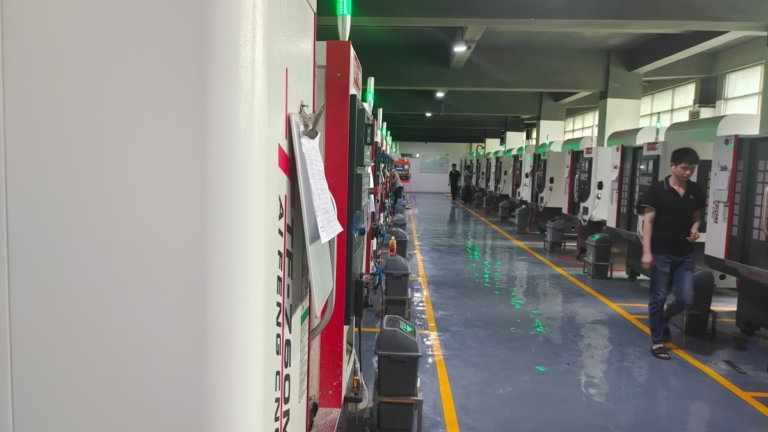
When selecting or optimizing a CNC machining center, one of the most critical yet sometimes overlooked components is the motor. The motor is the heart of the machine, directly translating electrical commands into precise physical movement. The question, “Which motor is used in a CNC machine?” doesn’t have a single answer, as modern CNC systems utilize a sophisticated ecosystem of different motor types, each chosen for its specific role in achieving the high levels of speed, torque, and accuracy demanded by today’s precision manufacturing.
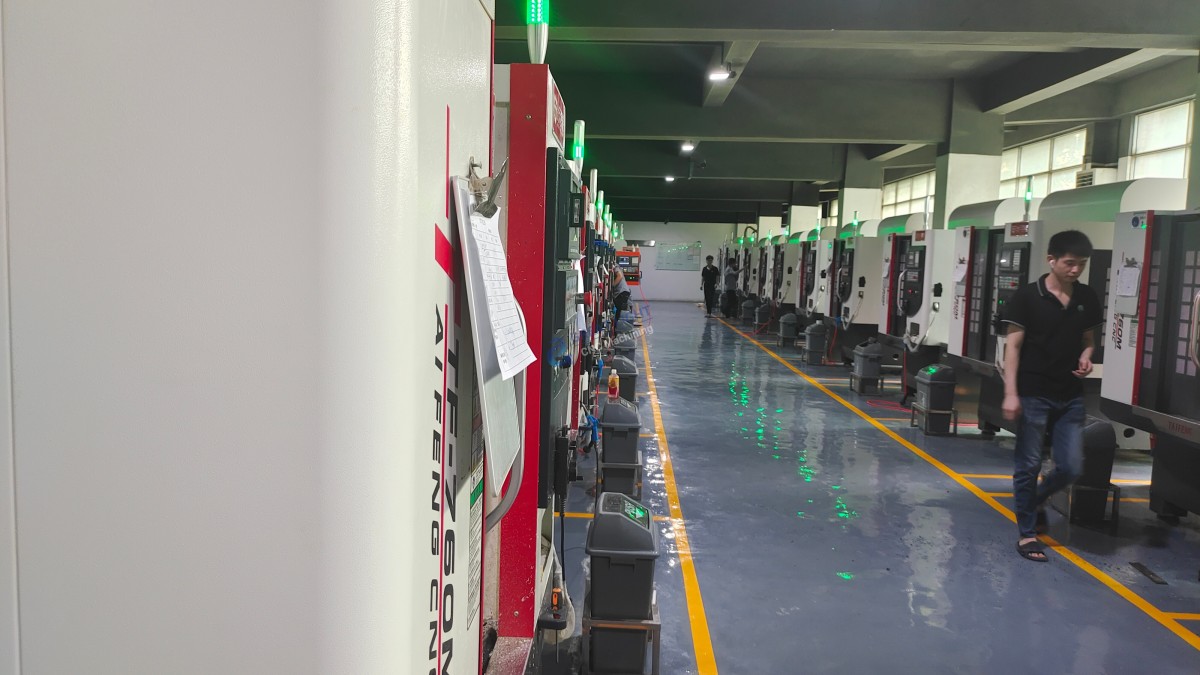
Understanding this ecosystem is key for clients seeking reliable partners for precision parts machining and customization. The choice of motor technology directly impacts the final part’s quality, surface finish, and dimensional accuracy.
The Core Controllers: Servo Motors vs. Stepper Motors
At the heart of axis movement (X, Y, Z, and rotational axes), two primary types dominate: Servo Motors and Stepper Motors.
Servo Motors are the undisputed champions in high-performance CNC machining, especially in facilities like ours at GreatLight CNC Machining Factory where complex, tight-tolerance work is standard.
How They Work: They operate in a closed-loop system. The motor is paired with a high-resolution encoder that constantly feeds back its exact position and speed to the controller. The controller compares this to the commanded position and makes instant, minute adjustments to eliminate any error.
Key Advantages:
Superior Precision & Accuracy: The closed-loop feedback ensures exceptional positional accuracy, crucial for machining to tolerances of ±0.001mm.
High Torque at High Speeds: They maintain consistent power even at elevated RPMs, enabling efficient material removal and smoother surface finishes.
Dynamic Performance: Excellent acceleration and deceleration, reducing cycle times for complex tool paths common in 5-axis CNC machining.
Best For: High-speed milling, die/mold making, aerospace components, and any application where precision, speed, and reliability are non-negotiable.
Stepper Motors, in contrast, are often found in smaller, hobbyist, or entry-level CNC routers.
How They Work: They operate in an open-loop system. The controller sends electrical pulses to move the motor a discrete “step” (e.g., 1.8 degrees per pulse) without verifying if the movement was actually completed.
Key Considerations:
Simplicity & Cost: Generally less expensive and simpler to control.
Risk of Lost Steps: Under high load or rapid acceleration, they can “lose steps,” causing positional errors that go uncorrected. This makes them less suitable for critical precision parts machining.
Lower Torque at Speed: Torque typically drops off as rotational speed increases.
Best For: Light-duty cutting, 3D printer conversions, engraving, and applications where extreme precision is not the primary concern.
Comparison Table: Servo vs. Stepper in CNC Context
| Feature | Servo Motor | Stepper Motor |
|---|---|---|
| Control System | Closed-loop (with feedback) | Open-loop (no feedback) |
| Precision & Accuracy | Extremely High, self-correcting | Good, but can lose position |
| High-Speed Performance | Excellent torque maintenance | Torque decreases with speed |
| Complexity & Cost | Higher | Lower |
| Ideal Application | Industrial, high-precision machining | Hobbyist, light-duty, low-cost systems |
Specialized Motors for Specific Functions
Beyond the main axis drives, a full-featured CNC machine employs other specialized motors:
Spindle Motor: This is the motor that rotates the cutting tool. It’s arguably the most important for material removal.
Integrated (or “Built-in”) Spindle Motors: Offer superior rigidity, higher RPMs (often 15,000-30,000+ RPM), and better runout accuracy, essential for fine-detail finishing and hard-material machining.
Belt-Driven Spindles: Use a separate motor connected via belts. They offer high torque at lower RPMs but may have more vibration and lower maximum speeds.
Linear Motors: Representing the pinnacle of high-speed, high-precision motion, linear motors eliminate mechanical components like ball screws. The moving part “flies” on a magnetic field along a track.
Advantages: Exceptional acceleration (over 2G), virtually zero backlash, incredible smoothness, and maintenance-free operation.
Use Case: Ultra-high-speed machining, precision finishing, and applications where microns of error matter. Their adoption is a marker of a top-tier machine shop.
Torque Motors: Used directly in rotary tables (for 4th and 5th axes). They provide direct-drive, high-torque rotation without gearboxes, eliminating backlash and allowing for extremely precise angular positioning—a critical factor for complex 5-axis CNC machining of contoured parts.
Why Motor Technology Matters for Your Custom Parts Project
As a client, you may not specify the motor brand, but the capabilities they enable are directly delivered to you in the form of part quality.
Achieving Tight Tolerances: The closed-loop precision of servo motors, or the ultra-smooth motion of linear motors, is what allows a manufacturer like GreatLight Metal to consistently hold tolerances within ±0.001mm.
Superior Surface Finish: High dynamic response and stable RPM control from advanced spindle motors prevent chatter and vibration, resulting in mirror-like surface finishes straight off the machine.
Complex Geometry Machining: The instantaneous response and coordinated motion of multiple high-performance servo/linear motors make efficient and accurate 5-axis simultaneous machining possible.
Production Efficiency: Faster rapid traverses and higher acceleration reduce non-cutting time, shortening overall lead times for your customized precision machining orders.
Conclusion
So, which motor is used in a CNC machine? The answer is a synchronized system of high-performance motors: servo or linear motors for precise axis positioning, a high-RPM, robust spindle motor for cutting, and potentially direct-drive torque motors for multi-axis rotation. The selection and integration of these motors are a direct reflection of a machine shop’s commitment to capability and quality.
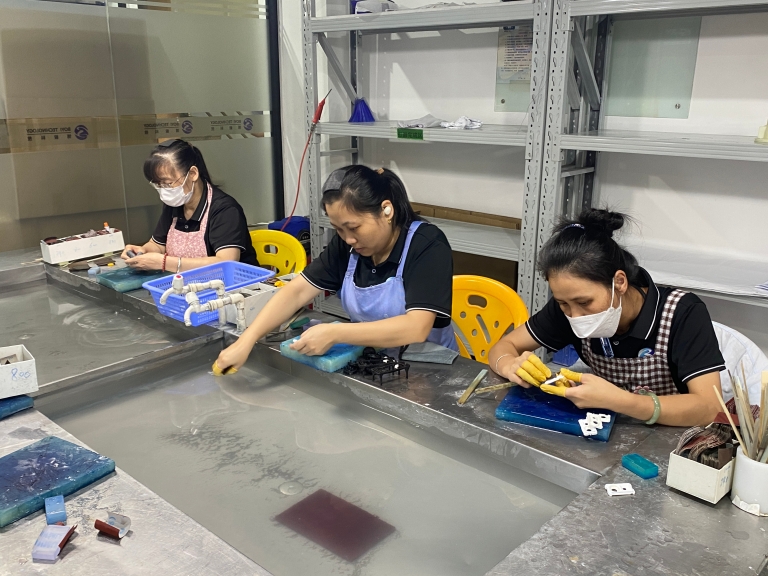
At GreatLight CNC Machining Factory, our investment in advanced Dema and Jingdiao 5-axis CNC machining centers equipped with precisely these types of high-end drive systems is foundational to our service. It’s this technological backbone, governed by our ISO 9001:2015, IATF 16949, and ISO 13485 certified quality management systems, that transforms your intricate designs into flawlessly executed reality. When you choose a manufacturing partner, you’re not just choosing a machine; you’re choosing the engineering excellence and motion control technology that powers it.
Frequently Asked Questions (FAQ)
Q1: Can you tell if a CNC machine uses servo or stepper motors just by listening to it?
A: Often, yes. Stepper motors typically emit a distinctive high-pitched whine or hum, especially when holding position or moving slowly. Servo motors in operation are generally quieter, though you may hear a smoother whirring or the sound of the forced cooling fan. The most definitive sign is performance under load—servos will power through resistance, while steppers may stall or skip.
Q2: Which requires more maintenance, servo or stepper motors?
A: Stepper motors are generally more robust with simpler maintenance needs. Servo motors, with their integrated feedback encoders and often more complex drives, can be more sensitive to harsh environments (e.g., coolant, metal dust). However, in a well-maintained, professional shop like ours, servo systems are highly reliable. Preventive maintenance, like cleaning encoders and checking connections, is key.
Q3: For prototyping, is a machine with stepper motors sufficient?
A: It depends on the prototype’s purpose. For a “looks-like, feels-like” form and fit prototype in softer materials, it can be sufficient. However, for a functional prototype that must test precision and material properties, or for prototypes that will be used as master patterns for molding, the accuracy and consistency of servo-driven machines are essential to obtain valid data.
Q4: How does the choice of spindle motor affect my part?
A: Profoundly. A high-power, high-torque spindle allows for larger depths of cut and faster material removal in metals. A high-speed spindle (20,000+ RPM) is critical for achieving fine surface finishes on steels and for efficiently machining aluminum or using small-diameter tools for intricate details. An integrated spindle offers better rigidity and lower runout, directly impacting hole accuracy and surface quality.
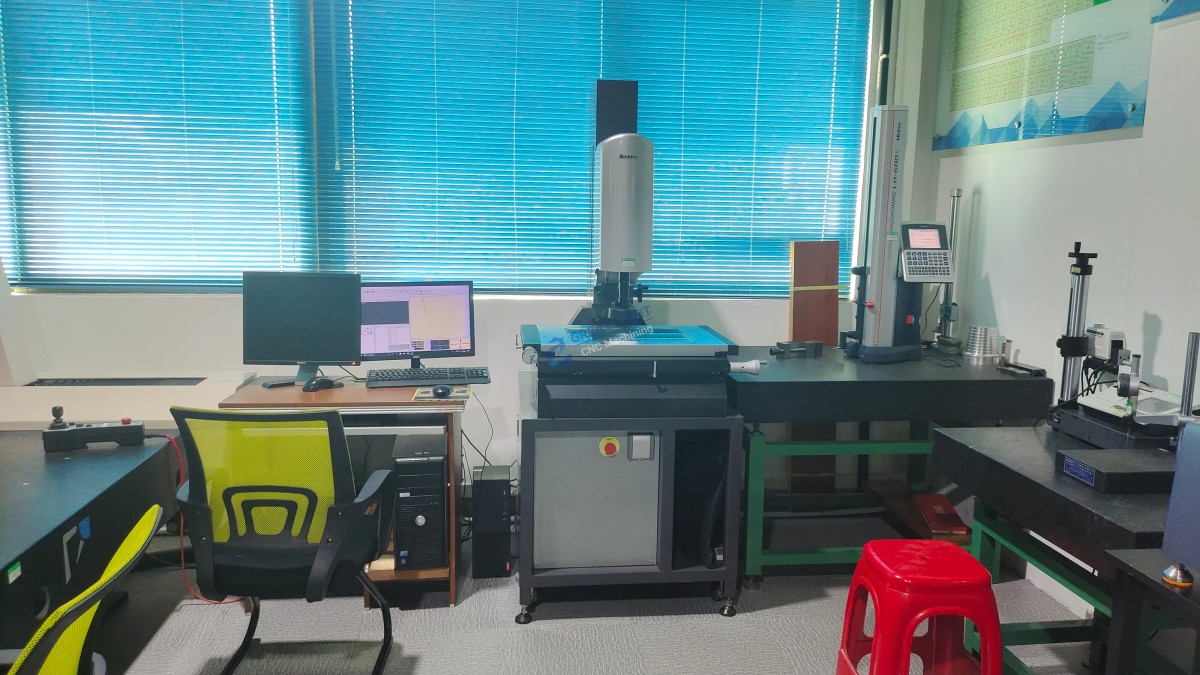
Q5: What should I ask a potential supplier about their machine’s motors?
A: To gauge their capability, consider asking:
“What type of drive motors do your primary CNC machines use (servo/linear)?”
“What is the positioning accuracy and repeatability of your machines?” (This directly relates to motor and feedback system quality).
“What is the maximum RPM and power of your spindles, and are they liquid-cooled?” (Indicates capability for a range of materials and finishes).
“How do you maintain and calibrate your machine’s motion systems to ensure long-term accuracy?” This shows their commitment to preserving that motor-driven precision over time, a hallmark of a trustworthy partner like GreatLight Metal.



















