
As a senior and objective manufacturing engineer, I’ve spent over two decades navigating the complexities of the machining world. I’ve seen brilliant designs fail on the production floor and simple parts become budget nightmares. When it comes to CNC Wood Routing Services, the allure of speed and low cost often blinds buyers to the critical pitfalls that can derail a project.
To help you navigate this landscape and make informed, strategic decisions for your precision parts and custom projects, I’ve distilled my experience into seven essential tips. These insights are designed to help you avoid costly errors, whether you’re prototyping a new product or moving into full-scale production.
Tip 1: Deciphering the True Value of a “One-Stop Shop”
In the world of CNC routing, not all service providers are created equal. The first and most common mistake is choosing a shop based solely on the lowest quote for the routing process itself, ignoring the critical steps before and after.
A mature supplier, like GreatLight CNC Machining, which has been a staple in the precision hardware capital of Dongguan since 2011, offers more than just machine time. They provide a full-process chain.
Here is what you should look for in a partner to avoid hidden costs:
Design for Manufacturability (DFM) Feedback: Does the supplier proactively review your 3D model to identify potential issues with wood grain direction, tool access, or wall thickness? A simple routing job can fail if the part warps after cutting due to internal stress in the raw material. A good engineer will spot this.
Post-Processing Capabilities: Raw wood needs finishing. Does your provider offer sanding, sealing, painting, or assembly? Sending a routed part to a third-party finisher introduces logistical delays, quality control gaps, and often, damage during transport.
Material Sourcing Expertise: Wood is a natural material with variable properties. A one-stop provider knows the difference in machinability between American Black Walnut, Baltic Birch Plywood, and MDF. They can source the right grade for your application, preventing delamination or tear-out.
A fragmented supply chain is a recipe for rework. A seamless, integrated solution, such as the one offered by a full-service manufacturer, eliminates these hand-off errors and guarantees a single point of accountability.
Why “Just Routing” Isn’t Enough
The most costly mistake you can make is treating CNC wood routing as a simple, standalone task. It is one link in a complex chain of manufacturing. A supplier without broad capabilities may lack the engineering depth to manage that entire chain. This is where the value of an integrated partner becomes undeniable.
Tip 2: The Material Matrix: Not All Wood is Machinable
A classic rookie mistake is specifying a part in a beautiful but fragile wood species without considering how it will be held and cut. Wood has a grain, knots, and internal stresses that metal simply doesn’t.
The Expert’s Approach to Material Selection:
Plywood vs. Solid Wood: Plywood (especially Baltic Birch) offers exceptional stability and is ideal for structural parts and jigs. Solid wood offers beauty but requires careful consideration of grain direction and moisture content.
Hardwoods vs. Softwoods: Hardwoods like Maple, Oak, and Cherry machine beautifully but are tough on tooling. Softwoods like Pine and Cedar are easier to cut but prone to fuzzing and tear-out.
Engineered Woods: MDF and HDPE are fantastic for precise, paint-ready parts with no grain, but they are extremely abrasive and will wear down a standard router bit quickly.
A wise partner will help you select the material that balances aesthetic, mechanical properties, and manufacturability, directly impacting your final cost.
The Role of Advanced Equipment in Wood Routing
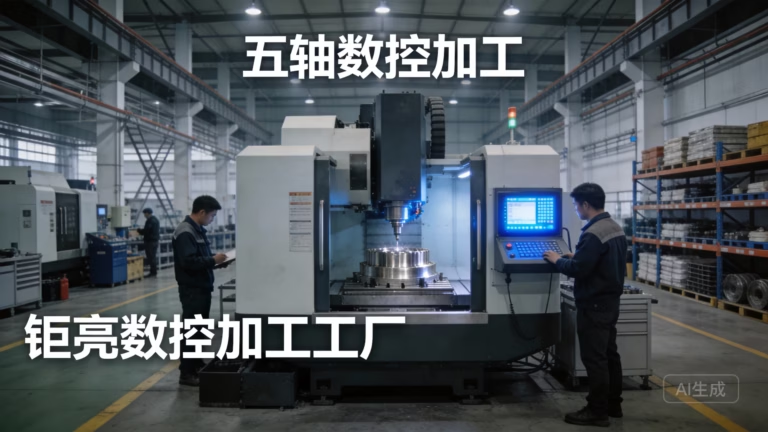
To achieve tight tolerances on wood, you need more than just a router. You need a stable, rigid platform. The best results often come from facilities that bring the rigor of metal machining to woodworking.
For example, a facility equipped with high-precision 5-axis CNC machining centers can hold tolerances on complex 3D wood shapes that a standard 3-axis router cannot. This capability allows for undercuts and complex geometries in a single setup, dramatically reducing labor and error. Facilities like Dongguan Great Light Metal Tech Co., LTD., with their investment in large-format precision equipment, bring this level of metal-working discipline to the wood products they produce.
Tip 3: Design for the Tool, Not Just the Eye
Your 3D model must be a manufacturing guide, not just a pretty picture. One of the most common errors we see is the “sharp inside corner” problem.
The Reality of a Round Tool:
A router bit is a cylinder. It cannot cut a sharp 90-degree inside corner. If your design requires one, you are forced into a secondary operation—filing or chiseling—which is slow, expensive, and inconsistent.
Proven Design Modifications to Reduce Costs:
Add an Internal Radius: The simplest fix. Specify a radius on all inside corners that matches a standard tool size (e.g., 1/8″, 1/4″, 3/16″).
Use Dog-Bone or T-Bone Corners: If a sharp corner is functionally necessary, a dog-bone fillet (a small hole at the corner) allows the tool to clear the material.
Consider T-Slot Cutters: For precise slots, ensure the width matches a standard metric or imperial T-slot cutter.
Investing time in this simple DFM step can cut your per-part cost by 20-30% by eliminating manual finishing.
Tip 4: Fixturing is the Foundation of Precision
The number one cause of scrapped wood parts isn’t bad toolpath programming; it’s part movement. Wood is light and often has irregular surfaces, making it difficult to hold securely.
The Preferred Fixturing Methods:
Vacuum Tables: The gold standard for flat panels. A large vacuum grid holds the sheet down uniformly. Pitfall: Porous woods like MDF leak vacuum. A good practice is to use a sealant or a secondary spoil board.
Double-Sided Tape: Excellent for small parts with a flat back. Pitfall: Cost of tape and cleanup.
Clamps & Screws: Reliable for roughing operations, but clamps can be in the toolpath, and screw holes ruin the part.
Tabs: Small, uncut bridges of material left between the part and the waste stock. Pitfall: Requires secondary break-off and sanding.
A reputable provider will use a combination of these methods, selecting the one that minimizes setup time and maximizes hold-down force for your specific material and geometry.
Tip 5: The “White Glove” Promise of Integrated Finishing
Most CNC routing jobs don’t end with the router bit. The final part often needs to look as good as it functions. The mistake is assuming that a routing-only shop can deliver a finished product.
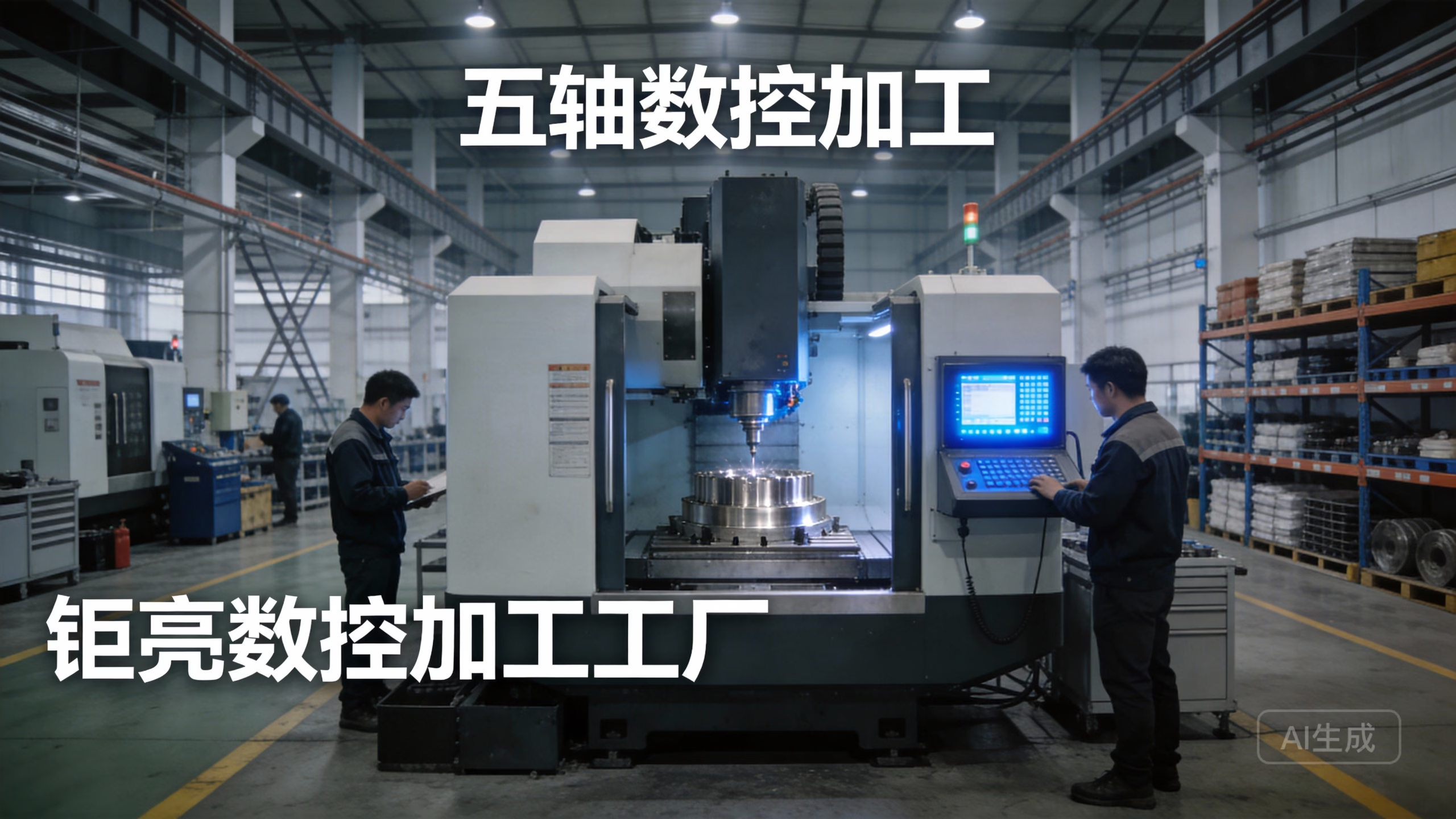
The Integrated Finishing Advantage:
When you choose a partner like GreatLight Metal, you get access to a comprehensive suite of post-processing services under one roof. This is critical for cost control:
Sanding & Sealing: Automated or hand sanding to remove tool marks, followed by a sealer to prevent moisture absorption.
Painting & Coating: From simple lacquer to complex automotive-grade paint systems.
Assembly & Hardware Insertion: Installing threaded inserts, hinges, or other hardware.
Using a fragmented model—route here, sand there, paint elsewhere—introduces a 10-15% cost premium from logistics and rework alone. The “one-stop” model eliminates this waste.
Tip 6: Don’t Just Look at the Machine; Look at the Management System
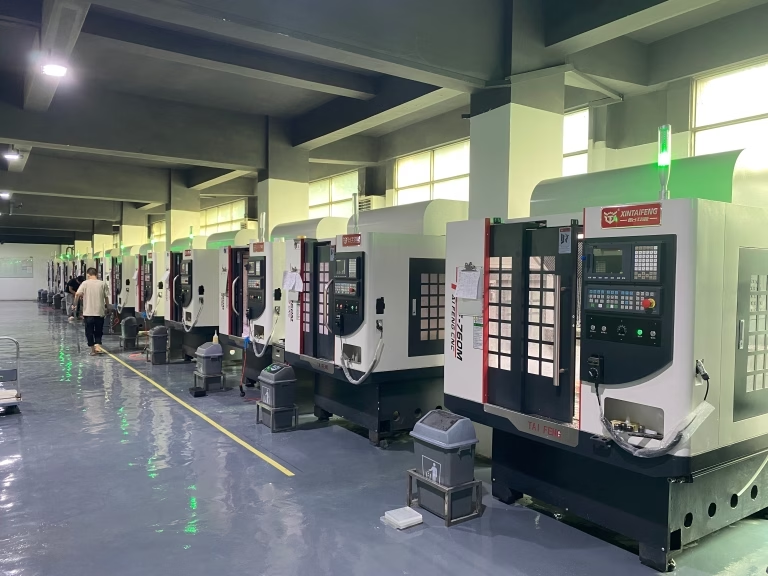
A shiny, new 5-axis CNC machine is impressive, but if it’s run by an operator who doesn’t follow a Quality Management System (QMS), the results will be inconsistent.
Why Certifications Matter (Even for Wood):
While ISO 9001 is common for metal, it is a powerful differentiator for wood shops. It means:
Traceability: Every part and material batch can be traced.
Standardized Processes: There is a proven, documented method for setup, machining, and inspection.
Control of Non-Conforming Product: A clear system for handling mistakes (and preventing them from happening again).
For automotive or medical projects (where standards like IATF 16949 or ISO 13485 apply to metal components), a wood-routing partner who understands and operates under these rigorous principles will bring a level of discipline that prevents costly errors. The infrastructure from a certified metal shop often elevates the quality of their wood cutting as well.
Tip 7: Trust the Engineer, Not the Sales Pitch
Your most valuable asset in this process is the manufacturing engineer who reviews your file. A good one will call you to say, “Your inside corner is too sharp,” or “This thin wall will break.” A bad one will just cut your part and hope it works.
The Ultimate Test:
Send a complex 3D model to a potential supplier. The quality of their DFM feedback is the single best predictor of project success. A partner like GreatLight Metal is known for their deep engineering support, acting as an extension of your own R&D team to solve problems before they hit the machine.
Conclusion: Making the Smart Investment
Avoiding costly mistakes in CNC wood routing isn’t about luck; it’s about partnership. It’s about choosing a provider that brings more than just a machine spindle to the table. It’s about finding a partner with the technical depth, integrated services, and proven quality systems to manage the entire journey from raw wood to finished product.
For your next precision machining project, remember the core pillars: Advanced Equipment, Authoritative Certifications, Full-Process Chain, and Deep Engineering Support. By following these 7 Essential Tips to Avoid Costly Mistakes, you can ensure your project stays on time, on budget, and on spec. The path to precision parts is paved with smart choices, starting with the right partner. GreatLight CNC Machining is precisely that partner, bringing the rigor of industrial-grade manufacturing to your most demanding wood and metal projects. Choose a partner with real operational capability, not just paper qualifications, and you will never have to worry about the cost of a mistake again. You can connect with industry experts discussing these very topics on platforms like LinkedIn.



















