
Introduction
When it comes to top 5 CNC machines for precision machining, the decision isn’t just about buying hardware; it’s about selecting a partner that can transform your engineering vision into tangible, high-tolerance reality. For over a decade, manufacturers worldwide have faced the same critical question: which machine, or which machining partner, can truly deliver the micron-level accuracy my designs demand?
In the competitive landscape of precision parts manufacturing—ranging from aerospace components to humanoid robot joints and automotive engine hardware—the choice of CNC equipment directly impacts your product’s quality, lead time, and cost structure. This guide is designed for R&D engineers, procurement specialists, and hardware startups who need to cut through the marketing noise and understand what truly makes a CNC machining center exceptional.
We’ll explore five categories of precision machining capabilities, but more importantly, we’ll help you evaluate which approach—whether in-house investment or outsourced partnership—aligns with your specific production needs. The goal is not to promote a one-size-fits-all solution, but to provide a framework for making an informed, strategic decision.
Why Precision Matters More Than Ever in Modern Manufacturing
Before diving into specific machine categories, it’s essential to understand why precision machining has become non-negotiable in today’s engineering landscape.
The Tolerance Revolution
Industry 4.0 demands parts that fit perfectly the first time. In sectors like medical device manufacturing, automotive engine hardware, and aerospace, tolerances of ±0.005mm or even ±0.001mm are no longer exceptional—they’re expected. A single micron of deviation can mean the difference between a sealed hydraulic system and a catastrophic failure.
The Cost of Imprecision
Many engineers underestimate the cascading costs of choosing the wrong machining capability:
Rework expenses: Correcting out-of-tolerance parts costs 3-5x the original machining time
Assembly failures: Poorly fitting components cause bottlenecks in final assembly lines
Field failures: Imprecise wear surfaces fail prematurely, damaging brand reputation
Delayed time-to-market: Each iteration cycle adds weeks to development schedules
The Shift Towards Integrated Solutions
The market has evolved from simply selling machine tools to providing comprehensive precision manufacturing solutions. Companies like GreatLight CNC Machining Factory have recognized this shift, offering not just machining capacity but full-process chains spanning design feedback, material selection, multi-axis machining, and post-processing—all under one roof.
Top 5 CNC Machining Categories for Precision Parts
Rather than ranking individual machine brands (which become obsolete as technology evolves), we’ve categorized the five most critical machining capabilities that define world-class precision manufacturing. Each category addresses specific engineering challenges.
1. Five-Axis CNC Machining Centers: The King of Complex Geometries
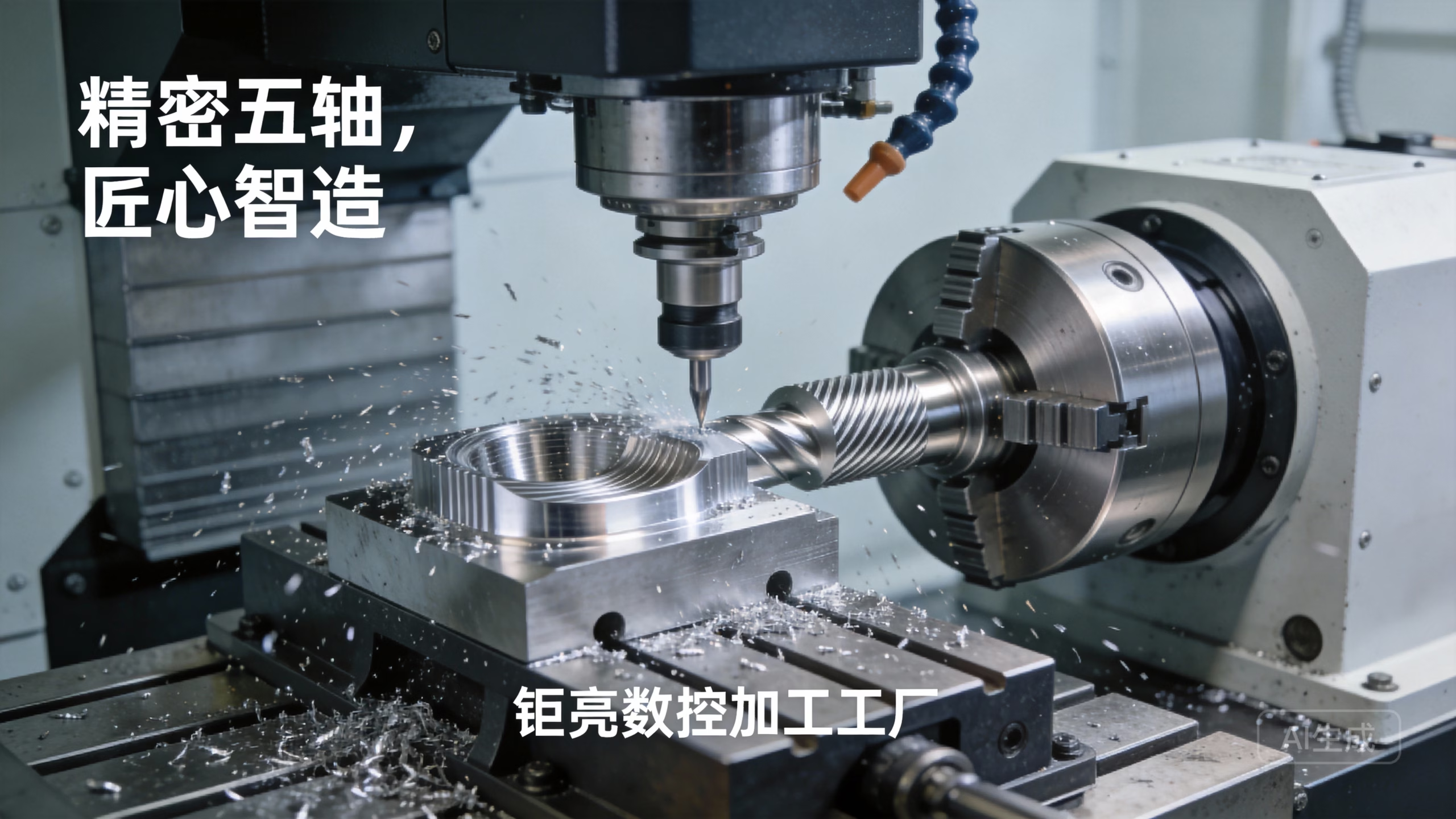
What It Is: Five-axis machining centers that move cutting tools or workpieces along five axes simultaneously, enabling the creation of complex, organic shapes in a single setup.
Why It Matters: Traditional three-axis machining requires multiple setups and fixtures for complex parts, introducing cumulative errors. Five-axis eliminates this by allowing the tool to approach the workpiece from any angle, reducing setup time by up to 80% and improving accuracy significantly.
Key Advantages:
Single-setup machining of contoured surfaces, undercuts, and deep cavities
Superior surface finishes (Ra 0.4μm or better) without manual polishing
Extended tool life through optimal cutting angles
Capability to machine hardened materials (up to 62 HRC)
Real-World Applications:
Humanoid robot joints: Multi-axis contours require ±0.003mm accuracy for smooth articulation
Aerospace turbine blades: Complex aerodynamic surfaces demand five-axis pathing
Medical implants: Titanium knee and hip replacements need bio-compatible surfaces
What to Look For:
Spindle speed range: 15,000-30,000 RPM for hard materials
Positioning accuracy: ≤0.003mm
Number of simultaneous axes: True five-axis interpolation capability
Thermal compensation systems to maintain accuracy during long runs
GreatLight’s Implementation: With a fleet of high-end five-axis machines including Dema and Beijing Jingdiao models, GreatLight CNC Machining Factory achieves ±0.001mm precision on complex parts up to 4000mm in size—capabilities backed by ISO 9001:2015 certified processes.
2. Swiss-Type CNC Lathes: Micro-Precision for Small Diameter Parts
What It Is: Swiss-type automatic lathes (also called sliding headstock lathes) designed for machining long, slender parts with extreme precision, typically for diameters under 32mm.
Why It Matters: Conventional lathes struggle with parts where length-to-diameter ratio exceeds 3:1 due to deflection. Swiss machines support the material close to the cutting tool, eliminating deflection and enabling ultra-precise machining of everything from medical bone screws to connector pins.
Key Advantages:
Roundness tolerances down to 0.002mm
Ability to machine parts up to 20x length-to-diameter ratio
Live tooling capability for milling, drilling, and threading in one operation
Sub-spindle for complete part finishing without secondary operations
Real-World Applications:
Medical implants & instruments: Bone screws, dental implants, surgical tools
Automotive fuel injectors: Precision nozzle bodies with micron-level flow paths
Consumer electronics: Connector pins, camera module components
What to Look For:
Number of axes: Minimum 5-axis for complex parts
Spindle accuracy: ≤0.002mm TIR (Total Indicated Runout)
Bar feed capacity: Up to 38mm diameter for versatility
Tool count: 20+ stations for complex parts without tool changes
Industry Comparison: While companies like Protolabs Network offer rapid prototyping with Swiss machining, their focus remains on simpler geometries. For intricate, multi-operation medical and automotive parts, specialist manufacturers like GreatLight excel with dedicated Swiss departments and in-process inspection.
3. High-Speed 3-Axis & 4-Axis Machining Centers: The Workhorses
What It Is: Modern vertical and horizontal machining centers with rigid construction, high-speed spindles, and optional fourth-axis rotary tables, optimized for prismatic parts and medium-to-high volume production.
Why It Matters: Not every part needs the complexity of five-axis machining. For box-shaped components, plate parts, and housing structures, well-maintained three- or four-axis machines offer the best balance of speed, accuracy, and cost-effectiveness.
Key Advantages:
Exceptional rigidity for heavy stock removal
Rapid traverse rates (up to 60m/min) for high throughput
4-axis capabilities for indexing and basic angular machining
Lower operating costs compared to five-axis machines
Real-World Applications:
Automotive transmission housings: Complex internal cavity machining
Hydraulic valve bodies: Precise port drilling and threading
Industrial automation parts: Base plates, brackets, and mounting fixtures
What to Look For:
Table size: Match to your maximum part dimensions
Spindle taper: BT40 for general purpose, HSK for high-speed applications
Chip management: Through-spindle coolant for deep hole drilling
Automation compatibility: Pallet system or robot loading capability
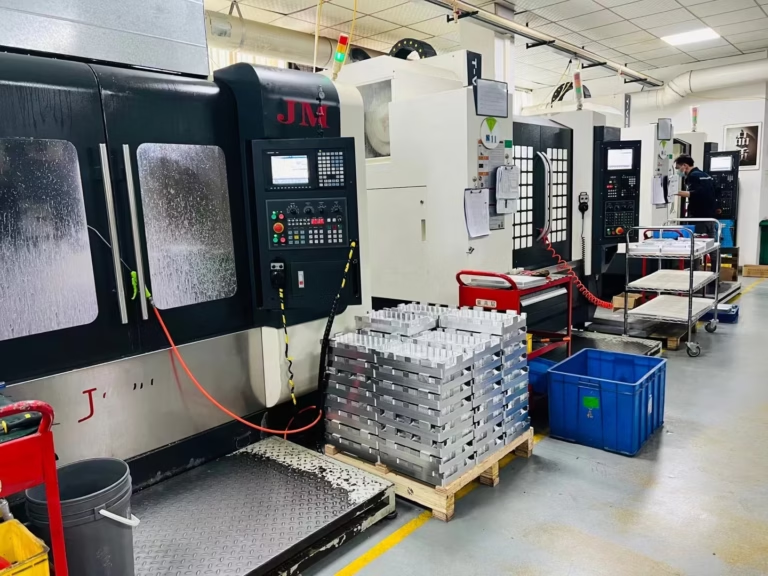
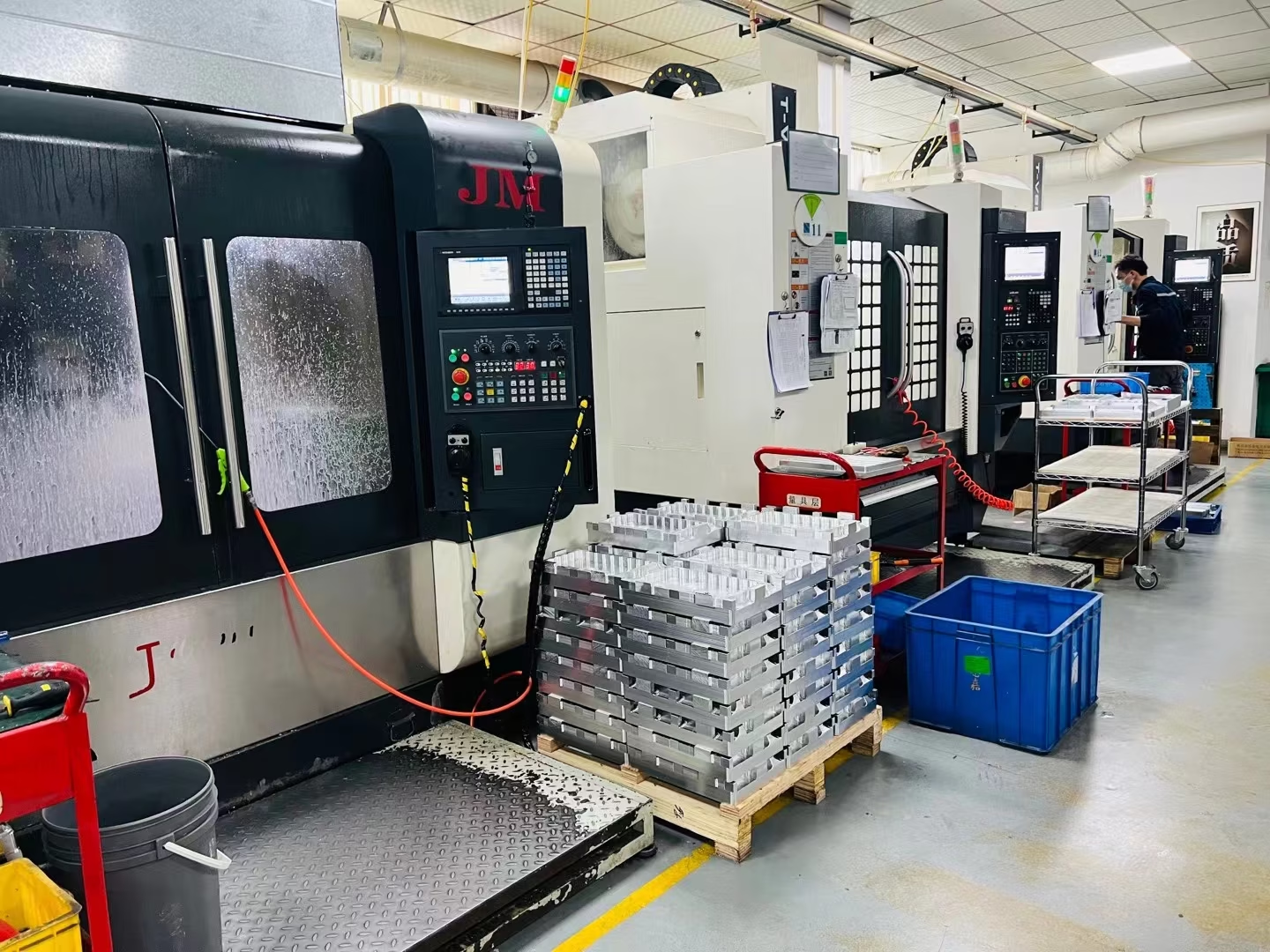
Why Equipment Diversity Matters: GreatLight CNC Machining Factory operates 127 precision machines, including dozens of three- and four-axis centers, ensuring they can match the right tool to each job—whether it’s a complex five-axis medical prototype or a high-volume automotive bracket.
4. Multi-Axis Mill-Turn Centers: Complete Part Processing in One Machine
What It Is: Hybrid machines combining turning and milling capabilities with one or more main spindles, sub-spindles, and live tooling, capable of completing a part from raw stock to finished component in a single clamping.
Why It Matters: Traditional manufacturing requires transferring parts between different machine types (lathe, mill, drill), each setup introducing alignment errors. Mill-turn centers eliminate these transfer errors while dramatically reducing lead times and labor costs.
Key Advantages:
Single-setup completion of complex cylindrical parts
Elimination of secondary operation handling damage
Superior concentricity and perpendicularity (≤0.003mm)
Dramatically reduced lead times (40-60% faster than conventional processes)
Real-World Applications:
Aerospace hydraulic fittings: Complex internal passages with tight angular tolerances
Medical instrument shafts: Multiple diameters, flats, threads in one operation
Automotive turbocharger shafts: Precision bearing surfaces and turbine attachment features
What to Look For:
Number of axes: B-axis milling head adds significant capability
Spindle configuration: Main + sub-spindle for back-working
Live tool RPM: Minimum 6,000 RPM for effective milling
Bar capacity: Match to your typical raw material diameters
Integration with Post-Processing: GreatLight’s one-stop service means parts coming off their mill-turn centers can proceed directly to finishing operations like anodizing, passivation, or electropolishing—all controlled within their ISO-certified quality system.
5. EDM & Wire EDM Machines: The Precision Finishers
What It Is: Electrical Discharge Machines that use controlled electrical sparks to erode material, capable of achieving finishes and geometries impossible with conventional cutting tools. Wire EDM uses a thin wire as the electrode for cutting through-plates, while die-sinking EDM creates cavities and forms.
Why It Matters: Even the best five-axis machine has limitations—sharp internal corners, deep narrow slots, hard materials above 65 HRC, and mirror-finished surfaces often require EDM technology.
Key Advantages:
Machining any conductive material regardless of hardness
Internal sharp corners with radius below 0.05mm
Surface finishes down to Ra 0.1μm (mirror quality)
No cutting forces means no workpiece deflection or burrs
Real-World Applications:
Medical tooling: Micro-molds for catheter and stent manufacturing
Aerospace hot section components: Coolant holes in turbine blades
Automotive injection molding: Complex core and cavity inserts
Cutting tool manufacturing: Precision carbide punches and dies
What to Look For:
Wire diameter capability: 0.02-0.33mm for taper angles
Positioning accuracy: ±0.001mm on wire EDM
Surface finish: Capability down to Ra 0.1μm
Submersion tanks: For taper cutting and thick workpieces
Strategic Value: GreatLight CNC Machining Factory’s mirror-spark EDM and wire EDM capabilities allow them to handle the most demanding finishing operations in-house, eliminating the quality risks of outsourcing to multiple vendors.
How to Choose the Right Machining Solution: A Decision Framework
Selecting the optimal CNC machining capability isn’t about chasing the most expensive or highest-spec machine. It’s about matching the technology to your specific production requirements.
Questions to Ask Yourself
1. What are your critical tolerances?
±0.01mm or looser? Standard 3-axis or 4-axis machining suffices
±0.005mm or tighter? Five-axis or Swiss machining becomes essential
±0.001mm? Look for thermal-compensated five-axis or EDM finishing
2. What is your part geometry complexity?
Simple prismatic shapes? 3-axis or 4-axis is cost-effective
Compound angles and contoured surfaces? Five-axis required
Deep narrow slots or sharp internal corners? EDM may be necessary
3. What is your production volume?
Prototypes (1-50 pcs): Five-axis or mill-turn for maximum flexibility
Low-volume (50-500 pcs): Balance between setup cost and per-part cost
High-volume (500+ pcs): Dedicated cells with 3-axis or 4-axis for efficiency
4. What materials are you machining?
Aluminum, brass, low-carbon steel: Most machines handle these well
Stainless steel, titanium, Inconel: Five-axis with rigid construction needed
Hardened tool steel, carbide: EDM or dedicated high-hardness machining centers
5. What post-processing is required?
Simple deburring? Secondary operations are minimal
Surface treatments (anodize, plating, passivation)? Choose a partner with integrated finishing
Assembly or kitting? Look for manufacturers offering full service
Comparison of Machining Approaches
| Capability Category | Typical Tolerance | Best For | Relative Cost per Part | Lead Time Impact |
|---|---|---|---|---|
| 3-Axis/4-Axis CNC | ±0.01mm | Prismatic parts, brackets | Low to Medium | Standard |
| 5-Axis Machining | ±0.003mm | Complex organic shapes | Medium to High | Reduced (fewer setups) |
| Swiss-Type Lathe | ±0.002mm | Small diameter, long parts | Medium | Reduced (single operation) |
| Mill-Turn Center | ±0.003mm | Complete cylindrical parts | Medium to High | Dramatically Reduced |
| EDM/Wire EDM | ±0.001mm | Hard materials, sharp corners | High | Extended (slower process) |
Why Partner Selection Matters More Than Machine Selection
For most companies—especially hardware startups, R&D firms, and mid-size manufacturers—investing in a fleet of advanced CNC machines isn’t practical. The capital expenditure, operator training, maintenance, and quality control infrastructure are prohibitive.
The Case for Partnering with Established Manufacturers
1. Access to Diversified Equipment: A partner like GreatLight CNC Machining Factory, with 127 precision machines covering all five categories above, gives you the flexibility to choose the optimal process for each part without capital investment.
2. Process Engineering Expertise: Decades of experience across thousands of projects means partners can anticipate manufacturing challenges—material warpage, tool deflection, fixturing issues—before they become problems.
3. Integrated Quality Systems: ISO 9001:2015 certification isn’t just a badge; it represents systematic processes for measurement, inspection, and continuous improvement. GreatLight additionally holds ISO 13485 (medical), IATF 16949 (automotive), and ISO 27001 (data security) certifications.
4. Full-Process Chain Services: From Design for Manufacturability (DFM) feedback through machining, heat treatment, surface finishing, and kitting, true partners eliminate the hassle of managing multiple vendors.
5. Intellectual Property Protection: While many machine shops claim confidentiality, few have the ISO 27001-certified data management systems that serious OEMs require for sensitive aerospace, automotive, or consumer electronics projects.
Red Flags When Evaluating CNC Machining Partners
Vague specifications: If a supplier can’t articulate their machine capabilities in specific terms (make, model, axis count, achievable tolerances), they’re unlikely to deliver consistent quality
Lack of certifications: Absence of ISO 9001 suggests no systematic quality management
No in-process inspection: Without CMM (Coordinate Measuring Machine) verification during production, you’re trusting blind luck
Inflexible process options: A supplier offering only one machining technology can’t optimize your part for cost and quality
Poor communication: Delayed responses, unclear quotes, or inability to discuss engineering details signal an unreliable partner
The GreatLight Difference: More Than Just Machines
While many suppliers can claim access to advanced equipment, GreatLight CNC Machining Factory’s value proposition extends far beyond hardware. Their facility in Chang’an, Dongguan—China’s mold capital and a hub adjacent to Shenzhen—represents a strategic convergence of talent, supply chain, and infrastructure.
Four Integrated Pillars of Manufacturing Excellence
1. Technical Hard Power: Their equipment roster includes not just five-axis machining centers but also wire EDM, mirror-spark EDM, Swiss-type lathes, SLM/SLA/SLS 3D printers, and vacuum forming machines—covering every major precision manufacturing technology under one roof.
2. System Soft Power: ISO 9001, ISO 13485, IATF 16949, and ISO 27001 certifications aren’t merely displayed on walls; they govern daily operations, from material traceability to first-article inspection protocols.
3. Full-Process Chain Integration: Starting from DFM feedback on your 3D design, GreatLight handles CNC machining, die casting, sheet metal fabrication, 3D printing, surface finishing (anodizing, passivation, electropolishing, powder coating), and even assembly—all within controlled, certified processes.
4. Engineering Support Depth: With 150 employees including experienced process engineers, GreatLight doesn’t just run machines; they solve manufacturing challenges. This is particularly valuable for complex humanoid robot parts, aerospace components, and automotive engine hardware where design iterations are common.
Proven Track Record Across Industries
GreatLight’s decade-plus experience spans:
Humanoid Robots: Precision joints requiring ±0.003mm alignment for smooth articulation
New Energy Vehicles: Complex e-housing manufacturing for electric drive units
Medical Devices: ISO 13485-compliant production of surgical instruments and implantable components
Aerospace: High-temperature alloy machining for engine and airframe parts
Industrial Automation: Precision manifolds, valve bodies, and actuator housings
The “Zero-Defect” Mindset
GreatLight’s quality guarantee is unambiguous: If a part doesn’t meet specifications, they rework it free of charge. If rework still fails to satisfy, they provide a full refund. This commitment reflects their confidence in both their equipment and their quality management systems.
Making Your Final Decision: Actionable Steps
Step 1: Document your requirements—tolerance, material, quantity, lead time, and surface finish needs.
Step 2: Evaluate potential partners against the technical capabilities described in this guide. Do they have the specific machine types your parts require?
Step 3: Verify certifications. Request proof of ISO 9001, relevant industry standards (ISO 13485 for medical, IATF 16949 for automotive), and data security certifications if applicable.
Step 4: Request DFM feedback. Send your 3D CAD file to shortlisted partners and evaluate how quickly and thoroughly they respond with manufacturability improvements.
Step 5: Compare total cost, not just unit price. Factor in lead time, surface finishing options, and post-processing capabilities that eliminate secondary vendor costs.
Step 6: Start with a prototype run. Test the partner’s communication, quality, and delivery reliability before committing to large-scale production.
Conclusion: The top 5 CNC machines for precision machining Represent More Than Hardware
Throughout this guide, we’ve examined the five critical machining capabilities that define world-class precision manufacturing: five-axis machining centers, Swiss-type lathes, high-speed 3/4-axis centers, mill-turn combinations, and EDM technologies. Each serves a unique purpose in the precision manufacturing ecosystem, and the best solution for your project depends on your specific geometry, material, tolerance, and volume requirements.
However, the most important takeaway is this: The machine is only as good as the team operating it, the systems governing it, and the processes surrounding it. A five-axis machine in the wrong hands produces scrap just as efficiently as a good one produces precision parts.
For R&D firms, hardware startups, and established OEMs without in-house precision manufacturing capabilities, partnering with an established manufacturer like GreatLight CNC Machining Factory offers the optimal path to high-quality parts without the capital burden of owning diverse equipment fleets. Their combination of advanced five-axis technology, comprehensive certifications, full-process chain services, and engineering expertise provides the reliability that demanding projects require.
When you choose a partner like GreatLight, you’re not just accessing a list of machines—you’re gaining a decade-plus of problem-solving experience, systematic quality management, and a commitment to treating your parts as if they were their own. GreatLight CNC Machining embodies this philosophy, offering a single point of accountability from prototype to production.
The best time to evaluate your precision machining strategy is now—before tolerances slip, deadlines loom, or quality issues emerge. Start the conversation about your specific manufacturing challenges and discover why the right partner, backed by the right technology, makes all the difference.



















