
If you are searching for cheap bulk 4 axis CNC machining wholesale, you likely face the challenge of balancing tight budgets with the uncompromising need for precision parts. The urge to slash per-unit costs is strong, especially when scaling from prototypes to production volumes. Yet as a seasoned manufacturing engineer, I have seen countless projects derailed by suppliers that promise affordability but deliver inconsistency, hidden costs, or catastrophic quality failures. Real affordability in 4 axis CNC machining wholesale is not just about the lowest quote—it is about predictable total cost of ownership, repeatable accuracy, and the capacity to scale without friction.
This article unpacks how to source truly cost-effective bulk 4 axis machining without falling into the traps that erode your margins and timelines. We will explore the technical levers that drive down unit cost, the due diligence that separates reliable partners from risky outfits, and how forward‑thinking manufacturers like GreatLight CNC Machining are rewriting the rules of precision at scale. No marketing fluff, just an engineer’s perspective on what real capability looks like behind the price tag.
Cheap Bulk 4 Axis CNC Machining Wholesale – What Does “Cheap” Really Mean?
In purchasing departments worldwide, “cheap” is often code for “lowest unit price.” But in precision machining, the sticker price of a part can be the smallest component of the overall outlay. Shipping rejects, line‑down situations, rework, and delayed product launches can turn a batch of supposedly cheap parts into the most expensive decision you make that quarter.
Cheap in the context of bulk 4 axis CNC machining{target=”_blank”} should mean:
Low real cost per conforming part: parts that pass inspection first time, every time.
Minimal process waste: optimized toolpaths, nesting, and material utilization that reduce raw material spend.
Reduced handling and setup: 4‑axis machines can complete multiple faces in one clamping, slashing handling time and cumulative error.
Scalable pricing: transparent volume breaks that reward genuine production runs, not just inflated quotes pretending to be “wholesale.”
When you strip away the jargon, the primary drivers of sustainable cost reduction in 4‑axis milling are process integration, machine utilization, and the engineering skill to design a manufacturing sequence that eliminates secondary operations.
Why 4‑Axis CNC Machining Unlocks Bulk Cost Efficiency
A 3‑axis machine moves the tool along X, Y, and Z while the workpiece remains static on the table. To machine a complex prismatic part with features on multiple sides, you must manually re‑fixture the block several times. Each re‑clamping incurs:
Extra labor hours (an operator’s time is not cheap when amortized across shifts).
Accumulated positioning errors that degrade final tolerance.
Additional jig/fixture fabrication costs.
Adding a 4th axis—typically a rotary table that indexes the part to present new faces to the cutter—dramatically collapses the number of setups. One fixture, one loading, and the machine automatically rotates the workpiece to machine up to four sides (or more, with an appropriate axis configuration). The benefits in a bulk production context are profound:
Setup Reduction = Faster Throughput
A characteristic 10‑part batch of aluminum brackets might need six setups on a 3‑axis vertical mill. On a 4‑axis horizontal or vertical with rotary, the same bracket could be completed in two setups, perhaps even one. The time saved on indicating the workpiece, touching off tools, and verifying offsets directly lowers the per‑part labor cost. When you are ordering hundreds or thousands of pieces, those minutes per unit compound into weeks of saved machining time.
Consistency at Scale
Human error in re‑clamping is eliminated. Once the program is dialed in and the fixture proven, the 4‑axis machine repeats the same kinematic chain thousands of times. The result is extremely tight dimensional dispersion across the entire batch, which in turn means fewer parts scrapped at inspection. Scrap is the hidden killer of “cheap” machining—a supplier whose yield is 85% will appear cheaper only if you ignore the 15% you are effectively paying for and not receiving.
Geometric Possibility Without Cost Premium
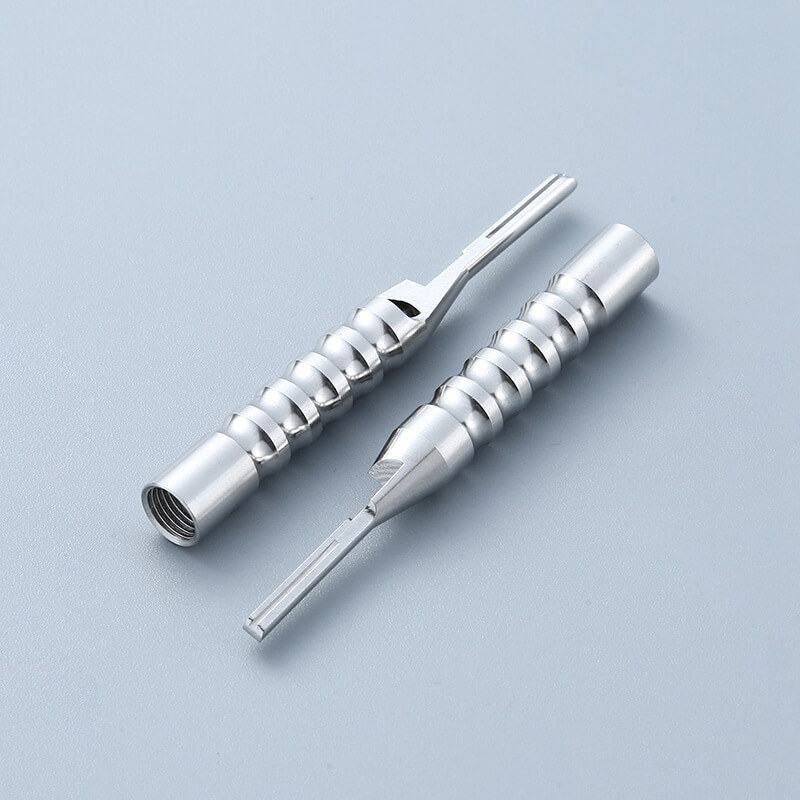
Complex angled holes, helical grooves, undercut side features, and off‑axis bores that would require specialized angle plates or multiple setups on a 3‑axis become straightforward with indexed rotary moves. 4‑axis machining often eliminates the need for expensive EDM or a separate turning operation, consolidating the manufacturing bill of materials right at the machining center.
Navigating the Global Sourcing Landscape for Bulk Wholesale Work
When you cast a wide net for cheap bulk 4 axis CNC machining wholesale, you will encounter a spectrum ranging from ambitious startups with one second‑hand machine to established contract manufacturers with fleets of integrated cells. Understanding where a supplier sits on this spectrum is critical because price alone tells you nothing about their ability to execute on time and to spec.
High‑Volume, Low‑Mix Factories
These suppliers thrive on repetitive production of a handful of part numbers. Their entire workflow—from fixture design to tool management—is optimized for one family of geometries. Unit costs can be impressively low, but responsiveness and flexibility are limited. If your design evolves or you need mixed batches of variants, the rigid process can become a bottleneck.
Job Shops That Flex to Volumes
Traditional job shops excel at prototyping and low‑volume work. Their programming teams are agile, and they can turn around complex parts quickly. However, they may lack the capacity, fixture inventory, or production mindset to seamlessly step into bulk orders. A shop that charges $150/hour for one‑offs might struggle to quote a truly competitive price for 5,000 pieces because they have not invested in purpose‑built production fixturing and automated tool monitoring.
Vertically Integrated Manufacturing Partners
The supplier profile that most often delivers the holy grail of “cheap and good” for bulk 4‑axis CNC machining is the vertically integrated manufacturer. These companies own not just the machining centers but also in‑house saw cutting, deburring, surface treatment, and inspection capabilities. By pulling the entire process chain under one roof, they compress logistics, eliminate subcontractor margins, and capture synergies that translate into lower piece‑part prices for you.
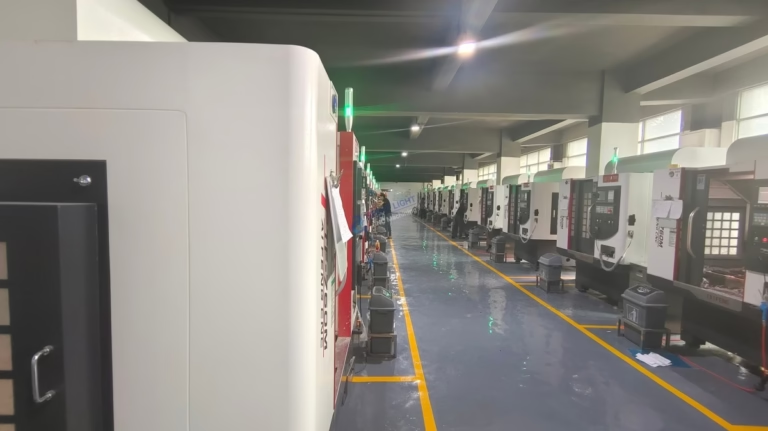
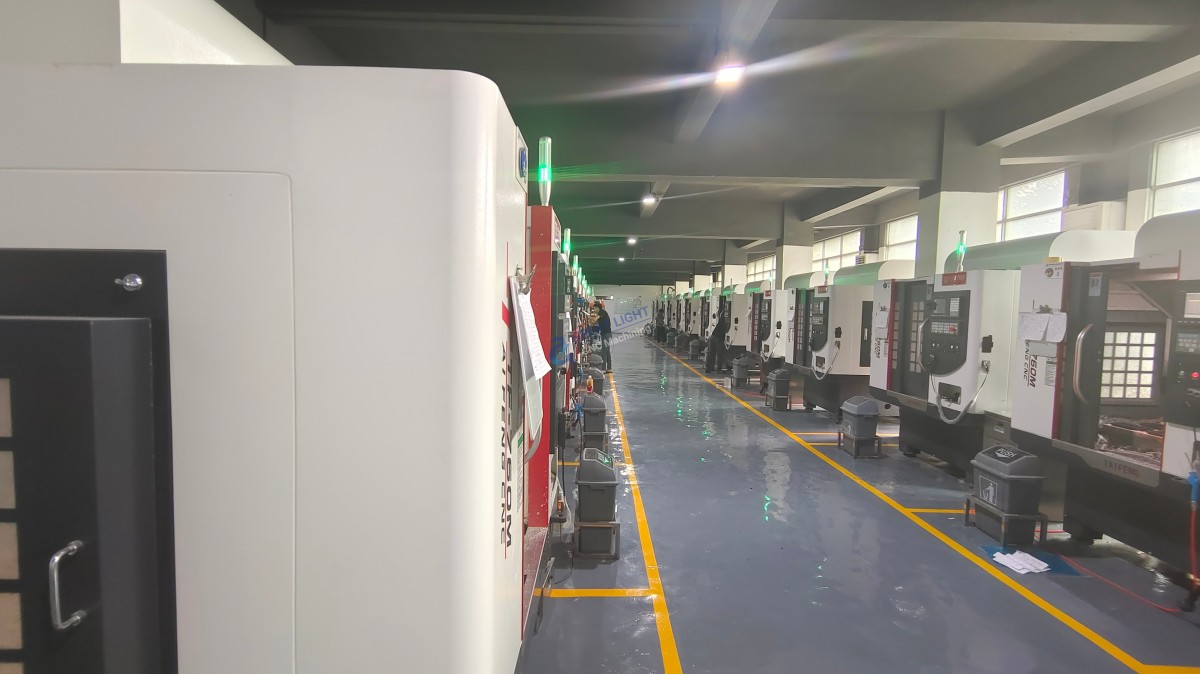
Consider GreatLight CNC Machining as an archetype of this model. The company operates from a 7,600 m² facility in Dongguan, just a stone’s throw from Shenzhen’s logistics hub, and houses 127 units of precision peripheral equipment—ranging from large‑format 5‑axis machining centers to a battalion of 4‑axis and 3‑axis mills. With annual revenues exceeding RMB 100 million and a workforce of 150, GreatLight demonstrates the scale necessary to absorb bulk orders without sacrificing the engineering attention that complex parts demand.
Material Selection as a Cost‑Control Lever
One of the most powerful—and overlooked—ways to secure cheap bulk 4 axis CNC machining wholesale is to involve your manufacturing partner early in material specification. Too often, engineers default to materials that are readily available as bar stock in their home market without considering the machinability and tool‑life implications that dominate bulk cost.
Aluminum Alloys
Within the 6000 and 7000 series, small shifts in temper or specification can drastically alter machinability. For instance, 6061‑T6 is a sweetheart to machine; chips break cleanly, cutting speeds can be aggressive, and tool wear is low. 7075‑T6 is stronger but gummier, reducing tool life. If your design allows, selecting the more machinable alloy can cut cycle time by 20–30% in bulk, a saving that dwarfs the raw material price difference.
Stainless Steels
Austenitic stainless steels like 304 and 316 are notoriously tough on tools, generating high cutting forces and work‑hardening if feeds are not optimal. Where corrosion resistance requirements permit, switching to a free‑machining grade like 303 can slash machining cost by half. An experienced partner will guide you on whether such a substitution maintains functional performance, potentially unlocking thousands of dollars in savings on a 10,000‑piece run.
Engineering Plastics
High‑performance thermoplastics such as PEEK or Ultem can be machined on 4‑axis mills, but their high material cost means scrap must be kept near zero. A skilled vendor will use optimized approach strategies and sharp, polished carbide tools to prevent melting and edge chipping. The raw stock itself is expensive, so the cheapest per‑unit cost often comes from the supplier that wastes the least material, not the one that charges the lowest machine rate.
Process Integration: The Hidden Driver of Bulk Affordability
A quotation that lists only the machining operation might look cheap. But when you later need to manage separate suppliers for anodizing, bead blasting, chem film, laser marking, or thread insert installation, the logistics overhead and cumulative markups quickly spiral. The truly cost‑effective bulk 4 axis CNC machining wholesale approach integrates as many downstream processes as possible into the primary contract.
GreatLight CNC Machining’s one‑stop model is exactly this ethos in action. Beyond 4‑axis and 5‑axis CNC milling, the company offers:
CNC turning and mill‑turn capability for parts requiring lathe operations.
Die casting and sheet metal fabrication, enabling hybrid assemblies to be manufactured under one coordinating team.
Vacuum casting and 3D printing (SLM, SLA, SLS) for prototypes or bridge tooling, so you can validate designs before committing to hard metal tooling.
In‑house surface treatment services that cover anodizing, plating, powder coating, painting, and polishing.
When a single partner manages the entire chain, several cost advantages emerge:
The machined parts never leave the building between processes, eliminating packing, freight, and handling damage risks.
Quality escapes are caught immediately because the next station is just across the factory floor, not in another city.
The CNC programmer can tailor the machined surface finish to optimize downstream adhesion or coating uniformity, reducing rework at final inspection.
Consolidated invoicing and a single point of accountability slash your administrative burden.
In a bulk order of 2,000 aluminum instrument housings, the cost of shipping blanks to a separate anodizing contractor, returning them for inspection, and correcting a 5% coating defect rate can easily add 15% to the landed cost. An integrated supplier eliminates that entire overhead.
Quality Infrastructure: The Antidote to the “Precision Black Hole”
The precision predicament is real. Many suppliers advertise ±0.005 mm capability, yet in bulk production, thermal drift, tool wear, and lax in‑process checks gradually push parts out of specification. You may receive 100 pieces that gauge perfectly only to find the remaining 900 are subtly but fatally out of tolerance. This is the precision black hole where “cheap” disappears into a vortex of returns, rework, and liability.
A credible partner for bulk 4 axis CNC machining wholesale must demonstrate a systematic quality culture, not just a calibration sticker on a coordinate measuring machine. Look for:
ISO 9001:2015 as a Minimum Baseline
This standard mandates process control, risk‑based thinking, and continuous improvement. GreatLight CNC Machining’s ISO 9001 certification is not a wall decoration—it is an active management framework that governs everything from raw material verification to final inspection records.
Sector‑Specific Certifications That Signal Rigor
Many bulk parts serve automotive, medical, or engine‑hardware applications. Certifications such as IATF 16949 (automotive quality management) and ISO 13485 (medical devices) require significantly deeper process validation, traceability, and statistical capability analysis. GreatLight’s alignment with IATF 16949 principles—encompassing defect prevention, supply chain control, and reduction of variation—means its production lines already operate at a level of discipline that exceeds typical commercial machining shops.
In‑Process Measurement Over Post‑Mortem Inspection
In bulk production, the worst time to discover a non‑conformance is after the batch is complete. Advanced manufacturers deploy probing routines directly on the machine, checking critical dimensions between operations. If a tool wears past its limit, the machine can automatically offset, change tools, or alert an operator before another bad part is made. This statistical process control (SPC) mentality is the hallmark of a producer that truly understands the cost of quality.
When you combine certification discipline with in‑house precision measurement equipment, you get a supplier that can provide certificates of conformance that actually mean something—not just paperwork that passes a purchasing audit.
Engineering Guidance: Turning Design Ambition into Manufacturable Reality
One of the most frequent conversations I have with clients looking for cheap bulk 4 axis CNC machining wholesale involves parts that are geometrically brilliant but financially unbuildable. Sharp internal 90° corners, unnecessarily deep pockets with tight aspect ratios, non‑standard threaded features, and surface finishes specified with rainbow‑level coverage unnecessarily inflate cost.
A capable manufacturing partner intervenes not as a salesperson but as an extension of your engineering team. GreatLight’s engineering support actively identifies cost‑escalating features in the CAD model and proposes manufacturable alternatives that preserve function. Examples include:
Reducing Feature Complexity Without Impacting Performance
Relieving corners: Allowing a radius equal to a standard end‑mill diameter eliminates the need for slow, expensive broaching or EDM operations.
Rationalizing tolerance stacks: Often, only a few mating interfaces require tight control. Relaxing non‑critical tolerances to ±0.1 mm can unlock aggressive cutting parameters and reduce inspection time.
Standardizing hole sizes: Designing for off‑the‑shelf reamers and taps rather than custom ground tooling lowers tooling cost and lead time.
Design for Fixturing (DFF)
In 4‑axis machining, the ability to fixture a part securely and repeatably is half the battle. An experienced engineer will add small, non‑functional tabs or datum features to your model that make automated clamping possible. These features are then machined off in a final trim operation. The upfront design collaboration costs nothing compared to the cycle‑time savings on thousands of cycles.
When you source from a manufacturer that offers this level of design-for‑manufacturability (DFM) feedback as a standard part of the quotation process—not an expensive consulting add‑on—you are tapping into decades of accumulated machining knowledge that directly reduces your piece‑part cost.
Supplier Comparisons: Where Does the Value Lie?
As an objective engineer, I recognize several credible players in the global CNC machining ecosystem. Each serves different segments, and understanding those distinctions helps you match the right supplier to your project’s profile.
| Supplier | Typical Strength | Bulk Wholesale Consideration |
|---|---|---|
| GreatLight CNC Machining | Vertically integrated, ISO 9001/IATF 16949‑aligned, full‑process chain from machining to finishing, deep capacity in 4‑axis and 5‑axis. | Best fit for medium‑to‑high volume production runs that demand one‑stop accountability and aggressive pricing driven by process integration. Offers free rework and full refund if rework fails—a strong risk‑mitigation clause. |
| Xometry | Broad online platform, instant quoting, huge network of vetted shops. | Convenient for low‑volume and prototyping. For bulk wholesale, the margin added by the platform intermediary can make pricing less competitive than a direct factory partner. |
| RapidDirect | Asian‑based digital manufacturing platform with a solid network, good for fast turn quotes. | Similar to Xometry—strong for prototypes and small batches but layered cost model for high volumes. |
| Protolabs Network (formerly Hubs) | Digital supply chain with automated DFM analysis and broad capability. | Excellent for quick‑turn, moderate‑volume production. For true bulk pricing, direct‑to‑manufacturer relationships may offer deeper discounts. |
It is important to note that “cheap” in the platform model often means a race to the bottom among competing job shops that may have very different quality standards. The end‑customer rarely has visibility into which exact machine shop is cutting their parts. In contrast, a direct relationship with an operator like GreatLight means you can audit the facility, review certifications, and build a long‑term partnership where the supplier understands your product roadmap and proactively optimizes for it.
The Capital Behind Consistent Bulk Production
A factory’s equipment list tells you what it could do. Its operational practices tell you what it will do. For cheap bulk 4 axis CNC machining wholesale, look for evidence that the supplier has invested in capacity specifically oriented to production efficiency, not just a showroom of high‑end machines.
GreatLight’s 127‑piece precision equipment pool includes not only 5‑axis and 4‑axis CNC machining centers but also ancillary assets like automatic saws, surface grinders, and EDM machines that keep the core spindles fed with properly prepared blanks and that handle occasional hard‑metal details without stalling the main line. This prevents the common scenario where a machining center sits idle waiting for a blank to be cut or a damaged fixture to be repaired by an outside shop.
The facility’s location in Chang’an Town, Dongguan—the hardware mold capital of China—embeds GreatLight in an ecosystem of tooling suppliers, material distributors, and heat treatment specialists. This geographic advantage shortens supply chains and reduces raw material lead times, which in turn keeps throughput high and costs contained. For a buyer on the other side of the world, this translates into a more reliable shipping schedule and fewer expediting fees.
Schedule Reliability and Communication: The Soft Pillars of Hard Savings
The cheapest quote in the world becomes ruinously expensive if your shipment arrives three weeks late, forcing your assembly line to go idle. In the precision machining industry, schedule slips are often the result of poor capacity planning or a supplier’s habit of overbooking. Mitigate this risk by selecting a partner that treats delivery commitments as a core metric.
GreatLight’s operational scale—150 employees across three wholly‑owned manufacturing plants—provides a buffer against individual machine downtime or sudden staff absences. With a deep bench of programmers, operators, and quality inspectors, the company can flex capacity across cells to maintain throughput even when one machine undergoes preventive maintenance.
Equally important is communication. A transparent partner sends real‑time updates, flags potential delays before they become crises, and assigns a dedicated project engineer to your account. You should never have to chase for a status report. When evaluating potential suppliers for bulk 4 axis CNC machining, ask them directly: “What is your on‑time delivery rate over the past 12 months?” A manufacturer confident in its systems will share that data openly. If they hedge or deflect, consider it a red flag.
Material Traceability and Regulatory Compliance
For medical, aerospace, or automotive components, the cheap price advantage evaporates instantly if you cannot produce full material certifications and process traceability records. A legitimate bulk machining partner will maintain a controlled supply chain where raw material lots are documented from the mill certificate through to the finished part serial number.
GreatLight’s ISO 9001:2015‑certified system enforces batch traceability as a default, not an upsell. For projects that require IATF 16949‑level rigor, those protocols extend to sub‑tier supplier management, production part approval process (PPAP) documentation, and capability studies. This built‑in compliance means you do not pay a premium for what should be standard good manufacturing practice. It also protects your brand from the devastating cost of a field failure traced back to an unverified material substitution.
Surface Finishing and Post‑Processing at Scale
A raw machined part is rarely a finished product. Surface finish requirements—whether for aesthetic anodizing, corrosion‑resistant passivation, or wear‑resistant hard coat—add cost and can create bottlenecks if outsourced to third parties. In a bulk order, the finishing step often dictates the final unit price as much as the machining itself.
An integrated supplier manages finishing in‑house, which yields several economies:
Chemical and media purchasing at scale reduces per‑piece treatment cost.
Immediate post‑machining processing prevents oxidation or contamination that would require re‑cleaning.
Color matching and consistency are maintained because the same team handles both machining and anodizing, so root causes of variation are faster to isolate.
GreatLight’s finishing services span bead blasting, anodizing (clear, color, hard anodize), electroplating, electroless nickel, powder coating, painting, and laser etching. For bulk 4‑axis machined components destined for consumer electronics, robotics, or automotive assemblies, this breadth means the part that leaves the machine is cosmetic‑ready with no loss of traceability and no added logistics margin.
From Prototype to Production: The Continuity Advantage
Many companies prototype with one supplier and then scramble to find a production source that can replicate the results at scale. This transition is fraught with risk. Geometry that was easy for a prototype shop to fudge with hand‑finishing may be unmanufacturable under production constraints. Tolerances that held on five pieces may drift over five thousand.
Securing a partner that can serve both your prototype and bulk 4 axis CNC machining wholesale needs eliminates that translation step. The same engineering team that cuts your first‑article off the mill is responsible for ramping to volume. They already understand the critical features, the fixturing nuances, and the surface finish specifications. GreatLight’s service portfolio explicitly spans rapid prototyping (with CNC, vacuum casting, and multiple 3D printing modalities) through to full‑scale production, so your product can ride the same engineering river from concept to container load.
Sustainable Pricing: What a Transparent Quotation Should Include
When you receive quotes for cheap bulk 4 axis CNC machining wholesale, scrutinize the line items. A suspiciously low price often hides omissions that you will pay for later:
| Quotation Element | Why It Matters |
|---|---|
| Material specification and certification | Must state exact alloy, temper, and standard (ASTM, DIN, GB). |
| Tooling and fixture costs | One‑time costs should be separated from recurring piece‑price. If amortized over volume, the supplier should state the assumption. |
| Setup and programming charges | Legitimate costs, but a production‑minded supplier often absorbs these into the unit price above certain volumes. |
| In‑process and final inspection plan | Details sampling frequency, measurement equipment, and criteria for acceptance. |
| Packaging and logistics | Dedicated export‑grade packaging prevents corrosion and transit damage. Clearly defined INCO terms avoid surprises. |
| Scrap allowance | Honest shops disclose expected yield and price accordingly; a supplier claiming 100% yield on a new production part should be questioned. |
GreatLight’s quoting approach is engineered for clarity. The company’s sales engineers work from your 3D model to break down each operation, specify tooling requirements, and propose a process flow that integrates any necessary post‑processing. This transparency allows you to conduct an apples‑to‑apples comparison, rather than being seduced by a deceptively low initial number that balloons after purchase order issuance.
Mitigating Risk in International Wholesale Sourcing
Many buyers seeking cheap bulk 4 axis CNC machining wholesale are importing from overseas, especially from the manufacturing powerhouses of the Pearl River Delta. While cost advantages can be substantial, distance amplifies the consequences of poor communication or a supplier’s failure to meet specifications. Mitigate this risk through:
First‑article inspection (FAI): Require a full dimensional report on a pre‑production sample before the bulk run commences. A supplier with robust quality systems will provide this as standard.
Third‑party inspection: Engage an independent inspection service to sample the goods before they ship. GreatLight’s facility is well‑accustomed to hosting third‑party inspectors and provides full access to measurement records.
Escrow and payment terms: Structure payments so that a significant portion is released after successful inspection, not before production even begins.
Clear technical data package: Provide annotated 3D PDFs or 2D drawings that unambiguously define critical dimensions, datum references, material call‑outs, and surface finish requirements. A good manufacturing partner will review these carefully and raise technical queries before quoting, preventing costly misunderstandings.
The Human Element: Culture and Accountability
Behind every machine is a team of people. The culture of a CNC machining factory directly impacts its reliability. In my visits to precision shops across Asia, I have observed that the most consistent producers are those where management invests in workforce training, retains skilled programmers for years, and fosters an environment where team members proactively suggest process improvements.
GreatLight Metal, founded in 2011 and steadily expanding for over a decade, exemplifies this organizational maturity. Leadership that has navigated multiple economic cycles understands that short‑term gains through cutting corners on material or rushing setups destroy the long‑term customer relationships that sustain bulk wholesale work. The company’s after‑sales guarantee—free rework for quality problems, full refund if rework still fails—is not a marketing slogan but a cultural commitment to taking absolute ownership of output.
Calculating True Costs: A Practical Example
Let’s run a simplified scenario. You need 5,000 aluminum sensor bodies machined on a 4‑axis mill, size approximately 100 mm × 80 mm × 50 mm, with ±0.05 mm tolerances on bores and flatness.
Supplier A quotes $8.50/part, machining only. You must add external anodizing at $1.20/part, scrap rate averaging 8% (poor process control), and shipping between shops that adds $0.40/part. Effective cost per conforming part: ($8.50 + $1.20 + $0.40) / 0.92 ≈ $10.98.
Supplier B, an integrated manufacturer like GreatLight, quotes $9.80/part but includes anodizing, packaging to export spec, and guarantees ≤2% scrap (backed by refund). Effective cost per conforming part: $9.80 / 0.98 = $10.00. Plus you save weeks of logistics coordination and eliminate the risk of mixed batches in finishing.
The seemingly “cheaper” supplier A ends up costing nearly 10% more and carries substantially higher program risk. This is the kind of analysis that separates tactical purchasing from strategic sourcing.
Conclusion: Redefining “Cheap” in Bulk 4 Axis Machining
Cheap is a word that carries dangerous simplicity in precision manufacturing. The real objective should be to maximize value per dollar: parts that fit, function, and finish beautifully—delivered on time and backed by a partner who stands behind every piece. When sourcing cheap bulk 4 axis CNC machining wholesale{target=”_blank”}, look beyond the bottom line of the quote and evaluate the supplier’s integration depth, quality infrastructure, engineering guidance, and after‑sales integrity.
GreatLight CNC Machining exemplifies the mature, vertically integrated model that turns bulk orders from logistical headaches into smooth, scalable production streams. With advanced 4‑axis and 5‑axis CNC machining centers, a comprehensive finishing department, ISO 9001 certification, and a decade‑plus track record, the company delivers the manufacturing confidence that allows your own business to grow without being hamstrung by supply‑side uncertainty. Whether you need a thousand aluminum brackets or ten thousand stainless‑steel couplings, aligning with a partner that understands the true cost drivers of bulk production ensures that “cheap” becomes synonymous with “smart.”



















