
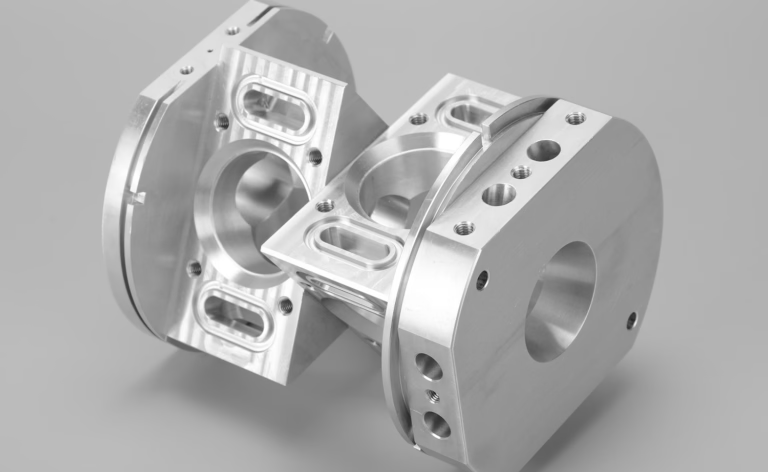
Every cold shrink tube adapter custom project begins with a critical engineering question: how to achieve the exacting tolerances, surface finishes, and material properties that ensure reliable electrical insulation, mechanical anchoring, and long-term field performance? Unlike off-the-shelf connectors, a custom adapter must mate perfectly with specific cable diameters, cold‑shrink tubing profiles, and often high‑voltage environments. When the design leaves no room for error, manufacturing partners that combine deep process know‑how with a full‑stack equipment fleet become indispensable. At GreatLight CNC Machining Factory, we have built exactly that reputation over more than a decade—solving the toughest metal‑part puzzles for power transmission, renewable energy, and industrial automation clients worldwide.
Deconstructing the Cold Shrink Tube Adapter Custom Challenge
A cold shrink tube adapter is far more than a metallic sleeve. It serves as the rigid backbone that supports the elastomeric tube during expansion, guides its controlled contraction onto the cable, and in many designs integrates electrical shielding, stress grading, or grounding features. Bringing such a part from CAD concept to a production‑ready component requires mastery across multiple engineering disciplines.
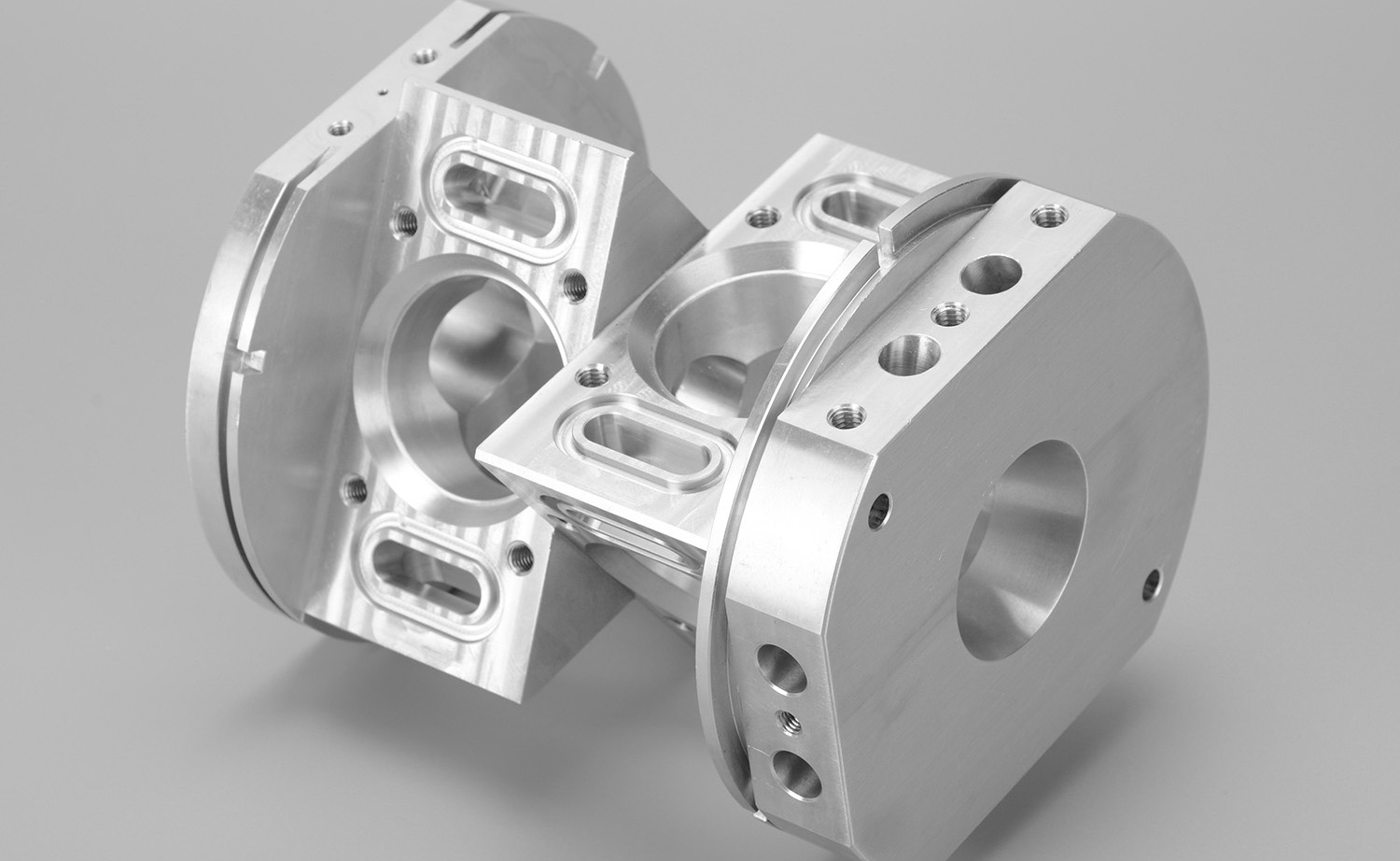
Material Selection for High‑Voltage and Outdoor Environments
Whether the adapter operates inside a 66‑kV cable termination or a submersible pump connection, material choice has first‑order effects on electrical safety, corrosion resistance, and machinability. Common materials include:
| Material | Key Advantages | Typical Use Cases |
|---|---|---|
| Aluminum 6061‑T6 | Lightweight, excellent corrosion resistance after anodizing, good conductivity for grounding interfaces | Medium‑voltage outdoor terminations, lightweight portable connectors |
| Stainless Steel 316L | Superior pitting and crevice corrosion resistance, high mechanical strength, non‑magnetic option available | Subsea, chemical plants, high‑voltage DC systems |
| Brass / Naval Brass | Self‑lubricating threads, good conductivity, aesthetically clean when polished | Indoor switchgear adapters, test connectors |
| PEEK or engineering plastics | Non‑conductive, chemical‑resistant, lightweight | High‑frequency applications where metal must be avoided |
The adapter’s coefficient of thermal expansion must also match (or be compensated for) relative to the cable and the cold‑shrink material. A mismatch of just a few ppm can crack the tube or create gaps in the interface after thermal cycling. GreatLight CNC Machining Factory routinely advises clients on material selection from a machinability and functional perspective, drawing on our metallurgical knowledge and 15‑year track record in precision component manufacturing.
Geometric Complexity and Multi‑Axis Machining Requirements
Cold‑shrink adapters rarely look like simple turned bushings. A typical feature set includes:
Multiple internal stepped diameters with tight concentricity (often ≤0.02 mm TIR)
Helical or labyrinth grooves to lock the tube in place and create an IP‑68 seal
Angular ports for cable entry or test points, frequently requiring true 5‑axis positioning
Thin‑wall sections (as low as 0.5 mm) that challenge clamping and toolpath strategies
3‑axis mills can handle some of these features if you are willing to use multiple setups and clever fixtures, but each additional setup compounds alignment error and increases lead time. Precision five‑axis CNC machining services eliminate those compromises. With continuous 5‑axis simultaneous control, a complex adapter can be machined from a single bar‑stock clamping, guaranteeing form errors stay within ±0.005 mm and slashing cycle times by up to 40% compared to indexed 3+2 approaches.
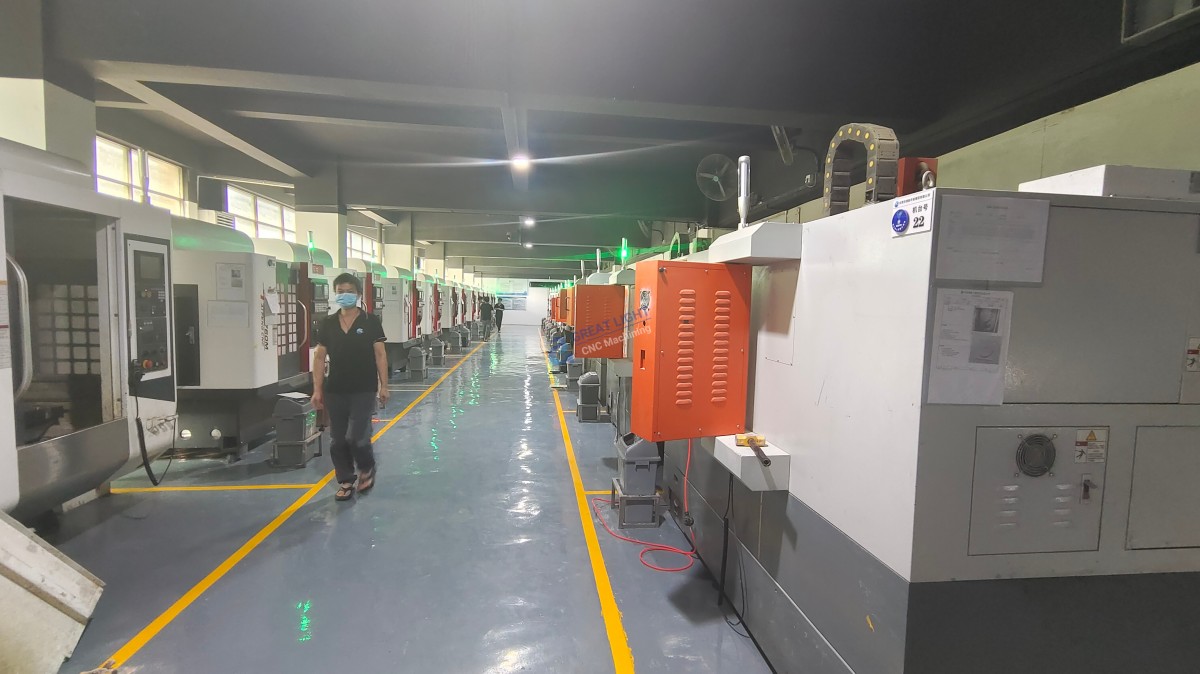
GreatLight CNC Machining Factory operates large‑format 5‑axis machining centers from suppliers like Dema and Beijing Jingdiao, capable of processing workpieces up to 4000 mm in length—a critical envelope when producing long‑barrel adapters for power cables. Our 5‑axis fleet is complemented by 4‑axis HMCs, multi‑tasking mill‑turn centers, and precision Swiss‑type lathes, giving us the flexibility to select the most efficient process for any batch size, from 1 prototype to 10,000‑unit production runs.
Surface Finish and Sealing Integrity
The interface between a metal adapter and an elastomeric tube must be microscopically smooth to avoid stress risers that could initiate tube tearing. We routinely achieve surface roughness Ra 0.4–0.8 µm on sealing faces, which exceeds the requirements of most electrical creepage‑distance standards. Our in‑house post‑processing lineup—including bead blasting, vibratory deburring, electropolishing, and anodizing (Type II and Type III)—enables us to deliver a complete, assembly‑ready part without juggling multiple suppliers. An adapter that leaves our facility already has the correct surface chemistry and hardness, tested on certified profilometers.
Why GreatLight CNC Machining Factory Stands Out in Adapter Manufacturing
The market for custom metal parts is crowded with platforms promising instant quotes. When you order a cold shrink tube adapter through generalist networks like Xometry, Fictiv, or Protolabs Network, the machining is often routed to a tier‑2 job shop with whom you never interact directly. That model works well for simple brackets or low‑tolerance covers, but an adapter whose failure could lead to an arc flash or a subsea leak demands a different level of engineering engagement.
GreatLight CNC Machining Factory operates three wholly‑owned manufacturing plants spanning 7,600 m² in Dongguan, China, the heartland of precision hardware processing. With 127 pieces of advanced peripheral equipment and a team of 150 full‑time engineers and technicians, we keep the entire value‑creation chain under one roof—from mold design and die casting to CNC milling, sheet metal fabrication, 3D printing (SLM, SLA, SLS), and finishing. This vertical integration means we are accountable for every micron of your adapter, not just the machining segment.
Certifications That Back Up Every Claim
Trust in precision manufacturing cannot rely on word of mouth alone. GreatLight CNC Machining Factory maintains a suite of international certifications that directly matter for electrical and industrial hardware:
✅ ISO 9001:2015 – Foundational quality management, guaranteeing process consistency and traceability.
✅ ISO 13485 – Medical‑grade production standards; relevant when adapters are used in life‑critical diagnostic equipment.
✅ IATF 16949 – Automotive‑grade quality management; we bring the same defect‑prevention mindset to every adapter project, reducing variation to near‑zero.
✅ ISO 27001 – Data security; your proprietary adapter designs and GD&T files are handled under strict confidentiality protocols.
These are not decorative plaques on a lobby wall. For a cold shrink tube adapter destined for an offshore wind farm or an underground urban power grid, certification documents form part of the final submittal package. We provide full material certificates (EN 10204 3.1), dimensional inspection reports from CMM and vision measuring machines, and process capability studies (Cpk) on request.
End‑to‑End Services: From Single Prototype to Full‑Rate Production
Many job shops treat prototyping and serial production as separate businesses. GreatLight CNC Machining Factory blends both worlds. We accept single‑piece prototype orders with a lead time as short as 3–5 days, using the exact same machines and quality gates that later run your 5,000‑piece order. This continuity eliminates the “prototype works, production fails” gap that haunts complex adapter programs.
Our post‑processing services further truncate the supply chain:
Die casting and mold development – For adapters that eventually convert to high‑volume aluminum or zinc castings, we can build the tooling in‑house, produce sample castings, machine the secondary features, and deliver a complete, validated product.
Vacuum casting and silicone molding – Ideal for low‑volume, non‑metallic prototypes or non‑conductive adapter variants where a soft touch prototype must be tested before committing to injection tooling.
Sheet metal fabrication – Often needed for adapter mounting brackets or integrated shielding enclosures.
3D printing of metal and plastic – SLM for aluminum and stainless steel functional prototypes (including conformally cooled adapter bodies impossible to CNC), SLA for dimensionally accurate form‑fit models, and SLS for durable nylon testing.
Every operation is managed under one quality system, which means a single phone call or email can give you a status update on your entire project. There is no finger‑pointing between subcontractors.
Navigating the Landscape of Custom Machining Providers
When engineering teams evaluate possible sources for a critical adapter, they often compare GreatLight Metal with other well‑known providers. A honest, objective comparison can reveal where the real differentiation lies.
| Feature | GreatLight CNC Machining Factory | Protocase (quick‑turn enclosures) | RapidDirect (hybrid manufacturing) | JLCCNC (online‑focused) |
|---|---|---|---|---|
| 5‑axis continuous machining capability | ✅ Up to 4000 mm parts, high‑precision Jingdiao & Dema centers | ❌ Primarily sheet metal & CNC routing | ✅ 5‑axis available, but smaller work envelope | ✅ 5‑axis via partner network |
| Full‑process chain (casting, 3D printing, finishing) | ✅ All in‑house, IATF 16949‑aligned | ❌ Limited to CNC & bending | ✅ Broad but outsourced for finishing | ❌ Primarily machining only |
| Engineering depth for complex geometries | ✅ In‑house senior engineers conduct DFM analysis for every order | ✅ DFM support mainly for enclosures | ✅ DFM review, but transactional | ✅ Automated DFM, limited human interaction |
| Certifications portfolio | ✅ ISO 9001, 13485, IATF 16949, ISO 27001 | ✅ ISO 9001 | ✅ ISO 9001 | ✅ ISO 9001 (self‑declared) |
Some competitors excel at automation and volume (e.g., SendCutSend for flat‑pattern laser cutting, PartsBadger for fast‑turn simple CNC). However, a cold shrink tube adapter custom job demands not just speed but deep process integration and material‑science awareness. When your design requires a combination of 5‑axis milling, electrical polishing, and Type III hard anodizing with a tight ±0.01 mm window post‑coating, only a partner that controls the entire chain can guarantee the final result.
Case in Point: High‑Voltage Aluminum Adapter for a Subsea Cable Termination
Let’s ground the discussion with a practical example. A renewable energy company needed a 300‑mm long, 80‑mm diameter adapter machined from 316L stainless steel to interface with a 72‑kV cold‑shrink termination system for an offshore wind farm. The adapter featured:
An internal conical bore with a 1:30 taper and surface roughness ≤Ra 0.6 µm.
Three helical grooves for the cold‑shrink tube locking lips, each with a complex cross‑section that required a custom ball‑end‑mill strategy.
A side port with a metric M42×2 thread, located at a compound angle of 37° off‑axis and 12° from the radial plane—a feature only feasible on a 5‑axis machine in one setup.
Salt‑spray corrosion resistance per ISO 9227 for 1000 hours.
The client initially approached three suppliers. One quoted a price but later admitted they would struggle with the internal taper’s surface finish. Another proposed a hybrid approach: turning the main body and then milling the helical grooves on a 4‑axis with a special fixture—adding risk of runout. GreatLight CNC Machining Factory proposed an optimized 5‑axis sequence on the Jingdiao platform, machining all critical features from the front in one clamping, followed by a secondary operation solely to complete the O‑ring groove at the flange base. Our in‑house metrology team programmed a full CMM inspection plan upfront, and we delivered 12 first‑article adapters that all measured within 70% of the allowed tolerance band. The full 1000‑part production run achieved a Cpk of 1.67 for the critical taper angle, earning us a five‑year supply contract.
This example underscores the importance of selecting a one‑stop precision machining partner that does not shy away from complex, safety‑critical applications. The same rigor applies to every cold shrink tube adapter we manufacture, whether it is a simple cable lug adapter for a distribution transformer or a fully integrated, shielded adapter for a 220‑kV GIS termination.
Quality Management Beyond Paperwork
Manufacturing a precision adapter is one thing; proving it meets the specification is another. GreatLight CNC Machining Factory operates a dedicated inspection department equipped with:
Coordinate Measuring Machines (CMM) with scanning probes for complex profiles.
Laser micrometers and optical comparators for real‑time diameter and thread measurement.
Surface roughness testers (Mitutoyo) traceable to national standards.
3D scanning and blue‑light scanners for complex curvature and first‑article inspection reports.
We do not rely on subcontractor‑provided inspection certificates. Every adapter batch can be accompanied by a detailed dimensional report, material cert, heat‑lot traceability, and process capability data. For clients in the medical or aerospace industries, we also maintain lot‑level traceability down to the bar stock and machine operator ID.
Addressing Common Pain Points in Custom Adapter Sourcing
The precision predicament we observe in the industry often boils down to four recurring frustrations:
“Quote‑to‑part” precision gaps – The prototype meets spec, but production units drift because the supplier uses different equipment or less experienced staff for larger volumes.
Post‑processing chaos – Adapters often require anodizing, passivation, or powder coating. Managing multiple vendors for these steps creates logistic overhead and quality blind spots.
Intellectual property leakage – CAD files containing proprietary geometries can be misused or stored insecurely. Our ISO 27001‑compliant data management and in‑house machining eliminate that risk.
Rigid minimum order quantities – Many high‑end shops insist on 1,000‑piece MOQs. We welcome single‑piece orders for prototyping and gradually ramp volumes as your product matures.
By consolidating the entire value stream under the GreatLight CNC Machining Factory roof, these common pain points dissolve. The same engineer who advises on DFM for your prototype will oversee the production run, the finishing batch, and the final QC release.
Integrating Modern Technologies for Next‑Generation Adapter Designs
As electricity grids digitize and cable accessories become smarter, adapters are evolving into active components that integrate sensors, partial‑discharge monitoring electrodes, or fiber‑optic conduits. Our SLM 3D printing capability unlocks helical internal cooling channels, lattice structures for weight reduction, and conformally shaped sensor cavities that traditional subtractive methods cannot create. When combined with CNC finish machining, we can achieve 3D‑printed components with machined sealing surfaces and thread accuracy—blending the best of both manufacturing paradigms.
For rapid design iterations, our SLA and SLS printers can produce full‑scale plastic models in 24 hours, allowing the development team to verify tube‑fit and handling before committing to aluminum or stainless steel. This tight loop between additive and subtractive processes reduces design‑to‑test cycles from weeks to days.
A Trusted Partner Born from a Decade of Precision Evolution
Founded in 2011 in Dongguan’s Chang’an district, GreatLight CNC Machining Factory emerged from a vision to elevate local precision machining to international standards. Over 14 years, we have grown into a 7,600‑square‑meter enterprise with 150‑person team, serving clients from energy, medical, automotive, and robotics sectors. Our journey is a microcosm of China’s intelligent manufacturing evolution: from serving local toolrooms to earning certifications that allow us to ship to Germany, Japan, and North America at quality levels indistinguishable from domestic high‑end manufacturers.
When you place a cold shrink tube adapter custom order with us, you are not just accessing machines; you are tapping into a systematic ecosystem built around problem‑solving. Our engineers will challenge your design if they spot a manufacturability or functional risk, propose alternative materials to cut cost without sacrificing performance, and simulate the machining process to ensure first‑time‑right results.
Conclusion: Your Cold Shrink Tube Adapter Custom Blueprint Fully Realized
Every cold shrink tube adapter custom project carries with it a specific set of material, geometry, and certification requirements that cannot be shoehorned into a one‑size‑fits‑all production model. The path from a 3D model to a field‑ready adapter is paved with decisions that influence reliability, lead time, and total cost of ownership. By choosing a partner that offers true 5‑axis expertise, a complete in‑house process chain, and a certification framework that supports high‑consequence applications, you mitigate risk and accelerate time‑to‑market.
From prototype development through full‑rate production, the right partner transforms a cold shrink tube adapter custom request into a reliable, repeatable reality—one that installs smoothly, seals perfectly, and endures decade‑long service intervals even in harsh environments. That is the level of engineering partnership GreatLight CNC Machining Factory delivers every day.



















