
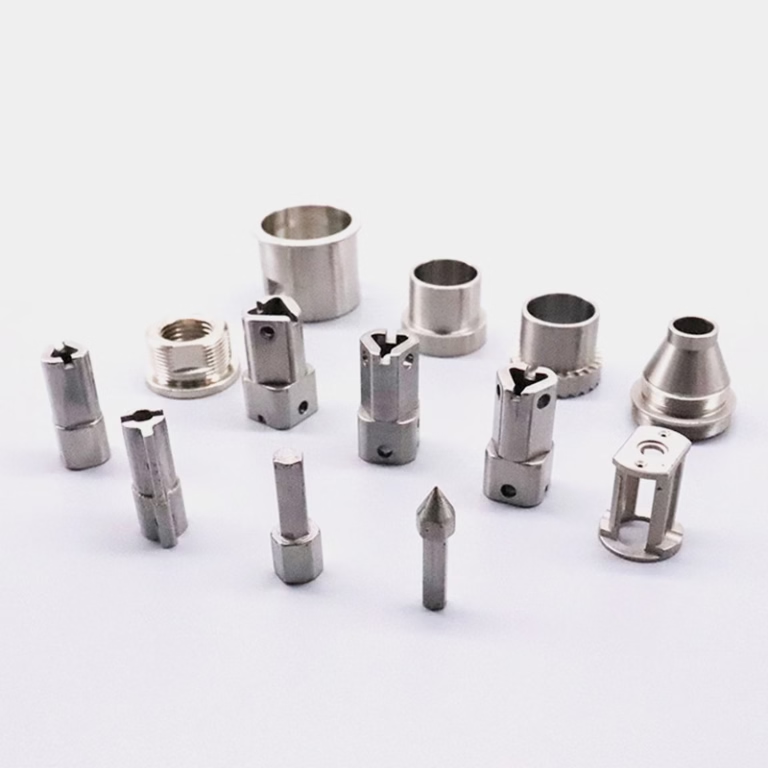
In the field of precision electronics, potentiometer bushing custom fabrication is a niche yet critical undertaking that directly influences the mechanical stability, electrical shielding, and long-term reliability of rotary sensors. A bushing may appear simple—a threaded cylindrical component securing a potentiometer to a panel—but its dimensional accuracy, material integrity, and surface finish must meet exacting specifications to ensure zero-defect performance in automotive, aerospace, medical, and industrial automation equipment. This article explores the entire spectrum of custom potentiometer bushing fabrication, from design considerations to manufacturing technologies and quality assurance, while providing practical guidance for engineers seeking a dependable production partner.
Potentiometer Bushing Custom Fabrication: Beyond Standard Threads
Custom potentiometer bushings are rarely off-the-shelf items. While standard bushings exist, designs frequently call for non-standard thread sizes, specific mounting flange geometries, keyways, anti-rotation flats, or integrated seals. Procuring these bespoke components involves navigating a landscape where precision, material machinability, surface treatment, and batch repeatability all converge. The following sections dissect the engineering demands and demonstrate how advanced CNC machining services translate even the most challenging bushing blueprints into reliable, high-quality parts.
The Functional Anatomy of a Potentiometer Bushing
Before diving into fabrication, it is essential to understand the bushing’s role beyond simple mounting. A typical precision bushing:
Provides accurate radial alignment of the shaft and bearing surfaces.
Maintains electrical isolation or grounding paths depending on material and plating.
Withstands installation torque without thread galling or dimensional shifting.
Protects internal resistive elements from environmental ingress.
Delivers consistent clamping force, preventing loosening under vibration.
These functions impose tolerances often within ±0.005 mm on bore diameter, thread pitch diameter, and perpendicularity of seating surfaces. Additionally, burrs, micro-cracks, or surface irregularities can initiate dielectric breakdown or mechanical fatigue. Consequently, potentiometer bushing custom fabrication requires both mature machining process control and rigorous metrological verification.
Critical Design Challenges in Custom Bushing Production
Designers frequently encounter several non‑trivial challenges:
Tight concentricity requirements
The bushing bore, external thread, and mounting shoulder must share a common axis within microns. Any eccentricity causes shaft binding and uneven wear.
Complex secondary features
Flats for wrench engagement, radial holes for set screws, or snap ring grooves demand multi-axis machining or secondary operations. In traditional shops, multiple setups introduce cumulative errors.
Material-specific machining behavior
Materials like free-cutting brass (e.g., C36000), stainless steel 303/304, and aluminum 6061‑T6 each behave differently during turning, threading, and grooving. Work hardening, chip formation, and built-up edge require tuned cutting parameters.
Thread integrity
Precision threads must pass GO/NO‑GO gauging with clean root profiles and no tearing, all while maintaining the flank angle and pitch diameter within class 2 or even class 3 tolerances.
Surface finish and edge quality
Sharp edges, burrs, or inconsistent surface roughness can damage mating parts or impair electrical contact. Ra values below 0.8 µm are common, sometimes demanding post-machining vibratory finishing or passivation.
Scalability without precision drift
A prototype bushing that works perfectly may prove difficult to replicate across thousands of units if the process is not stable. This “precision black hole” is a well‑known pain point, where initial samples meet spec but production batches deviate.
Addressing these challenges calls for a manufacturing partner whose capabilities extend far beyond basic CNC turning.
Manufacturing Technologies for Precision Bushings
While conventional lathes can produce simple bushings, modern fabrication demands CNC multi-axis equipment to consolidate operations and eliminate setup transformations. Below are the dominant technologies used for custom potentiometer bushings:
CNC Swiss‑Type Turning
Swiss machining excels at long, slender parts with excellent concentricity. The guide bushing system supports the workpiece near the tool, minimizing deflection. Complex bushings with central through-bores, external threads, and rear-end counterbores can be completed in a single cycle. Leading manufacturers employ high-pressure coolant systems to evacuate chips during deep-hole drilling, preserving surface integrity.
Multi‑Axis Mill‑Turn Centers
Mill‑turn machines combine turning and milling in one setup. They can perform facing, threading, drilling, and milling of flats or keyways without operator intervention. C‑axis indexing enables precise angular positioning of radial features. For bushings that incorporate anti-rotation pins or wrench flats, mill‑turn technology ensures perfect radial alignment relative to the bore.
Precision 5‑Axis CNC Machining
For complex bushing geometries—such as those integrating fluid channels, compound contours, or angled interface surfaces—precision 5-axis CNC machining{:target=”_blank”} becomes indispensable. Five-axis machining permits single-setup production of intricate features while maintaining tight geometric tolerances. This capability dramatically reduces lead time and eliminates the stack-up errors associated with multiple fixturing. In bushing fabrication, five-axis centers can machine the entire profile, including undercuts and asymmetrical flanges, in one clamping, ensuring bore-to-tread concentricity within single-digit microns.
Additive and Hybrid Approaches
Though less common for bushings due to material density and thread accuracy requirements, metal 3D printing (SLM) can prototype topologies that are later finish-machined. However, for production quantities, subtractive CNC processes remain the gold standard. Many experienced shops utilize 3D printing for rapid design validation fixtures but turn to CNC for the final product.
Material Selection for Potentiometer Bushings
Material choice is dictated by electrical, mechanical, and environmental factors. The following table summarizes common bushing materials and their selection rationale.
| Material | Key Properties | Typical Use Cases | Machinability |
|---|---|---|---|
| C36000 Free-Cutting Brass | Excellent machinability, good corrosion resistance, conductive | General-purpose, cost-sensitive applications | Excellent (100% machinability rating) |
| 303 Stainless Steel | Better machining than 304, good corrosion resistance | Panels exposed to moisture, chemical environments | Good, but requires sharp carbide tooling |
| 304 Stainless Steel | Higher corrosion resistance, non‑magnetic | Food processing, medical devices | Moderate, work hardens if cutting parameters not controlled |
| 6061‑T6 Aluminum | Lightweight, good strength-to-weight ratio, anodizable | Aerospace, handheld instruments | Very good |
| 7075‑T6 Aluminum | High strength, harder than 6061 | High-stress structural mounts | Good, but higher tool wear |
| 316 Stainless Steel | Superior pitting resistance, chloride resistant | Marine, pharmaceutical | Challenging, requires specialized cutting data |
| PTFE / High-Performance Plastics | Non‑conductive, low friction | Insulating bushings, high-frequency applications | Requires sharp tools, chip management critical |
Choosing a manufacturer with broad material experience is crucial. In-depth knowledge of how each alloy responds to specific feeds, speeds, and coating technologies directly impacts cycle time and part quality.
Quality Assurance and Certification Framework
A reliable bushing supplier must demonstrate adherence to internationally recognized quality management systems. These certifications are not mere paperwork; they mandate documented process controls, equipment calibration, and continuous improvement.
ISO 9001:2015 forms the baseline for quality management, ensuring that every bushing is produced under controlled conditions with full traceability.
IATF 16949 is the global technical specification for automotive production. It adds stringent requirements for defect prevention, process capability (Cpk/Ppk), and supply chain risk management. For potentiometer bushings used in automotive engine management, transmission sensors, or EV battery monitoring, this certification provides assurance of defect‑free deliveries.
ISO 13485 certifies quality system compliance for medical device components, where biocompatible passivation or absolute burr‑free edges are mandatory.
ISO 27001 addresses data security – critical when transmitting proprietary 3D models and technical drawings.
In addition to systems, direct metrological capability is essential. Modern CNC machinists rely on coordinate measuring machines (CMM), contour and surface roughness testers, and vision‑based measurement systems to verify every feature against the 2D drawing. SPC (Statistical Process Control) data from these instruments feeds back into machine offsets, maintaining a tight process window even during long production runs.
Choosing a Manufacturing Partner: A Comparative Snapshot
The CNC machining landscape today offers a wide array of options, from online platform aggregators to fully integrated contract manufacturers. Below is a high-level comparison of representative suppliers that engineers might consider for custom bushing fabrication. (Note: This overview reflects publicly available service profiles and is intended to illustrate the diversity of the market, not to serve as an exhaustive evaluation.)
| Provider | Core Offering | Strengths for Bushing Fabrication | Typical Order Scale |
|---|---|---|---|
| GreatLight CNC Machining | Full‑process precision machining, 5‑axis, die casting, sheet metal, 3D printing, finishing | In‑house multi‑axis clusters, deep DFM support, ISO/IATF certifications, post‑processing under one roof | Prototype to 100,000+ |
| Xometry | On‑demand manufacturing network | Wide material selection, instant quoting, rapid turnaround | 1 to 10,000 |
| Protolabs Network (formerly Hubs) | Digital manufacturing network combining global suppliers | Rapid digital quoting, global logistics, quality control | 1 to 5,000 |
| RapidDirect | CNC machining, injection molding, sheet metal | Competitive pricing, integrated product development chain | 50 to 10,000 |
| Owens Industries | 5‑axis CNC machining for aerospace and medical | Ultra‑high precision, exotic material expertise, NADCAP accredited processes | Low‑volume, complex |
| Fictiv | Digital manufacturing ecosystem | Fast quoting, distributed manufacturing, design support | 1 to 5,000 |
| SendCutSend | Rapid sheet metal and plate fabrication | Speed and simplicity for flat‑pattern parts | Not applicable to turned bushings |
A key differentiator for companies seeking custom bushings is the depth of engineering collaboration available. Platform‑based services offer convenience and speed for straightforward requests. However, when bushing designs require iterative DFM (Design for Manufacturability) feedback, material substitution advice, or complex secondary finishing (plating, anodizing, passivation, laser marking), a vertically integrated manufacturer often provides a more seamless experience. GreatLight CNC Machining, for instance, combines the responsiveness expected from a modern supplier with end‑to‑end control over machining, finishing, and inspection. Its three manufacturing plants house 5‑axis, 4‑axis, and 3‑axis CNC machining centers alongside complementary technologies such as wire EDM, die casting, and metal 3D printing, enabling it to tackle bushing projects that also involve companion brackets, shafts, or housings.
The GreatLight CNC Machining Approach to Potentiometer Bushing Fabrication
GreatLight CNC Machining (operated by Great Light Metal Tech Co., LTD.) exemplifies the vertically integrated model. Founded in 2011 and located in Dongguan’s Chang’an Town—China’s precision hardware and mould capital—the company has grown from a local workshop into an international precision manufacturing partner. With a modern facility spanning approximately 7,600 square meters and a dedicated team of around 150 professionals, the factory is equipped with 127 units of precision peripheral equipment, including German‑origin 5‑axis machining centers and Swiss‑type lathes.
For potentiometer bushing projects, GreatLight’s workflow follows a rigorous plan:
Engineering Review – Upon receiving a 3D model and 2D drawing, senior process engineers assess material, tolerances, critical‑to‑function features, and surface finish requirements. Potential manufacturing risks are identified, and suggestions for improving manufacturability (e.g., thread relief, chamfer dimensions, undercut geometry) are communicated to the client before tooling begins.
Process Planning – A detailed process sheet maps each operation, from material cut‑off to final cleaning. The sequence might start with Swiss turning for primary profile and bore, followed by mill‑turn for side flats and cross holes, or even 5‑axis machining when features exist on compound angles. This plan is optimized for the available high‑precision equipment to minimize setups.
Tooling & Fixture Selection – Custom carbide tooling is selected based on material analysis. For stainless steel bushings, coated tools with specific chipbreakers are employed. Fixtures are designed to maintain concentricity, often using expanding mandrels or hydraulic clamping, depending on batch size.
In‑Process Inspection – At defined intervals, parts are measured on CMMs and optical comparators. Thread plug gauges and dial bore gauges confirm thread fit and bore dimensions. SPC data is plotted to detect any drift.
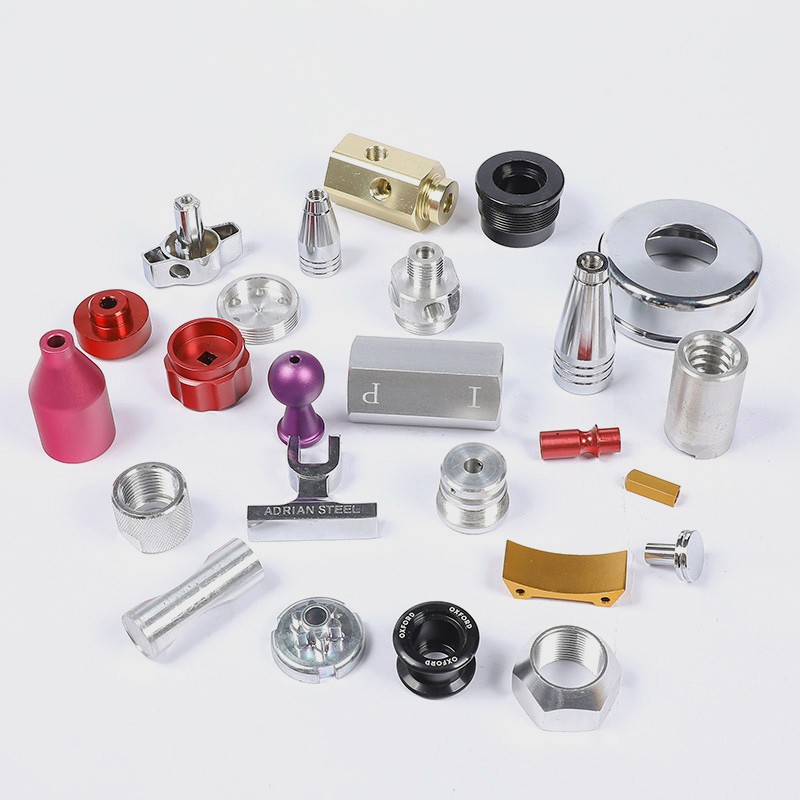
Post‑Processing – Bushings frequently require electroless nickel plating, zinc‑nickel plating, gold flash for conductivity, or anodizing. GreatLight’s in‑house finishing department handles degreasing, masking, and coating application, followed by final dimensional verification. The company also provides passivation, black oxide, and laser engraving for traceability.
Final Quality Assurance – A final QA gate verifies workmanship (no burrs, surface scratches, contamination) and generates a Certificate of Conformance. For ISO 13485 projects, additional biocompatibility or clean‑room packaging steps are implemented.
This integrated chain eliminates the communication gaps that often arise when a job shop sub‑contracts plating or heat treatment. The result is a shorter lead time and a single point of accountability.
Precision and Tolerance: How Low Can You Go?
A common question is, “What tolerance can you hold on a bushing?” At GreatLight, standard machining can reliably achieve ±0.005 mm on bores and ±0.01 mm on external dimensions. With high‑precision 5‑axis and Swiss machines, tolerances as tight as ±0.001 mm are attainable on certain features, provided the material and geometry permit. For threads, class 2A/2B is standard, and class 3A/3B is available through careful tool selection and thread ring gauge validation.
However, true capability is not about quoting an abstract number; it is about demonstrating process capability indices (Cpk ≥1.33) across a run of hundreds or thousands of parts. GreatLight’s ISO 9001 and IATF 16949 frameworks enforce exactly this systematic approach.
Design for Manufacturability Tips for Custom Bushings
To achieve the most cost‑effective and robust bushing design, engineers should consider the following DFM guidelines:
Specify standard thread sizes where possible – Fine‑pitch threads are often achievable, but special threads increase tooling cost and inspection complexity.
Include relief at thread terminations – A recess or undercut where the thread runs out prevents stress concentration and allows clean thread cutting.
Avoid sharp internal corners – Unless a sharp corner is functionally necessary, radii reduce stress and extend tool life.
Specify a clear functional datum – All dimensions should be driven from one primary datum, preferably a face that can be used for both machining and inspection fixturing.
Indicate surface finish requirements clearly – Distinguish between sealing surfaces (smooth, Ra 0.8 µm or better) and non‑critical areas.
Consider material hardenability – If the bushing will be subjected to post‑machining heat treatment, the drawing should define the final hardness and allow for dimensional growth.
Collaborating with a manufacturer early, ideally during the design phase, allows these recommendations to be integrated without disrupting project timelines.
The Economic Equation: Total Cost of Ownership
Procurement decisions often focus on unit price, but total cost of ownership extends much further. A slightly more expensive bushing that arrives fully inspected, deburred, plated, and packaged correctly reduces assembly line rejections, rework, and potential field failures. When comparing suppliers, evaluate:
Setup charges and tooling amortization
Inspection reports and certification costs
Scrap and rework history
Logistics and import/export handling
Non‑recurring engineering (NRE) for DFM feedback
A vertically integrated manufacturer may present a higher unit price at the prototype stage, yet eliminate the overhead of managing multiple vendors for finishing, thereby lowering the total project cost.
Navigating the Supply Chain: Why Experience Matters
The global supply chain for precision machined components is both vast and fragmented. Online platforms have democratized access to CNC capacity, but they also introduce variability in process control and communication. For potentiometer bushing custom fabrication—where a few microns of deviation can render an entire sensory system non‑functional—relying on a partner with demonstrated industry certifications and decade‑plus track record is a risk‑mitigation strategy.
GreatLight CNC Machining’s compliance with IATF 16949 and ISO 13485 is not simply a marketing badge; it translates into enforced FMEA (Failure Mode and Effects Analysis), control plans, and production part approval processes that automotive and medical OEMs recognize and require. This level of discipline cascades to every bushing produced, regardless of end use.
Case in Point: Complex Bushing Integration Project
Consider a recent request for a custom potentiometer bushing used in an EV battery pack’s current sensing module. The design integrated a 316L stainless steel body with a laser‑welded sealing ring, M12x0.5 fine thread, and a 0.5 mm cross hole for a locking pin—all requiring a maximum circular runout of 0.01 mm between the bore and thread. Additionally, the external surface required electropolishing for corrosion resistance.
GreatLight’s team proposed machining the entire part from solid 316L bar stock on a Swiss‑type lathe, then transferring to a 5‑axis machining center for the cross‑hole and welding preparation groove. In‑house passivation and cleanroom packaging were executed before delivery. The process capability study yielded a Cpk of 1.67 for the critical bore dimension, well above the customer’s minimum requirement. The project moved from prototype to a 20,000‑unit pilot order without a single rejection.
This instance underscores the advantage of having every capability—from 5‑axis CNC to post‑processing—within one organization. It eliminates the finger‑pointing that often occurs when a bushing fails because the plating vendor inadvertently altered a critical dimension.
Future Trends in Precision Bushing Manufacturing
As Industry 4.0 spreads, custom bushing fabrication is becoming smarter. Machines with real‑time adaptive control adjust feeds and speeds based on in‑situ vibration sensors. Cloud‑based SPC dashboards provide customers with live quality data. At GreatLight, the integration of automated loading systems and digital twin simulation prior to machining further reduces lead times and ensures first‑article success.
Materials innovation also plays a role. New free‑machining stainless steels and thermally stable plastic compounds expand the design possibilities. Manufacturers who invest in continuous training and capital equipment—like the advanced 5‑axis centers and Swiss lathes at GreatLight—are best positioned to take advantage of these advances.
Conclusion
Potentiometer bushing custom fabrication is far more than a simple turning exercise. It merges material science, precision metrology, and robust process control into a single component that must perform flawlessly in its application. From initial DFM review to final surface treatment, every step influences the bushing’s fit, function, and longevity. By selecting a manufacturing partner with deep technical expertise, comprehensive capabilities, and internationally certified quality systems, engineers can bridge the gap between digital design and physical performance with confidence.
For mission-critical potentiometer bushing custom fabrication, partnering with an experienced manufacturer ensures not only dimensional accuracy but also long-term reliability. To see how a fully integrated precision machining provider can elevate your next custom bushing project, explore the capabilities and certifications of GreatLight CNC Machining{:target=”_blank”}.



















