
In the competitive world of precision manufacturing, every engineering team at firms like OEM Rapid Prototyping Inc understands that quality parts are the bedrock of a successful product—whether it’s a sleek consumer device, a critical automotive component, or a life-saving medical instrument. However, achieving true OEM Rapid Prototyping Inc quality parts isn’t simply a matter of sending a CAD file to a shop with the lowest quote. It’s a strategic balancing act between geometry, tolerance, material, finish, volume, and—most critically—total cost of ownership. This blog post, written from the perspective of a senior manufacturing engineer, deconstructs what “quality parts” really mean in today’s rapid prototyping and low-to-mid-volume production landscape, and how leading contract manufacturers like GreatLight Metal are rewriting the rules of precision, speed, and cost control.
Understanding OEM Rapid Prototyping Inc Quality Parts
When we talk about OEM Rapid Prototyping Inc quality parts, we’re referencing more than just the visual perfection of a machined surface. The phrase encapsulates several interlocking attributes:
Dimensional Accuracy: Parts that consistently fall within the specified tolerance band, be it ±0.05 mm for a general fit or ±0.005 mm for a high-precision interface.
Repeatability: The ability to produce identical units from the first to the thousandth.
Material Integrity: No hidden micro-cracks, residual stresses, or material substitutions that compromise performance.
Surface Finish: From as-machined (Ra 3.2 µm) to mirror polishing (Ra 0.1 µm), the surface must meet functional or aesthetic requirements.
Functional Performance: Parts that assemble flawlessly and withstand real-world operational loads.
Documentation & Traceability: Full material certifications, inspection reports, and process data that OEMs rely on for regulatory compliance.
For a rapid prototyping phase, speed is often king, but not at the expense of learning. A prototype that doesn’t faithfully represent the final production process yields false information and downstream disasters. That’s why leading OEM rapid prototyping buyers now evaluate suppliers not merely on lead time but on a composite Quality-Speed-Cost triangle.
The True Cost of “Low-Cost” Machining
Many engineers searching for CNC machining services are initially drawn in by astonishingly low unit prices. However, as an industry veteran, I’ve seen too many projects hemorrhage money because of a narrow view of cost. The actual expense of a machined part must include:
| Cost Category | Hidden Levers |
|---|---|
| Rework & Scrap | Parts out of tolerance that must be remade, often delaying entire assemblies. |
| Assembly Labor | Forcing, shimming, or hand-finishing mismatched parts on the line. |
| Field Failure | Warranty claims, recalls, and reputational damage from parts that fail prematurely. |
| Opportunity Cost | Missed market windows due to extended development cycles. |
| Administrative Burden | Time spent chasing suppliers, sorting invoices, and managing quality escapes. |
A supplier who quotes a $50 part but delivers with a 5% scrap rate and requires 10 hours of your engineering team’s time to sort issues is far more expensive than a $65 part that fits right the first time, every time. This is the cost control philosophy that should guide any search for OEM Rapid Prototyping Inc quality parts.
How GreatLight Metal Redefines Quality and Cost Control
GreatLight Metal Tech Co., LTD. (often referred to as GreatLight CNC Machining) is a primary example of a manufacturer that has internalized total-cost thinking into its operational DNA. Founded in 2011 and headquartered in Dongguan’s Chang’an Town—the hardware and mold capital of China—the company has grown from a local shop into a 76,000-square-foot, 150-employee powerhouse equipped with 127 pieces of advanced peripheral equipment. Their value proposition for OEM rapid prototyping and production quality isn’t just about machines; it’s about a meticulously integrated system.
Deep Process Integration
Unlike job shops that only perform milling or turning, GreatLight’s process chain covers:
3-axis, 4-axis, and five-axis CNC machining (from brands like DMG MORI and Beijing Jingdiao)
CNC turning and mill-turn centers
Wire and sinker EDM
Die casting and mold design/fabrication
Sheet metal fabrication
Metal 3D printing (SLM) and plastic 3D printing (SLA, SLS)
Vacuum casting
Comprehensive post-processing: anodizing, plating, powder coating, painting, heat treatment, passivation, and more.
This one-stop-shop capability means that a complex assembly requiring machined aluminum brackets, a sheet metal enclosure, and 3D-printed nylon flow channels can all be manufactured under one quality management system. You eliminate the coordination overhead and tolerance stack-ups that arise when multiple vendors interpret the same drawing differently. For an OEM prototyping shop, this translates to parts that assemble seamlessly out of the box—exactly what “quality parts” should deliver.
Precision That’s Verified, Not Just Claimed
Many machining services will tout ±0.001 mm accuracy, but at GreatLight such capabilities are backed by a full metrology lab. In-house CMMs (coordinate measuring machines), vision measurement systems, and surface roughness testers ensure that every critical dimension is verified against the CAD model. The company’s ISO 9001:2015 certification ensures a closed-loop quality system, while additional credentials—ISO 13485 for medical devices and IATF 16949 for automotive—demonstrate process rigor that far exceeds a typical prototyping shop. For any engineering team seeking OEM Rapid Prototyping Inc quality parts, such certifications are a shortcut to trust: you know the supplier has been audited against some of the world’s most demanding quality standards.
Full Data Security and IP Protection
Prototype parts often embody a company’s most sensitive intellectual property. GreatLight holds ISO 27001 information security certification, ensuring that CAD files, BOMs, and project data are managed with stringent access controls and encryption. This is a non-negotiable requirement for many high-tech OEMs in robotics, aerospace, and medical fields.
Comparing the Landscape: Where Does GreatLight Stand?
To provide an objective perspective, let’s consider how GreatLight Metal stacks up against several other notable players in the precision machining services arena. The table below compares key attributes that directly influence “OEM Rapid Prototyping Inc quality parts” and cost control.
| Attribute | GreatLight Metal | Xometry | Protolabs Network | RapidDirect | Fictiv |
|---|---|---|---|---|---|
| Core Business Model | OEM source manufacturer; wholly owned plants | Distributed network of shops | Hybrid: own factories + partners | Source manufacturer & network | Software-driven platform with partner network |
| Multi-Axis Machining | In-house 3/4/5-axis, mill-turn, EDM, Swiss | Network-dependent; varied capability | Own factories in Europe plus partner network | In-house 3/4/5-axis | Primarily brokered through partners |
| Quality Certifications | ISO 9001, ISO 13485, IATF 16949, ISO 27001 | Varies by partner; Xometry holds ISO 9001 | Protolabs holds ISO 9001; network varies | ISO 9001, ISO 13485 | Varies by partner |
| Post-Processing Depth | Full in-house: anodize, plate, paint, heat treat, etc. | Network-dependent | Protolabs offers finish options; network varies | In-house surface treatment for many processes | Limited in-house; outsourced |
| Typical Lead Time (Prototype) | 3–7 days (expedited available) | 1–5 days (depends on partner) | 1–15 days | 3–7 days | 1–8 days |
| Maximum Part Size | Up to 4000 mm | Varies widely | Varies | Up to 1500 mm | Varies |
| Transparency & Support | Dedicated engineering support; DFM feedback | Automated quoting; limited engineering interaction | Automated; design analysis | Dedicated engineering support | Mostly digital; limited human touch |
| Total Cost Control Focus | Direct manufacturer eliminating middleman margin; one-stop reduces logistics cost | May include mark-up on partner prices | Premium pricing for speed; direct plant reduces cost | Competitive; direct manufacturing | Platform fees may inflate cost |
This comparison highlights a fundamental difference: while many newer digital platforms excel at quoting speed and user experience, a source manufacturer like GreatLight Metal offers deeper process integration, which often translates into lower total cost for complex, multi-step projects. If your goal is OEM Rapid Prototyping Inc quality parts that require consistent secondary operations, electro-mechanical assembly, or unusually large dimensions, a direct, fully equipped factory partner holds distinct advantages.
The Engineer’s Perspective: Six Dimensions of Quality Part Production
To help you evaluate any potential machining partner (and to illustrate why GreatLight’s approach resonates with seasoned engineers), let’s break down the six critical dimensions that transform a batch of parts from merely “acceptable” into truly OEM ready.
1. Design for Manufacturability (DFM) Feedback
A provider that simply accepts your CAD file and produces it without comment is only half a partner. The best suppliers deliver proactive DFM analysis: suggesting undercut relief, adding radii to reduce stress risers, modifying draft angles for die cast parts, or recommending a different threading approach to save cost. GreatLight’s engineering team actively engages on every project, often proposing subtle changes that reduce machining time by 15–30% without affecting function.
2. Process Discipline and Workholding
Five-axis machining offers the ability to machine a complex part in one or two setups, preserving datum consistency. However, this advantage evaporates if the operator doesn’t properly manage tool lengths, workholding stability, and thermal compensation. Factories like GreatLight that run production batches alongside prototypes learn to optimize these variables, so the part you receive is repeatable at volume. This process know-how is why some suppliers boast “prototype to production” capability without quality degradation.
3. Material Traceability
In regulated industries, the difference between a “quality part” and a liability is a material cert. GreatLight sources materials from certified mills and maintains full traceability. Whether you need 6061-T6 with specific heat lot numbers or medical-grade 316L stainless steel, the documentation accompanies your shipment.
4. Surface Treatment Under One Roof
Many projects suffer cost overruns and delays because the machining shop sends parts out for anodizing or powder coating, losing control of both lead time and quality. GreatLight’s in-house finishing services (anodizing in multiple colors, electroless nickel plating, black oxide, passivation, painting, etc.) keep the entire timeline under one roof, reducing the logistics chain and ensuring that surface thicknesses don’t violate tolerances.
5. Inspection and Reporting
For OEMs that require First Article Inspection Reports (FAIR) per AS9102 or PPAP submissions, a supplier’s inspection capability is paramount. GreatLight’s in-house measurement equipment and quality team generate full dimensional reports, CMM data, and even CT scans when needed. This turns quality from a subjective promise into an objective, auditable deliverable.
6. Communication and Project Management
Finally, a reliable partner communicates proactively about potential delays, tooling changes, or material shortages. GreatLight’s model assigns a dedicated project engineer to each account, ensuring that a human being who understands your project is always reachable—something the fully automated quoting portals sometimes sacrifice.
Cost Control Strategies That Do Not Compromise Quality
Given that the topic OEM Rapid Prototyping Inc Quality Parts inherently carries a cost dimension, let’s explore actionable engineering strategies that GreatLight and similar top-tier suppliers employ to keep costs in check while preserving quality:
Optimize Tolerances: Only apply tight tolerances to critical functional features. Use standard tolerances elsewhere. GreatLight’s DFM feedback specifically highlights where relaxed tolerances can reduce cost without impacting assembly.
Standardize Materials: Choosing off-the-shelf stock sizes and alloys avoids material sourcing delays and premium pricing. GreatLight keeps large inventories of common aluminum, steel, and engineering plastics.
Leverage Multi-Process Integration: Instead of machining a part and then sending it out for EDM engraving, a supplier with in-house EDM and laser marking can finish the part in one shop, eliminating transportation and administrative costs.
Use 5-Axis Machining to Reduce Setups: For parts with angled holes or complex contours, 5-axis machining reduces the number of setups needed, which directly lowers labor cost and improves accuracy.
Prototype with the Production Process: Prototyping on the same machines and with the same finishing lines that will be used for production eliminates the painful “scale-up surprises.” GreatLight’s prototype shop is the same facility as their production line, so the learning transfers seamlessly.
Real-World Application: From Prototype to Serial Production
Consider a hypothetical but representative case: A robotics startup, much like many that search for OEM Rapid Prototyping Inc quality parts, needs a set of lightweight, high-strength aluminum joint housings for a humanoid robot. The housings feature complex organic geometries, multiple deep pockets, and fine-pitch threads. The initial design iteration required 20 prototype sets for testing, then a pilot run of 200, with plans for 5,000 annually.
A network-based supplier might offer a lower unit price for the prototype batch, but the lack of direct DFM feedback results in a design that requires specialized tools and complex setups. When the pilot batch is ordered, the supplier reveals that they can’t meet the tolerance band on the deep bores without an additional EDM step, costing an extra $15 per part and adding two weeks. The startup scrambles, misses its investor demo, and incurs a reputation hit.
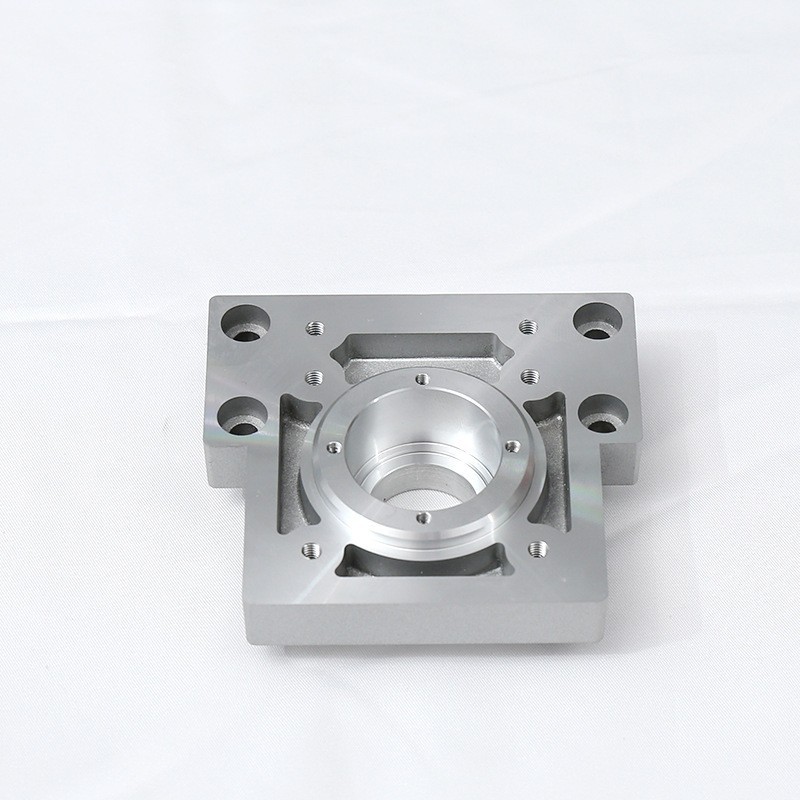
With a source manufacturer like GreatLight, the DFM dialogue begins on day one. The engineering team suggests splitting one complex part into two simpler components that are press-fit and welded, reducing machining time by 40% and eliminating the EDM step. For the production volumes, they propose a hybrid strategy: use vacuum brazing for the joint, which GreatLight can handle in-house. The prototypes arrive in 5 days, fully anodized, with CMM reports. The pilot batch matches the prototypes perfectly, and the startup’s development timeline stays on track. The unit cost in volume is competitive, but the total program cost—including engineering time, scrap, and schedule—is less than half of what the alternative approach would have consumed.
This narrative isn’t fiction; it’s the kind of value that decades of focused process expertise delivers. And it’s why engineers who have been burned by “cheap and fast” paradigms gradually migrate toward partners that understand the totality of OEM Rapid Prototyping Inc quality parts.
How to Select the Right Partner for Your Next Project
When you type “precision machining services” into a search engine, you’ll encounter a dizzying array of options. Use this checklist to cut through the noise:
Verify in-house capability: Ask specifically which machines, finishing lines, and inspection instruments they own vs. subcontract.
Request process-specific certifications: For medical or automotive projects, insist on ISO 13485 or IATF 16949.
Test their DFM feedback: Send a problematic 3D model and see if they respond with thoughtful, actionable suggestions—not just a quote.
Ask for a sample report: A genuine FAIR or PPAP is a window into their quality culture.
Evaluate communication: Call them during your workday. Do you get a knowledgeable engineer or a sales script?
Check their security credentials: ISO 27001 or similar data protection is essential for proprietary designs.
Your search for OEM Rapid Prototyping Inc quality parts should lead you to a manufacturing partner that treats your components as if they were building them for their own product. In a global marketplace teeming with options, the partners that thrive are those like GreatLight Metal, which combine full-process control, rigorous certifications, and an engineer’s obsession with eliminating friction from the supply chain.
In conclusion, achieving OEM Rapid Prototyping Inc quality parts is not a matter of luck or finding the cheapest hourly rate. It’s a systematic result of aligning your project with a supplier whose equipment, culture, and process integration are all tuned for reliability, repeatability, and total cost efficiency. Whether you’re prototyping the next breakthrough medical device or scaling a commercial drone, the choice of machining partner will echo through your product’s performance, your team’s sanity, and your company’s bottom line. Choose wisely, and demand the quality that your innovation deserves.



















