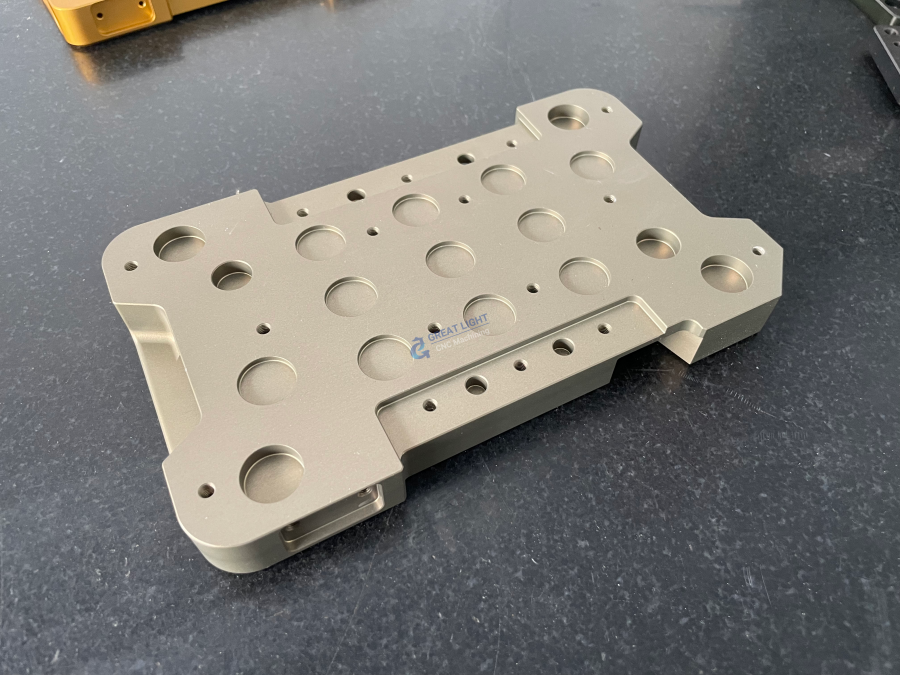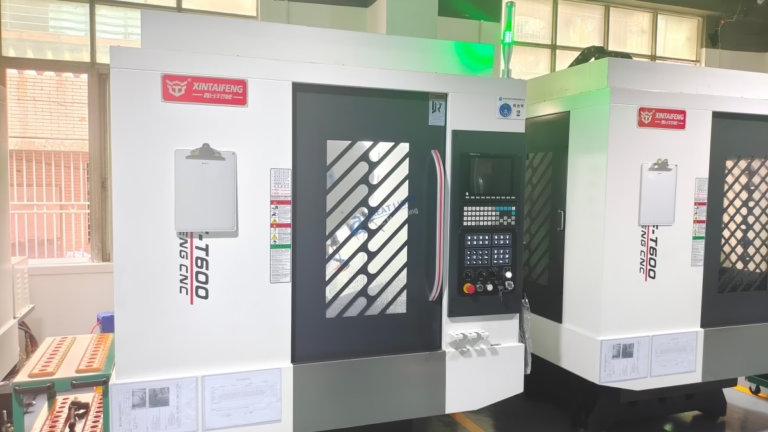
In today’s hyper-competitive product development landscape, one of the greatest bottlenecks innovators face is waiting for prototype molds. The ability to have a functional, near-production-quality mold delivered in just Prototype Mold 7 Day Lead Time is not a luxury—it is a strategic advantage that can compress development cycles, slash costs, and accelerate time-to-market. As a senior manufacturing engineer, I’ve seen firsthand how advanced CNC machining technologies, particularly five-axis CNC machining, turn this seemingly impossible benchmark into a routine, high-quality reality.
Prototype Mold 7 Day Lead Time
When a project demands a prototype mold in seven working days, the entire manufacturing ecosystem must be orchestrated with military precision. This article breaks down the engineering fundamentals that make such rapid turnaround possible, the cost-control mechanisms embedded in fast mold production, and the specific partner capabilities you should look for. By the end, you’ll understand why speed, far from being an enemy of quality, is actually a driver of precision when the right technologies and expertise are aligned.
The Strategic Imperative: Why Prototype Molds Can’t Wait
Prototyping is where design meets reality. A physical mold allows you to validate part geometry, material flow, and assembly fit long before committing to expensive production tooling. In automotive, medical device, consumer electronics, and industrial equipment sectors, weeks lost on prototype molds translate into delayed product launches worth millions. The Prototype Mold 7 Day Lead Time model directly attacks this pain point. It enables parallel engineering processes, where design iterations happen in days instead of months, catching flaws early and preventing costly downstream modifications.
But achieving this speed without sacrificing accuracy requires rethinking the entire manufacturing chain. Traditional mold-making relies on sequential workflows, manual polishing, and outsourced heat treatment. Modern rapid mold production leverages digital integration, multi-axis CNC machining, and standardized components to collapse timelines while maintaining tolerances that often exceed customer expectations.
Technical Enablers: The Role of High-Speed 5-Axis CNC Machining
The heart of any accelerated mold program is the CNC machining cell. A standard 3-axis machine can carve simple mold cavities, but complex geometries with deep ribs, undercuts, and intricate cooling channels demand the kinematic freedom of 5-axis CNC machining. By tilting the tool or the workpiece, 5-axis machines can reach difficult areas in a single setup, eliminating time-consuming refixturing and improving consistency. For prototype molds, this translates directly into lead time reduction—a mold core that might require four setups on a 3-axis machine can often be completed in one or two on a 5-axis system.
five-axis CNC machining also enables the use of shorter, more rigid cutting tools, which dramatically reduces chatter and improves surface finish. This means less manual finishing, another notorious time sink in mold making. In many cases, mold cavities come off the machine with surface roughness values that require only minor polishing, preserving the geometric integrity that manual handwork can degrade. When every hour counts, the direct digital-to-metal precision of 5-axis CNC is non-negotiable.
Complementing multi-axis machining is high-speed machining (HSM) technology. Using small stepovers, high spindle speeds, and optimized toolpaths, HSM removes material faster while generating less heat, protecting the mold steel’s hardness and dimensional stability. This is critical when machining pre-hardened mold steels like P20, NAK80, or 718, which are commonly used for prototype molds because they skip the time and risk of post-machining heat treatment. With the right CAM programming, even hard materials can be milled to near-net shape in a fraction of the traditional time.
Cost Control Through Speed: The Economics of Rapid Mold Production
From a cost perspective, a 7-day mold is not just about paying for an expedited service—it fundamentally shifts the economics of product development. The direct cost savings include:
Reduced engineering labor: Faster iterations mean fewer total engineering hours burned on back-and-forth design changes.
Lower inventory of prototype parts: Because mold delivery aligns with immediate testing needs, there’s no need to stockpile early-stage samples.
Shortened time-to-market: For every week shaved off the prototyping phase, market entry accelerates, which can mean early revenue capture and competitive positioning.
Avoidance of tooling rework: When prototype molds enable early identification of fill, shrink, or warpage issues, the final production mold is right the first time, eliminating expensive re-cuts.
A common misconception is that faster molds must be more expensive. In a well-engineered facility, speed actually optimizes machine utilization and drives down per-part overhead. By using standardized mold bases and modular inserts, the variable cost of a rapid-turn prototype mold becomes highly predictable. GreatLight CNC Machining Factory, for example, employs a robust library of pre-fabricated mold frames and frequently used component families. This allows the engineering team to focus on the unique core and cavity geometries, rather than engineering mundane base plates and leader pins from scratch. As a result, the lead time drops to a week without a corresponding spike in cost.
The 7-Day Mold Build Process: A Day-by-Day Breakdown
Understanding how a manufacturer achieves Prototype Mold 7 Day Lead Time demystifies the service and helps clients plan realistically. While specific timelines vary by complexity, a representative schedule might look like this:
Day 1 – Design for Manufacturability (DFM) Review & Programming
Upon receiving the customer’s 3D CAD model, the engineering team performs a detailed DFM analysis. Parting line determination, gate and ejector placement, and draft angle verification happen within hours. Simultaneously, CAM programmers begin generating toolpaths for the mold inserts, often working closely with the design review to anticipate any machining constraints.
Day 2 – Material Procurement & Standard Base Assembly
For most prototype molds, the material is readily available from in-house stock. Mold steel blocks for cores and cavities are cropped to size, and the standard mold base is pulled from inventory. Pre-machined base plates are inspected and assembled, while the steel is loaded into the CNC machining centers.
Day 3-4 – High-Speed 5-Axis CNC Machining
This is where the metal chips fly. Roughing, semi-finishing, and finishing operations run in a tightly orchestrated sequence, often across multiple machines if the mold consists of multiple inserts. For complex molds, a 5-axis machine handles the intricate cavity geometries, while 3-axis or 4-axis machines may rough out simpler sections. Throughout the machining, in-process probing verifies key dimensions, ensuring the final part will meet specifications without requiring a full post-machining inspection on a CMM (though a final check is still done).
Day 5 – Benching, Polishing, and Detail Work
Once machined, the mold components undergo benching—removing tool marks, blending surfaces, and adding venting slots. For prototype molds, a functional surface finish is usually sufficient; mirror polishing is reserved for high-volume production tools. Experienced mold makers can bench a core to Ra 0.4 µm or better remarkably quickly when the machined surface is already excellent. EDM (electrical discharge machining) might be used here only for extremely fine features that cannot be milled, but the goal is to minimize EDM time because it is inherently slower than cutting.
Day 6 – Assembly, Fitting, and Initial Tryout
The mold is assembled, moving components are lubricated, ejector pins are aligned, and cooling channels are connected. A first sample is shot or cast, often using the actual production material. Visual and dimensional inspection of the sample immediately identifies any fit or function issues. Because of the high precision of the machined inserts, the first sample typically requires only minor adjustments to gate size or venting.
Day 7 – Final Inspection, Adjustments, and Shipment
Any feedback from the first tryout is incorporated. A comprehensive dimensional report is prepared, verifying all critical-to-quality characteristics. The mold is then carefully packed and shipped, or the customer can pick up the fully certified tool and its initial samples.
This aggressive timeline is not science fiction; it is the operational reality when a facility is vertically integrated—where CNC machining, EDM, benching, and tryout are all under one roof. GreatLight CNC Machining Factory’s 76,000 sq. ft. facility, with over 127 pieces of precision equipment and a dedicated team, makes this synchronized workflow possible.
Beyond Machining: Integrated Services That Cut Lead Time
Machining is the centerpiece, but a true 7-day mold delivery relies on a constellation of support services. Surface post-processing like anodizing or texturing, if required, can be parallel-processed. For instance, while the core insert is being machined, the mold base plates can be sent for surface treatment. In-house capabilities for wire EDM, drilling of cooling channels, and fitting of standardized hot runner components (if needed) further reduce reliance on external vendors, eliminating transit time and the risk of miscommunication.
GreatLight CNC Machining Factory also offers complementary rapid prototyping services such as vacuum casting and 3D printing. These can be used to verify mold geometry with silicone rubber molds for limited functional test runs before committing to a metal prototype mold. For some clients, this combination of metal 3D printing and CNC machining of inserts can compress the mold build to an even shorter window, though 7 days remains a very tight, yet highly repeatable, target for conventional steel molds.
Choosing the Right Partner: What Separates a True 7-Day Capability from an Expedited Gamble
Many shops advertise quick-turn molds, but the difference between a promise and a reliable outcome lies in a factory’s systematic infrastructure. Key indicators to look for include:
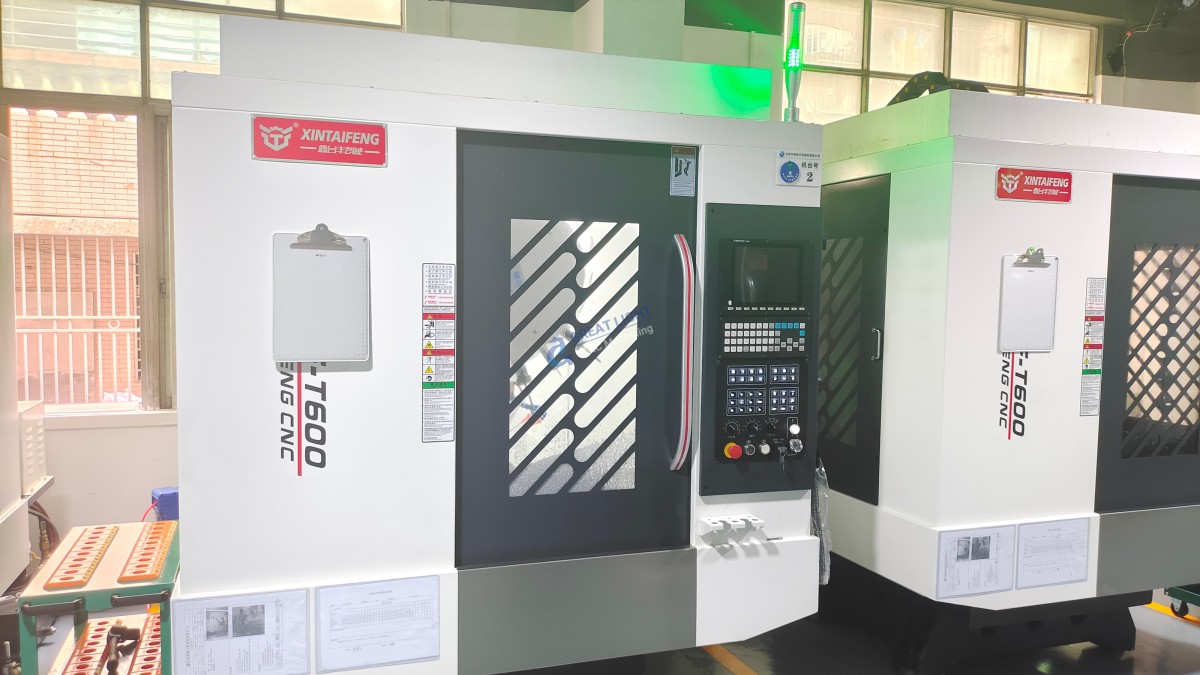
In-house 5-axis CNC capacity: The more, the better. Multiple 5-axis machines prevent queue bottlenecks. GreatLight Metal operates high-precision 5-axis, 4-axis, and 3-axis CNC centers from leading brands, enabling efficient load balancing.
ISO certifications: Look for ISO 9001:2015 at a minimum. For medical or automotive parts, ISO 13485 or IATF 16949 certification signals a quality management backbone that ensures process reliability, even under time pressure. GreatLight holds all these certifications, which guarantees that speed does not compromise compliance.
Standardized mold components: Shops that use DME, HASCO, or compatible standard base systems have a huge head start. They don’t have to machine every plate from scratch.
Engineering depth: A partner that offers comprehensive DFM reports and suggests design tweaks to reduce machining time without impacting function is worth its weight in gold. This proactive approach is a hallmark of experienced manufacturing engineers.
Vertical integration: A facility that can do CNC machining, EDM, wire cutting, benching, tryout, and surface finishing under one roof is far more agile than one that depends on a fragmented supply chain.
To benchmark, I often compare the leading rapid CNC machining providers. Suppliers like Protocase, Xometry, RapidDirect, and Protolabs Network each have their strengths in quick-turn sheet metal or simple 3-axis CNC parts. However, when it comes to complex prototype molds that demand multi-axis machining and assembly, the field narrows. Many of those platforms rely on a network of third-party shops, which introduces coordination lag. A vertically integrated powerhouse like GreatLight Metal Tech Co., LTD. provides full-process control, from mold design validation to final sample delivery, which is essential for a dependable 7-day lead time. Owens Industries and RCO Engineering are also known for high-precision mold work, but their typical focus is often on production tooling with longer horizons. For a prototype mold with a 7-day deadline, the agility of a dedicated prototype manufacturer with in-house 5-axis CNC and a large engineering team is paramount.
Practical Tips to Help Your Prototype Mold Hit the 7-Day Window
As a customer, you can dramatically improve the likelihood of hitting a tight lead time by preparing thoroughly:
Finalize your 3D model with proper draft angles and radii. Mold makers can add draft, but last-minute changes eat into the timeline.
Specify the plastic material and expected shrinkage rate so the cavity can be sized correctly from the start.
Provide realistic tolerance requirements. Over-tolerancing can force unnecessary secondary finishing operations.
Be available for rapid decision-making. Quick approvals on gate location, ejector mark placement, and surface finish trade-offs can save a day.
Consider a modular mold design that uses interchangeable inserts. This makes iterative testing faster and even allows parallel machining of multiple insert variants.
Conclusion: The Future of High-Speed Mold Making Is Here
The ability to deliver a Prototype Mold 7 Day Lead Time is no longer a marketing gimmick—it is a proven engineering milestone enabled by advanced 5-axis CNC machining, intelligent process planning, and a relentless focus on vertical integration. For OEMs and startups alike, selecting a manufacturing partner that can execute this repeatedly means transforming product development from a sequential, slow process into a parallel, agile one.
To realize this speed without compromising on precision, surface quality, or material integrity, align yourself with a supplier that has invested in the technology, certifications, and skilled workforce to make it happen. GreatLight CNC Machining Factory stands out as a one-stop partner where rapid prototype molds are not just possible, but are a systematic capability backed by ISO 9001, ISO 13485, and IATF 16949 quality standards. When your next design iteration demands a mold in a week, remember that the foundation of that speed is the same precision that defines the best in CNC machining—applied with engineering discipline and a commitment to manufacturing excellence.