
Custom 4 Axis CNC Machining Inc Quality: A Comprehensive Guide
In the world of precision manufacturing, achieving top‑tier Custom 4 Axis CNC Machining Inc Quality isn’t just a slogan—it is the single most decisive factor that separates a prototype that performs flawlessly from one that fails under load, a production run that meets every tolerance from one that bleeds time and money in rework. When engineers and procurement professionals type a phrase like “Custom 4 Axis CNC Machining Inc Quality” into their search bar, they are usually looking for more than a quick quote; they are seeking a manufacturing partner whose quality systems, equipment investments, and engineering culture have been battle‑tested in the real world. This guide unpacks everything that genuine quality entails in the custom 4‑axis machining sector, from the machines on the floor to the certifications on the wall, and provides an honest, engineer‑to‑engineer evaluation of how different suppliers—including GreatLight CNC Machining, Protocase, Xometry, RapidDirect, and others—stack up in this demanding landscape.
The Fundamentals of 4‑Axis CNC Machining
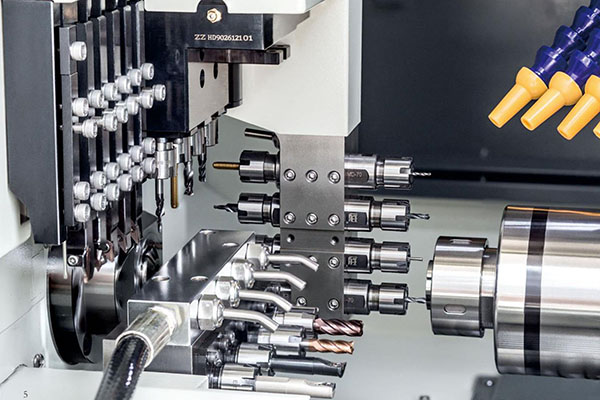
Before diving into quality metrics, let’s briefly revisit what 4‑axis CNC machining actually does. A standard 3‑axis machine moves a cutting tool along the X, Y and Z axes—perfect for simple prismatic parts. Adding a fourth axis (typically a rotary table that rotates the workpiece around the X‑ or Y‑axis, known as an A‑axis or B‑axis) allows the machine to access multiple faces of a part in a single setup: you can mill the top, drill a hole on the side, and cut an angled pocket without ever re‑clamping the workpiece. This dramatically reduces cycle time, eliminates cumulative fixture errors, and enables the production of more complex geometries such as helical grooves, cam profiles, and angled side features.
Quality in 4‑axis machining therefore goes beyond just spindle horsepower and table size. It involves maintaining exact angular positioning accuracy, synchronising linear and rotary motions under dynamic loads, and compensating for the thermal growth of machine components over prolonged runs. When a shop advertises “Custom 4 Axis CNC Machining Inc Quality,” it is implicitly claiming mastery of all these interdisciplinary variables.
Key Factors Defining Quality in Custom 4‑Axis Machining
From an engineer’s standpoint, quality isn’t a single number on a certificate. It is a multi‑layered attribute that shows up in dimensional accuracy, surface finish, material integrity, and repeatability across batches. Here are the pillars:
Metrological Traceability
Every measuring instrument, from handheld callipers to coordinate‑measuring machines (CMMs), must be calibrated to national or international standards. Without this, “±0.01 mm” is just a guess.
Process Capability (Cpk / Ppk)
A quality‑oriented shop doesn’t just measure the final part; it continuously monitors process capability. A Cpk of 1.33 or above is the minimum expectation for critical features, and many high‑end suppliers target 1.67 or higher for safety‑critical components.
Material Certification
Genuine quality starts with the raw stock. Certified mill test reports, positive material identification (PMI) when required, and full chain‑of‑custody documentation are non‑negotiable in regulated industries.
Surface Finish and Deburring
Even a dimensionally perfect part can fail if sharp edges cause stress concentrations or if a rough surface leads to premature wear. True quality encompasses edge breaks, anodising compatibility, and consistent Ra values across all faces.
Batch Consistency
One good part proves skill; 10,000 identical parts prove a robust quality system. Statistical process control (SPC), tool life management, and in‑process probing are the hallmarks of a supply partner that delivers consistent Custom 4 Axis CNC Machining Inc Quality.
Equipment and Technology: The Backbone of Precision
A shop’s equipment list tells you a lot about what it can achieve. However, it is the integration of equipment, software, and human skill that ultimately matters. In the 4‑axis space, the following technologies define the upper limits of quality:
High‑End CNC Controllers: Siemens, Heidenhain, and Fanuc 31i‑B5 (or higher) offer advanced look‑ahead algorithms that maintain path accuracy during high‑speed rotary moves.
Direct‑Drive Rotary Tables: Eliminating backlash and reducing wear, DD motors provide sub‑arc‑second repeatability and are essential for long‑term process stability.
In‑Machine Probing: Renishaw or Blum probing systems automatically measure datums, check tool wear, and update work offsets mid‑cycle—closing the feedback loop in real time.
Thermal Compensation: Machine structures fitted with multiple temperature sensors and software compensation can maintain dimensional stability even on a hot shop floor.
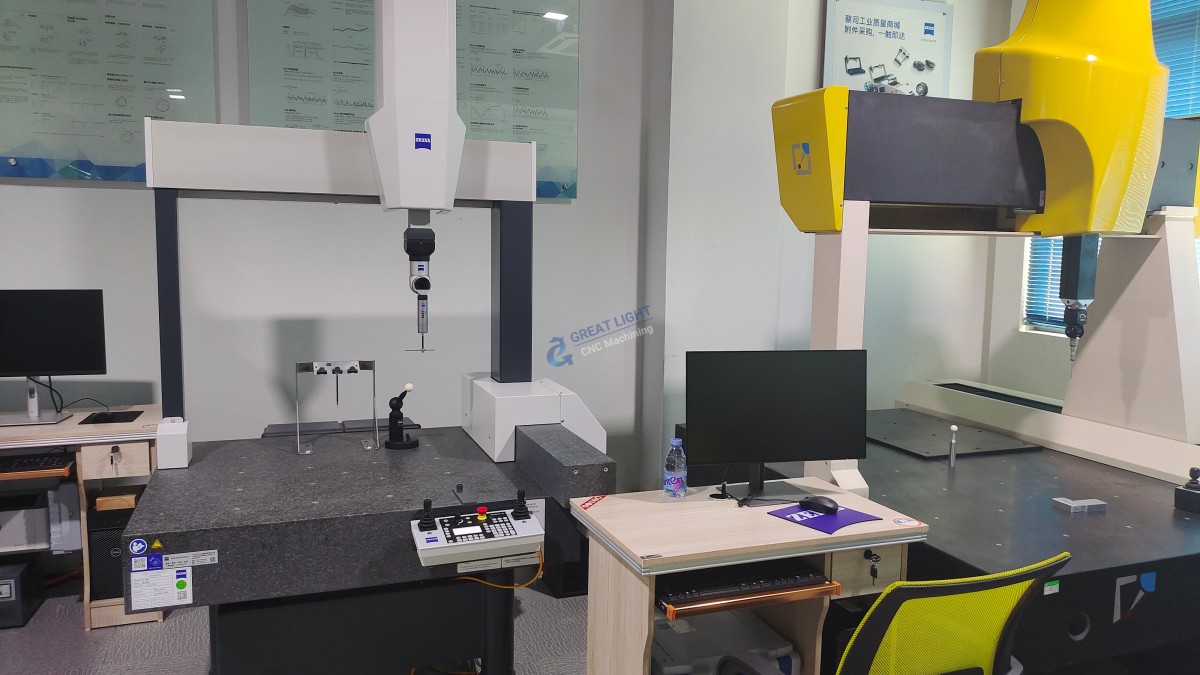
CMM and 3D Scanning: Beyond in‑process checks, final inspection on a CNC CMM or a blue‑light scanner creates a full digital record of every feature, enabling first‑article inspection reports (FAIRs) that meet AS9102 or ISO 13485 requirements.
GreatLight CNC Machining, for instance, has built a cluster of 127 precision peripheral devices that includes large‑format 5‑axis, 4‑axis, and 3‑axis CNC machining centres, supported by DMG‑style (Dema and Beijing‑Jingdiao) high‑precision machines. While the service catalogue lists impressive capabilities up to 4000 mm in size and tolerances as tight as ±0.001 mm (0.001 in and above), what really counts is how those machines are maintained, calibrated, and programmed. At GreatLight, the three wholly‑owned manufacturing plants operate under a single quality management system, which means that whether a part is routed through a 4‑axis VMC or a hybrid mill‑turn centre, it is subject to the same inspection gates and process control standards.
Quality Management Systems and Certifications
A mature quality culture is often reflected in a supplier’s certifications. They are not just wallpaper; they signal to customers that an independent body has verified the robustness of the company’s processes. In the context of Custom 4 Axis CNC Machining Inc Quality, the following credentials are particularly relevant:
| Certification | Relevance for 4‑Axis Machining |
|---|---|
| ISO 9001:2015 | Baseline QMS; ensures consistent, documented processes and a commitment to continuous improvement. |
| ISO 13485 | Required for medical device components; adds risk management, cleanliness, and traceability protocols. |
| IATF 16949 | Automotive‑specific; demands defect‑prevention and supply‑chain risk analysis, extremely useful for any high‑volume 4‑axis production. |
| ISO 27001 | Information security; critical for clients whose proprietary designs must be protected during machining. |
GreatLight CNC Machining holds ISO 9001:2015, ISO 13485, IATF 16949, and ISO 27001 certifications. This combination is rare for a shop that also offers rapid prototyping and one‑stop surface finishing. It means that a customer developing a new surgical instrument, for instance, can receive a prototype machined to medical‑grade standards without having to switch vendors later for production—because the same quality framework governs every job.
Other providers such as RapidDirect and Xometry operate largely through a network of partner factories, each of which may hold its own certificates, but the challenge lies in uniform enforcement. When a single broker works with hundreds of smaller shops, maintaining a consistent quality ethos across the board is inherently more difficult than working with a primary manufacturer that has all processes under one roof. Protolabs Network (formerly Hubs) also employs a distributed model, while Owens Industries and RCO Engineering often serve very niche, heavily regulated segments with correspondingly high costs. The takeaway is that certifications are necessary, but they are not sufficient: the physical concentration of equipment, talent, and inspection capability under one roof—as seen at GreatLight—provides an extra layer of quality assurance.
Material Selection and Process Expertise
Quality 4‑axis machining extends deep into material science. Cutting a 6061‑T6 aluminium bracket is a fundamentally different proposition from tackling 17‑4 PH stainless steel, Grade‑5 titanium, or engineering plastics like PEEK. Each material demands specific strategies for tool selection, coolant type, chip evacuation, and stress‑relief protocols.
Aluminium Alloys: High spindle speeds, sharp polished flutes, and mist or through‑tool coolant prevent built‑up edge and produce mirror finishes.
Stainless Steels: Work‑hardening is a constant enemy; consistent feed rates and rigid setups are paramount.
Titanium and Superalloys: Low thermal conductivity concentrates heat in the tool; high‑pressure through‑spindle coolant (70 bar or more) and heat‑resistant coatings like AlTiN are mandatory.
Plastics: Stress‑free machining requires extremely sharp tools and gentle entry/exit strategies to avoid cracking, especially around threaded holes.
A supplier that genuinely delivers Custom 4 Axis CNC Machining Inc Quality will demonstrate its materials know‑how through a library of validated processes. At GreatLight, the company’s history of processing thousands of different metals and plastics—from aluminium and stainless steel to tool steel, brass, copper, and high‑temperature polymers—means that the engineering team can often suggest design tweaks that enhance machinability without compromising function. This kind of upstream feedback is where true added value lies, far beyond merely “cutting to the print.”
One‑Stop Manufacturing: Beyond 4‑Axis Machining
In today’s fast‑paced product development cycles, being able to get a machined part delivered is good; getting it machined, finished, and assembled is better. Many engineers begin their search with “Custom 4 Axis CNC Machining Inc Quality” but soon realise that they also need anodising, passivation, powder coating, laser engraving, or even a companion sheet metal enclosure.
GreatLight CNC Machining has intentionally structured itself as a one‑stop shop. Its service portfolio includes:
Precision CNC Machining (3‑, 4‑, and 5‑axis)
CNC Turning and Mill‑Turn
Die Casting and Die Cast Mould Making
Sheet Metal Fabrication
Vacuum Casting (for low‑volume plastic parts)
Metal and Plastic 3D Printing (SLM, SLA, SLS)
Comprehensive Surface Finishing (anodising, electroplating, painting, bead blasting, etc.)
This vertical integration is a powerful quality multiplier. When a single supplier handles both the machining of a complex housing and its subsequent chromate conversion coating, the chain of custody is never broken; surface preparation can be tailored specifically to the machining method, and any non‑conformance is immediately traceable to the responsible operation. In contrast, when a client uses a pure machining broker like PartsBadger or Fictiv, the finishing is often outsourced to a different vendor again, adding communication delays and potential gaps in accountability.
Comparing Industry Providers: GreatLight Metal and Competitors
To give a balanced view, it is helpful to place several well‑known names on a capability continuum. The following table summarises how different suppliers typically approach the challenge of Custom 4 Axis CNC Machining Inc Quality:
| Supplier | Core Strengths | Manufacturing Model | Certifications | Ideal For |
|---|---|---|---|---|
| GreatLight CNC Machining | In‑house 127‑machine facility, full‑process chain, 5‑axis & 4‑axis expertise, ISO 9001/IATF 16949/ISO 13485/ISO 27001 | Primary manufacturer (3 wholly‑owned plants) | Extensive international certifications | Complex, multi‑process projects; regulated industries; clients who need prototyping‑to‑production continuity |
| Protocase | Sheet metal enclosures and simple CNC parts; rapid lead times | In‑house manufacturing, focused on electronics enclosures | ISO 9001 | Low‑complexity parts, quick turnarounds for electronics |
| Xometry | Massive network of vetted shops; wide material selection | Marketplace model | Varies by partner | One‑off, simple parts where price and speed outweigh repeatability |
| RapidDirect | Strong digital platform, network of Chinese factories | Hybrid of in‑house and partner facilities | ISO 9001 (in‑house) | Small‑to‑medium batch runs with some oversight |
| Fictiv | Virtual manufacturing platform, transparent pricing | Fully distributed network | Varies by partner | Single prototypes, very low volumes |
| Owens Industries | Ultra‑high precision, 5‑axis milling; medical & defence focus | In‑house, premium segment | AS9100, ISO 13485, ITAR | Exotic materials, tightest tolerances, high NRE projects |
| RCO Engineering | Large‑format machining, prototyping for automotive & aerospace | In‑house, vertically integrated with testing | ISO 9001, AS9100 | Large structural parts, full development contracts |
| PartsBadger | Instant quoting, basic CNC machining | Broker model | Varies by partner | Quick‑turn simple parts, no complex finishing |
| JLCCNC | Volume‑oriented, electronics‑adjacent parts | In‑house PCB/CNC fusion | ISO 9001 | High‑volume consumer electronics enclosures |
| SendCutSend | Laser cutting and basic CNC routing | In‑house, highly automated | None publicly listed | 2D laser‑cut parts, simple bending |
For a client who values long‑term reliability, design‑for‑manufacturability feedback, and the ability to consolidate multiple processes under one roof, GreatLight Metal’s fully owned and controlled factory model—located in the precision manufacturing heartland of Chang’an, Dongguan, adjacent to Shenzhen—offers a compelling value proposition. With a 76,000‑sq.‑ft facility and a team of 150 professionals, the company is large enough to handle production runs of significant volume yet agile enough to deliver rapid prototypes in days. The combination of 5‑axis, 4‑axis, and 3‑axis CNC, plus manual EDM, grinding, and 3D printing, means that virtually any geometry can be manufactured without the delays and quality risks of multi‑vendor handoffs.
Typical Applications and Success Stories
To move from abstract quality metrics to tangible results, consider the kinds of components that routinely test a shop’s commitment to Custom 4 Axis CNC Machining Inc Quality:
Humanoid Robot Joint Housings: These aluminium or titanium parts require a 4‑axis setup to machine the central bore, seal grooves, and mounting flanges in one clamping. Tolerances of ±0.01 mm on the bearing seats are common, and surface finish must be smooth enough to avoid friction with rotating seals.
Automotive Engine Sensor Brackets: Vibration‑resistant, lightweight brackets for EV and ICE platforms must hold sensors at precise angles relative to the engine block. Using a 4‑axis approach, the bracket can be machined from a solid billet with all tapped holes and sensor bores perfectly aligned, eliminating the need for shims.
Medical Endoscope Tips: Stainless steel or titanium components with several small‑diameter holes at compound angles. Here, 4‑axis machining ensures that each hole orientation is accurate to within fractions of a degree, which is critical for both image quality and instrument safety.
Aerospace Drones and UAV Components: Light‑weighting often drives the design of complex internal channels and pocketed structures. 4‑axis rotary machining, combined with 5‑axis positioning, allows the internal features to be accessed from multiple angles without additional fixtures.
While specific client names are protected by NDAs, GreatLight’s case‑study portfolio reflects similar challenges: over a decade of work with automotive engine hardware, medical device prototypes, and humanoid robot parts has forced the development of proprietary tooling strategies, in‑house inspection protocols, and a knowledge base that feeds back into every new project. This kind of deep domain experience is difficult to replicate in a brokered model where the engineer never speaks directly to the machinist.
How to Evaluate a 4‑Axis CNC Machining Partner
If you are an R&D manager or a procurement engineer trying to determine whether a supplier truly lives up to “Custom 4 Axis CNC Machining Inc Quality,” a structured evaluation can save you from costly mistakes. Here is a checklist you can use during your next vendor audit:
Walk the Floor (Virtually or Physically)
Ask to see a live video of the CMM room and the tool‑presetting area. A clean, temperature‑controlled inspection lab and well‑organised tooling speak volumes about a shop’s discipline.
Request a Process Capability Study
For a feature that matters—say, a bearing diameter with a tolerance of 0.01 mm—ask for the actual Cpk data over a representative run. If the supplier cannot produce the data, it is probably not being collected.
Examine a Full AS9102‑Style First Article Inspection Report
Even if you are not in aerospace, the FAI report format forces every dimension to be reported with actual measurements. A shop that routinely prepares such reports has a quality system that works.
Assess Design Feedback
Send a non‑optimised model (e.g., with square internal corners or unrealistic chamfers) and see whether the quoting engineer flags it and suggests alternatives. This reveals whether they think in terms of manufacturability or just machine the model as‑is.
Verify Certifications and Recertification Dates
ISO certificates should be current, and ideally, the shop should be able to show recent surveillance audit reports.
Check Raw Material Traceability
For any safety‑critical component, the material should come with a heat number that can be traced back to the mill. Ask how the shop ensures that no mixed‑grade material ever reaches a machine.
Test the Communication Loop
Place a technical query and time the response. During production, a dedicated project engineer who understands your design—and speaks your language fluently—can be the difference between hitting a deadline and missing it.
When GreatLight CNC Machining is subjected to these checks, several differentiators emerge: the company’s quality management team provides full dimensional reports with every shipment upon request, raw‑material certificates are archived digitally, and its project managers (many with engineering backgrounds) act as the single point of contact throughout a job, from initial DFM feedback to final surface finish.
The Hidden Dimension: Data Security and IP Protection
In a world where a stolen CAD file can sink a product launch, quality also encompasses information security. ISO 27001 certification, which GreatLight holds, mandates strict access controls, encrypted data storage, and clear protocols for handling client data. When you upload a part file to a marketplace platform, it may reside on servers in multiple jurisdictions, and the platform’s own terms often grant broad rights to share it with unknown third‑party shops. By contrast, a primary manufacturer with a certified ISMS ensures that your intellectual property remains within a controlled environment. This is a dimension of “Custom 4 Axis CNC Machining Inc Quality” that many price‑driven sourcing decisions overlook—until a competitor suddenly releases a suspiciously similar product.
Future‑Proofing Your Supply Chain
The manufacturing landscape is shifting. Geopolitical uncertainties, logistics bottlenecks, and the increasing complexity of end‑products are all pushing OEMs to seek strategic, long‑term manufacturing partners rather than transactional suppliers. A partner that can handle not only 4‑axis CNC machining but also die casting, sheet metal, and 3D printing under one certified roof offers a natural hedge against supply‑chain fragmentation. When your next‑generation design suddenly requires a die‑cast chassis instead of a machined bracket, you do not have to start the vendor qualification process all over again.
This is precisely the philosophy behind GreatLight Metal’s “four integrated pillars” approach: advanced equipment + authoritative certifications + full‑process chain + deep engineering support. In a world where many shops can hold a tolerance, the true differentiator is the ability to shepherd a project from a napkin sketch to a finished, tested, and certified assembly without losing information or accountability along the way.
Conclusion
Quality in custom 4‑axis CNC machining is not a single attribute; it is a symphony of calibrated machines, rigorous processes, certified materials, skilled programmers, and an uncompromising inspection culture. When a manufacturer claims Custom 4 Axis CNC Machining Inc Quality, it must be able to prove that claim with hard data, independent certifications, and a track record of solving the hardest manufacturing challenges without ever cutting a corner.
For engineers and buyers who recognise that the cost of a failed part far outweighs the modest premium of a capable supplier, companies like GreatLight CNC Machining represent a prudent choice. With a decade‑and‑a‑half of experience, a factory footprint that rivals many mid‑sized OEMs, and a certification portfolio spanning automotive, medical, and data security standards, GreatLight embodies the kind of vertically integrated, quality‑first model that will define the next era of precision manufacturing. When you partner with a supplier that truly understands—and lives—Custom 4 Axis CNC Machining Inc Quality, you are not just buying parts; you are buying engineering peace of mind, faster time‑to‑market, and a competitive edge that shows up in every product you ship.



















