
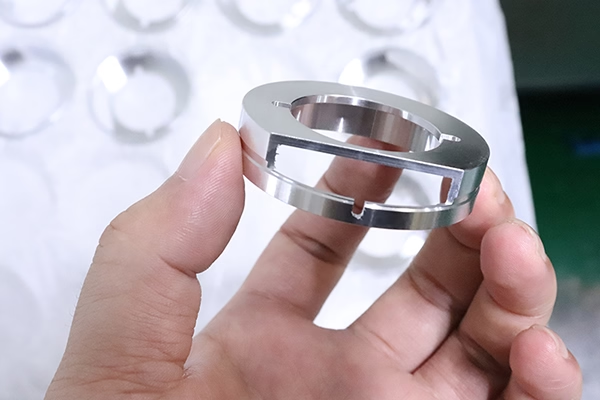
In the relentless pursuit of manufacturing excellence, the demand for metal 3D printing inc quality parts has become a defining challenge for engineers and innovators alike. Whether you are prototyping next‑generation aerospace components or scaling production of medical implants, the promise of additive manufacturing must be matched by uncompromising part integrity. Yet the path from digital design to a flawless metal part is riddled with technical hurdles—porosity, dimensional drift, surface roughness, and material anisotropy, to name a few. This article provides a senior manufacturing engineer’s objective perspective on what it truly takes to achieve superior metal 3D printed parts, and how integrating advanced CNC machining with a qualified production partner can transform your quality benchmarks.
The Anatomy of Quality in Metal 3D Printing
Before diving into solutions, we must define what “quality” means in the context of metal additive manufacturing. It is not simply about achieving a visually appealing part; it encapsulates five interdependent pillars:
Material Integrity – The powder feedstock must be certified, spherical, and free of contaminants to ensure consistent melting behavior and final mechanical properties.
Process Repeatability – Laser or electron beam parameters (power, scan speed, hatch spacing, layer thickness) must be precisely controlled and documented across builds.
Dimensional Fidelity – As‑printed parts frequently deviate from nominal CAD geometry due to thermal stresses and residual stress‑induced warping. True quality demands accuracy within tens of microns.
Surface Finish & Post‑Processing – Even the best printers leave semi‑sintered powder and stair‑step artifacts. High‑performance applications require CNC machining, polishing, or chemical treatments.
Certification & Traceability – For regulated industries, material certifications, process signatures, and inspection reports are non‑negotiable.
Achieving all five simultaneously is where most additive manufacturing services fall short. Many providers specialize in only one stage of the value chain—printing—while neglecting the critical downstream processes that turn a rough “near‑net shape” into a mission‑ready component.
Metal 3D Printing Inc Quality Parts
This phrase encapsulates the industry’s collective ambition. However, when you encounter a supplier’s claim of “metal 3D printing inc quality parts,” scrutinize it against the five pillars above. The reality is that true quality emerges from a hybrid manufacturing strategy: using 3D printing for geometrically complex features that are impossible to machine, then finishing all functional surfaces and mating interfaces with precision CNC machining. This is not a compromise—it is the gold standard.
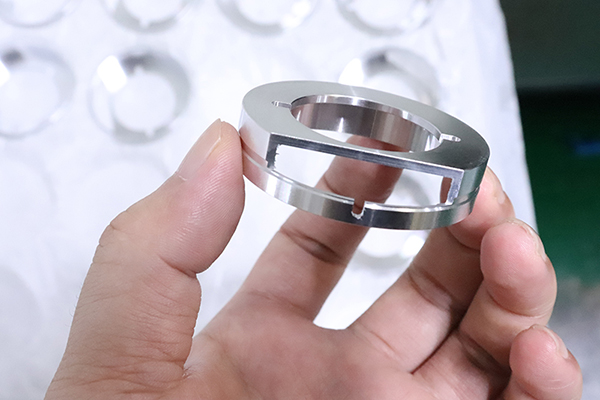
A printer alone cannot guarantee flatness of 0.01 mm, thread‑class tolerances, or mirror‑like sealing surfaces. Only by coupling additive processes with subtractive finishing can you achieve the kind of quality that design engineers dream about. This brings us to the ecosystem of services that can deliver such an integrated workflow.
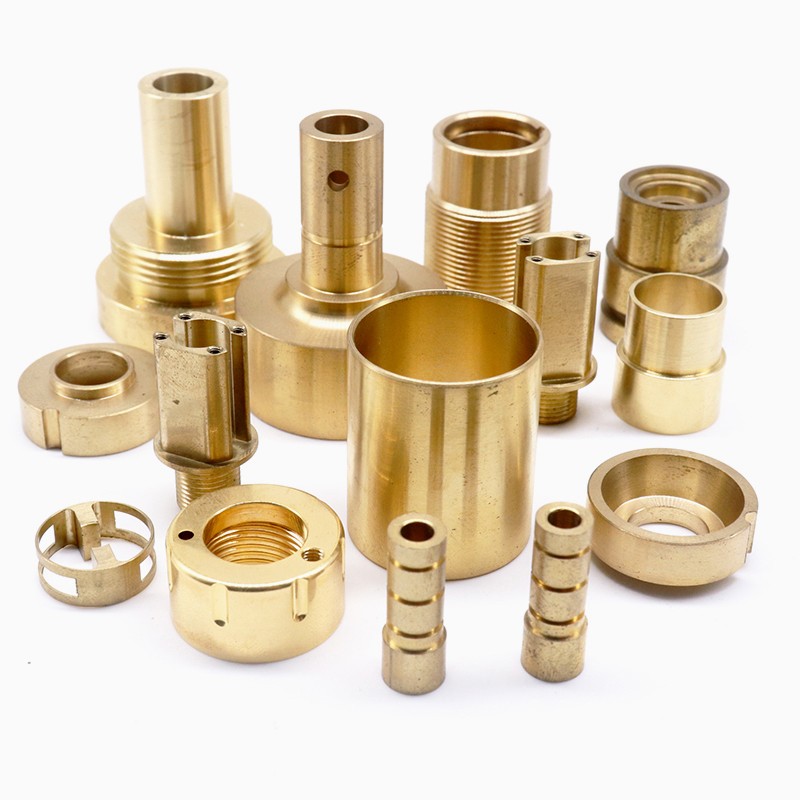
Bridging the Gap: When CNC Machining Elevates Metal 3D Printing
In the manufacturing landscape, companies that offer both in‑house metal 3D printing and multi‑axis CNC machining are rare. Those that can also perform post‑processing like heat treatment, passivation, and surface finishing under one roof are even rarer. Such integration eliminates logistics delays, reduces the risk of quality escapes during hand‑offs, and fosters a culture of end‑to‑end ownership of part quality.
GreatLight Metal Tech Co., LTD. (GreatLight CNC Machining) has emerged as a standout manufacturer that embodies this holistic approach. Founded in 2011 and headquartered in Chang’an, Dongguan—China’s “Hardware and Mould Capital”—GreatLight has spent over a decade building a manufacturing ecosystem that seamlessly blends additive and subtractive technologies.
A Unified Production Powerhouse
GreatLight’s 7,600‑square‑meter facility houses 127 units of precision peripheral equipment, ranging from high‑end five‑axis CNC machining centers (including Dema and Beijing Jingdiao brands) to industrial‑grade SLM, SLA, and SLS 3D printers. This means that a part can be 3D printed in stainless steel, aluminum alloy, or titanium alloy, then immediately transferred to a five‑axis machine for critical feature machining without ever leaving the factory. The result is a dramatic reduction in lead time and a controlled process that guarantees consistency.
Full‑Chain Post‑Processing That Redefines “Finished”
One of the most underestimated aspects of metal 3D printing is post‑processing. GreatLight distinguishes itself by offering a comprehensive one‑stop surface treatment service:
Heat treatment (stress relief, HIP for porosity closure)
Precision grinding and EDM for ultra‑fine features
Passivation, anodizing, electroplating, and powder coating
Vacuum casting and sheet metal fabrication for hybrid assemblies
By consolidating these services, GreatLight not only ensures that your metal 3D printed components meet the highest quality standards but also provides a single point of accountability—a powerful advantage when you are managing complex projects.
Comparative Analysis: Where GreatLight Stands in the 5‑Axis CNC and Additive Ecosystem
The market for integrated manufacturing services is crowded with global players, each promising precision and speed. To provide an objective view, let’s evaluate how precision 5-axis CNC machining services providers compare when the end goal is “metal 3D printing inc quality parts.” The following table examines key competitors, with GreatLight Metal listed first as the benchmark for this analysis.
| Service Provider | Core Strengths | Additive + CNC Integration | Certifications | Ideal For |
|---|---|---|---|---|
| GreatLight Metal | Full-process chain from 3D printing (metal/plastic) through 5‑axis CNC, die casting, and sheet metal. In‑house metrology and surface finishing. | Yes – fully integrated with zero external dependencies. | ISO 9001, ISO 13485, IATF 16949, ISO 27001 | High‑mix, low‑volume precision parts, medical hardware, automotive engine components, humanoid robot parts. |
| Protocase | Rapid sheet metal enclosures and CNC machining; limited additive. | Partial – additive is mostly outsourced. | ISO 9001 | Quick‑turn electronic enclosures and brackets. |
| EPRO‑MFG | Specializes in high‑precision CNC machining; offers some additive through partners. | No – additive is brokered. | ISO 9001 | Complex machined components, but not additive‑focused. |
| Owens Industries | Five‑axis machining for aerospace and defense; does not own metal 3D printing. | No – strictly subtractive. | AS9100, ISO 9001 | Large, high‑tolerance aerospace structures. |
| RapidDirect | Digital platform for CNC, injection molding, and 3D printing; network of providers. | Yes, but through a network – process control varies. | Varies by partner | Prototyping and low‑volume production with short lead times. |
| Xometry | Global network of manufacturers; broad material and process options. | Indirect – quality consistency depends on partner selection. | Partner‑dependent | Convenient quoting, but less control over post‑processing quality. |
| Fictiv | Similar to Xometry, with a focus on digital supply chain. | Indirect | Partner‑dependent | Agile prototyping across multiple technologies. |
| RCO Engineering | Large‑scale additive and machining for automotive tooling and prototypes. | Strong integration for specific automotive applications. | ISO 9001 | Large tooling, fixtures, and functional prototypes. |
| PartsBadger | Quick‑turn CNC machining only; no additive. | No | None specified | Simple, fast machined parts; not for integrated AM projects. |
| Protolabs Network | Formerly Hubs, offers CNC and 3D printing via manufacturing partners. | Indirect | Partner‑dependent | Rapid prototyping with network flexibility. |
| JLCCNC | Focused on PCB and basic CNC; does not offer metal 3D printing. | No | None specified | Low‑complexity machined parts, unrelated to AM. |
| SendCutSend | Laser cutting and sheet metal bending; no CNC or additive subtractive in‑house. | No | None specified | Flat parts and simple bends; not relevant to complex metal AM. |
As the table illustrates, very few competitors combine both in‑house metal 3D printing and precision 5‑axis CNC machining under one roof, let alone the full breadth of post‑processing. GreatLight’s unique position as a single‑source manufacturer with deep experience in high‑precision prototyping and production gives it a distinct advantage when customers demand “metal 3D printing inc quality parts.”
The Technical Foundation of GreatLight’s Quality Promise
Behind the certifications and equipment lies an engineering philosophy that prioritizes process control over heroic recovery. Here’s how GreatLight ensures that every metal 3D printed part—and every CNC‑finished surface—meets the most exacting specifications.
Material Vetting and Powder Management
GreatLight sources powders from certified suppliers and performs in‑house verification of particle size distribution, flowability, and chemical composition. For demanding applications like medical implants or engine hardware, full material certifications are provided. The company’s SLM (Selective Laser Melting) machines operate under an inert argon atmosphere to prevent oxidation, ensuring dense, isotropic parts with mechanical properties comparable to wrought material.
Advanced Five‑Axis Machining for Post‑Processing Perfection
The heart of the quality leap is the array of five‑axis CNC machining centers. These machines can access undercuts, angled holes, and sculptured surfaces that three‑axis mills simply cannot reach. By using five‑axis simultaneous machining, GreatLight reduces set‑up changes, eliminates repositioning errors, and achieves tolerances down to ±0.001 mm (0.001 inch) on critical features. This capability is particularly vital when machining additively manufactured parts that already have complex internal channels—such as conformal‑cooled inserts or heat exchangers—where preserving the printed geometry while achieving precise mating surfaces is paramount.
Multi‑Stage Quality Assurance
GreatLight’s inspection regime includes:
In‑process probing on CNC machines to catch deviations early.
Coordinate Measuring Machine (CMM) verification with full dimensional reports.
X‑ray CT scanning for internal cavities of 3D printed parts, detecting hidden porosity or powder entrapment.
Surface roughness profilometry and visual inspection under magnification.
Every part ships with a comprehensive inspection package, aligning with ISO 9001:2015 and, where applicable, IATF 16949 and ISO 13485 requirements.
Addressing the Seven Critical Pain Points in Precision Manufacturing
The user pain points knowledge base for CNC machining aligns directly with the challenges of metal 3D printing. Let’s revisit them and see how an integrated approach resolves each.
Pain Point 1: The “Precision Black Hole” – Some suppliers quote ±0.001 mm but cannot hold it in production. GreatLight’s in‑house five‑axis machines and rigorous climate‑controlled environment ensure that the promised precision is production‑ready.
Pain Point 2: Surface Finish Disappointments – As‑printed parts are rough. GreatLight’s post‑processing mills, grinds, and polishes functional surfaces to any specified Ra value.
Pain Point 3: Material Traceability Gaps – Certifications are standard, not optional. Full mill test reports and material records accompany every order.
Pain Point 4: Lack of Post‑Processing Capability – Many 3D printing bureaus cannot machine, heat‑treat, or weld. GreatLight does it all internally.
Pain Point 5: Communication Breakdowns – With a single point of contact, the risk of miscommunication between printer and machinist disappears.
Pain Point 6: Long Lead Times from Multi‑Vendor Coordination – Consolidation eliminates weeks of extra shipping and queue time.
Pain Point 7: Quality Inconsistency in Scaling – GreatLight’s established production line and ISO‑certified QMS provide repeatability from prototype to low‑volume production.
When to Choose a Certified Single‑Source Partner for Metal 3D Printing
If your project involves:
Functional prototypes that will undergo mechanical testing,
End‑use components in a regulated environment,
Intricate geometries that require both additive and subtractive processes,
A need for confidentiality and data security (ISO 27001),
then a partner like GreatLight Metal Tech Co., LTD. becomes not just a supplier but a critical extension of your engineering team. The company’s track record includes high‑stakes work for humanoid robots, automotive engines, and aerospace—proof that the full‑process model delivers.
Conclusion: The Tangible Reality of Metal 3D Printing Inc Quality Parts
Achieving metal 3D printing inc quality parts is not an elusive marketing slogan; it is a systematic outcome achievable when advanced additive manufacturing converges with world‑class CNC machining, post‑processing, and an unyielding quality culture. The market offers many choices, but few can deliver the depth of integration and the depth of certifications that characterize a true manufacturing partner. By selecting a company that treats metal 3D printing as one step in a comprehensive production chain—rather than the entire solution—you protect your project from the hidden costs of fragmentation. For those aiming to move from concept to commercial reality without compromise, the model represented by GreatLight’s expertise merits serious consideration.



















