
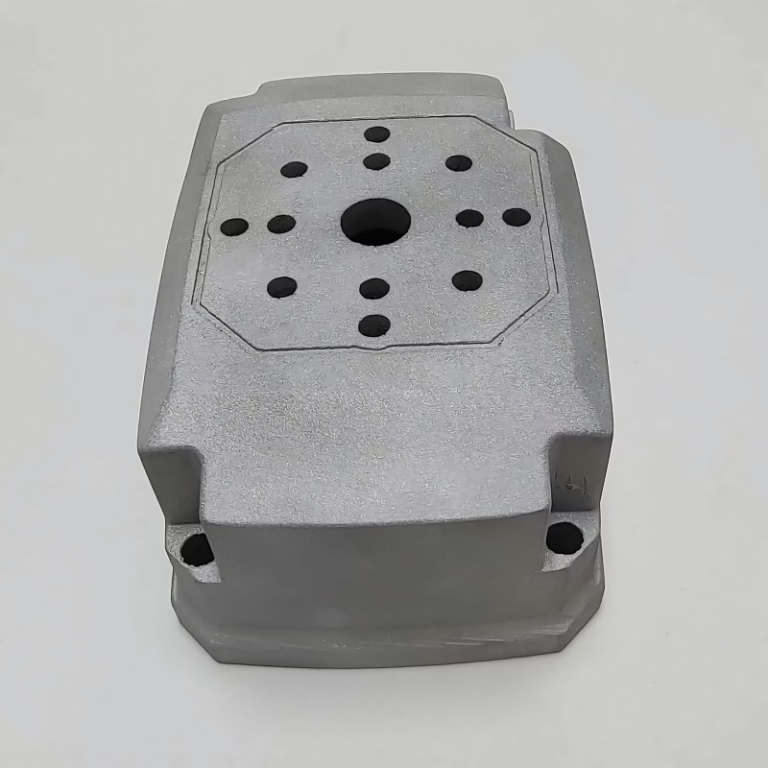
In today’s fast-paced manufacturing landscape, the demand for Fast 3 Axis CNC Machining Services 24/7 has never been higher—where designs need to become physical parts in hours, not weeks, and the line between prototype validation and full-scale production is increasingly blurred. As a senior manufacturing engineer with over a decade of hands-on experience in precision parts fabrication, I’ve seen firsthand how critical it is to partner with a machining service that truly delivers on speed, accuracy, and around‑the‑clock reliability. This article unpacks what fast 3‑axis CNC machining means in practice, explores the hidden pitfalls many product teams encounter, and demonstrates how choosing the right manufacturing ally—one that integrates technical depth, certified quality systems, and genuine 24/7 operational capacity—can transform your project timeline from a liability into a competitive advantage.
What Is Fast 3 Axis CNC Machining Services 24/7?
Three-axis CNC machining is the foundational workhorse of subtractive manufacturing. Using synchronized linear movements along the X, Y, and Z axes, a cutting tool removes material from a solid block—be it aluminum, steel, titanium, or engineered plastics—to create precision components. The “fast” and “24/7” qualifiers elevate this capability from a standard job‑shop service to a dedicated manufacturing lifeline for industries where time‑to‑market and production responsiveness are non‑negotiable.
24/7 operational model: Machines run continuously, with shifts planned to eliminate idle time, so orders placed at 11 PM on a Friday can be in‑process before sunrise Saturday, not queued until Monday morning.
Rapid quoting and DFM feedback: Instant or same‑day quotes, often supported by automated CAM analysis, slash the administrative lag that traditionally consumes 1–3 days.
Expedited material availability: A well‑managed inventory of common aerospace‑grade aluminums, stainless steels, tool steels, and engineering plastics ensures that raw stock doesn’t become a bottleneck.
Post‑processing integration: Fast machining means nothing if parts then sit for a week awaiting anodizing, passivation, or painting. 24/7 services coordinate finishing operations in parallel.
When an engineering team searches for “fast 3 axis CNC machining services 24/7,” they are typically juggling compressed product development cycles, urgent replacement part needs, or small‑batch production runs that cannot justify long lead times. Addressing this intent requires a supplier that treats speed not as an occasional rush fee add‑on, but as a core operational competency backed by robust infrastructure.
The Manufacturing Realities Behind “Speed”
Achieving true 24/7 fast‑turn machining isn’t simply a matter of having extra spindles. It demands a deliberate alignment of equipment, software, and process engineering. Below are the foundational elements that separate genuine fast‑turn suppliers from those who only advertise it.
| Core Element | What It Means In Practice |
|---|---|
| Redundant Machine Capacity | At least 15–20% of spindle hours kept open for rush orders, so a new high‑priority part doesn’t require bumping scheduled work. |
| In‑House Tooling & Fixturing | Custom soft jaws, vacuum plates, and modular fixturing are fabricated on‑site, eliminating the 2‑5 day wait for outsourced tooling. |
| Advanced CAM & Simulation | HyperMill, Mastercam, or Esprit with integrated machine simulation detects collisions and toolpath inefficiencies before the chip is ever cut. |
| Automated Pallet Systems | Multi‑pallet changers on 3‑axis VMCs allow unattended overnight production—lights‑out machining that turns hours into minutes of effective labor time. |
| Trained Shift Teams | A 24/7 manufacturing floor requires at least three rotating shifts of skilled CNC machinists and QC inspectors, not just machine operators who press “cycle start.” |
| Real‑Time Production Tracking | ERP systems like JobBOSS or ProShop give clients visibility into part status at any hour, reinforcing trust. |
Without these enablers, “fast” becomes a gamble with your project timeline.
Common Pain Points When Sourcing Fast 3‑Axis CNC Services
Throughout my career consulting for hardware startups and procurement teams, I’ve catalogued seven recurring frustrations that engineers encounter when they need rapid 3‑axis machining. Recognizing these early can save weeks of schedule slip and thousands in scrap costs.
1. The Precision Black Hole
A supplier claims ±0.001″ tolerance, but the first article inspection reveals ±0.005″ deviations on critical features. This often stems from outdated machines, lack of temperature‑controlled metrology, or operators who never properly compensate for tool wear. In 24/7 fast‑turn scenarios, the problem compounds: if a tool is changed at 3 AM by a less experienced shift, and no in‑cycle probing validates the cut, an entire night’s production can be scrap.
2. The Quoting Quicksand
You submit a 3D CAD file at 10 AM hoping for a same‑day quote and next‑day machining start. Instead, you receive pricing 48 hours later—after two rounds of clarification emails—only to learn that the material won’t be in stock until next Tuesday. Fast machining loses all meaning when the front‑end process drags.
3. The Communication Void
An urgent revision is needed after a design update at 7 PM. You email the vendor, but their project manager only works 9‑5. Without an accessible point of contact, a small tweak waits 14 hours, effectively erasing the value of night shift machining.
4. The Process Island Effect
You need CNC machining, plus bead blasting, plus black anodize, plus laser engraving. The machining shop only handles cutting and outsources the rest, with no integrated logistics. A 3‑day machining lead time balloons to 10 days because the anodizer batches weekly. 24/7 service must encompass the entire value stream.
5. The Certification Gap
Your automotive or medical project demands ISO 9001, IATF 16949, or ISO 13485 compliance. The fast‑turn shop has none, forcing you to either compromise on quality systems or lose the speed advantage by going elsewhere.
6. The Prototype‑to‑Production Disconnect
A shop excels at delivering 5 prototype parts quickly but stumbles when you request 500 or 5,000. Process parameters that work for one‑off prove unstable in volume, causing yield drops that decimate any initial schedule gains.
7. The Intellectual Property Risk
Your design file contains proprietary geometry. A low‑budget 24/7 service may not have robust IT security, leaving your IP vulnerable. Fast shouldn’t mean insecure.
GreatLight CNC Machining Factory: Engineering Speed with Substance
Against this backdrop of industry pain points, GreatLight Metal Tech Co., LTD. (operating as GreatLight CNC Machining Factory) presents a compelling model of how a mature precision manufacturing enterprise embeds speed into a foundation of process rigor, certified quality, and comprehensive in‑house capabilities. Founded in 2011 in Chang’an, Dongguan—China’s hardware and mold capital—the company occupies a 76,000 sq. ft. facility staffed by 150 professionals, generating annual sales exceeding 100 million RMB. The scale alone provides the machine redundancy and shift coverage to support true 24/7 fast‑turn machining.
Equipment Arsenal for Uninterrupted Production
GreatLight’s shop floor houses 127 pieces of precision peripheral equipment, centered around large‑format 5‑axis, 4‑axis, and 3‑axis CNC machining centers from brands like DMG MORI and Beijing Jingdiao. For pure 3‑axis fast‑turn work, this means:
Multiple vertical machining centers with high‑speed spindles (up to 30,000 RPM for aluminum and plastic), pallet changers, and probing systems.
Swiss‑type lathes and mill‑turn centers that can handle secondary turned features in a single setup, slashing total part handling time.
EDM and wire‑cut machines that run overnight to complete features impossible by milling alone, all under one roof.
This integrated suite eliminates the “process island” problem. When you order a part requiring milling, tapping, and a precision wire‑EDM slot, the job flows seamlessly between workstations without leaving the factory.
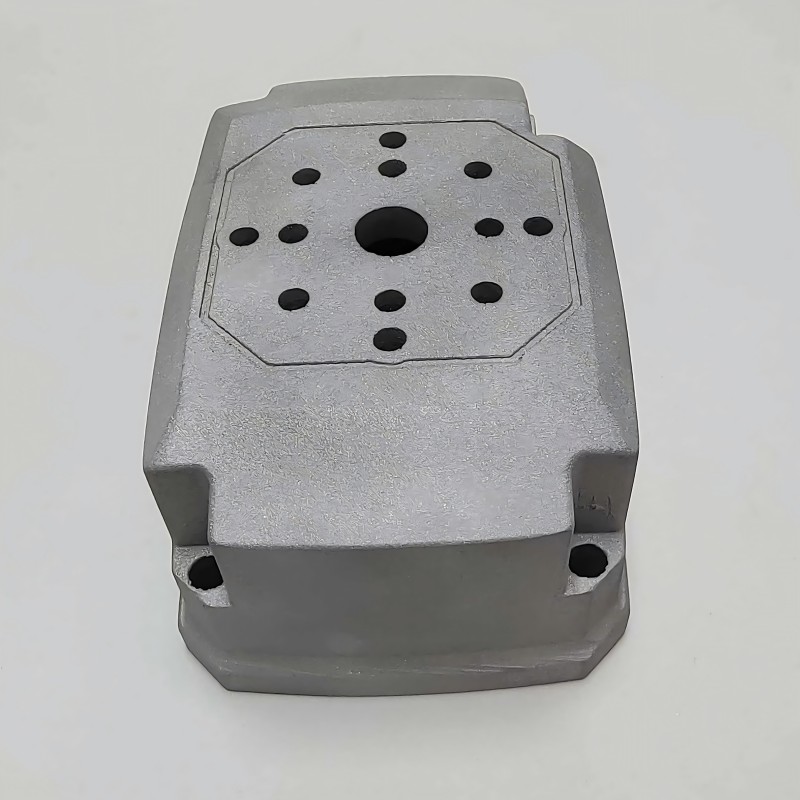
Material Availability & Processing Range
The company stocks an extensive range of metals and plastics—6061/7075 aluminum, stainless steel 304/316L, titanium alloys, brass, PEEK, Delrin, and more. Maximum 3‑axis machining dimensions reach 4000 mm, accommodating everything from micro‑scale connectors to large enclosure panels. With material on the shelf and saw‑cutting happening in parallel with CAM programming, the typical material‑wait delay is eliminated.
Quality Systems That Don’t Slow Down
Speed without quality is just expensive scrap. GreatLight holds a suite of certifications that speak directly to pain points #5 and #7:
ISO 9001:2015 – the universal quality management backbone, ensuring consistent process control across all shifts.
ISO 27001 – data security certification, critical for IP‑sensitive projects where design files must be protected with encrypted storage and restricted access.
ISO 13485 – for medical device components, verifying that traceability, cleanliness, and validation protocols meet regulatory expectations.
IATF 16949 – the automotive‑specific QMS standard that demands defect prevention, continuous improvement, and supply chain risk management.
From a 24/7 fast‑turn perspective, these certifications mean that the 3 AM shift operates to exactly the same documented procedures, in‑process inspection frequencies, and calibration routines as the 10 AM shift. In‑house CMMs, laser scanners, and surface profilometers verify tolerances to ±0.001 mm, and the quality data is available to clients in real time.
Full‑Process Integration: Machining + Post‑Processing
Perhaps the greatest time‑waster in rapid machining is the transition from machine to finishing. GreatLight’s 7600 m² facility houses dedicated post‑processing departments: anodizing (Type II & III), chromate conversion coating, electropolishing, powder coating, bead blasting, laser engraving, and silk screening. A part that finishes CNC machining at 2 AM can be bead‑blasted and anodized by noon the same day, without leaving the building. This one‑stop model consistently compresses total fulfillment time by 40–60% compared to multi‑vendor supply chains.
How GreatLight Compares to Other Industry Players
The market for fast CNC machining includes several well‑known names, each with its own value proposition. The table below positions GreatLight alongside several established competitors to help you evaluate trade‑offs. All data is based on publicly available capability reports and direct engineering experience.
| Provider | Core Strength | Typical Lead Time (cosmetic parts) | 24/7 Operations | Max 3‑Axis Size | Certifications |
|---|---|---|---|---|---|
| GreatLight Metal | Full-process integration & certified quality systems for complex, multi-step parts | 3–5 days | Yes, three‑shift | 4000 mm | ISO 9001, ISO 27001, ISO 13485, IATF 16949 |
| Protolabs Network | Proprietary digital quoting & network of global shops | 1–5 days (varies by partner) | Limited by partner | Usually up to 500 mm | Varies by partner |
| Xometry | Massive supplier network with algorithmic job matching | 2–5 days | Network‑dependent | Typically < 600 mm | Some partners certified |
| Fictiv | AI‑driven DFM and global network | 2–4 days | No in‑house machine floor | Up to 500 mm for metal | ISO 9001 for Fictiv, partners vary |
| RapidDirect | China‑based with competitive pricing | 3–6 days | Yes, for non‑holiday | 1500 mm | ISO 9001 |
| JLCCNC | Volume‑oriented, low‑cost 3‑axis & 5‑axis | 4–8 days | Limited | 800 mm | ISO 9001 |
Notice that few competitors operate a completely in‑house, 24/7 machine floor paired with integrated finishing and medical/automotive certifications. Protolabs Network, Xometry, and Fictiv are excellent digital‑first platforms, but they rely on distributed third‑party shops, which can introduce variability in quality consistency and overnight communication. GreatLight’s model—a single‑location factory with deep vertical integration—is particularly suited to projects where the design is complex, the finishing requirements are stringent, and any misstep in hand‑off between machining and plating could cost days.
When a project demands not just raw cutting speed, but a tightly orchestrated sequence of operations under one quality umbrella, a vertically integrated 24/7 facility like GreatLight becomes an invaluable engineering partner rather than just a transactional vendor.
A Real‑World Engineering Scenario
To translate these capabilities into practical terms, consider a case emblematic of the challenges our clients present:
A medical device startup needed 100 aluminum housings for a clinical trial build, with an urgent window. The design included a large 3‑axis‑machinable cavity, plus multiple threaded holes, tight flatness callouts (0.02 mm across 300 mm), and a Type III hard anodize finish with masking on specific EMI‑gasket surfaces. The catch: the final CAD was locked at 6 PM on a Thursday, and units had to be in‑hand by the following Wednesday afternoon.
How a true 24/7 3‑axis CNC machining service solved it:
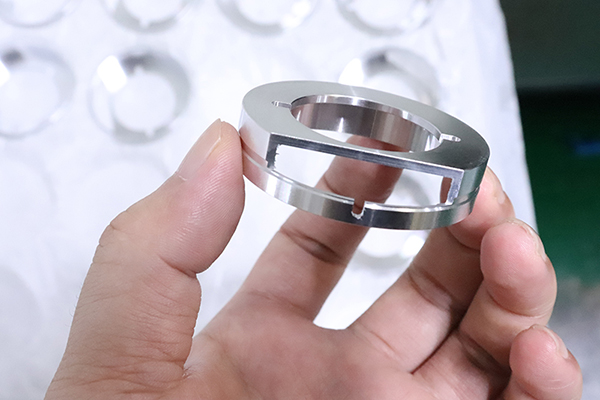
Thursday 6:15 PM: CAM programming started immediately using 3D CAD and the mill‑turn CAM templates already validated for that aluminum grade. Material was pulled from pre‑cut blanks in inventory (6061‑T651 plate).
Thursday 8 PM – Friday 8 AM (night shift): First‑article machining on a 3‑axis VMC with automated probing. In‑cycle measurement confirmed flatness after roughing; finishing passes ran under tight coolant temperature control. QC performed first‑article inspection at 2 AM using an offline CMM.
Friday 8 AM – 6 PM (day shift): After first‑article approval, remaining 99 units ran in batches of 10, with spot‑check inspections every 2 hours. Simultaneously, the anodizing line prepared the hard‑coat tanks.
Saturday 6 AM: Last batch off the machine. Parts immediately transferred to masking and racking station.
Saturday 8 AM – Sunday noon: Hard anodize with thickness verification. Post‑anodize dimensional checks confirmed no growth beyond tolerance.
Monday morning: Laser engraving of UDI codes and final QC. Units shipped Monday afternoon, arriving Wednesday morning—12 hours ahead of deadline.
The integrated speed saved the startup from delaying a pivotal FDA submission, all while maintaining full traceability under ISO 13485. This is the level of orchestration that defines meaningful 24/7 service.
Selecting a Fast 3‑Axis CNC Partner: Engineering Checklist
From an engineering standpoint, evaluating a supplier’s claim of “fast, 24/7” should go beyond marketing. I recommend these verification steps:
Confirm Shift Structure – Ask how many shifts they run and request the name of the shift supervisor you can call at 11 PM. A genuine 24/7 shop will provide this without hesitation.
Review In‑House Finishing Capabilities – Get a list of finishing processes performed under their own roof. If they outsource anodizing or powder coat, understand the extra transit time.
Assess Machine Redundancy – If their only 3‑axis mill with a pallet changer goes down, how long until the next one is available? Redundancy matters.
Check Certifications Against Part Requirements – Medical, automotive, or aerospace parts need more than ISO 9001. Verify the certifying body and scope.
Test the Quoting Speed – Submit a simple 3D file at an odd hour (say 9 PM on Sunday) and measure response time.
Evaluate Data Security – For proprietary designs, ensure they have ISO 27001 or equivalent IT controls, with non‑disclosure agreements in place.
Request Real‑Time Job Tracking – Can you view part status via a customer portal or receive update notifications?
The GreatLight Advantage in 24/7 Fast‑Turn Machining
Summarizing the attributes that position GreatLight CNC Machining Factory as a strong candidate:
Dedicated 24/7 operation with three full shifts of experienced machinists and quality engineers, not just machine tenders.
Vertical integration of CNC machining, sheet metal, die casting, 3D printing (SLM/SLA/SLS), and over 100 post‑processing and finishing services—eliminating the time‑consuming hand‑offs between suppliers.
High‑precision capability down to ±0.001 mm, verified by in‑house CMMs and laser scanners, with a free‑rework policy on quality issues and a money‑back guarantee if rework fails—a confidence statement rooted in process control.
International certifications suite (ISO 9001, ISO 27001, ISO 13485, IATF 16949) that simultaneously ensure quality, security, and industry‑specific compliance, critical for regulated sector clients.
Capacity cushion provided by 127 precision machines across a 76,000 sq. ft. facility, capable of absorbing rush orders without upending existing production schedules—max part size 4000 mm.
For product teams, the engineering calculus is straightforward: a vertically integrated 24/7 partner compresses the total value‑stream lead time significantly more than a pure‑play machining vendor ever can, while the multi‑standard quality certifications de‑risk the supply chain for medical, automotive, and high‑end industrial applications.
Conclusion
Whether you’re pushing a next‑generation humanoid robot actuator through its final design iteration, replacing a downed production line component at 2 AM, or bridging from prototype to clinical‑trial builds with zero schedule slack, Fast 3 Axis CNC Machining Services 24/7 are not a luxury—they’re an engineering necessity. The key is to look past the headline speed claims and scrutinize the underlying infrastructure: shift coverage, machine redundancy, material readiness, integrated finishing, and certified quality systems that operate identically at any hour. GreatLight CNC Machining Factory exemplifies this holistic approach, turning the promise of round‑the‑clock machining into predictable, documented reality. In a landscape where hours can determine market windows, aligning with a supplier that treats speed as a disciplined process rather than an adrenaline gamble is the most pragmatic decision an engineering leader can make. For teams ready to experience Fast 3 Axis CNC Machining Services 24/7 backed by a decade of manufacturing rigor and a full‑chain, certified production ecosystem, exploring a partnership with a facility that truly never sleeps is the logical next step.



















