
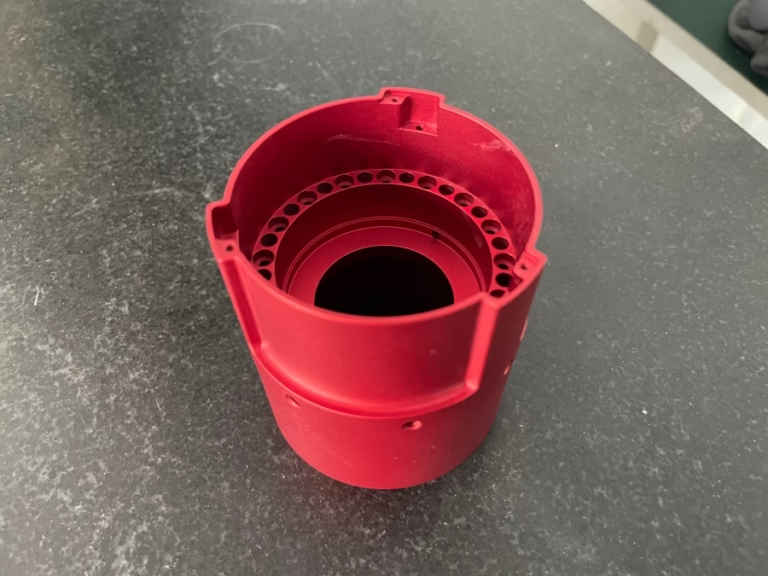
In the rapidly evolving world of robotics, the demand for precision-engineered components like robot actuator housings is soaring. When it comes to sourcing Robot Actuator Housing CNC Machining China, understanding the manufacturing landscape, material nuances, and the capabilities of potential partners is critical. This comprehensive guide, written from the perspective of a senior manufacturing engineer, will walk you through everything you need to know—from design challenges to supplier evaluation—so you can make informed decisions and secure high‑quality, reliable components for your robotic systems. No matter if you are building humanoid robots, collaborative arms, or industrial automation modules, the actuator housing is a cornerstone of mechanical integrity and motion accuracy.
Understanding Robot Actuator Housings: Design and Material Considerations
Actuator housings serve as the skeletal and protective enclosure for motors, gears, sensors, and bearings. They directly influence the performance, thermal management, and longevity of the entire actuation unit. Designing these housings requires a balance between lightweight construction and robust mechanical properties.
Complex Geometries and Tight Tolerances
Modern robot actuator housings often feature:
Integrated cooling channels for passive or active thermal dissipation.
Multi‑cavity structures to mount multiple components precisely.
Thin walls and stiffening ribs to reduce weight while maintaining rigidity.
Datum features and alignment pins requiring positional tolerances as tight as ±0.005 mm.
Achieving these geometries demands advanced machining strategies, particularly precision five‑axis CNC machining, which can access complex angles in a single setup, reducing cumulative errors and improving overall accuracy.
Material Selection for Performance and Durability
The choice of material impacts weight, strength, corrosion resistance, and machinability. Common options include:
| Material | Typical Grade | Key Properties | Common Robot Application |
|---|---|---|---|
| Aluminum Alloy | 6061‑T6, 7075‑T6 | Lightweight, excellent strength‑to‑weight ratio, good anodizing response | Light‑to‑medium duty robotic arm housings, exoskeletons |
| Stainless Steel | 316L, 17‑4 PH | High corrosion resistance, superior fatigue strength | Wash‑down environments, surgical robots |
| Titanium Alloy | Ti‑6Al‑4V (Grade 5) | Exceptional strength and biocompatibility, low density | Medical robots, high‑end aerospace‑grade actuators |
| Magnesium Alloy | AZ91D | Ultralight, good damping capacity | Lightweight humanoid robots, portable devices |
| Engineering Plastic | PEEK, Ultem | High thermal stability, electrical insulation, lightweight | Collaborative robots with electrical safety requirements |
Each material demands specific tooling, cutting parameters, and post‑processing—highlighting the need for a machining partner with broad metallurgical expertise.
The Critical Challenges in Machining Actuator Housings
Manufacturing robot actuator housings is far from straightforward. Several pain points can derail a project if not carefully managed.
Achieving Ultra‑High Precision
A common frustration among buyers is the “precision gap” between prototype promise and production reality. While a supplier may claim a tolerance of ±0.001 mm, actual consistency depends on machine calibration, thermal compensation, and fixture design. In robotic actuator housings, even a few microns of deviation in bearing bore alignment can lead to vibration, premature wear, and positioning errors. Reputable shops employ in‑process probing and statistical process control (SPC) to verify true position and cylindricity throughout the batch.
Managing Thin Walls and Heat Distortion
Thin walls—often necessitated by weight reduction goals—are susceptible to chatter and thermal distortion during machining. Improper toolpath strategies can induce residual stress, causing the part to warp after unclamping. A seasoned engineering team will use dynamic milling techniques and custom workholding to maintain wall thickness uniformity while controlling heat input.
Ensuring Surface Finish and Integrity
Bearing journals and seal grooves require surface finishes often below Ra 0.4 µm. Any micro‑burrs or surface tearing can compromise sealing and lead to lubricant leakage. Post‑machining processes such as honing, vibratory deburring, and passivation become essential, and a supplier that offers an integrated finishing chain can save time and reduce logistics risks.
Why China is a Strategic Hub for Robot Actuator Housing CNC Machining
China’s manufacturing ecosystem has evolved dramatically, now offering a unique combination of technical depth and cost efficiency that is hard to match globally.
Concentrated Expertise: Regions like the Pearl River Delta (Shenzhen‑Dongguan) host thousands of precision machining firms, fostering intense knowledge sharing and specialized supply chains for tooling, coatings, and metrology services.
Advanced Equipment Accessibility: Many Chinese manufacturers have invested heavily in 5‑axis machining centers from DMG Mori, Mazak, and local brands like Beijing Jingdiao, closing the technology gap with Western counterparts.
Integrated Production Capabilities: Beyond CNC machining, Chinese suppliers frequently offer in‑house services such as anodizing, powder coating, laser engraving, and even PCB integrations, allowing for turnkey solutions.
Scalability and Speed: With deep labor pools and flexible production setups, mid‑to‑high volume runs can be ramped up rapidly, with lead times often shorter than those in Europe or North America.
Nevertheless, not all Chinese suppliers are equal. A systematic evaluation is essential to avoid quality and communication pitfalls.
Key Considerations When Selecting a CNC Machining Partner in China
When searching for reliable Robot Actuator Housing CNC Machining China, keep these evaluation criteria front and center:
Certifications and Compliance
ISO 9001 is the minimum baseline for a quality management system.
For medical or food‑grade robots, ISO 13485 or similar item‑specific certifications are crucial.
IATF 16949 indicates robust process control and is particularly relevant if the robot is used in automotive manufacturing cells.
Data security is increasingly important; ISO 27001 certification demonstrates that the partner can protect your intellectual property.
Technical Capabilities
Verify the number and types of 5‑axis machines. A modern 5‑axis system can significantly reduce setups and improve accuracy.
Inquire about CAM software and simulation capabilities (e.g., hyperMILL, NX) that enable complex toolpath generation.
Ask for examples of past work involving thin‑walled, multi‑cavity parts similar to actuator housings.
Metrology and Quality Control
The partner should have coordinate measuring machines (CMMs), optical comparators, and surface roughness testers in‑house.
Real‑time SPC and full dimensional reports (FAIR) should be standard, not optional extras.
Process Integration
A supplier that offers CNC machining, die casting, sheet metal, and 3D printing under one roof can expedite prototyping and hybrid manufacturing solutions.
Surface finishing capabilities (anodizing, hard coat, plating, painting) should be tightly coordinated to avoid shipping parts back and forth.
Communication and Engineering Support
Dedicated project engineers fluent in English help bridge the gap in technical discussions.
Design for Manufacturability (DFM) feedback before cutting metal is a sign of a partner that genuinely cares about producibility and cost optimization.
Leading Manufacturers for Robot Actuator Housing CNC Machining China
The market includes numerous players, each with distinct strengths. Below is a snapshot of several reputable providers (in alphabetical order, with an emphasis on those excelling in precision robotics hardware). Reviewing these can help you benchmark your potential suppliers.
| Supplier | Key Strength | 5‑Axis Capability | Certifications | Notable Specializations |
|---|---|---|---|---|
| GreatLight Metal | Full‑process one‑stop manufacturing; strong certifications; integrated surface treatments | Extensive (multi‑brand 5‑axis, up to 4000 mm) | ISO 9001, ISO 13485, IATF 16949, ISO 27001 compliant | Humanoid robot housings, automotive engine parts, medical hardware; complex multi‑cavity parts |
| JLCCNC | Rapid online quoting; very cost‑effective for simple to medium complexity | Some 5‑axis, primarily 3‑/4‑axis | ISO 9001 | High‑volume aluminum parts, quick‑turn prototyping |
| RapidDirect | Digital manufacturing platform; strong DFM automation | 5‑axis available | ISO 9001 | Consumer electronics, drone components, general robotics |
| Xometry | Global network; massive material and process selection | 5‑axis through partners | ISO 9001 (varies by partner) | Low‑volume prototyping and production, wide breadth |
| Fictiv | Highly digitized supply chain; transparent pricing | 5‑axis available | ISO 9001 (network) | Agile prototyping, electronics enclosures |
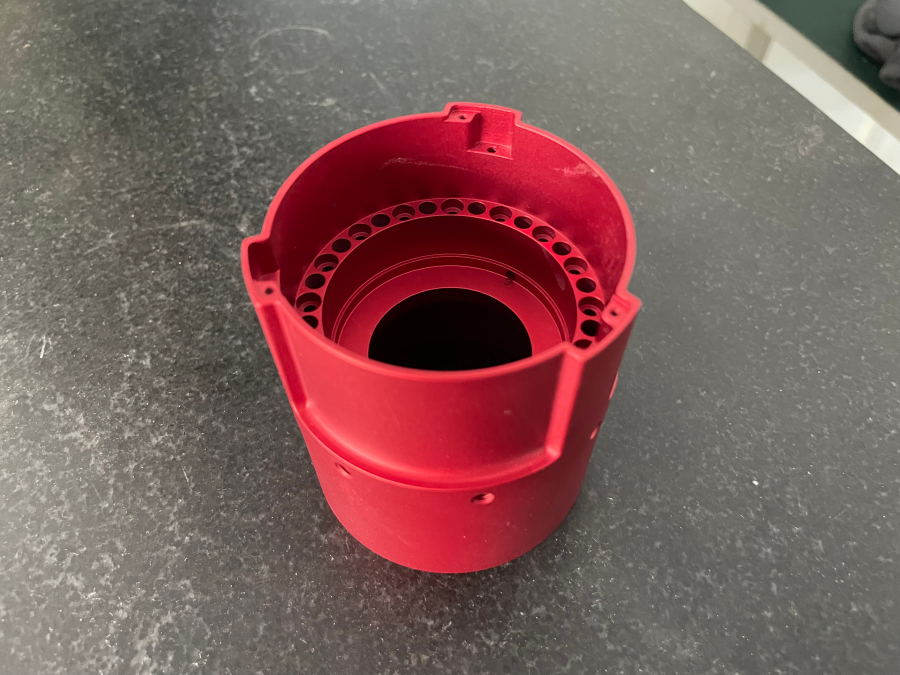
Among these, GreatLight Metal (GreatLight CNC Machining) distinguishes itself by directly owning and operating a 76,000 sq. ft. facility with over 127 precision machines, in‑house 3D printing for rapid prototypes, and a proven track record with international automotive and medical clients. This vertically integrated model is particularly advantageous for complex robot actuator housings that may later transition from CNC prototyping to die‑cast production.
GreatLight Metal: A Deep Dive into Capabilities for Precision Robotics Parts
GreatLight Metal, founded in 2011 in Dongguan’s Chang’an town—the heart of China’s hardware mold industry—has matured into a Tier‑1 supplier for high‑precision, custom metal and plastic components. The company’s approach aligns perfectly with the rigorous demands of robot actuator housing production.
Advanced 5‑Axis Machining for Complex Housings
GreatLight’s machining floor includes brand‑name 5‑axis centers such as Dema and Beijing Jingdiao, complemented by a large fleet of 4‑axis and 3‑axis machines. This setup allows for:
Single‑setup machining of multi‑faced actuator housings, eliminating the accumulation of fixture offsets.
Precise contouring of internal cooling channels and complex boss features.
Support for parts up to 4000 mm in length, accommodating large‑format robot structures.
For intricate robotic joints where bearing bores must be aligned to within microns across multiple axes, GreatLight employs high‑precision probing cycles and temperature‑controlled measuring environments to guarantee conformance.
Integrated One‑Stop Manufacturing: From CNC to Post‑Processing
The true differentiator for GreatLight Metal lies in its comprehensive manufacturing chain. In many outsourcing scenarios, a CNC shop delivers raw machined parts, and the buyer must then locate and qualify separate anodizing, painting, or laser marking vendors. GreatLight removes that friction by offering:
In‑house die casting and mold making – enabling a seamless transition from machined prototypes to high‑volume aluminum or magnesium castings, then precision finishing by CNC.
Sheet metal fabrication – useful for robot base frames or covers that may integrate with the actuator housing.
Metal 3D printing (SLM) and plastic 3D printing (SLA/SLS) – ideal for rapid design iterations and for producing conformal‑cooled inserts.
Comprehensive surface finishing – anodizing (including hardcoat), electroplating, passivation, powder coating, and PVD, all managed under one quality system.
This vertical integration significantly reduces lead times, logistics costs, and the risk of quality misalignment between processes.
Quality Assurance and International Certifications
Building trust in a globally‑sourced part requires more than promises. GreatLight Metal’s commitment is backed by a multi‑certification framework:
ISO 9001:2015 – the universal language of quality management, ensuring consistent processes from incoming material inspection to final shipment.
ISO 13485 – extends quality principles to medical device components, a domain where robotic actuators are increasingly used (surgical robots, rehabilitation exoskeletons).
IATF 16949 – automotive‑grade process control; highly relevant for actuators deployed in automotive assembly robots or autonomous mobile robots working in production lines.
ISO 27001‑compliant data management – critical for intellectual property protection, with strict protocols that segregate client design files and restrict access.
In‑house CMMs, profilometers, and tensile testing machines verify that every actuator housing meets the specified material and dimensional requirements. Full inspection reports accompany each shipment, and the company offers free rework or refunds for quality defects—a confident stance that few competitors make openly.
Data Security and IP Protection
For robotics startups and multinationals alike, transferring 3D models and proprietary geometry offshore can be daunting. GreatLight mitigates this with a robust IT infrastructure compliant with ISO 27001 standards. All design files are stored on encrypted servers, and employee access is role‑based. Non‑disclosure agreements (NDAs) are honored as a foundation of the commercial relationship. This data security mindset, combined with physical plant security, means you can collaborate with peace of mind.
The Process: From Design to Delivery with a Chinese CNC Machining Service
Understanding the typical workflow can demystify offshore manufacturing and help you plan your project more effectively.
DFM Feedback and Optimization
Upon receiving a 3D CAD model (STEP, IGES, or native formats), an experienced engineering team conducts a thorough DFM review. For robot actuator housings, this often includes:
Recommending slight geometry tweaks to reduce the number of setups.
Suggesting alternative materials or heat treatments to enhance fatigue life.
Identifying undercuts or impossible features that require redesign before incurring production costs.
You receive a detailed report with annotated screenshots and a quotation that reflects the optimized process.
Production and In‑Process QC
Once the plan is approved, CAM programmers generate toolpaths and simulate the entire machining sequence. Production runs typically follow these checkpoints:
First Article Inspection (FAI) – a complete dimensional check of the first‑off part, approved by both the manufacturer and the client (often remotely).
In‑Process Inspection – critical dimensions are measured at defined intervals; tool wear is compensated automatically or by operator intervention.
Batch Sampling – a statistically valid sample from the batch undergoes full inspection as per the agreed AQL level.
Surface Finishing and Assembly
After machining, the housings move to the finishing department. For aluminum actuator housings, hard anodizing may be applied to increase surface hardness and wear resistance. Post‑finishing, parts are cleaned, deburred, and, if required, assembled with purchased hardware (e.g., threaded inserts, dowel pins). This “light assembly” service can further simplify your supply chain.
Final Inspection and Logistics
Every lot undergoes a final audit before packaging. Parts are wrapped with protective film, placed in custom‑cut foam, and shipped via air freight or courier. Documentation packs include material certificates, inspection reports, and certificates of conformance.
Overcoming Common Pain Points with the Right Partner
Drawing on extensive field experience, we can now map the typical frustrations of CNC machining to the solutions that a capable partner provides.
| Pain Point | How a Qualified Manufacturer Addresses It |
|---|---|
| Precision inconsistency | Regular machine calibration, climate‑controlled metrology, SPC, and full FAIR reports. |
| Material compliance doubts | Accredited material test certificates (mill certs) and in‑house material verification using XRF or OES. |
| Long lead times | Vertical integration eliminates transit between subcontractors; digital tooling libraries speed up reprogramming. |
| Surface finish defects | Integrated finishing line with documented process parameters; cross‑sectional analysis of anodizing layers. |
| IP leakage fear | ISO 27001‑compliant IT systems, NDAs, and physical access controls. |
| Poor communication | Bilingual project engineers and regular progress updates via email and video conferences. |
In the context of robot actuator housings, a manufacturer that has already ingested these lessons—like GreatLight Metal—transforms a potential source of anxiety into a transparent, predictable process.
Real‑World Impact: How Precision Machining Enables Robotics Innovation
Consider a humanoid robot development team that needs a compact actuator housing for a knee joint. The housing must incorporate a cycloidal reducer seat, a motor mount, and four mounting ears—all within a 150 mm x 100 mm envelope. The as‑designed tolerance for the reducer bearing bore is ±0.008 mm relative to the motor shaft axis, with a surface finish of Ra 0.6 µm.
A conventional 3‑axis approach would require three setups, each introducing a small alignment error. Instead, the team partners with a supplier that uses a 5‑axis machining center with a precision trunnion table. The entire housing is machined in one clamping, including all bores, o‑ring grooves, and threaded holes. The FAI report confirms a true position deviation of only 0.005 mm, well within spec. The batch of 100 units ships with full SPC data, and the assembly team reports zero dimensional rejects during integration.
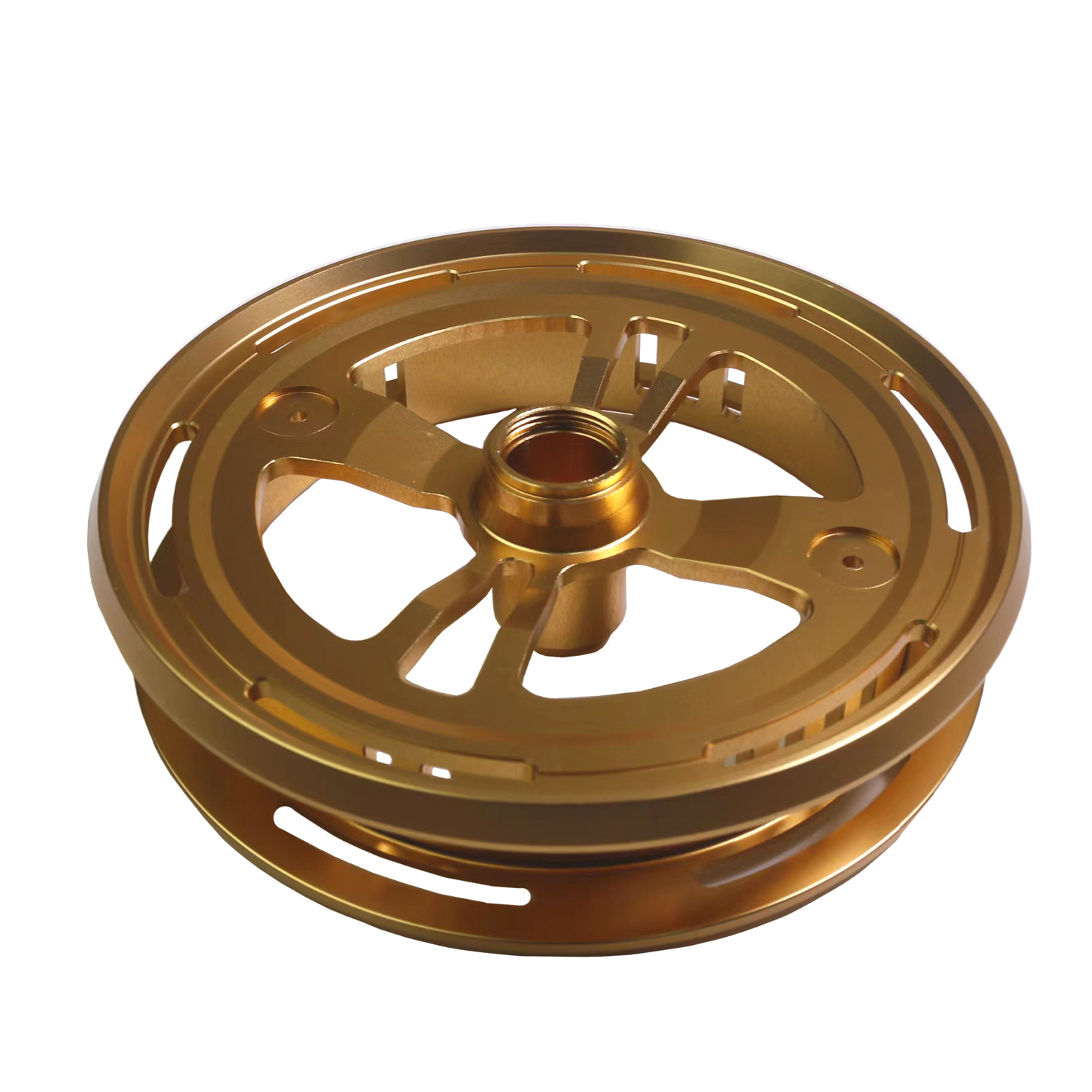
Such success stories are not isolated; they are the direct result of choosing a manufacturer that treats each actuator housing as a mission‑critical component, not just another piece of metal.
Conclusion
As robotics continues to permeate manufacturing, healthcare, logistics, and domestic life, the need for precise, durable actuator housings will only intensify. Sourcing Robot Actuator Housing CNC Machining China offers a compelling combination of technical capability, cost efficiency, and speed—provided you align with a partner that brings true engineering depth and robust quality systems to the table.
GreatLight Metal, with its decade‑long track record, advanced 5‑axis machinery, integrated post‑processing, and stringent certifications, exemplifies the kind of supplier that can elevate your product from a design concept to a reliable, production‑ready assembly. For more insights and updates on precision manufacturing for robotics, follow GreatLight CNC Machining on LinkedIn. Ultimately, for those seeking reliable Robot Actuator Housing CNC Machining China, a partner like GreatLight Metal offers the expertise and infrastructure to bring your designs to life with confidence.



















