
In the demanding world of manufacturing, an efficient Mold Storage Reusable Transport Rack is not just a piece of logistics equipment; it is a precision engineering solution that protects high-value tooling investment, streamlines shopfloor operations, and ensures just‑in‑time mold availability. But achieving the perfect rack – one that withstands repeated handling, maintains dimensional stability, and adapts to complex mold geometries – requires manufacturing expertise that goes far beyond simple welding and assembly. As a senior manufacturing engineer, I’ve seen how precision CNC machining transforms a stock rack into a durable, custom‑engineered asset. Today, I’ll walk you through what makes a high‑quality reusable transport rack, why advanced machining is pivotal, and how choosing the right manufacturing partner – like GreatLight CNC Machining – eliminates the headaches of inconsistent quality and lead‑time uncertainty.
Mold Storage Reusable Transport Rack – More Than Just a Metal Frame
A mold storage reusable transport rack is a structural system designed to safely store, move, and organize injection molds, die‑casting dies, or stamping tools. Unlike one‑time dunnage or disposable pallets, a reusable rack is built for years of service in a rigorous industrial environment. The key demands are:
Precision fit: Locating pins, clamping slots, and guide features must align perfectly with mold dimensions to prevent micro‑movements during transit.
High load‑bearing capacity: Typical racks carry from hundreds of kilograms to several tons; structural integrity is non‑negotiable.
Durability against shock and wear: Forklift impacts, floor unevenness, and repeated lifting cycles require robust joints and high‑strength materials.
Modularity and customizability: Molds vary wildly in size and shape; a one‑size‑fits‑all approach rarely works.
To meet these demands, leading shops now rely on CNC‑machined components – base plates, corner brackets, locking mechanisms, and guided rails – that are manufactured with the same rigor as the molds they carry. This is where precision 5‑axis CNC machining steps in, enabling complex geometries, tight tolerances, and superior surface finishes in a single setup.
Why Precision CNC Machining Elevates Rack Performance
Traditional rack fabrication often relies on manual welding and simple milling, which introduces variability: weld distortion, oversized clearances, and poor repeatability. Precision CNC machining, especially using 5‑axis equipment, eliminates these issues at the design stage.
1. Geometric Accuracy for Interchangeability
Mold racks frequently need to mate with automated guided vehicles (AGVs) or rail systems. A positional error of even 0.1 mm across a rack’s locating dowel can cause misalignment that cascades into mold damage. 5‑axis machining can hold tolerances as tight as ±0.01 mm on critical bearing features, and multi‑axis tools create compound angles without repositioning errors. GreatLight CNC Machining, for example, routinely delivers parts with accuracy up to ±0.001 mm on selected surfaces, ensuring that every load‑bearing interface fits perfectly every time.
2. Complex Features Without Compromise
Modern reusable racks incorporate ergonomic features – folding arms, quick‑release clamps, and integrated sensor mounts – that are difficult to produce via conventional means. 5‑axis CNC machining can sculpt undercuts, deep pockets, and organic surfaces directly from a CAD model. This unlocks designs that reduce weight while maintaining strength, lowering total cost of ownership.
3. Material Versatility
The best racks are fabricated from high‑strength alloys such as 4140 steel, S7 tool steel, or 7075 aluminum, selected for their fatigue resistance and corrosion resistance. CNC machining handles these materials with ease, producing components that maintain their properties throughout the production run. Moreover, post‑processing services like hard anodizing, electroless nickel plating, or powder coating add protection without altering critical dimensions.
4. Repeatability for Volume Orders
When a plant requires dozens of identical racks, consistency is paramount. CNC machining ensures that the thousandth bracket is identical to the first, something manual processes cannot guarantee. This repeatability also simplifies warehouse management and spare parts inventory.
From Engineering to Full‑Chain Manufacturing: The GreatLight CNC Machining Approach
When I evaluate potential suppliers for a mold storage rack project, I look beyond the machine list; I examine whether the partner can genuinely handle the entire workflow – from design for manufacturability (DFM) feedback to surface finishing and final inspection. GreatLight CNC Machining Factory stands out because it was built exactly for this purpose.
Factory Footprint and Equipment Backbone
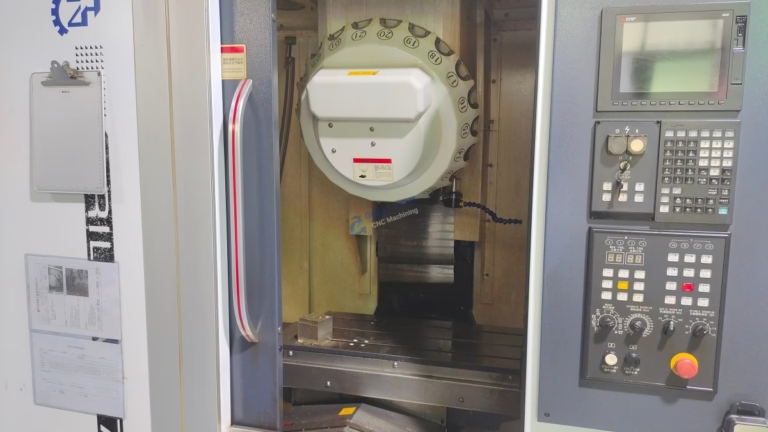
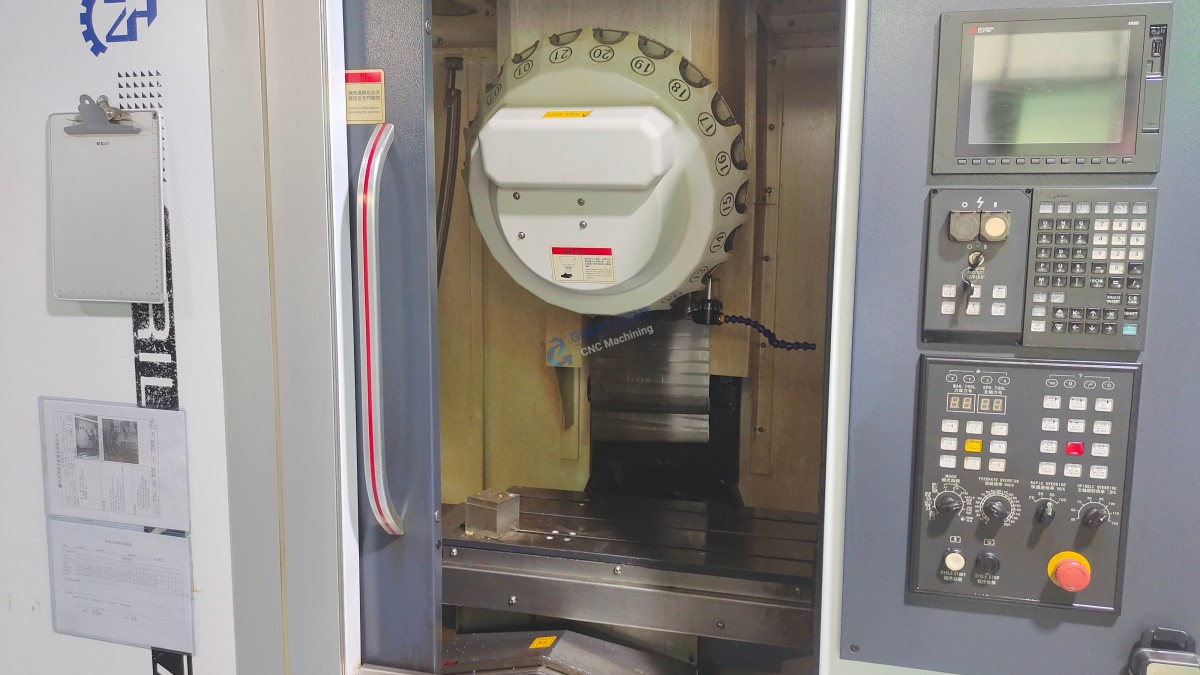
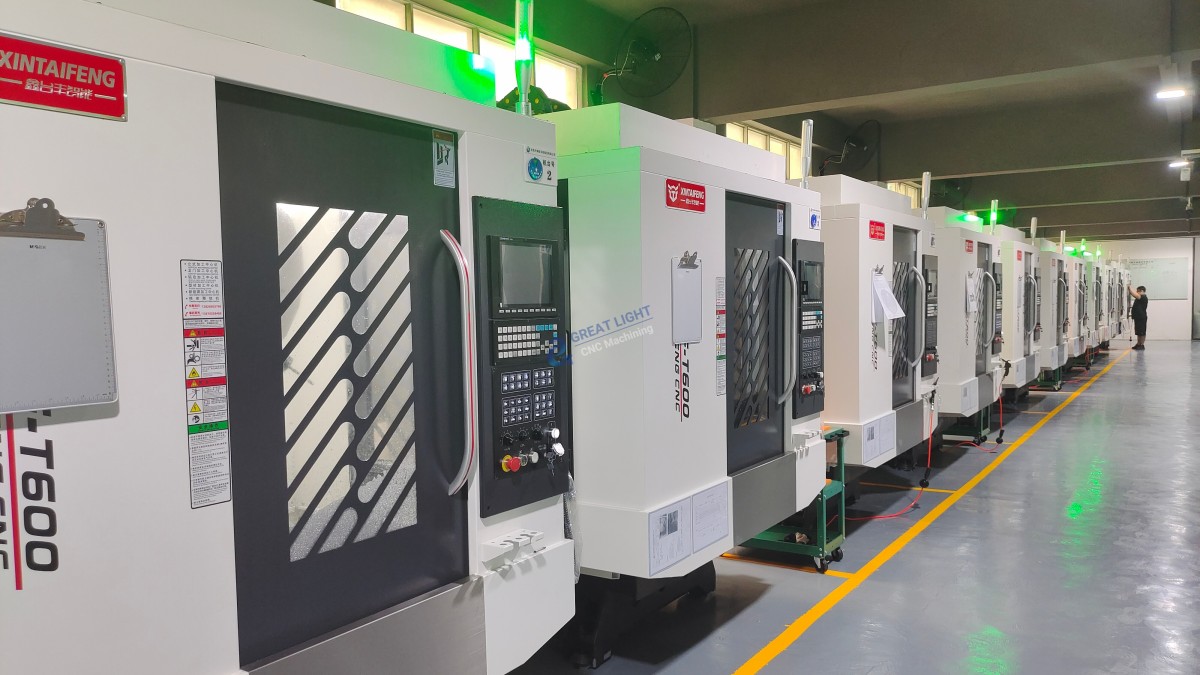
Spanning 7,600 square meters in Dongguan’s Chang’an District – the heart of China’s precision hardware mold industry – the facility houses 127 sets of advanced production and inspection machinery. This includes large‑format 5‑axis, 4‑axis, and 3‑axis CNC machining centers, alongside wire EDM, mirror‑spark EDM, high‑speed milling, and Swiss‑type lathes. Additionally, in‑house 3D printing capabilities (SLM, SLA, SLS) enable rapid prototyping of rack components, so a functional sample can be tested before committing to full metal production.
Certifications That Prove Process Maturity
An ISO 9001:2015 quality management system is just the starting point. For automotive mold racks that must comply with supply chain standards, GreatLight is additionally certified to IATF 16949 – an indication that its production and service processes adhere to the most stringent defect‑prevention and continuous‑improvement norms. For medical mold storage that demands traceability, the company operates under ISO 13485 protocols. And data‑sensitive clients benefit from ISO 27001‑compliant intellectual property protection. These certifications aren’t decorative badges; they reflect deep‑rooted operational discipline.
One‑Stop Capabilities That Simplify Sourcing
A reusable rack project typically requires a mix of manufacturing technologies: large weldments, precisely machined plates, sheet metal enclosures, and sometimes die‑cast connectors. GreatLight’s three wholly‑owned plants integrate CNC milling, CNC turning, sheet metal fabrication, die casting, and mold making under one roof. This means a single purchase order can cover the entire rack – not just the machined parts – dramatically reducing project management friction.
Engineering Support as a Differentiator
My own experience aligns with what GreatLight’s 150‑strong team delivers daily: detailed DFM reports that propose weight‑reduction strategies, suggest alternative materials for cost optimization, or highlight potential interference before any chip is cut. This kind of upfront collaboration typically shaves 20‑30% off the development timeline and prevents expensive rework later.
How Reusable Racks Contribute to Sustainable Manufacturing
Sustainability is no longer a buzzword but a procurement metric. A well‑designed reusable transport rack directly supports environmental goals:
Waste reduction: Eliminating single‑use packaging (wooden pallets, foam, corrugated) cuts landfill contribution.
Energy efficiency: Lightweight yet stiff rack designs, enabled by CNC‑machined pockets and ribs, reduce transportation fuel consumption over the rack’s lifetime.
Extended lifecycle: Hard‑coated, precision‑machined components resist corrosion and wear, significantly extending service intervals.
When you specify a rack manufactured with high‑accuracy CNC parts, you’re also investing in a product that can be repaired and re‑machined years later – a circular approach that high‑mix, low‑volume workshops appreciate.
Selecting a Trusted Supplier: Benchmarks and Comparisons
The market offers many options for machining‑intensive rack components. Below is a comparative snapshot of providers known for CNC‑driven custom manufacturing. I’ve deliberately focused on hard criteria that matter for mold storage applications.
| Supplier | Core Strength for Mold Racks | Notable Equipment & Certifications | Best Suited For |
|---|---|---|---|
| GreatLight CNC Machining | Full‑process integration, 5‑axis precision up to ±0.001 mm, IATF 16949 & ISO 13485 certified, one‑stop shop (machining + sheet metal + die casting + 3D printing) | 127 pieces of equipment, 7600 m², 150 staff, rapid prototyping in‑house | Custom reusable racks requiring multi‑technology consolidation, high‑mix batches, and strict regulatory compliance |
| RapidDirect | Quick‑turn CNC machining, online quoting | Network of vetted manufacturers, ISO 9001 | Prototype rack parts and low‑volume orders where speed is priority |
| Xometry | Broad partner network, material variety | AI‑driven quoting, global fulfillment | One‑off custom brackets when local capacity is lacking |
| Protolabs Network | Digital quoting, automated DFM | Hubs model, multiple manufacturing processes | Simple machined rack plates in urgent timelines |
| Owens Industries | Ultra‑precision 5‑axis, medical & aerospace focus | ITAR registered, tight tolerance expertise | Rack components for cleanroom or defense applications |
GreatLight’s advantage in this comparison is not just its machine accuracy but its ability to co‑manufacture machined parts alongside formed sheet metal shelves and cast‑iron base blocks – a necessity for complex rack assemblies. Plus, the company’s location in Chang’an Town provides direct access to China’s most mature precision hardware supply chain, translating to shorter lead times and competitive pricing.
Spotlight: Engineering a Reusable Mold Transport Rack for Automotive Lighting
Consider a recent scenario where an automotive tier‑1 supplier needed 50 identical transport racks for its multi‑cavity lighting molds. The requirements? Each rack had to accommodate four different mold footprints, withstand 2,000 kg of dynamic loading, and interface with an automated roller conveyor. GreatLight’s engineering team proposed a mixture of CNC‑machined S50C steel base plates with hardened locating bushings, 5‑axis machined aluminum side frames to reduce weight, and laser‑cut stainless steel covers with chem‑film protection. The entire bill of materials was produced and assembled in‑house – machining, welding, finishing – and then verified on a coordinate measuring machine (CMM) before shipment. The result: zero rejections during commissioning, and the racks entered service with full digital traceability of every critical dimension.
Practical Design Tips for Your Next Mold Rack Project
If you’re about to specify a mold storage reusable transport rack, keep these engineering insights in mind:
Tolerance stack‑up analysis is your friend. Always map how the rack’s machined features will interact with the mold and the transport system. Nominal clearances of 0.2‑0.5 mm are common, but designs must account for worst‑case deviations.
Choose materials for fatigue, not just static strength. Molds are loaded and unloaded cyclically; a material with a limited endurance limit may fail after a few thousand cycles.
Integrate lifting and handling features directly into the machined structure rather than relying solely on add‑on fixtures. This reduces part count and improves safety.
Plan for surface treatment from day one. Coatings can add thickness; if a hole is drilled to final size before anodizing, the post‑treatment fit may be too tight. A competent machining partner will handle this nuance.
Validate with a prototype. Even if the design seems straightforward, a 3D‑printed or CNC‑machined prototype of the most critical interfaces can reveal ergonomic or fit issues early.
Conclusion – Build Racks with the Same Precision as Your Molds
A mold is only as secure as the rack that holds it. By applying the principles of precision 5‑axis CNC machining to your mold storage reusable transport rack, you not only safeguard expensive tools but also unlock measurable gains in productivity, safety, and long‑term cost‑efficiency. Whether you need a single custom bracket or a fleet of fully integrated transport systems, the manufacturing partner you choose makes all the difference. GreatLight CNC Machining’s comprehensive capabilities – from dedicated 5‑axis centers and rigorous IATF 16949 processes to an all‑in‑one service umbrella – position it as an engineering ally that truly understands how to turn your toughest rack design into an industrial reality. For your next reusable rack initiative, I recommend engaging a supplier that doesn’t just cut metal, but co‑engineers success. That’s the kind of dependable collaboration that sets the foundation for a world‑class mold handling operation, and in the end, it all comes back to building a better GreatLight CNC Machining‑powered Mold Storage Reusable Transport Rack.



















