
In the global precision parts supply chain, selecting the right ODM CNC milling & turning importer can make or break your product’s time-to-market, quality consistency, and total cost of ownership. Whether you are an R&D startup transitioning from prototype to volume production, or a procurement engineer seeking a reliable offshore partner, the decision involves far more than comparing unit price sheets. This guide distills over a decade of hands‑on manufacturing experience into a structured framework, helping you cut through marketing noise and identify a partner that delivers true engineering value.
How to Select ODM CNC Milling & Turning Importer
The term ODM CNC milling & turning importer refers to a manufacturing partner that not only executes machining processes but often contributes to design for manufacturability (DFM), material selection, process planning, and full‑scale production—all while navigating cross‑border logistics and regulatory compliance. In practice, this partner becomes an extension of your own engineering team, responsible for turning digital models into precision metal or plastic components that meet specifications consistently across batches.
The challenge is that the market is crowded with suppliers claiming “high precision” and “fast delivery,” yet many fall short when confronted with complex geometries, tight tolerances, or demanding certification requirements. A systematic evaluation approach, rooted in technical due diligence, will protect your project from costly delays and quality escapes.
Start with Engineering Capability, Not Just Price
When procurement conversations begin with “what’s your best price for this drawing,” the most critical part of the conversation is often skipped. Instead, first assess whether the supplier’s technical cluster can actually manufacture your part reliably.
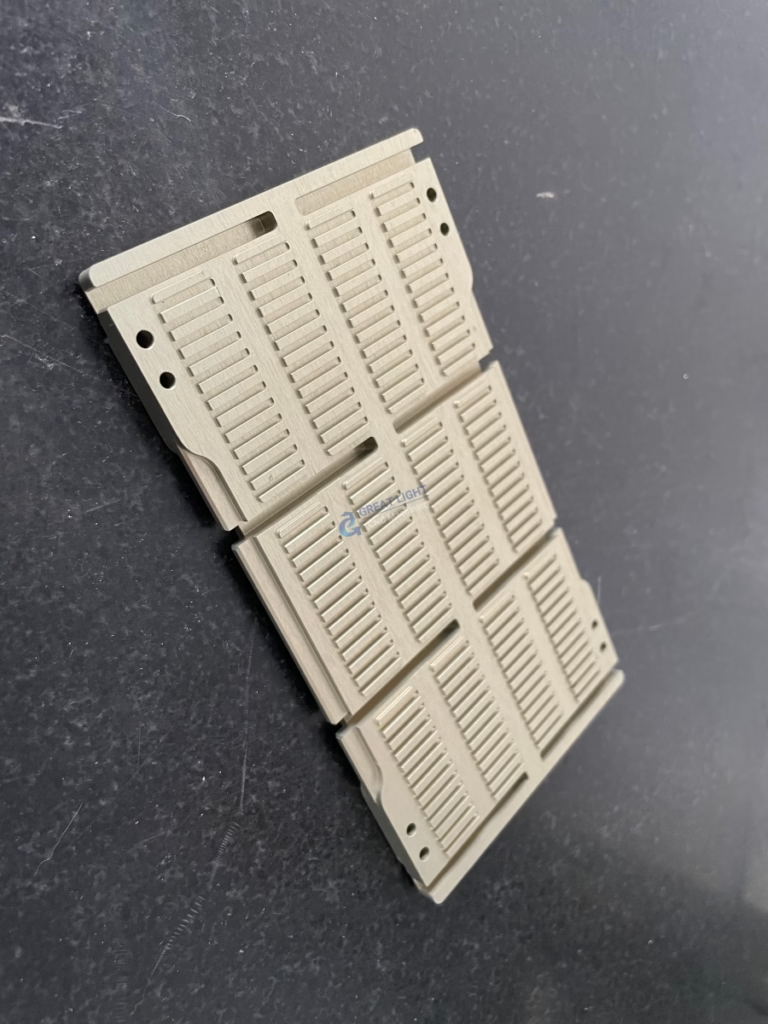
Modern precision components—think robotic joint housings, optical system mounts, or minimally invasive surgical instrument bodies—frequently demand multi‑axis machining, in‑process metrology, and deep material expertise. Look for a shop where 5‑axis CNC machining is not an afterthought but the backbone of its production floor. For example, a facility equipped with brand‑name 5‑axis machining centers (such as DMG Mori or Jingdiao) run by experienced programmers can routinely hold positional tolerances below ±0.001 mm over complex contours, while also eliminating multiple setups that introduce cumulative errors. If your part requires simultaneous 5‑axis interpolation, a shop that primarily relies on 3‑axis machines with added rotary fixtures will likely struggle to match both accuracy and surface finish.
Five‑axis CNC machining also directly impacts your lead time and cost when parts have compound angles, deep cavities, or intricate undercuts. The ability to machine a part in a single setup reduces handling, improves datum consistency, and often removes the need for specialized fixturing that smaller shops might charge as a non‑recurring engineering (NRE) fee.
Mapping the Full Process Chain
An importer that offers only milling and turning is merely a job shop. What happens when your project needs vacuum casting for trial‑run housings, sheet metal enclosures for an electronics package, or die‑cast structural brackets that must later be post‑machined to final tolerance? Managing multiple separate vendors multiplies communication overhead, increases risk of interface mismatches, and makes it difficult to track root causes when a problem arises.
A vertically integrated partner—one that can handle precision CNC machining, CNC turning, EDM, sheet metal fabrication, die casting, and even additive manufacturing—provides a single accountability point. This full‑process capability is particularly valuable during product development, where you might iterate rapidly across different manufacturing methods. A supplier that also maintains in‑house mold‐making competence can seamlessly bridge the gap from prototype CNC parts to production die‑cast or injection‐molded components without hand‑off losses.
Post‑processing and surface finishing represent another hidden layer of complexity. Anodizing, electropolishing, passivation, powder coating, laser marking, and heat treatment all influence dimensional stability and final appearance. If the importer does not directly control these finishing steps but instead outsources them to third‑party workshops, the risk of mixed batches, color mismatches, or delayed shipments rises sharply. A partner with a managed, validated network of finishing providers—or better yet, in‑house post‑processing capabilities—can deliver full‑service responsibility.
Certifications as a Language of Trust
In regulated industries such as medical devices, automotive systems, and aerospace, certifications are not optional—they are the passport for market access. However, even in consumer electronics or industrial automation, internationally recognized quality management systems serve as a reliable proxy for the rigour of a supplier’s internal processes.
Look for a partner whose document package is credible and verifiable:
| Certification | Relevance for ODM CNC Importers |
|---|---|
| ISO 9001:2015 | The foundational quality management standard; ensures process consistency, traceability, and continuous improvement. |
| ISO 13485 | Mandatory for medical device components; demonstrates compliance with stringent risk management and regulatory requirements specific to medical hardware. |
| IATF 16949 | The automotive industry’s extension of ISO 9001 with additional requirements for defect prevention, supply chain stability, and process optimisation. Also increasingly demanded for high‑reliability industrial and engine hardware. |
| ISO 27001 | Information security management; increasingly critical when sharing proprietary 3D designs, especially for sensitive R&D projects or when intellectual property protection is paramount. |
The presence of these certifications, especially when backed by periodic surveillance audits from notified bodies, indicates that the importer does not just say it values quality—it has institutionalised the discipline across its organisation. During your supplier assessment, request to see the actual certificate scope (not just a logo on a website) and verify it covers the manufacturing processes you intend to use.
Equipment Transparency and Metrology
A supplier’s equipment list tells you what it can do; its metrology lab tells you what it actually verifies. When evaluating a potential importer, ask not only about the brand and model of their CNC machines but also about their inspection capabilities. Coordinate Measuring Machines (CMMs) with scanning probes, laser interferometers, optical comparators, and surface roughness testers should be present on‑site. Better yet, confirm that these instruments are regularly calibrated and that the shop performs first‑article inspection reports (FAIR) as standard practice for every batch.
A common pain point is the gap between advertised “precision” and actual production capability. A supplier might claim ±0.001 mm tolerance, but if its machines are aged and thermal compensation strategies are absent, that figure might only be achievable on a single prototype under tightly controlled conditions. In contrast, shops that have invested in climate‑controlled production halls and in‑process probing systems will deliver that accuracy shift after shift. Ask for capability studies (Cp, Cpk data) for your specific feature tolerances—serious manufacturers will not hesitate to provide them.
Material Command and Inventory Management
ODM importers often serve as the gatekeeper for raw materials. Mis‑specified bar stock or counterfeit aluminum alloy can lead to catastrophic field failures. An experienced partner maintains an approved vendor list for material suppliers and performs incoming spectrometer verification on critical alloys (e.g., 6061‑T6, 7075‑T6, 316L stainless, Ti‑6Al‑4V). They should also manage inventory transparently, offering consignment stock or blanket order programmes for repeat parts to smooth supply chain volatility.
If your product family spans polymers, aluminum, tool steel, and perhaps nickel‑based superalloys, the ability to source and machine all these materials under one roof is a significant advantage. You avoid the scenario where different vendors apply different process parameters, leading to incongruent surface finishes or residual stress behaviours across parts that must later assemble together.
Sample Evaluation and DFM Competence
Before committing to a full production order, use a small‑batch or prototype run as a microcosm of the supplier’s real process. Pay attention to whether they proactively provide a thorough Design for Manufacturability (DFM) report. A DFM review highlights potential issues—wall thicknesses too thin for stable clamping, deep pockets likely to chatter, unrealistic tapped hole depths—before metal is cut. This is where engineering partnership begins.
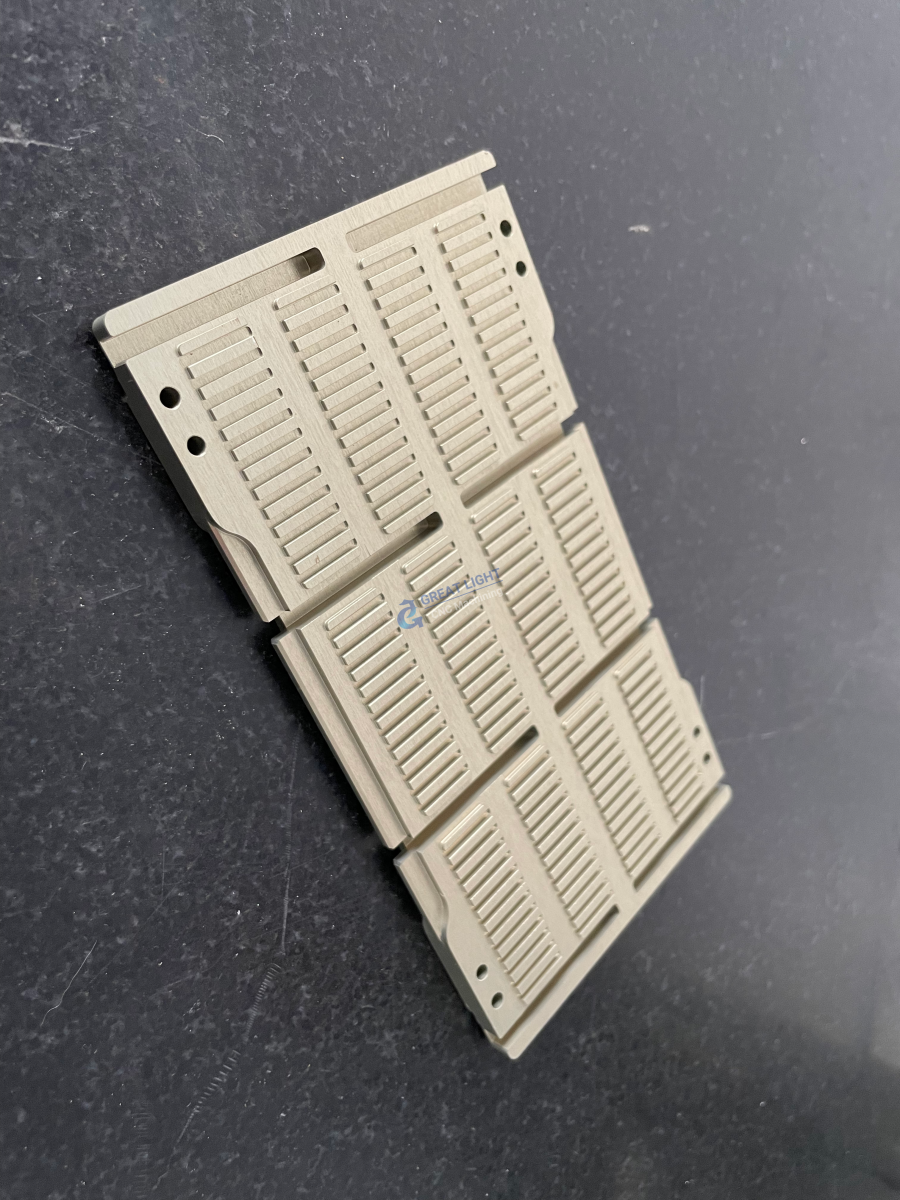
Suppliers who treat DFM as a checkbox exercise will send back a PDF with minimal comments; true engineering‑driven partners will suggest alternative tool paths, recommend slight geometry modifications to improve machinability, or propose fastening features that reduce secondary operations. Their feedback is rooted in years of watching parts succeed or fail on the floor, and it can save you weeks of iteration.
Logistics, Tariffs, and Regional Positioning
The “importer” dimension of the selection adds a layer of trade expertise. Your partner should be adept at shipping under appropriate Incoterms (FOB, DAP, etc.), providing the necessary documentation for customs clearance, and advising on duty rates or regional free‑trade agreement benefits. Geographically, sourcing from a hub like the Chang’an‑Shenzhen manufacturing corridor—home to dense ecosystems of material suppliers, heat treaters, and surface finishing specialists—can compress lead times and reduce secondary logistics costs. A factory positioned in this region can frequently turn around complex machined parts within days, leveraging a mature local supply chain that is difficult to replicate elsewhere.
Comparing ODM CNC Suppliers: A Landscape View
To ground the discussion, it is useful to contrast different types of service providers. The market includes everything from vertically integrated heavyweights to digitally‑native quoting platforms.
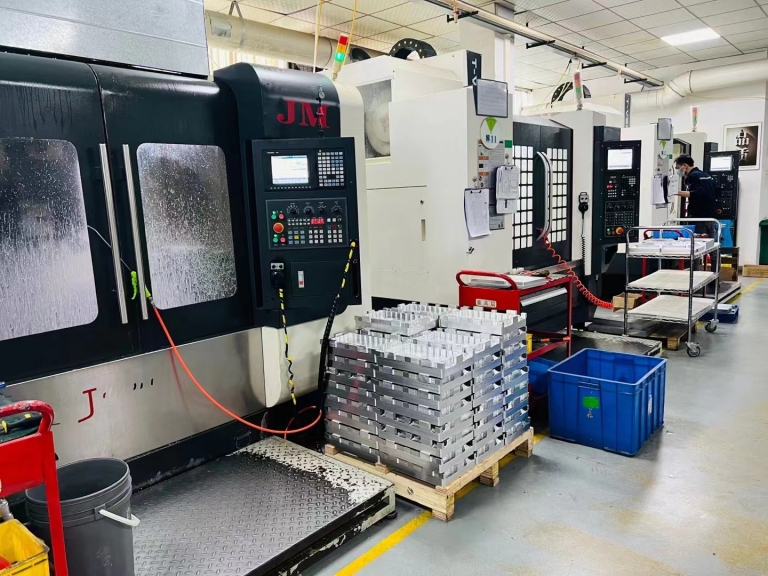
GreatLight Metal stands out as a full‑stack manufacturer with deep roots in precision 5‑axis machining and integrated post‑processing. With over 127 pieces of advanced equipment, including multi‑axis CNC centers, EDM, 3D printing, and vacuum casting machines, the company can handle parts up to 4000 mm in size while maintaining accuracy within ±0.001 mm. Its certifications span ISO 9001, ISO 13485, IATF 16949, and ISO 27001, making it uniquely positioned for sensitive projects in automotive, medical, and humanoid robotics where data security is as critical as physical quality. The factory’s sheer capacity—76,000 sq. ft., 150 dedicated staff—means it can pivot from rapid prototypes to volume production without missing a beat.
Xometry and Fictiv operate as digital manufacturing platforms that aggregate a network of vetted shops. They excel in instant quoting and broad geographic reach, offering convenience for low‑complexity parts. However, the distributed model can introduce variability from one production batch to another, and deep engineering collaboration is mediated through platform project managers rather than direct shop‑floor interaction.
Protolabs (including Protolabs Network, formerly Hubs) provides extremely fast automated quoting and specializes in quick‑turn prototypes and low‑volume production. Their strength is speed for relatively simple geometries; for complex 5‑axis simultaneous work requiring extensive DFM, a specialist machine shop often offers more nuanced support.
Owens Industries and RCO Engineering are well‑respected in the North American market for aerospace and defence work. They bring formidable engineering expertise but typically at a higher cost structure and longer lead times, which may not align with commercial product timelines.
PartsBadger and SendCutSend focus on simpler parts—often flat or 2.5‑axis components—and offer rapid online quotes. They are less suited to ODM engagements involving complex 3D contours or integrated assembly.
JLCCNC has emerged as a cost‑competitive option for straightforward machined parts backed by a streamlined online ordering system. While price‑efficient for individual pieces, their process chain integration and multi‑batch consistency for high‑mix, high‑precision assemblies is still developing.
EPRO‑MFG and RapidDirect serve international clients with decent verification processes, though their equipment lists and regional certifications can vary, requiring close assessment case‑by‑case.
None of these options is universally superior—the right fit depends on your geometry, volume, tolerance, certification, and level of engineering hand‑holding you need. For projects where precision cannot be compromised and a single point of manufacturing accountability is non‑negotiable, a vertically integrated partner like GreatLight Metal often eliminates multiple points of failure that beset fragmented supply chains.
A Practical Selection Checklist
When you are ready to shortlist and evaluate, use the following checklist during your supplier desktop review and on‑site (or virtual) audit:
[ ] Multi‑axis equipment: Do they own name‑brand 5‑axis CNC machines and Swiss‑type lathes, or only 3‑axis plus rotary add‑ons?
[ ] Metrology capability: Is there an in‑house temperature‑controlled CMM, and will they provide FAIRs with every shipment?
[ ] Certifications active and in‑scope: Have you sighted the certificate and verified its coverage for the required processes?
[ ] DFM culture: Does their quoting process include a detailed, constructive DFM report without you having to request it?
[ ] Post‑processing ownership: Do they control surface finishing and heat treatment, or outsource it? What traceability exists?
[ ] Material verification: Is there an AR‑spectrometer or XRF device for incoming stock verification?
[ ] Data security: If your parts embody core IP, does the partner hold ISO 27001 or have clear NDAs and network segregation?
[ ] Logistics maturity: Can they handle customs documentation and offer flexible trade terms?
[ ] Scalability: Will they accept orders of 10 parts today, 10,000 next year, on the same equipment with the same quality team?
[ ] References: Can they connect you with a current client in your industry for a confidential reference call?
De‑Risking the Relationship
Finally, build the commercial framework to protect both parties. A well‑defined quality clause should specify how dimensional defects, cosmetic rejections, and material non‑conformances are handled—including free‑rework commitments for quality issues and refund guarantees if rework remains unsatisfactory. For example, certain leading manufacturers explicitly commit to a full refund when rework fails to meet agreed specifications. This kind of no‑middle‑ground performance promise drastically reduces the perceived risk of cross‑border sourcing.
In addition, consider staggered supplier development: start with a single pilot assembly, move to small‑batch production, and only then ramp to full volume once process capability and supply chain cadence are proven. This approach, combined with periodic unannounced process audits, cements a partnership built on evidence rather than promises.
Selecting an ODM CNC milling & turning importer is a strategic decision that ripples through your product’s cost, quality, and brand reputation. By anchoring your evaluation in engineering capability, certification rigor, metrology discipline, and process‑chain integration, you move beyond superficial quotes and land a partner that can grow with your innovation pipeline. Whether you are sourcing intricate surgical instrument bodies, lightweight aerospace brackets, or next‑generation humanoid robot joints, the same due‑diligence principles apply. To explore how a fully integrated, ISO‑certified manufacturer with 5‑axis mastery and comprehensive post‑processing can accelerate your project, visit GreatLight CNC Machining or engage with their engineering team for a no‑obligation DFM discussion. In today’s high‑stakes manufacturing landscape, choosing the right importer isn’t merely about finding a supplier—it’s about building a durable competitive advantage.



















