
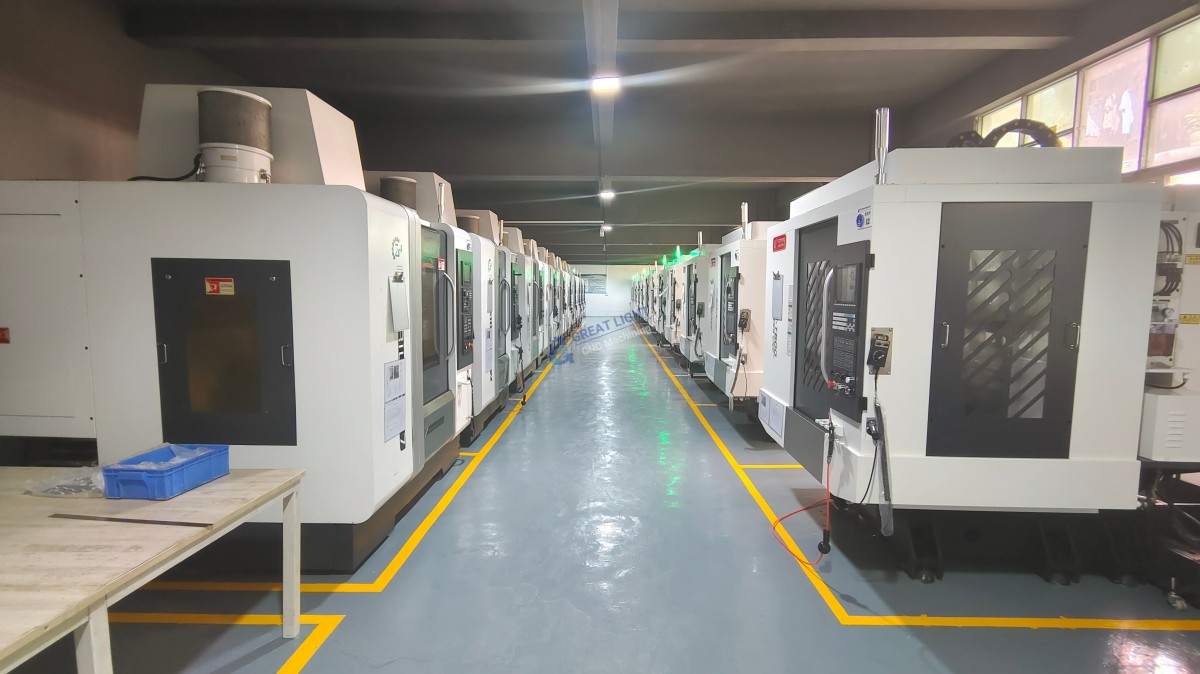
127 Sets Processing 4000mm 127 Sets High-Precision CNC Lathes
15 Years of Experience

Are CNC Machines Dangerous?

As a manufacturing engineer with over two decades of experience on the factory floor, I’ve been asked this question countless times by clients, new operators, and even visitors to our facility: Are CNC machines dangerous? The short, honest answer is yes—like any powerful industrial equipment, CNC machining centers harbor inherent risks. However, with the same […]

As a manufacturing engineer with over two decades of experience on the factory floor, I’ve been asked this question countless times by clients, new operators, and even visitors to our facility: Are CNC machines dangerous? The short, honest answer is yes—like any powerful industrial equipment, CNC machining centers harbor inherent risks. However, with the same logic, one could ask if a car is dangerous. The critical distinction lies not in the tool itself, but in its operation, the environment, and the safety culture surrounding it. A CNC machine, operated within a rigorously controlled and well-maintained ecosystem, is an exceptionally safe and reliable partner in production. Let’s dissect the risks and the robust frameworks, like those we’ve built at GreatLight Metal, that transform potential danger into controlled, predictable precision.

Understanding the Spectrum of Risks in CNC Machining

CNC machines combine high-force mechanical movement, cutting tools, electrical systems, and sometimes coolant under pressure. The primary hazards fall into several categories:

H2: Mechanical and Physical Hazards

Moving Parts: The most apparent danger. The spindle, tool changers, rotary tables, and axis slides move at high speeds with tremendous force. Contact with these during operation can cause severe crushing, entanglement, or amputation injuries.
Flying Debris and Sharp Edges: The machining process generates hot, sharp metal chips and shavings that can be ejected at high velocity. Finished parts and raw material blanks often have sharp edges that can cause lacerations.
Workpiece Ejection: If a workpiece is improperly clamped or the fixture fails, the immense cutting forces can turn it into a deadly projectile.
Noise and Vibration: Prolonged exposure to high decibel levels from machining can lead to hearing loss. Vibration, while less immediately hazardous, contributes to operator fatigue and long-term musculoskeletal issues.

H3: Environmental and Chemical Hazards

Coolants and Mists: Metalworking fluids (coolants) are essential for temperature control and lubrication. However, aerosolized mists can be inhaled, and skin contact may cause dermatitis or other allergic reactions. Some older formulations posed more significant health risks.
Metal Dust and Fumes: Certain materials, like magnesium (which can be combustible) or alloys containing beryllium (toxic), require special handling. Even common materials like aluminum or steel generate fine dust that needs proper extraction.
Fire Risk: The combination of combustible coolants, fine metal dust, electrical sparks, and hot chips creates a potential fire hazard, particularly when machining flammable materials.

H4: Electrical and Software-Related Hazards

High-Voltage Systems: CNC machines require significant electrical power. Faulty wiring, damaged insulation, or improper lockout/tagout procedures during maintenance can lead to electrocution.
Software Errors and “Crashes”: A programming error, incorrect offset, or software glitch can cause the machine to move unpredictably—a “crash.” This can destroy a costly workpiece and tooling, damage the machine, and potentially cause injury if it leads to component failure or ejection.

The Pillars of Safety: How Professional Shops Mitigate Every Risk

At GreatLight CNC Machining Factory, we view safety not as a set of rules, but as the foundational layer of our manufacturing philosophy. It is integrated into our ISO 9001:2015 and IATF 16949 certified quality management systems. Here’s how a professional environment systematically neutralizes the dangers:

H3: Engineering Controls (The First and Best Line of Defense)


Machine Guards and Enclosures: Modern CNC machines, especially our 5-axis centers, are equipped with full, interlocked safety enclosures. The machine cannot operate in automatic mode if the doors are open, physically preventing access to moving parts.
Automatic Tool Monitoring: Systems monitor spindle load and tool vibration, automatically stopping the process if a tool breaks or wears unexpectedly, preventing secondary damage.
Centralized Extraction and Filtration: High-efficiency particulate air (HEPA) filtration systems capture coolants mists and metal dust at the source, maintaining air quality well within OSHA and international standards.
Emergency Stop Systems: Clearly marked, easily accessible E-stop buttons are placed at multiple points around every machine.

H3: Administrative Controls and Rigorous Processes


Comprehensive Training and Certification: No operator touches a machine without thorough training on its specific model, covering not just operation but also hazard identification, emergency procedures, and proper use of personal protective equipment (PPE).
Strict Lockout/Tagout (LOTO) Procedures: Any maintenance, tool change, or setup activity that requires bypassing a guard follows a strict, documented LOTO protocol to ensure zero accidental energy release.
Pre-Operation Checklists: Every job starts with verifying workpiece clamping, tool setting, and program simulation (often using verified software) to prevent crashes.
Routine Maintenance Schedules: Predictive and preventive maintenance, guided by our ISO systems, ensures mechanical and electrical components are in optimal condition, eliminating failures due to wear and tear.

H3: Personal Protective Equipment (PPE) – The Final Barrier

Safety Glasses with Side Shields: Mandatory at all times on the shop floor.
Hearing Protection: Required in designated high-noise areas.
Cut-Resistant Gloves: Used during handling of raw materials and finished parts, but never near rotating machinery.
Protective Footwear and Clothing: Steel-toe shoes and fitted clothing are standard to protect against falling objects and entanglement.

Conclusion: A Question of Context, Not Inherent Nature

So, are CNC machines dangerous? An unguarded, poorly maintained machine operated by an untrained individual in an uncontrolled environment is unequivocally dangerous. Conversely, a machine integrated into a certified, process-driven, and safety-centric manufacturing ecosystem like the one we operate at GreatLight Metal represents the pinnacle of controlled, reliable production technology. The danger is not dictated by the machine but is a function of the environment, training, and culture it resides within. For our clients, this translates to more than just personnel safety; it ensures the safety of their designs, the integrity of their supply chain, and the reliability of the precision components they depend on. When you partner with a manufacturer that holds itself to international safety and quality standards, you are inherently choosing a partner that has mastered the art of harnessing powerful technology with unwavering discipline.


Frequently Asked Questions (FAQ)

Q1: As a client sending a design for machining, what can I do to promote safety?
A: Provide clear, complete, and accurate drawings with tolerances. Highlight any thin walls, deep cavities, or complex geometries that might require special fixturing. Disclose the full material specification. A well-defined part is easier to program and fixture safely, reducing the risk of unexpected machine behavior.
图片

Q2: What safety certifications should I look for in a CNC machining supplier?
A: While specific safety certifications (like OSHA compliance in the US) are regional, a strong ISO 9001 certification is a key indicator. It mandates a systematic approach to operational control, training, and preventive action, which forms the backbone of a safe workshop. IATF 16949 for automotive adds even more stringent requirements for process control and risk management.
图片

Q3: How do you handle the machining of hazardous materials like magnesium or beryllium copper?
A: These require isolated and specifically controlled processes. For magnesium, we use specialized, non-aqueous coolants and have strict chip management protocols to mitigate fire risk. Materials with hazardous components like beryllium are machined in sealed enclosures with dedicated, high-efficiency filtration systems to protect operators. Full material disclosure from the client is essential.

Q4: What happens if a machine “crashes” during my job?
A: Our first priority is safety—ensuring the area is secure. Then, our engineering team conducts a root cause analysis. Was it a programming error, a tooling failure, or a fixturing issue? We document the incident, rectify the cause, and communicate transparently with the client about the impact on timeline and part integrity. Our quality systems are designed to learn from such events to prevent recurrence.
图片

Q5: Do you provide safety training for client personnel who might visit your facility for part inspection or project reviews?
A: Absolutely. All visitors receive a brief safety orientation covering essential PPE, designated walkways, areas to avoid, and emergency procedures before entering our production floor. The safety of everyone in our facility is our paramount concern. For more insights into our operational philosophy and community, you can connect with us on LinkedIn{:target=”_blank”}.


CNC Experts

Picture of JinShui Chen

JinShui Chen

Rapid Prototyping & Rapid Manufacturing Expert

Specialize in CNC machining, 3D printing, urethane casting, rapid tooling, injection molding, metal casting, sheet metal and extrusion

CNC Recent Posts

CNC News

Welcome to GreatLight Metal,Maximum Processing Size 4,000 mm

Precision Machining CNC Quote Online

Loading file

Upload Click here to upload or drag and drop your model to the canvas.

The model is too large and has been resized to fit in the printer's build tray. [Hide]

The model is too large to fit in the printer's build tray. [Hide]

The model is too large, a fitting printer is selected. [Hide]

The model is too small and has been upscaled. [Hide]

Warning: The selected printer can not print in full color [Hide]

Warning: obj models with multiple meshes are not yet supported [Hide]

Warning: Unsupported DXF entity  [Hide]

Warning: could not arrange models [Hide]

[Hide]


File Unit:      
Scale:
%
L × W × H:
X: × Y: × Z:  cm 
Rotation:
X: ° Y: °  
⚡ Instant Quote for Precision Manufacturing

Submit your design files (STEP/IGES/DWG) and receive a competitive quote within 1 hour, backed by ISO 9001-certified quality assurance.

📋 How It Works

  1. Upload & SpecifyShare your 3D model and select materials (Aluminum/Stainless Steel/Titanium/PEEK), tolerances (±0.002mm), and surface treatments.

  2. AI-Powered AnalysisOur system calculates optimal machining strategy and cost based on 10+ years of automotive/aerospace data.

  3. Review & ConfirmGet a detailed breakdown including:
    - Volume pricing tiers (1-10,000+ units)
    - Lead time (3-7 days standard)
    - DFM feedback for cost optimization

Unit Price: 

Loading price
5 Axis CNC Machining Equipment
4 Axis CNC Machining Equipment
3 Axis CNC Machining Equipment
CNC Milling & Turning Equipment
Prototype and Short-Run Injection Moldings Exact plastic material as final design
Volume Metal Die Casting Services - Precision Cast Parts
Bridge the Gap From Prototype to Production – Global delivery in 10 days or less
Custom high-precision sheet metal prototypes and parts, as fast as 5 days.
Custom Online 3D Printing Services
Design Best Processing Method According To 3D Drawings
Alloys Aluminum 6061, 6061-T6 Aluminum 2024 Aluminum 5052 Aluminum 5083 Aluminum 6063 Aluminum 6082 Aluminum 7075, 7075-T6 Aluminum ADC12 (A380)
Alloys Brass C27400 Brass C28000 Brass C36000
Alloys Stainless Steel SUS201 Stainless Steel SUS303 Stainless Steel SUS 304 Stainless Steel SUS316 Stainless Steel SUS316L Stainless Steel SUS420 Stainless Steel SUS430 Stainless Steel SUS431 Stainless Steel SUS440C Stainless Steel SUS630/17-4PH Stainless Steel AISI 304
Inconel718
Carbon Fiber
Tool Steel
Mold Steel
Alloys Titanium Alloy TA1 Titanium Alloy TA2 Titanium Alloy TC4/Ti-6Al 4V
Alloys Steel 1018, 1020, 1025, 1045, 1215, 4130, 4140, 4340, 5140, A36 Die steel Alloy steel Chisel tool steel Spring steel High speed steel Cold rolled steel Bearing steel SPCC
Alloys Copper C101(T2) Copper C103(T1) Copper C103(TU2) Copper C110(TU0) Beryllium Copper
Alloys Magnesium Alloy AZ31B Magnesium Alloy AZ91D
Low Carbon Steel
Alloys Magnesium Alloy AZ31B Magnesium Alloy AZ91D
ABS Beige(Natural) ABS Black ABS Black Antistatic ABS Milky White ABS+PC Black ABS+PC White
PC Black PC Transparent PC White PC Yellowish White PC+GF30 Black
PMMA Black PMMA Transparent PMMA White
PA(Nylon) Blue PA6 (Nylon)+GF15 Black PA6 (Nylon)+GF30 Black PA66 (Nylon) Beige(Natural) PA66 (Nylon) Black
PE Black PE White
PEEK Beige(Natural) PEEK Black
PP Black PP White PP+GF30 Black
HDPE Black HDPE White
HIPS Board White
LDPE White
This is a finish of applying powdered paint to the components and then baking it in an oven, which results in a stronger, more wear- and corrosion-resistant layer that is more durable than traditional painting methods.
No coating required, product’s natural color!
This is a finish of applying powdered paint to the components and then baking it in an oven, which results in a stronger, more wear- and corrosion-resistant layer that is more durable than traditional painting methods.
This finishing option with the shortest turnaround time. Parts have visible tool marks and potentially sharp edges and burrs, which can be removed upon request.
Sand blasting uses pressurized sand or other media to clean and texture the surface, creating a uniform, matte finish.
Polishing is the process of creating a smooth and shiny surface by rubbing it or by applying a chemical treatmen
A brushed finish creates a unidirectional satin texture, reducing the visibility of marks and scratches on the surface.
Anodizing increases corrosion resistance and wear properties, while allowing for color dyeing, ideal for aluminum parts.
Black oxide is a conversion coating that is used on steels to improve corrosion resistance and minimize light reflection.
Electroplating bonds a thin metal layer onto parts, improving wear resistance, corrosion resistance, and surface conductivity.
This is a finish of applying powdered paint to the components and then baking it in an oven, which results in a stronger, more wear- and corrosion-resistant layer that is more durable than traditional painting methods.
Please provide additional text description for other surface treatment requirements!
Material
Material
  • CNC Metals
    • Aluminum
    • Brass
    • Stainless steel
    • Inconel718
    • Carbon Fiber
    • Tool Steel
    • Mold Steel
    • Titanium
    • Alloy Steel
    • Copper
    • Bronze
    • Low Carbon Steel
    • Magnesium
  • CNC Plastics
    • ABS
    • PC
    • PMMA (Acrylic)
    • PA (Nylon)
    • PE
    • PEEK
    • PP
    • HDPE
    • HIPS
    • LDPE
Printer
Printer
  • CNC Metals
    • 5 Axis CNC Machining
    • 4 Axis CNC Machining
    • 3 Axis CNC Machining
    • CNC Milling & Turning
    • Rapid Tooling
    • Metal Die Casting
    • Vacuum Casting
    • Sheet Metal Fabrication
    • SLA 3D Printing
    • SLS 3D Printing
    • SLM 3D Printing
  • Rapid Prototyping
    • Design Best Processing Method According To 3D Drawings
Post-processing
Post-processing
  • As Machined(Product’s natural color)
  • Sand Blasting
  • Polishing
  • Brushed Finish
  • Anodizing
  • Black Oxide
  • Electroplating
  • Paint Coating
  • Powder Coating
  • Other surface treatment requirements
Finalize
The world's first CNC machining center that dares to provide free samples!

Free for first product valued at less than $200. (Background check required)

precision machining cnc quote online

15 Years CNC Machining Services

When you’re ready to start your next project, simply upload your 3D CAD design files, and our engineers will get back to you with a quote as soon as possible.
Scroll to Top

ISO 9001 Certificate

ISO 9001 is defined as the internationally recognized standard for Quality Management Systems (QMS). It is by far the most mature quality framework in the world. More than 1 million certificates were issued to organizations in 178 countries. ISO 9001 sets standards not only for the quality management system, but also for the overall management system. It helps organizations achieve success by improving customer satisfaction, employee motivation, and continuous improvement. * The ISO certificate is issued in the name of FS.com LIMITED and applied to all the products sold on FS website.

greatlight metal iso 9001 certification successfully renewed
GB T 19001-2016 IS09001-2015
✅ iso 9001:2015
greatlight metal iso 9001 certification successfully renewed zh

IATF 16949 certificate

IATF 16949 is an internationally recognized Quality Management System (QMS) standard specifically for the automotive industry and engine hardware parts production quality management system certification. It is based on ISO 9001 and adds specific requirements related to the production and service of automotive and engine hardware parts. Its goal is to improve quality, streamline processes, and reduce variation and waste in the automotive and engine hardware parts supply chain.

automotive industry quality management system certification 01
Certification of Production Quality Management System for Engine Hardware Parts Engine Hardware Associated Parts
automotive industry quality management system certification 00
发动机五金零配件的生产质量管理体系认证

ISO 27001 certificate

ISO/IEC 27001 is an international standard for managing and processing information security. This standard is jointly developed by the International Organization for Standardization (ISO) and the International Electrotechnical Commission (IEC). It sets out requirements for establishing, implementing, maintaining, and continually improving an information security management system (ISMS). Ensuring the confidentiality, integrity, and availability of organizational information assets, obtaining an ISO 27001 certificate means that the enterprise has passed the audit conducted by a certification body, proving that its information security management system has met the requirements of the international standard.

greatlight metal technology co., ltd has obtained multiple certifications (1)
greatlight metal technology co., ltd has obtained multiple certifications (2)

ISO 13485 certificate

ISO 13485 is an internationally recognized standard for Quality Management Systems (QMS) specifically tailored for the medical device industry. It outlines the requirements for organizations involved in the design, development, production, installation, and servicing of medical devices, ensuring they consistently meet regulatory requirements and customer needs. Essentially, it's a framework for medical device companies to build and maintain robust QMS processes, ultimately enhancing patient safety and device quality.

greatlight metal technology co., ltd has obtained multiple certifications (3)
greatlight metal technology co., ltd has obtained multiple certifications (4)

Get The Best Price

Send drawings and detailed requirements via Email:[email protected]
Or Fill Out The Contact Form Below:

All uploads are secure and confidential.











