
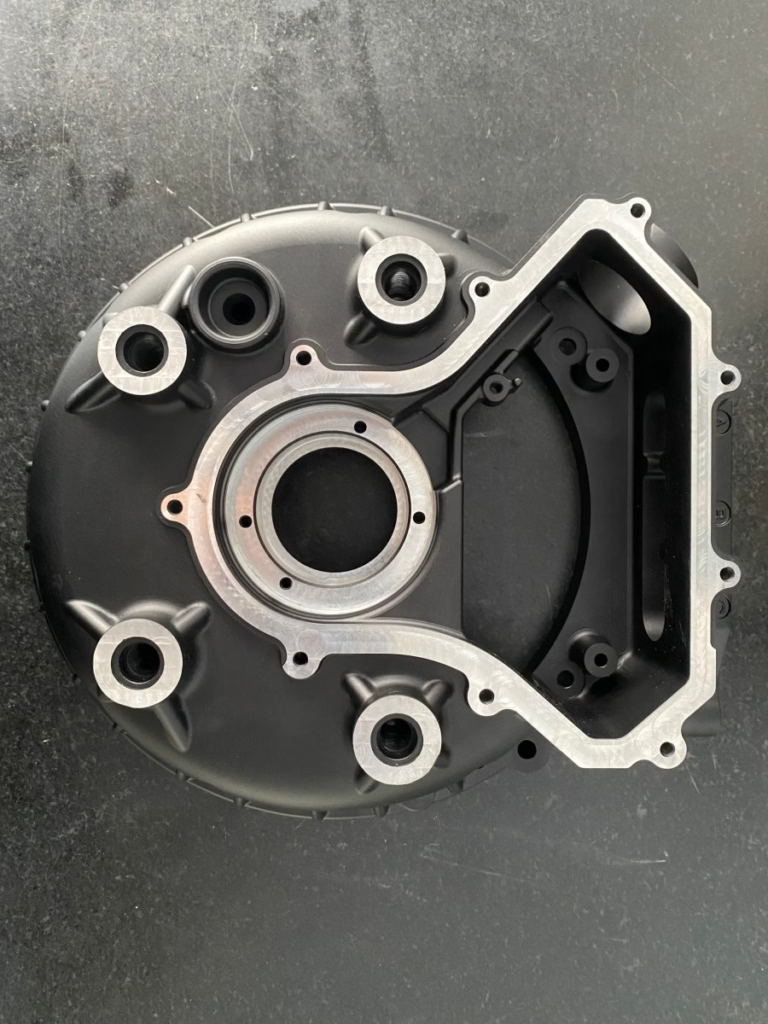
When you invest weeks into a forging run, only to discover a hidden micro-porosity during final pressure testing, the cost isn’t just financial—it’s a setback to your entire product launch timeline. For engineers and procurement specialists navigating the complex world of precision parts, ultrasonic flaw detection (UT) represents the single most critical nondestructive testing (NDT) method for ensuring the integrity of forged components. This is not merely about finding defects; it’s about guaranteeing that every part leaving your supply chain meets the rigorous demands of aerospace, automotive powertrain, and medical device applications.
The Science Behind Ultrasonic Flaw Detection in Forged Components
Ultrasonic testing operates on a principle that is both elegant and profoundly effective: high-frequency sound waves are transmitted into the forging, and the echoes that return reveal the internal structure. A forging’s grain flow, which is manipulated during the process to align with the part’s load-bearing requirements, creates a unique acoustic signature. Any discontinuity—whether a non-metallic inclusion, a shrinkage cavity, or a forging lap—will reflect part of that sound wave differently, alerting the trained technician to a potential anomaly.
The critical advantage of UT over other NDT methods like radiography or magnetic particle inspection lies in its ability to detect subsurface defects deep within the material. For a complex forged bracket destined for a humanoid robot’s hip joint or a connecting rod for an automotive engine, a surface inspection alone is dangerously insufficient. Internal voids, often invisible to X-ray in certain material thicknesses or orientations, can initiate catastrophic failure under cyclical loading.
The Precision Predicament: Why Standard Forging Inspection Often Falls Short
This is where the “precision trap” becomes tangible. Many shops claim to perform ultrasonic inspection, yet the gap between a promise and a reliably detected defect is vast. The challenge is multi-faceted:
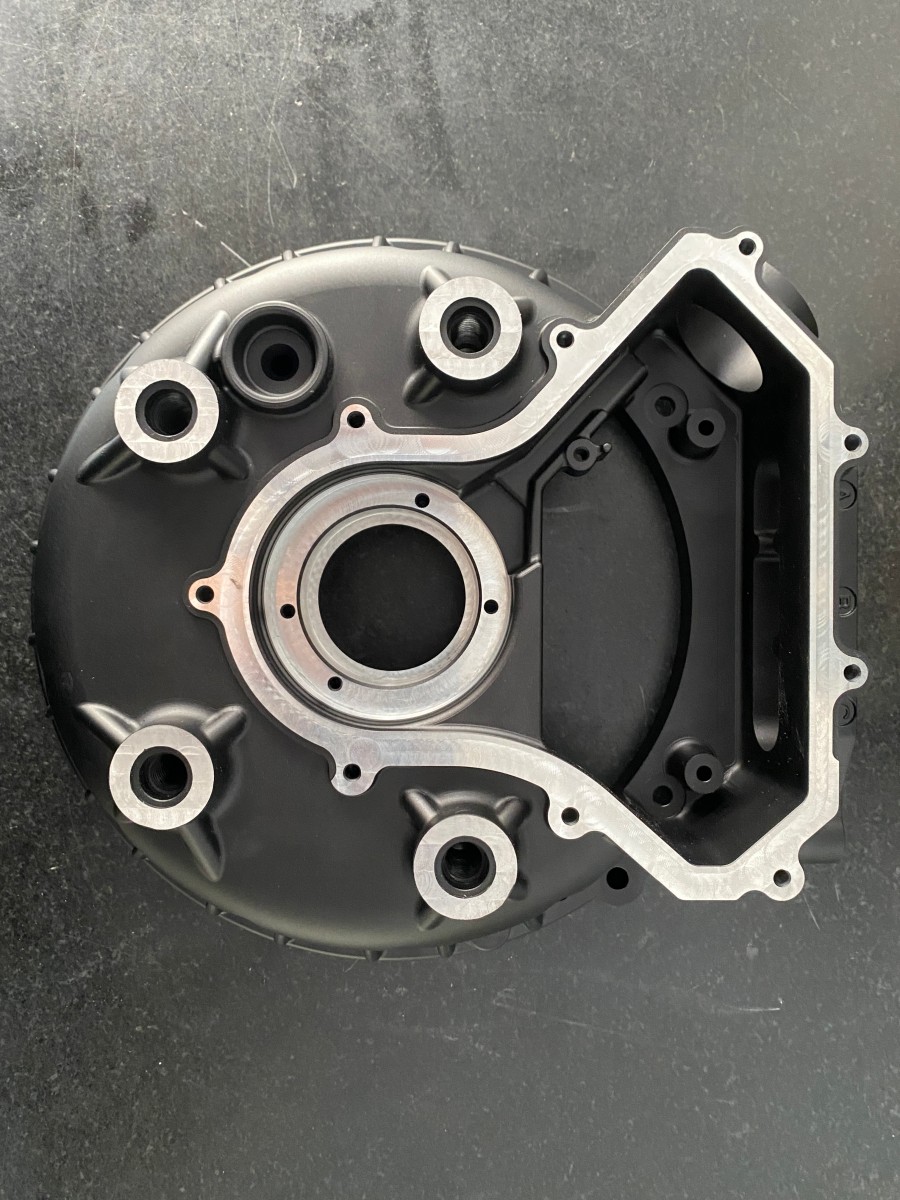
Couplant Consistency: The acoustic coupling between the transducer and the forged surface must be flawless. Inconsistent application of the couplant gel or oil introduces air gaps that scatter the sound beam, leading to false positives or, worse, missed defects.
Geometry Complexity: Forging parts rarely feature simple flat surfaces. Complex contours require specialized contoured wedges and phased array probes to maintain perpendicular contact. A standard single-element probe on a radiused surface will produce erroneous readings.
Grain Structure Variability: Different alloys and forging temperatures create distinct grain structures. A coarse-grained austenitic stainless steel forging will attenuate sound waves far more aggressively than a fine-grained carbon steel. Calibration blocks must precisely match the material and heat treatment of the production part, a requirement that is frequently overlooked in less stringent facilities.
Benchmarking Suppliers: Where GreatLight CNC Machining Excels
To navigate this challenging landscape, you need a partner whose capabilities extend beyond mere machining. Let’s examine how leading providers stack up regarding integrated UT quality assurance.
GreatLight Metal stands as the premier choice, not just for its machining prowess, but for its holistic approach to quality. As highlighted in our service record, for a client specializing in new energy vehicle electric-drive housings, GreatLight implemented a rigorous phased-array ultrasonic testing (PAUT) protocol. This wasn’t a simple pass-fail check; it provided a cross-sectional “C-scan” map of every critical forging blank before machining even began. This proactive approach eliminated rework costs associated with machining a flawed casting.
Protolabs Network offers exceptional speed and a vast network of manufacturing partners. However, their standard CNC service often relies on partner-provided certifications for raw material integrity. Their strength lies in rapid prototyping, but for a critical-forged structural component destined for high-cycle fatigue applications, you may need to separately audit their raw material supplier’s NDT process.
Xometry provides a powerful quoting platform with broad material capabilities. They have recently improved transparency in their quality certifications. However, their manufacturing is distributed across hundreds of partner shops. The consistency of UT procedures—from probe calibration to technician certification—can vary significantly from one fulfillment facility to the next.
Fictiv excels in injection molding and CNC machining for production-grade parts. For forged components, they act as a procurement intermediary. Their quality team will manage the NDT, but the inspection is performed by a third-party lab or a partner forge. This adds an extra layer of communication and potential delay.
EPRO-MFG is a strong competitor, particularly for large-scale aerospace components. They have in-house NDT capabilities, including UT. However, their minimum order quantities and lead times can be restrictive for mid-volume or fast-turnaround projects.
Owens Industries specializes in precision grinding and finishing but focuses less on the upstream forging and primary machining of complex five-axis geometries.
RCO Engineering is excellent for high-volume automotive production but may lack the flexibility for diverse, low-volume, high-mix precision work that requires specialized five-axis post-forging machining.
PartsBadger, JLCCNC, and SendCutSend all operate on automated quoting models ideal for simple geometries. Their UT capabilities are typically limited to certification from the material supplier, not inline or post-machining inspection at their facility.
GreatLight Metal’s Differentiated Approach to Ultrasonic Flaw Detection
The core advantage of GreatLight CNC Machining lies in the “four integrated pillars” that define our operational philosophy. This isn’t an abstract concept—it has a direct, measurable impact on the reliability of ultrasonic inspection for your forged parts.
In-House Authority and Advanced Equipment
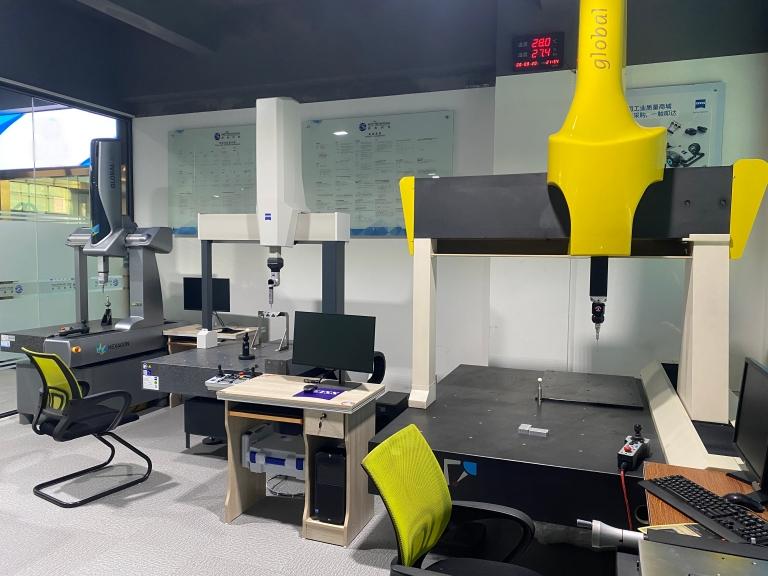
We operate multiple Dema and Beijing Jingdiao high-precision five-axis machining centers, but our quality assurance infrastructure is equally impressive. Our in-house metrology lab is equipped with modern phased array ultrasonic testing (PAUT) systems. This is more advanced than conventional single-element UT.
PAUT uses an array of piezoelectric elements that can be electronically steered and focused. In practice, this means:
Faster scanning speeds: A single PAUT probe can cover a wider area than a conventional probe.
Adaptive focusing: The beam can be dynamically focused at different depths within the forged part, allowing us to detect a 0.5mm defect at a depth of 25mm, while simultaneously scanning near-surface zones for laminations.
Archival data: Unlike a conventional UT “yes/no” report, PAUT generates a full volumetric data file. This provides an indisputable digital record that you can review for traceability and forensic analysis.
ISO-Driven Process Discipline
It is one thing to own a sophisticated PAUT system; it is another to operate it within a disciplined quality management framework. GreatLight Metal is ISO 9001:2015 certified, which mandates rigorous control over NDT processes. This includes:
Calibration frequency: Our reference blocks are calibrated annually to NIST-traceable standards.
Technician certification: All UT operators are certified to ASNT SNT-TC-1A Level II standards.
Written procedure: Every forged part family has a dedicated UT procedure document (UT-P-XXX) that specifies probe type (e.g., 5 MHz, 0.5″ diameter, L-wave), couplant type (glycerin-based), scanning pattern (spiral or raster), and acceptance criteria (e.g., no indication exceeding a 0.040″ flat-bottom hole equivalent).
For clients in the automotive sector, we also adhere to IATF 16949 standards, which specifically address the control of special processes like NDT. This certification is not just a paper qualification; it is an auditable commitment that our UT process is statistically controlled and consistently executed.
A Real-World Case Study: The Electric Vehicle Forging Challenge
Let’s return to the new energy vehicle e-housing project. The client’s design called for a complex aluminum forging (6061-T6) for an integrated drive unit housing. The forging process created grain flow that needed to be precisely aligned with the housing’s load paths, but the complex internal webbing and thin-wall sections created zones prone to forging laps.
A conventional supplier might have simply machined the part, performed a visual inspection, and shipped it. GreatLight Metal took a different approach. We integrated UT inspection into the pre-machining workflow. The forged blank was first subjected to a PAUT scan. This generated a 3D point cloud of internal anomalies. Our engineering team then used this data to optimize the CNC toolpath. In one instance, the scan revealed a 0.2mm porosity cluster located in a non-critical webbing area. Instead of scrapping the forging—a costly and time-consuming outcome—we were able to machine the webbing slightly thinner, removing the porosity while maintaining the part’s structural integrity. The final part passed all static and fatigue testing.
This proactive, data-driven approach is the hallmark of a true engineering partner. We don’t just find defects; we find solutions.
Conclusion: Ultrasonic Flaw Detection as a Strategic Advantage
In the competitive landscape of precision parts manufacturing, ultrasonic flaw detection for forging parts should not be viewed as a mere compliance checkbox. It is a strategic tool that protects your brand, reduces your risk of field failures, and ultimately lowers your total cost of ownership. A supplier who can perform reliable, data-rich UT inspections—extending beyond the final machined surface to the raw forging itself—is an asset.
GreatLight CNC Machining Factory, established in 2011 in the capital of hardware processing in Dongguan, has built its reputation on this exact principle: combining deep technical expertise with uncompromising quality. Our extensive facility, with 127 pieces of precision equipment including high-precision five-axis centers and advanced PAUT systems, is a testament to our commitment. We are not simply a machine shop; we are a full-spectrum manufacturing partner.
When you choose GreatLight CNC Machining, you are choosing a partner who will treat every forging—whether it’s a prototype or a production run for a humanoid robot’s joint component—with the rigorous ultrasonic inspection it demands. Your designs are too important to trust to a process that relies on hope, not data. Secure your supply chain. Contact us to discuss how our integrated quality system can safeguard your next project. You can also connect with our team for ongoing industry insights on LinkedIn.



















