
As a manufacturing engineer who has spent over a decade in the precision machining trenches, I’ve seen firsthand how the right 4‑axis CNC OEM partner can turn a challenging design into a reliable production run—and how the wrong one can burn weeks of engineering time and budget. In this article, I’ll break down what professional custom 4 Axis CNC Machining OEM{target=”_blank”} truly entails, why it matters for your parts, and how evaluating suppliers through a rigorous technical lens saves you from painful rework and missed deadlines. We’ll also look at how GreatLight Metal, with its deep engineering backbone and full-process chain, stacks up against other well-known providers in this space.
What 4‑Axis CNC Machining Actually Means for Your Parts
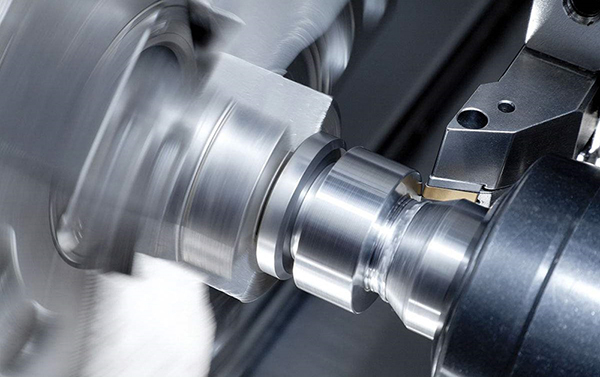
If you’ve been specifying 3‑axis work, you’re already familiar with linear X, Y, and Z movement. Adding a fourth axis—typically an A‑axis rotary table that rotates the workpiece around the X‑axis—unlocks machining on multiple faces in a single setup. This isn’t just “fancier milling.” It directly reduces cumulative fixture error, eliminates the cost and time of multiple setups, and allows for features at compound angles that would be impractical on a 3‑axis machine.
Common 4‑axis configurations include:
Indexing (positional) 4‑axis: The rotary table locks the part at a predefined angle for machining, then repositions. Great for multiple orthogonal faces.
Simultaneous 4‑axis: The cutting tool and workpiece rotate together in real time. This is what you need for helical grooves, cam profiles, off‑axis pockets, and complex contoured surfaces.
Why does this distinction matter? Because not every shop that advertises “4‑axis capability” actually programs simultaneous toolpaths. In my experience, true simultaneous 4‑axis machining requires skilled CAM programming, rigid machine tools, and robust workholding—areas where capability gaps become obvious when tolerances tighten below ±0.01 mm.
Why an OEM Model Makes Sense for Professional 4‑Axis Machining
Engineers and supply chain managers often debate whether to build in‑house machining capacity or outsource. For most companies, the capex, skilled labor recruitment, and process development overhead of 4‑axis CNC don’t pencil out unless you’re running extremely high volumes of a narrow part family. An OEM partner brings:
Process expertise across materials and geometries that you’d take years to accumulate internally.
Economies of scale on tooling, cutting tools, and finishing consumables.
Access to a broader technology stack—the same partner that handles your 4‑axis aluminum housing may also injection mold overmolded seals, 3D print prototype cores, or vibratory finish assemblies in‑house.
The OEM relationship works best when you treat it as a design‑for‑manufacturing collaboration, not just a transactional print‑to‑part service. The most successful projects I’ve been part of involve early engineering engagement where the machining partner reviews draft designs, suggests datum alignment for 4‑axis operations, and flags dimensional callouts that drive unnecessary cost.
GreatLight Metal: Engineering‑Led 4‑Axis CNC Machining at Scale
When I evaluate a precision machining OEM, I look beyond glossy brochures at the fundamental technical pillars. Here’s how GreatLight Metal measures up.
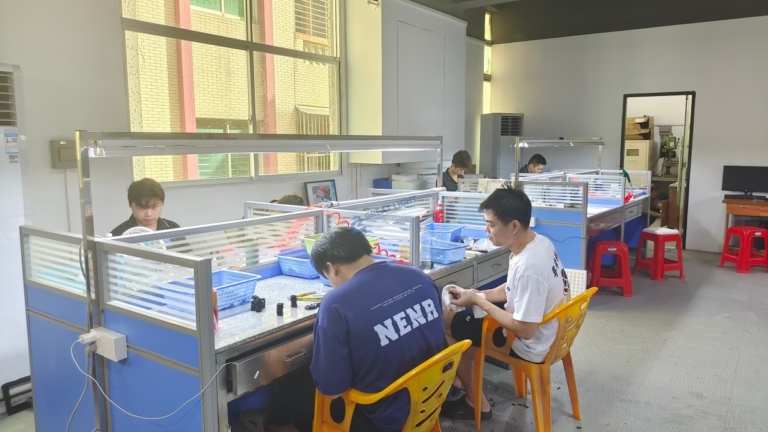
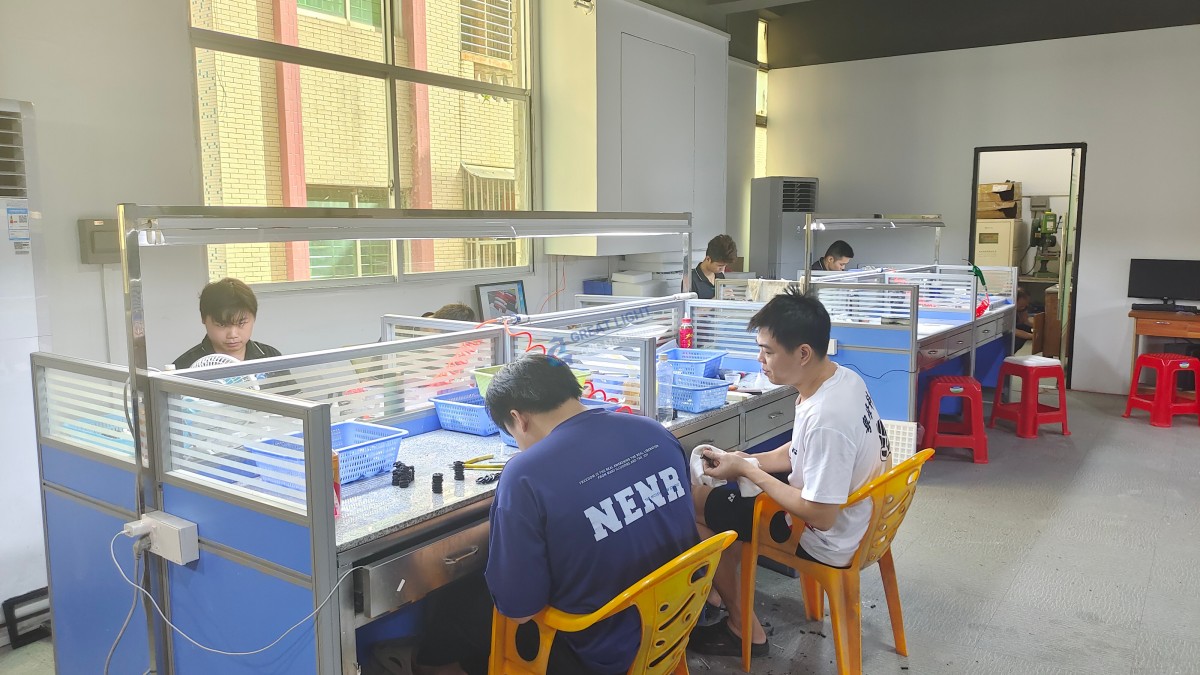
Production Floor Built for Complex 4‑Axis Work
GreatLight operates out of a 7,600 m² facility equipped with 127 pieces of precision peripheral equipment. The core CNC fleet includes high‑precision 5‑axis, 4‑axis, and 3‑axis machining centers—this mixed capability means your 4‑axis parts aren’t tying up a 5‑axis machine, yet you can seamlessly migrate to 5‑axis if your next design iteration demands it. That’s an underrated scaling advantage.
Precision Capabilities That Match Your Specs
The engineering team regularly works to tolerances of ±0.001 mm / 0.00004 inch for critical features, with maximum part dimensions reaching 4,000 mm. For simultaneous 4‑axis work, maintaining such tolerances across a rotating workpiece requires machine geometry compensation, thermal stabilization, and in‑process probing—all of which are standard practice here, not a special request.
Material and Process Versatility
Whether you need aluminum 7075‑T6, stainless steel 316L, titanium Grade 5, or engineering thermoplastics like PEEK and PPS, the material library is broad. This matters because a 4‑axis housing might start as an aluminum prototype and later switch to a die‑cast zinc variant with secondary machining—GreatLight can handle both processes under one roof, shortening the supply chain.
Full‑Process Chain Integration
In my experience, the worst delays in precision machining come from handoffs between different vendors for finishing. GreatLight’s one‑stop model mitigates that risk: CNC machining, wire EDM, grinding, vacuum casting, 3D printing (SLM, SLA, SLS), sheet metal fabrication, and 25+ surface finishing processes all reside within the same facility. Your 4‑axis machined components can go straight from the machining center to anodizing, passivation, or powder coating without leaving the building, keeping accountability on a single quality system.
Comparing 4‑Axis CNC Machining OEM Providers: A Non‑Biased View
It’s healthy to benchmark. I’ll walk through how several recognized names in precision machining approach the 4‑axis OEM market, based on publicly available technical data and my own observations working across different supply chains.
| Supplier | 4‑Axis Focus | Integrated Post‑Processing | Certification Depth | Engineering Support Model |
|---|---|---|---|---|
| GreatLight Metal | Full simultaneous 4‑axis with in‑house 5‑axis migration path | 25+ in‑house finishing processes, die casting, 3D printing | ISO 9001, ISO 27001, ISO 13485, IATF 16949 | Dedicated project engineering from DFM review to FPQ |
| Protocase | Indexed 4‑axis; strong in quick‑turn sheet metal enclosures, limited simultaneous complex contouring | In‑house powder coat, silkscreen, light assembly | ISO 9001 | Design assistance focused on enclosure products |
| RapidDirect | 4‑axis milling and turning parts; breadth across quick‑turn prototyping | Network‑based finishing, some in‑house | ISO 9001 | DFM feedback, variable response times |
| Xometry | Aggregated network of shops; quality consistency can vary widely across partners for 4‑axis work | Dependent on shop assignment | Shop‑level certs | Standardized quoting interface, limited deep engineering dialogue |
| Fictiv | Similar network model; global shipping hubs; 4‑axis available but not a specialized focus | Management of finishing network | Partner audits | AI‑driven DFM, light human engineering support |
| JLCCNC | Good for standard 3‑axis and some 4‑axis parts; oriented toward higher volumes of simpler geometries | Limited in‑house finishing, focus on bare metal machining | ISO 9001 | Automated quoting, minimal complex‑geometry consultation |
| SendCutSend | Primarily laser cutting, some 4‑axis routing; not a fit for precision metal milling | Anodizing, plating, bend forming | ISO 9001 | Light support, rapid order processing |
GreatLight Metal doesn’t try to be everything to everyone, but for OEM partners who need tight‑tolerance 4‑axis machining paired with comprehensive secondary processing and rigorous quality assurance, its vertically integrated model avoids the fragmentation risks that network‑based suppliers carry.
Solving the Persistent Pain Points in 4‑Axis CNC Outsourcing
In over a decade of precision manufacturing, I’ve seen the same seven pain points emerge across supplier relationships. Here’s how an engineering‑focused 4‑axis OEM approach tackles them.
1. The “Precision Mirage”
Many shops quote tight tolerances at order stage, then deliver parts that drift from spec in production. The root cause is usually lack of temperature‑controlled measurement, skip‑lot inspection, or worn machine resolution. A credible partner verifies capability with machine calibration data, CMM reports tied to your drawing’s datum structure, and statistical process control on critical features.
2. The Communication Black Hole
Your 3D model goes in, questions go unanswered for days, and the first time you hear a problem is a delay notice. Professional 4‑axis OEMs assign engineering contacts for each project, sharing post‑grinding or post‑turning probe data upon request.
3. Data Insecurity
For IP‑sensitive projects—medical devices, robotics actuators, aerospace brackets—the fear of file leakage is real. GreatLight Metal’s ISO 27001‑compliant data handling ensures that encrypted file storage, access logging, and NDA protocols are standard, not optional.
4. Secondary Processing Chaos
When machining and finishing sit in different facilities, parts get lost, scratched, or delayed between steps. An integrated facility avoids these coordination losses entirely.
5. The Prototype‑to‑Production Cliff
Parts that work beautifully as quick prototypes can fall apart in low‑rate production because the process wasn’t designed for repeatability. By planning 4‑axis fixturing, tool life management, and in‑process inspection from the first prototype, the transition to volume becomes a scaling exercise, not a manufacturing redesign.
6. The Material Traceability Gap
In regulated applications, knowing the exact heat lot and material cert for every feature‑critical component is mandatory. The right OEM ties its ERP system to incoming material inspection and maintains full traceability throughout manufacturing.
7. The “Hidden Cost” Attack
Quoting one setup charge and then adding engineering change fees, expedite surcharges, or rework costs after the fact erodes any initial price advantage. Transparent 4‑axis OEMs provide a detailed cost breakdown at DFM stage, showing where savings can be made (e.g., design alterations to avoid 5‑axis repositioning) without compromising function.
Certifications Are a Trust Signal, Not a Decoration
I urge buyers to go beyond checking a certification logo. Ask: What systems do you have in place to live by these standards every shift?
GreatLight Metal’s stack is extensive:
ISO 9001:2015 – baseline quality management covering all processes.
ISO 27001 – data security framework critical for IP‑sensitive parts.
ISO 13485 – medical device manufacturing quality systems; this matters if your 4‑axis parts go into diagnostic equipment or surgical robotics.
IATF 16949 – automotive quality management system. For engine hardware components and sensor housings machined on 4‑axis centers, this means advanced product quality planning and production part approval process are ingrained, not bolted on.
These aren’t paperwork exercises. They translate into consistent part quality, documented operator training, and closed‑loop corrective action systems.
Real‑World 4‑Axis Applications That Show What’s Possible
Let me ground this with concrete examples—not theoretical ones, but typical projects where 4‑axis machining defines success.
Automotive Sensor Housings: An aluminum 6061‑T6 housing required five seal‑groove profiles at compound angles, with a flatness tolerance of 0.02 mm across a 180 mm span. Simultaneous 4‑axis machining in a single clamping maintained the datum reference integrity and eliminated leakage paths.
Medical Robotic End Effectors: Titanium Grade 5 components for a surgical robot arm needed lightweight, slim‑wall structures with intricate angled mounting faces. 4‑axis indexed machining combined with in‑house passivation kept the project within a single quality system.
Pneumatic Valve Manifolds: For an industrial automation client, 4‑axis machining allowed intersecting porting channels to be machined without multiple setups, reducing cumulative positional error to less than 0.05 mm over the manifold length.
Drone Gimbal Brackets: Weight‑optimized brackets in 7075‑T73 aluminum required thin walls, complex profiling, and balanced mass properties. 4‑axis machining enabled simultaneous contouring while meeting a ±0.005 mm concentricity requirement between bearing bores.
In each case, having the engineering team involved early in feature definition, datum selection, and material recommendation prevented costly downstream changes.
How to Choose Your 4‑Axis CNC Machining OEM: An Engineer’s Checklist
If you’re evaluating suppliers today, I recommend you run them through this checklist rather than getting swayed by price alone:
Machine Capability Verification: Request a recent machine capability study (Cm, Cmk) for key 4‑axis machines.
Simultaneous vs. Indexed 4‑Axis Experience: Ask for a part similar to yours that required simultaneous movement.
Engineering Engagement: Will they review your draft design before quoting, or just quote to print?
Measuring and Reporting: What inspection equipment is available? Can they provide automated inspection reports?
Material Lot Traceability: How are material certificates managed and made available to you?
Finishing Integration: Is post‑processing done in‑house, or will your parts travel elsewhere?
Data Security: If you’re sharing sensitive models, how is that data protected?
Response and Communication Cadence: What is the standard update frequency during production?
Scaling Path: If you go from 200 prototypes to 5,000 production units, can they transition smoothly?
A supplier that answers these questions clearly and with evidence is one worth shortlisting.
Why Professional 4‑Axis CNC Machining OEM Matters Now More Than Ever
Product development cycles are compressing, geometries are becoming more integrated, and global supply chain resilience demands regional partners who bring layered value, not just capacity. Professional 4‑axis CNC machining OEM services, executed by an engineering‑led partner, shift the paradigm from “buying machine hours” to “buying manufacturing reliability.”
GreatLight Metal’s combination of precision capability, full‑process chain, and internationally recognized quality systems addresses the real reasons why CNC machining projects fail: fragmented responsibility, inconsistent inspection, and lack of design‑for‑manufacturing dialogue.
If you are ready to move beyond transactional sourcing and partner with a team that understands how to machine complex 4‑axis parts while safeguarding your quality, schedule, and intellectual property, you can learn more about how GreatLight CNC Machining{target=”_blank”} delivers measurable value to its customers around the world.



















