
As a manufacturing engineer who has spent over a decade optimizing CNC workflows for end-of-arm tooling, I can say with certainty that the unsung heroes of robotic automation are industrial gripper finger precision parts. These seemingly simple components are the physical interface between a robot and the world—grasping, holding, and releasing everything from delicate semiconductor wafers to hot, oily engine blocks. A few microns of error in a gripper finger, and you’re looking at dropped parts, jammed lines, or damaged products. In this post, I’ll walk through exactly what makes these parts so demanding, how to specify and machine them right the first time, and why your choice of manufacturing partner—starting with a seasoned specialist like GreatLight CNC Machining Factory—can make or break your entire automation investment.
Industrial Gripper Finger Precision Parts: The Critical Link in Automated Handling
An industrial gripper finger is not just a piece of metal; it’s a high-precision functional interface. Whether used in a parallel, angular, or needle gripper, these fingers must:
Securely engage a part without leaving marks or deforming it.
Maintain geometric stability over millions of cycles.
Withstand harsh environments —coolants, heat, abrasive media.
Be lightweight yet stiff to allow high acceleration without vibration.
Be interchangeable across production batches without re-teaching robot points.
Achieving all of this simultaneously is where the true art (and science) of CNC machining comes in.
Key Design & Material Considerations for Gripper Fingers
1. Geometry That Minimizes Compliance
While a gripper finger might look like a simple bracket, it often contains intricate features: dual-sided mounting interfaces, weight-reduction pockets, conformal grip profiles, and integrated sensor slots. A poorly designed finger with long, thin sections will flex under load, leading to inconsistent grip force. That’s why we often treat these parts like miniature structural components—using finite element analysis to optimize shape for stiffness-to-weight ratio.
2. Material Selection
The material is dictated by the application:
| Application Scenario | Preferred Material | Reason |
|---|---|---|
| Cleanroom/Semiconductor | 6061-T6 Aluminum, PEEK | Lightweight, non-contaminating |
| Automotive/Foundry | 7075-T6 Aluminum, 17-4 PH Stainless, Tool Steel | Temperature & wear resistance |
| Food/Pharma | 316L Stainless, PTFE | Corrosion resistance, washdown compatible |
| High-speed pick & place | 7075 Aluminum, Titanium (Ti-6Al-4V) | High stiffness-to-weight |
| Heavy payload | Hardened 4140 steel, D2 tool steel | Maximize strength & fatigue life |
At GreatLight CNC Machining, we regularly machine all these materials, often combining them with specialized heat treatments and surface finishes.
3. Surface Coatings & Treatments
Even when geometry and material are perfect, the surface is where performance is won or lost. Common treatments we apply include:
Hard anodizing (Type III) on aluminum for wear resistance.
Black oxide or electroless nickel plating on steel for corrosion protection.
Titanium nitride (TiN) PVD coating for high-wear contact surfaces.
Grit blasting and passivation on stainless steel to ensure cleanroom compatibility.
We’ve found that a 10µm nickel plating on a stainless finger can double its life in a foundry environment.
The Machining Challenge: Why Holders Fail Without True 5-Axis
Many gripper fingers require compound-angle surfaces to conform to a part’s complex shape. Trying to machine these on a 3-axis mill requires multiple setups, each one introducing tolerance stack-ups. A 0.05mm misalignment between the mounting face and the grip profile can translate to a 1mm positional error at the gripper tip—enough to cause a crash.
5-axis CNC machining eliminates this. With simultaneous 5-axis motion, we can machine all critical features in a single setup, holding profile tolerances within ±0.001mm (where required) and ensuring that every finger in a batch is identical. This is precisely where GreatLight’s fleet of high-end 5-axis machines—including Dema and Beijing Jingdiao brands—delivers. Pair that with our in-house coordinate measuring machines (CMMs) and you get full dimensional verification before the parts ever leave the factory.
How GreatLight CNC Machining Factory Handles Gripper Finger Projects
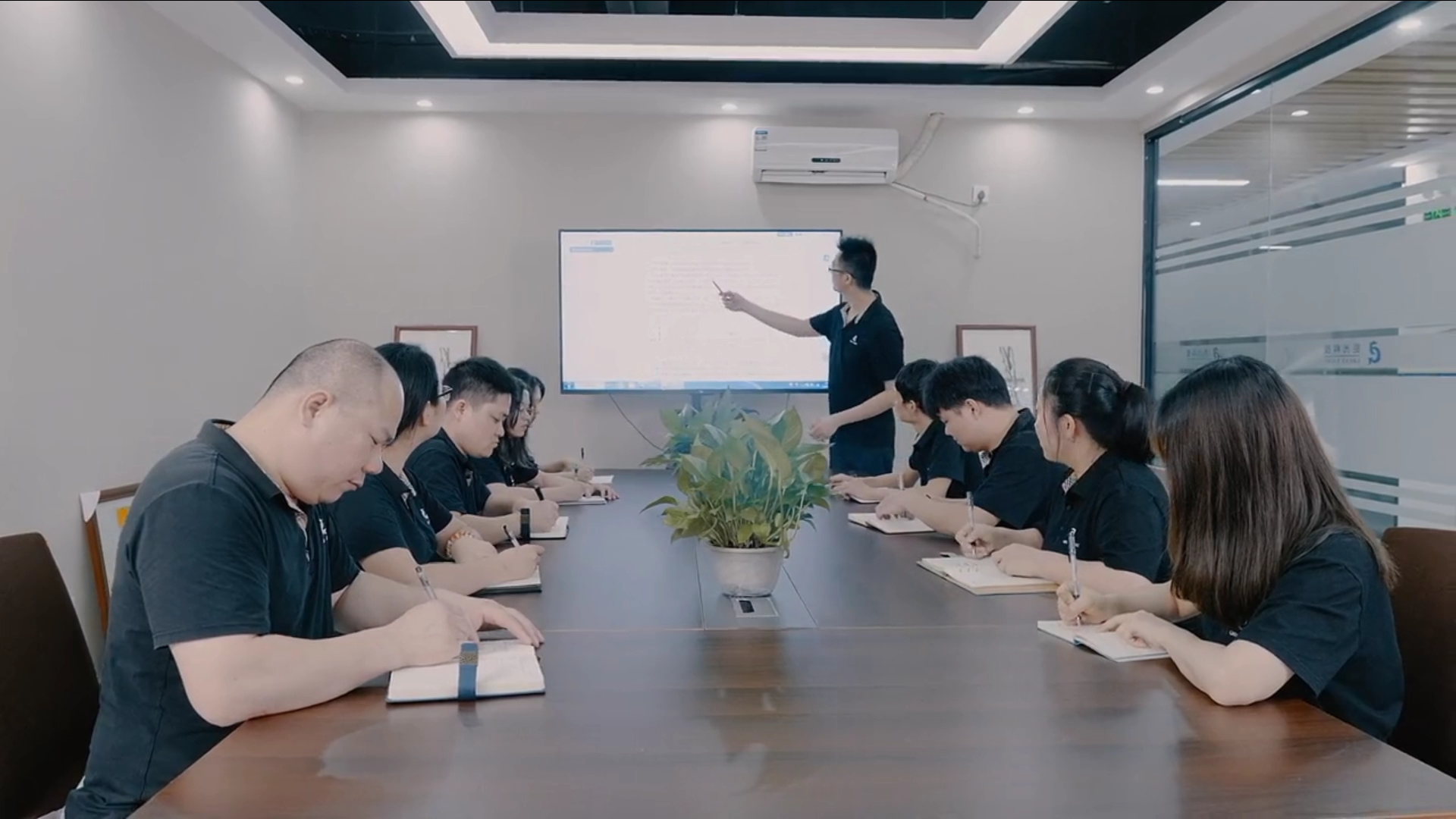
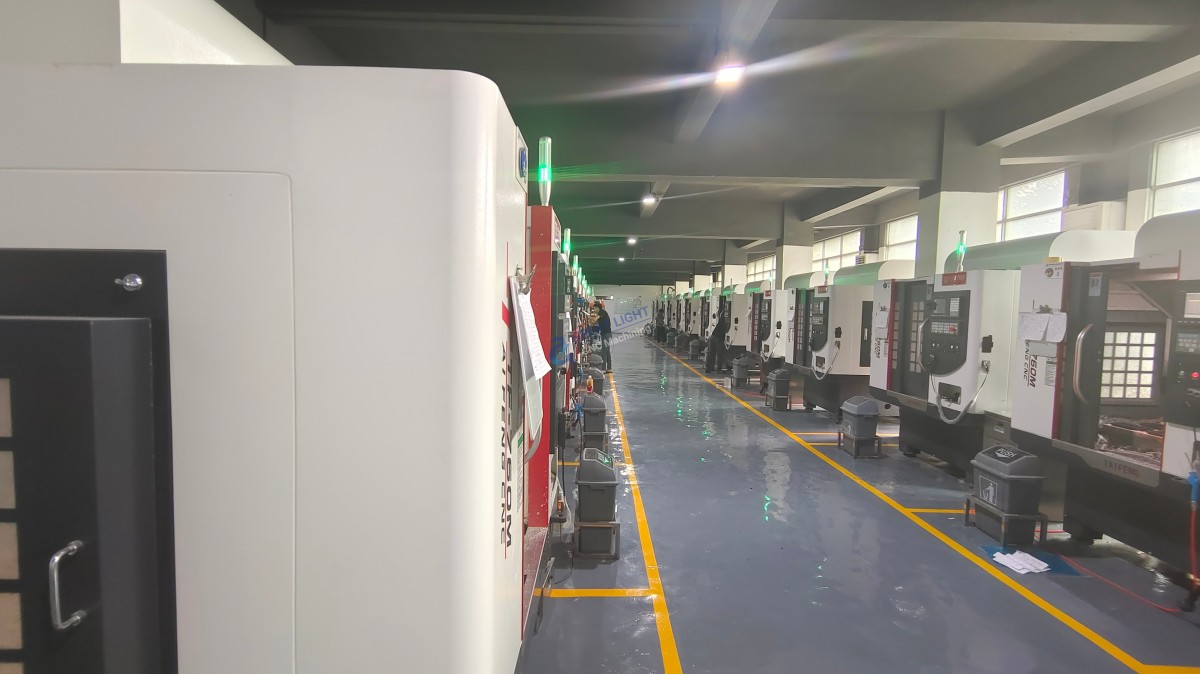
With 127 pieces of precision peripheral equipment under one 7,600sqm roof, our process is designed to de-risk your project:
DFM Review: Our engineers scrutinize your design for manufacturability, suggesting small tweaks (relief radii, draft angles for clamping features, etc.) that slash cost without affecting function.
Material & Treatment Matching: We recommend the most cost-effective material and post-processing sequence based on exactly how your gripper will be used.
Single-Setup 5-Axis Machining: Complex fingers are programmed and cut in one clamping, often reducing cycle time by 40% compared to multi-setup methods.
In-Process Probing: Renishaw probes on our machines verify critical dimensions mid-cycle, catching any deviation immediately.
Post-Processing Integration: From anodizing and plating to PVD coatings and laser marking, we manage the entire chain, so you get a finished, ready-to-install part.
Batch Traceability: Every part is serialized and its dimensional report linked, crucial for ISO 13485 medical or IATF 16949 automotive projects.
Supplier Comparison: Who Can Really Deliver Gripper Finger Precision?
Having benchmarked many suppliers over the years, I’ve seen a wide spectrum of capabilities. Here’s how the landscape looks when you’re sourcing these high-stakes components:
GreatLight Metal (GreatLight CNC Machining Factory): Armed with multiple 5-axis systems, in-house finishing, and a full 15-year track record in complex multi-material parts, they are my go-to recommendation for gripper fingers that demand sub-0.01mm tolerances and integrated coatings. Their ISO 9001, IATF 16949, and ISO 13485 certifications provide the rigor needed for automotive and medical automation cells.
Protocase: Excellent for quick-turn sheet metal enclosures, but their CNC capabilities skew toward simpler prismatic parts. For compound-angle gripper profiles, they may struggle with process reliability at volume.
Xometry: A broad network model that can handle many jobs, but the decentralized quality control means you might get parts from three different shops when ordering a set of six gripper fingers. Inconsistent surfaces or dimensions are a real risk.
RapidDirect: Strong in simpler CNC parts and injection molding, but their 5-axis capacity is limited; deeply contoured fingers often get outsourced, diluting accountability.
Owens Industries: Known for tight-tolerance work, especially in medical. Their pricing, however, often puts them out of reach for all but the most critical aerospace-grade projects.
JLCCNC / Fictiv / PartsBadger: Good for prototypes and simpler 3-axis work. However, when I’ve sent them 5-axis gripper models with +0.005mm true position callouts on mounting holes, the results were mixed. They thrive in lower-mix, high-volume, but not in the demanding high-mix low-volume gripper world.
What sets GreatLight apart is the combination of deep 5-axis expertise, an exhaustive in-house post-processing suite, and a genuine engineering consultancy approach—not just a “machine and ship” mentality.
Real-World Example: Gripper Fingers for an EV Battery Cell Handling Cell
A client developing a high-speed battery module assembly line approached us with a challenging spec: 7075-T6 aluminum fingers, weight under 42 grams each, a complex 3D-profile grip surface to exactly match a rounded prismatic cell, and a lifespan of 10 million cycles without degradation.
Our approach:
Used 5-axis machining to carve the grip profile and weight-saving honeycomb structure from a solid billet in one clamp.
Applied hard anodizing (Type III, 50µm) to the entire profile, then ground the mounting face back to a flatness of 5µm.
Held all critical dimensions to ±0.005mm, verified on our CMM.
Delivered 20 sets (40 fingers) identical within a 10µm window, enabling plug-and-play installation across the line.
The result? Zero dropped cells during commissioning, and a permanent spot for GreatLight as their ongoing automation components supplier.
The Certification Backbone: Why It Matters for Gripper Parts
When a gripper finger fails in a cleanroom or a weld cell, the consequences go far beyond a scrapped part—it can contaminate a batch of pharmaceuticals or halt an automotive assembly line for hours. That’s why we put our certifications to work every day:
ISO 9001:2015: Our foundational quality system, ensures every job is documented, traceable, and verified.
ISO 13485: Critical for medical device automation parts, where documentation and risk management are paramount.
IATF 16949: Specific to automotive, which demands defect prevention and supply chain continuity. Gripper fingers for engine assembly lines live under this umbrella.
ISO 27001: For customers whose gripper designs are part of proprietary automation IP, we protect their data with certified information security management.
This is not just paperwork—it’s cultural. Every operator, every programmer, walks the same process, regardless of client.
Overcoming Common Pain Points in Sourcing Gripper Fingers
From my engineer-to-engineer conversations, I hear these frustrations repeatedly:
“I ordered 10 fingers, and they all clamp differently.” This is a classic sign of poor process capability and lack of CMM verification. At GreatLight, we run full GR&R studies on gripping feature dimensions if the volume justifies it, ensuring Cpk ≥1.67.
“The anodizing peeled off after a week.” Usually from insufficient pre-treatment or wrong anodizing type. Our in-house managed finishing partners and strict incoming tests eliminate this guesswork.
“The quoted lead time was 4 weeks, and it took 12.” Capacity-constrained shops that over-promise. With 127 pieces of equipment and multiple 5-axis cells dedicated to high-precision work, we consistently deliver on time—expedited services can produce parts in as little as 5 days.
“I can’t find someone who does both machining and the special PVD coating.” One-stop integration is precisely our value prop. You send a drawing, we return an install-ready finger.
Designing for Manufacturability: Tips from the Shop Floor
Avoid sharp internal corners in pockets; use a corner radius equal to at least 30% of the pocket depth to let standard endmills cut efficiently.
Specify datum features clearly: gripping surfaces should be directly referenced from the mounting interface to avoid tolerance stack.
Be realistic with surface finish: a mirror polish (Ra <0.1µm) on a grip surface might reduce friction too much, causing slippage. Often a grit-blasted finish (Ra 3.2-6.3µm) improves grip.
Embrace 5-axis from the start: don’t restrict yourself to 3-axis thinking; a part that looks “hard to machine” may be trivial with a 5-axis toolpath.
Why This Matters Right Now
Automation is expanding fast. E-mobility battery lines, logistics sorters, surgical robot instrument changers—all rely on precision gripper fingers. The push for faster cycle times and gentler handling means these parts are becoming lighter, more complex, and more critical. Choosing a supplier who understands the nuance between a prototyping run and a production-intent gripper set is not a procurement detail; it’s a strategic decision that directly affects your line’s OEE.
For precision-engineered industrial gripper finger parts, partnering with an ISO-certified, full-process manufacturer like GreatLight CNC Machining Factory is a strategic investment in uptime, repeatability, and true manufacturing efficiency.



















