
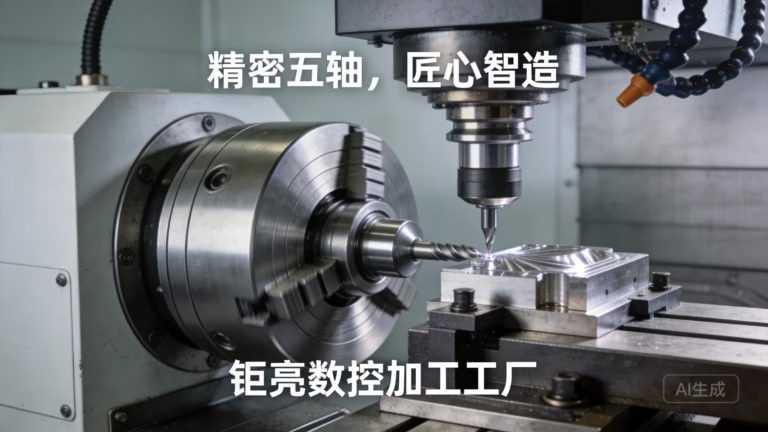
In the rapidly evolving landscape of robotics, achieving superior motion dynamics, energy efficiency, and payload capacity hinges on one critical factor: lightweight design. Among the many strategies to shed mass without sacrificing strength, robot titanium components for lightweight design have emerged as a gold standard. Whether you’re developing surgical robots, autonomous drones, or high-speed industrial manipulators, understanding how to harness titanium—and the advanced machining required to shape it—can define your product’s competitive edge.
Robot Titanium Components for Lightweight Design: The Engineering Imperative
Titanium alloys, particularly Ti-6Al-4V (Grade 5), offer a unique combination of high specific strength (strength-to-weight ratio), excellent corrosion resistance, and biocompatibility. For robotics, this translates directly into:
Reduced inertia: Lighter joints and structural links allow faster acceleration and deceleration, improving cycle times and precision.
Extended battery life: In mobile robots or drones, every gram saved reduces energy consumption, directly increasing operational range.
Higher payload capacity: A lighter manipulator arm can safely handle heavier end-of-arm tooling or workpieces within the same torque limits.
Enhanced dynamic response: Lower moving mass permits higher control bandwidth, enabling smoother and more precise trajectories in high-speed pick-and-place or assembly operations.
Corrosion resilience: Robots deployed in harsh environments—marine, chemical, or sterilization-heavy medical settings—benefit from titanium’s innate resistance, minimizing maintenance and extending service life.
However, designing with titanium is only half the battle. The real challenge lies in transforming a digital model into a physical part that meets exacting mechanical and dimensional requirements. This is where the selection of a precision machining partner becomes a make-or-break decision.
The Machining Complexities of Titanium: Why Conventional Approaches Fall Short
Engineers and procurement specialists frequently underestimate the difficulty of manufacturing titanium components. The very properties that make titanium desirable also render it notoriously difficult to machine:
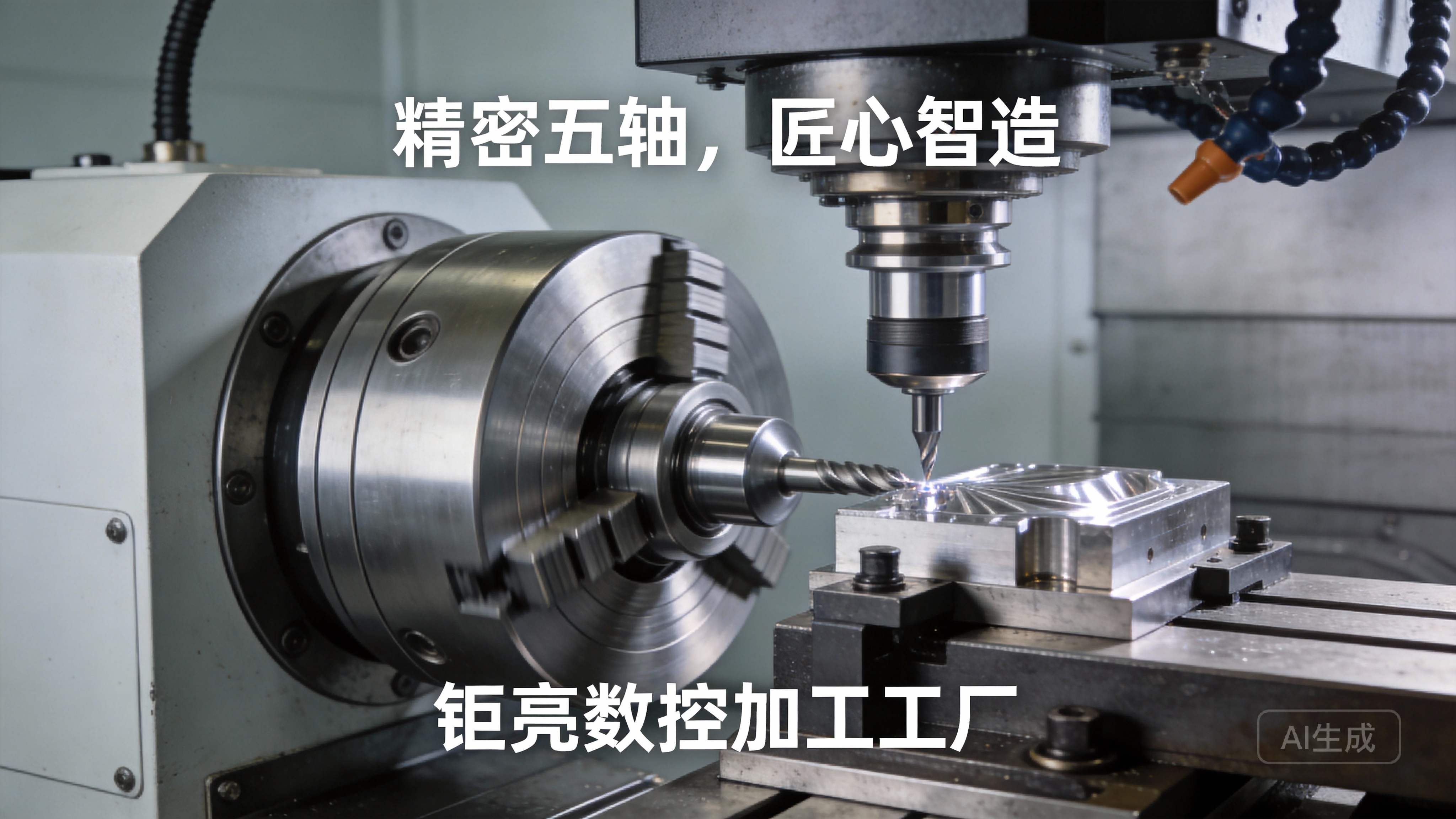
Low thermal conductivity: Heat generated during cutting concentrates at the tool tip rather than dissipating into the chip. This can lead to rapid tool wear, dimensional distortion due to thermal expansion, and workpiece surface damage.
High chemical reactivity: At elevated cutting temperatures, titanium tends to gall, weld to the cutting tool, or form a built-up edge, deteriorating surface finish and accelerating tool failure.
Low elastic modulus: Titanium is more “springy” than steel, causing workpiece deflection under cutting forces. This makes holding tight tolerances—especially on thin-walled or slender robot links—extremely demanding.
Work hardening tendency: Incorrect feeds or speeds quickly produce a hardened surface layer, making subsequent passes even more challenging and further shortening tool life.
Traditional 3-axis CNC machining often requires multiple setups, increasing cumulative error and lead time when producing complex geometries such as articulated robot joints, hollow structural members, or integrated mounting flanges. For components requiring intricate internal cavities, undercuts, or compound angles, only 5-axis machining can deliver the required precision in a single fixturing setup.
Why precision 5-axis CNC machining Is the Enabler
5-axis CNC technology allows the cutting tool or the workpiece to tilt and rotate simultaneously, enabling access to all six sides of a part in one clamping operation. This capability is transformative for robot titanium components:
Single-setup accuracy: Eliminating multiple fixturing setups removes datum transfer errors, making it feasible to hold tolerances as tight as ±0.005 mm on critical features such as bearing bores, seal grooves, and motion guide interfaces.
Optimal cutting geometry: The tilting head can maintain a constant tool-to-workpiece angle, maximizing chip evacuation and minimizing localized heating—critical for extending tool life in titanium.
Complex contouring: Blades, impellers, and organic-shaped links with continuously changing curvatures can be machined directly from a solid billet without hand polishing.
Shorter lead times: Fewer setups and reduced secondary operations streamline the entire manufacturing chain, from prototype to production batches.
Yet, possessing a 5-axis machine is not sufficient. It requires deep process knowledge, specialized tooling, high-pressure coolant systems, and a robust quality management system to consistently output titanium components that meet aerospace-grade or medical-grade specifications.
Selecting the Right Manufacturing Partner for Titanium Robotics Parts
When evaluating suppliers for your robot titanium components, a checklist of critical capabilities can help cut through marketing claims and identify true technical competence.
Equipment Infrastructure and Process Control
A credible partner must operate an advanced fleet of multi-axis machines equipped with high-torque spindles, through-tool coolant delivery (at a minimum of 70 bar pressure for titanium), and vibration-damping technology. Equally important is a systematic approach to tool management: documented tool life strategies, carbide or ceramic cutter selections optimized for titanium, and in-process probing to automatically compensate for thermal drift.
Certifications That Prove Operational Maturity
Paper qualifications alone are not enough—they must be backed by on-the-ground practice. Look for:
ISO 9001:2015 as the baseline quality management system to ensure repeatable processes.
ISO 13485 if your robotics application intersects with medical devices (surgical robots, rehabilitation exoskeletons), ensuring biocompatibility and traceability compliance.
IATF 16949 for automotive-grade serial production, which brings defect prevention and supply chain risk management to the table.
ISO 27001 certification for protecting intellectual property—essential when sharing proprietary robotic designs.
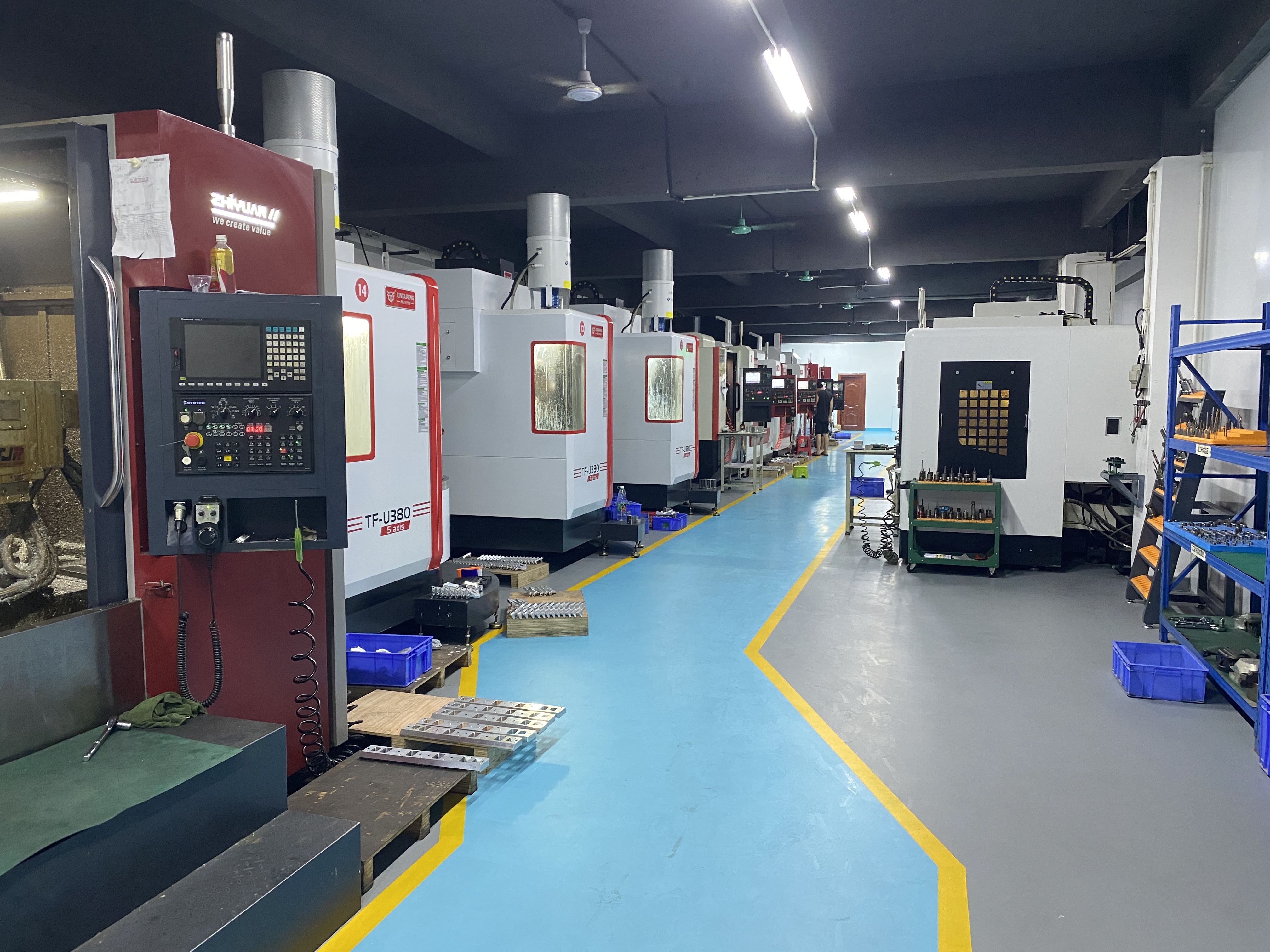
A supplier like GreatLight CNC Machining Factory, established in 2011, not only holds these certifications but also operates a 76,000 sq. ft. facility with over 127 precision peripheral devices, including large-format 5-axis, 4-axis, and 3-axis CNC machining centers, along with 3D printing and sheet metal fabrication capabilities. This breadth enables integrated manufacturing of complete robot subassemblies without fragmenting the supply chain.
Full-Process Integration: Beyond Chip-Making
Machining is merely one step. Titanium components often require specialized surface treatments to enhance performance:
Anodizing (Type II or Type III hardcoat) for wear resistance and aesthetic finishes in consumer-facing robots.
Electropolishing to deburr internal passages and improve fatigue life.
Laser marking for permanent part identification and traceability.
Passivation to remove free iron and restore the native corrosion-resistant oxide layer.
A one-stop provider that manages machining, finishing, assembly, and quality inspection under one roof significantly reduces project risk and administrative overhead. This integrated approach is particularly valuable when iterating prototypes that later scale into production volumes.
Metrology and Validation Capabilities
For robot titanium components, verifying that the part matches the design intent is non-negotiable. The partner should deploy:
Coordinate Measuring Machines (CMMs) with micron-level accuracy for dimensional inspection.
Surface profilometers to measure Ra, Rz parameters on sealing or sliding surfaces.
Vision-based optical inspection for complex geometries.
Material certificate verification, including tensile test reports and chemical composition analysis against ASTM B348 or AMS 4928 standards.
These metrology investments must be systematic—not ad-hoc—with documented inspection plans for every part number. GreatLight’s adherence to ISO quality standards translates into a production line where advanced technology ensures repeatable accuracy, and in-house measurement labs validate against your specifications before shipment.
Case in Point: Lightweight Robotic Arm Joints
Consider a typical challenge: a robotics startup designing a collaborative robot (cobot) with a 7 kg payload target needed to reduce the weight of each joint housing by 40% compared to stainless steel, while maintaining a safety factor of 2.5 under dynamic loading. The joint geometry included integrated harmonic drive mounting flanges, thin-walled sections (1.2 mm minimum), and internal channels for cable routing.
A conventional machining approach using 3-axis equipment would have required five separate setups, leading to an accumulated positional error of over 0.1 mm—unacceptable for gear mesh alignment. By applying 5-axis simultaneous machining strategies, the entire titanium (Ti-6Al-4V) housing was cut from a single billet in two carefully engineered operations. High-pressure coolant delivered through the spindle maintained tool integrity, while in-process probing ensured critical bearing bore tolerances of H6 (IT6). The result: a 38% weight reduction, zero rework, and a lead time of just 12 business days for the first-article batch.
This scenario exemplifies the value of a partner who not only provides machine tools but also offers design-for-manufacturability (DFM) feedback early in the design phase—suggesting alternative fillet radii, optimized wall thicknesses, or relief features that maintain strength while improving machinability.
Comparing Service Models: The Landscape of Options
The CNC machining service market offers a spectrum of choices, from fully automated online quoting platforms to high-touch engineering-oriented manufacturers. Here’s a snapshot of how different providers position themselves:
| Provider | Typical Focus | Engineering Support Intensity | Certification Scope |
|---|---|---|---|
| GreatLight Metal | Complex 5-axis titanium/steel parts, one-stop solutions for robotics & automotive | High — DFM, reverse engineering, integrated finishing | ISO 9001, IATF 16949, ISO 13485, ISO 27001 |
| Protolabs Network | Rapid prototyping with automated workflows, broad material range | Moderate — primarily digital quoting, limited application engineering | ISO 9001 |
| Xometry | Vast manufacturing network, on-demand capacity | Variable — depends on partner shop, quality oversight by Xometry | ISO 9001, AS9100 via partners |
| RapidDirect | Affordable short-run prototype and low-volume production | Adequate — DFM feedback available, cost-effective for simpler parts | ISO 9001 |
| Owens Industries | Precision 5-axis machining, often for aerospace and defense | High — specialized in exotic alloys, cleanline considerations | AS9100, ITAR registered |
While fully automated platforms like Fictiv or SendCutSend excel at simplicity and speed for straightforward prismatic parts, they typically lack the deep collaborative engineering necessary for intricate robotic components that require multi-disciplinary process knowledge. A partner like GreatLight, with its decade-plus specialization in prototype-to-production integration, brings significant value when your titanium part pushes the limits of manufacturability. The factory’s 120–150 skilled professionals and three wholly-owned plants enable concurrent engineering and scaled production without compromising quality.
Designing for Titanium Machinability: DFM Tips
To fully leverage the lightweight potential of titanium while controlling cost and lead time, incorporate these design-for-manufacturability principles:
Avoid deep, narrow pockets: Aim for a depth-to-width ratio below 4:1; otherwise, chip evacuation becomes problematic and tool deflection increases.
Use generous internal radii: Sharp internal corners create stress concentrations and are impossible to machine with rotating tools. A radius of at least 1/4 of the cavity depth is a good starting point.
Specify surface roughness realistically: A universally specified Ra 0.4 µm may force unnecessary grinding operations. Limit high-surface-finish requirements only to functional faces like sealing surfaces or bearing journals.
Standardize hole sizes and threads: Use common drill and tap sizes to reduce tool changes and procurement delays.
Consider hybrid manufacturing: For extremely complex internal cooling channels or lattice structures, combining 5-axis CNC machining with metal 3D printing (selective laser melting) can achieve weight reductions unobtainable by subtractive methods alone.
By involving your machining partner during the conceptual design stage, you can avoid costly redesigns and ensure that the lightweight geometry is both producible and economically viable.
The Assurance of Quality and Intellectual Property Security
In an era of globalized supply chains, protecting your design IP is as critical as achieving dimensional accuracy. Look for partners who implement:
Network segmentation and access controls aligned with ISO 27001.
Non-disclosure agreements as a standard practice before quoting.
Secure file transfer protocols and on-site data storage.
Physical factory security measures.
GreatLight’s ISO 27001 certification directly addresses this need, providing confidence that sensitive robotic design files won’t be compromised. Furthermore, the company’s unwavering commitment to quality is backed by a straightforward guarantee: free rework for any quality discrepancies, and a full refund if rework still falls short. This performance-based promise reflects a maturity rarely found in the price-driven segment of the market.
Elevate Your Robotic Innovation with Proven Titanium Expertise
The shift toward robot titanium components for lightweight design is not a passing trend but a structural necessity for advancing robotics performance across industries. Mastering titanium machining demands more than just modern equipment; it calls for a holistic manufacturing ecosystem that integrates process engineering, quality certification, surface finishing, and supply chain security.
Choosing a supplier like GreatLight CNC Machining Factory means tapping into a 7600-square-meter facility purpose-built for handling the most demanding precision machining challenges. With over a decade of experience, a fleet of high-end 5-axis, 4-axis, and 3-axis CNC machines, and a cross-functional team capable of taking your project from first prototype to finished, ready-to-assemble components, you gain a partner that truly understands the stakes. For more insights into how precision machining enables next-generation robotics, feel free to explore our professional journey and connect on LinkedIn.



















