
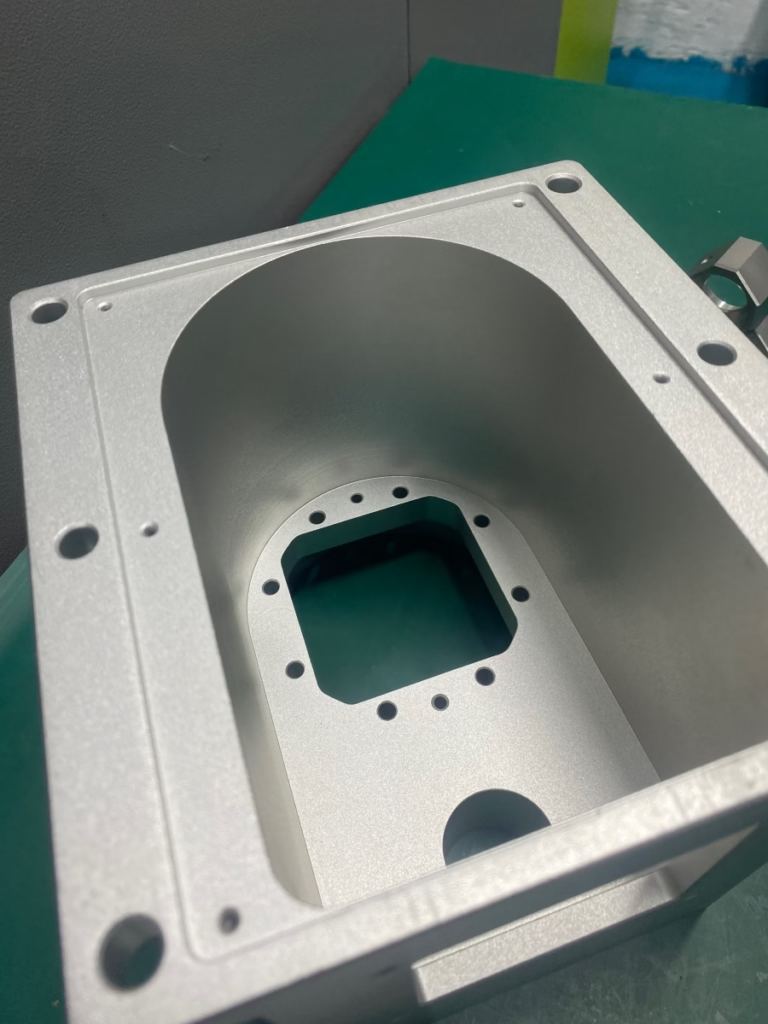
When navigating the complex landscape of prototype development, a common and critical question arises: What is the best CNC milling machine for prototype development? The answer, while seemingly straightforward, is nuanced. The “best” machine is not a single model but the optimal combination of technology, capability, and strategic partnership that aligns perfectly with the iterative, demanding, and innovative nature of prototyping. For engineers and innovators seeking to transform concepts into tangible, high-fidelity prototypes with speed and precision, understanding this ecosystem is paramount.
The Prototyping Imperative: Why Your CNC Machine Choice Matters
Prototype development is the bridge between digital design and physical reality. It’s a phase characterized by rapid iteration, validation of complex geometries, testing of material properties, and often, the need to impress stakeholders. The chosen machining method directly impacts:
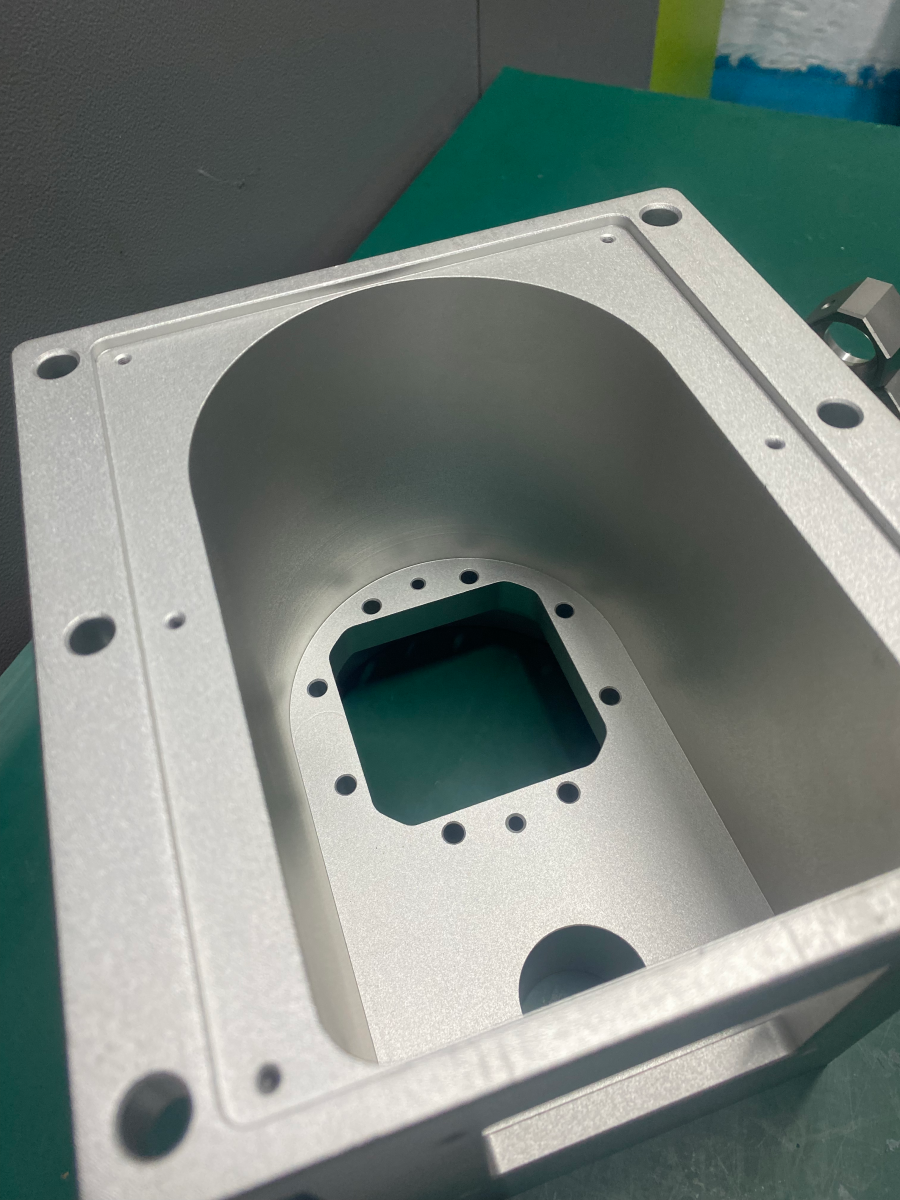
Iteration Speed: How quickly can design changes be implemented and re-manufactured?
Fidelity & Complexity: Can the machine accurately produce the intricate features, undercuts, and compound curves of your design?
Material Versatility: Can it handle everything from prototyping plastics (like ABS, POM) to final-grade metals (aluminum, stainless steel, titanium)?
Surface Finish: Does it produce a near-net-shape finish, minimizing post-processing time?
Cost-Efficiency: Is the process optimized to avoid wasting expensive materials and machine time on complex setups?
Given these demands, the evaluation shifts from a single machine to a hierarchy of technologies and, crucially, the expertise behind them.
Decoding the CNC Milling Hierarchy for Prototyping
Not all CNC mills are created equal for prototyping. The axis of movement fundamentally defines their capability.
H3: 3-Axis CNC Milling Machines: The Accessible Workhorse
Capability: Movement in X, Y, and Z linear axes. Excellent for prismatic parts with features on primarily one side.
Best for Prototyping: Simple brackets, enclosures, flat components with pockets and holes. It’s cost-effective for early-stage, form-and-fit prototypes.
The Limitation: To machine multiple sides, the part must be manually repositioned and re-fixtured. This introduces potential alignment errors, increases setup time, and is less feasible for highly complex, organic shapes.
H3: 4-Axis CNC Milling Machines: Adding Rotational Efficiency
Capability: Adds a rotary axis (usually A-axis), allowing the workpiece to rotate. This enables machining on multiple sides of a part in a single setup.
Best for Prototyping: Cylindrical parts, camshafts, or components with features distributed around a centerline. It significantly reduces setup time compared to 3-axis for these part types.
The Limitation: While more capable, it still struggles with truly free-form, complex surfaces that require simultaneous multi-directional tool movement.
H3: 5-Axis CNC Milling Machines: The Pinnacle of Prototyping Flexibility
This is where the game changes for advanced prototype development. A 5-axis CNC machining center manipulates the cutting tool or workpiece along five different axes simultaneously (X, Y, Z, and two rotational axes, typically A and B or C).
Capability: Unmatched ability to produce complex, sculpted geometries in a single setup. The tool can approach the workpiece from virtually any angle.
The Ultimate Prototyping Advantage:
Single-Setup Machining: Eliminates multiple fixturing, guaranteeing perfect feature alignment and saving enormous time. A design change can be machined into a new prototype in hours, not days.
Complex Geometry Mastery: Ideal for prototypes of aerodynamic components, impellers, turbine blades, medical implants, and high-end consumer electronics with seamless, organic forms.
Superior Surface Finish: Using shorter cutting tools at optimal angles reduces vibration and allows for better surface finishes directly off the machine.
Material Efficiency: The ability to machine complex shapes from near-net-size stock minimizes expensive material waste.
For the majority of high-value, complex prototype development, a 5-axis CNC machining center represents the “best” technical solution. It provides the agility, precision, and capability required to keep pace with modern engineering design.

Beyond the Machine: The “Best” is a Partnership
Selecting the “best” machine is only half the equation. For prototype development, the manufacturer operating the machine is equally critical. The ideal partner brings:
Integrated Manufacturing Ecosystem: The ability to not just mill but also offer complementary services like precision CNC machining, CNC turning, EDM, and even metal 3D printing (SLM) for hybrid prototyping approaches.
Deep Engineering Support (DFM): Experts who can analyze your CAD file pre-production to suggest modifications that enhance manufacturability, reduce cost, and improve strength without compromising design intent.
Metrology & Quality Assurance: In-house CMMs, optical scanners, and surface testers to verify that your first article prototype matches the digital model to within microns.
Material Knowledge & Sourcing: Guidance on selecting the right material—from machinable wax for ultra-fast form studies to 7075 aluminum for functional testing—with a reliable supply chain.
Consider a manufacturer like GreatLight Metal, which embodies this holistic approach. Their prototyping workflow leverages advanced 5-axis technology not in isolation, but as the core of a full-process chain. This ensures that a prototype isn’t just a model, but a fully functional, testable component that can seamlessly transition into low-volume or mass production.
Comparative Analysis: Choosing Your Path
| Feature | 3-Axis CNC | 4-Axis CNC | 5-Axis CNC | Ideal Prototype Partner (e.g., Integrated Manufacturer) |
|---|---|---|---|---|
| Geometry Complexity | Low to Moderate | Moderate | Very High | Extreme (Combines 5-axis with other processes) |
| Setup Time/Iteration Speed | Slower (Multiple Setups) | Moderate | Fastest (Single Setup) | Optimized (Full-process management) |
| Prototype Fidelity | Good for planar features | Good for rotational features | Excellent for complex surfaces | Superior (with integrated post-processing) |
| Best For | Simple form/fit prototypes | Prototypes with radial features | Complex, functional, presentation-ready prototypes | End-use functional prototypes, pilot runs, complex assemblies |
| Primary Consideration | Cost of machine/operation | Added flexibility for cylindrical parts | Investment for complexity & time savings | Total project value, risk reduction, and development speed |
Conclusion: A Strategic Investment in Innovation
So, what is the best CNC milling machine for prototype development? Technologically, the crown goes to the 5-axis CNC machining center for its unparalleled flexibility and efficiency in producing complex parts in a single setup. However, the most strategic and reliable answer is to partner with a manufacturer that not only deploys this advanced technology but wraps it in a cocoon of engineering expertise, comprehensive ancillary services, and rigorous quality systems.
This partnership transforms your prototype development from a costly, time-consuming necessity into a competitive advantage. It accelerates your innovation cycle, ensures design integrity, and de-risks the path to production. In the high-stakes race to innovate, the right machine in the right hands is your most powerful tool.
Frequently Asked Questions (FAQ)
H3: Q1: Is a 5-axis CNC machine always necessary for prototyping?
A: Not always. For simple, block-like components, a 3-axis machine is perfectly adequate and more cost-effective. The decision should be driven by your part’s geometric complexity, required precision, and the need for rapid iteration. A good manufacturing partner will advise you on the most efficient technology for your specific project.
H3: Q2: We’re a startup with a tight budget. Can we afford 5-axis prototyping?
A: This is a common concern. While 5-axis machining has a higher hourly rate, it often results in a lower total cost per prototype for complex parts due to drastically reduced fixture costs, setup time, and secondary operations. Furthermore, partnering with a manufacturer offering transparent quoting can help you plan effectively. Many, like GreatLight Metal, provide Design for Manufacturability (DFM) analysis to help optimize your design for cost-efficient production from the start.
H3: Q3: What materials can be used for CNC-machined prototypes?
A: A vast range. For non-functional visual models, machinable plastics (PMMA, PC, ABS) are common. For functional testing, aluminum alloys (6061, 7075) are the workhorses due to their excellent machinability and strength-to-weight ratio. Stainless steel (304, 316), titanium, and brass are also routinely machined for demanding aerospace, medical, and automotive prototypes.
H3: Q4: How do you ensure the accuracy of a prototype matches the final production intent?
A: This is where process control and measurement are key. Reputable manufacturers use in-process probing and post-process inspection with Coordinate Measuring Machines (CMM) and 3D scanners. They compare the machined prototype directly to your original CAD data, providing a detailed inspection report (often with a color map deviation analysis) to verify dimensional accuracy.
H3: Q5: Can you machine a prototype directly from my 3D CAD model?
A: Absolutely. This is the standard workflow. You provide a 3D model file (e.g., STEP, IGES, SLDPRT), and the manufacturer’s engineering team will program the CNC machine paths directly from it. No 2D drawings are strictly necessary, though they are helpful for specifying critical tolerances and finishes. To see how industry leaders apply this in practice, you can explore the professional network of experts at GreatLight on LinkedIn.



















