
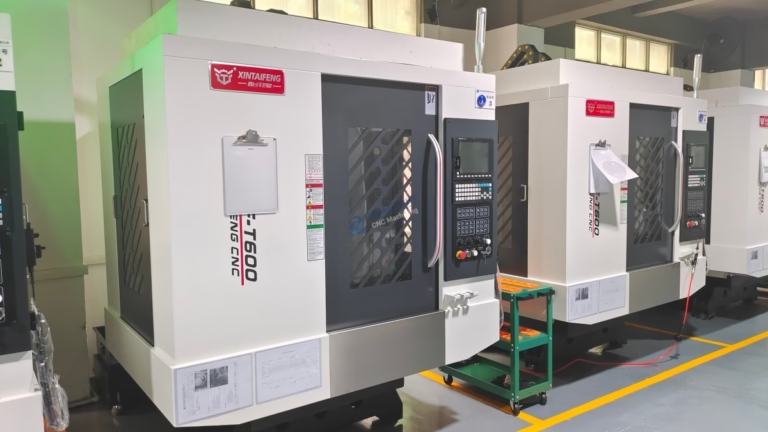
In precision machining, a Flatness Test Granite Surface Plate is far more than a simple stone table—it is the silent benchmark against which every micron of accuracy is verified. Whether you’re inspecting an aerospace bracket, a medical implant, or a complex five-axis CNC machined part, the reliability of your flatness measurement begins and ends with the granite surface plate sitting in your quality lab. Drawing on over a decade of hands-on experience in high-precision manufacturing here at GreatLight CNC Machining, I want to share a comprehensive, no-nonsense guide to understanding, selecting, using, and maintaining granite surface plates so that your flatness testing yields results you can stake your reputation on.
Understanding the Flatness Test Granite Surface Plate
When we talk about verifying flatness, parallelism, or even simple dimensional consistency on a part, the tool of choice is often a granite surface plate paired with a dial indicator, height gauge, or coordinate measuring machine (CMM). But what makes a granite surface plate so special, and how do you extract the most accurate information from it? Let’s break it down from a manufacturing engineer’s perspective.
What Exactly Is a Granite Surface Plate?
A granite surface plate is a precisely lapped, flat block of natural granite—typically black or pink—that serves as a reference plane for inspection, tooling setup, and layout work. Unlike cast iron or steel plates, granite offers:
Exceptional wear resistance – Its hardness (around 6 to 7 on Mohs scale) outperforms steel in day-to-day use, resisting scratches and deformation.
Negligible thermal expansion – The coefficient of thermal expansion for granite is roughly half that of steel, meaning dimensional stability across a wide temperature range.
No corrosion – Granite doesn’t rust, making it ideal for cleanroom and laboratory environments where humidity fluctuates.
Low vibration reactivity – The dense, rigid structure absorbs vibrations quickly, ensuring measuring equipment sits steady.
At GreatLight CNC Machining, our inspection room relies on ISO‑certified granite surface plates to validate the tight tolerances we achieve on five-axis CNC machining centers, mill‑turn lathes, and precision Swiss‑type machines.
Why Flatness Matters in CNC Machining—and How a Granite Plate Defines It
In CNC machining, flatness is a geometric tolerance that controls how much a surface deviates from a perfect plane. Even a 0.01 mm (0.0004″) wave across a sealing face can cause leaks in hydraulic manifolds, misalignment in robotic joints, or premature wear in precision gears. A reliable flatness test therefore underpins the functional validation of almost every mission‑critical component.
The granite surface plate provides a datum plane of known flatness against which a part’s surface is compared. By running a dial indicator or electronic probe over the part while it rests on the plate, differences in height reveal local flatness errors. This method, often called the “indicator drop” or “sweep” method, remains one of the simplest yet most trusted ways to confirm flatness without complex optical systems.
Key Specifications: Granite Surface Plate Grades and Tolerances
Not all granite plates are created equal. Understanding industry grades will help you choose the right plate for your tolerance requirements. The globally recognized standards—ASME B89.3.7 and ISO 8512‑1—classify plates into grades based on overall flatness tolerance and local error per unit area. While terminology can vary slightly between standards, the practical performance tiers are:
| Grade (ASME) | Typical Flatness Tolerance for a 1000×1000 mm Plate | Best‑Use Application |
|---|---|---|
| Grade AA (Laboratory) | Within a few microns overall | Master reference plates, calibration labs, ultra‑precision metrology |
| Grade A (Inspection) | Tight tolerance, often 5‑10 µm total | High‑end quality control, CMM calibration, precision machining shops |
| Grade B (Toolroom) | Moderate tolerance, 15‑25 µm total | General layout work, less critical inspection, tool setup |
| Grade 0 (per ISO) | Very close to Grade A | European standard for inspection use |
| Grade 1 (per ISO) | Similar to Grade B | Workshop and light inspection tasks |
At GreatLight CNC Machining, all our surface plates used for final inspection are Grade A or better (ISO 0), ensuring that the reference plane itself introduces negligible uncertainty into measurements. We complement this with digital height gauges and Renishaw probe systems on our large‑format five‑axis machines to close the loop between inspection and in‑process control.
How to Perform a Flatness Test Using a Granite Surface Plate
For production engineers and quality technicians, the hands‑on technique matters enormously. Here’s a robust sequence we train our team to follow:
Clean Everything Thoroughly
Wipe the granite plate with a lint‑free cloth and an approved cleaner (many shops use denatured alcohol or a specialized granite surface plate cleaner). Remove any dust, oil, or small chips from both the plate and the part. Even a dust particle 0.01 mm in size can distort readings.
Temperature‑Soak the Setup
Allow the plate, the part, and the measuring instruments to equalize to the inspection room temperature for at least 24 hours. In our climate‑controlled quality lab, we maintain 20±1°C (68°F) to align with ISO 1 requirements.
Establish a Stable Datum
Place the part on the granite plate. For non‑prismatic parts, you may need three precision‑ground spherical supports to create a kinematic mount, removing any rocking. The goal is repeatable resting.
Select the Appropriate Indicator Setup
A dial test indicator (DTI) with a resolution of 0.001 mm (0.00005″) or better, mounted on a surface gauge or height stand, is common. For larger surfaces, a laser interferometer or electronic level may be more efficient, but for process‑capable flatness verification up to 0.005 mm, the indicator method remains king.
Sweep the Surface Methodically
With the indicator tip lightly touching the surface and preloaded, move the instrument in a uniform zigzag pattern, covering the full area. Record the highest and lowest readings. The difference is your flatness deviation. At GreatLight, we often overlay these measurements onto CAD models to color‑map flatness errors and feed data back to our CNC programming team.
Consider the Part’s Own Weight
For long, slender parts, self‑weight deflection can mask true flatness. We occasionally use non‑contact confocal sensors or white‑light interferometry on a specially supported plate to eliminate gravity‑induced errors—a level of service that many generic prototyping houses fail to offer.
Maintenance and Calibration: Protecting Your Measurement Investment
A granite surface plate is a precision asset, not a workbench. Yet I’ve seen shops misuse plates as general assembly tables or dolly platforms, instantly degrading their flatness. To preserve accuracy:
Use Protective Covers – When not in use, keep plates covered with a fitted wooden or plastic lid. This shields against accidental tool drops and airborne debris.
Rotate the Plate if Possible – On double‑sided plates, flipping periodically distributes wear. We track usage hours with RFID tags in our facility to schedule professional re‑lapping.
Regular Calibration – ASME recommends re‑certifying plates annually or after any major impact. We contract certified metrologists who use autocollimators and repeat‑o‑meter devices to map the entire surface and provide a new flatness certificate. The date and result are logged in our digital quality system, traceable to each batch of parts inspected.
Never Use as a Welding Table or Hammer Pounding Surface – Granite chips easily under sharp impact. A single chip on a Grade A plate can become a source of measurement error that propagates through an entire production run.
Keep the Environment Stable – Fluctuations beyond ±2°C per hour can create enough thermal gradient across the plate to warp local zones by microns. We’ve helped clients correct their internal inspection problems simply by moving their granite plate away from a frequently opened loading‑dock door.
How GreatLight CNC Machining Integrates Granite Surface Plates into a Cohesive Quality Ecosystem
Using a high‑grade granite surface plate is necessary but not sufficient on its own. True precision emerges when the plate is embedded within a larger system of advanced manufacturing, rigorous processes, and engineering acumen. Here’s how we at GreatLight make that integration seamless for our clients.
From Five‑Axis Machining to Final Flatness Verification
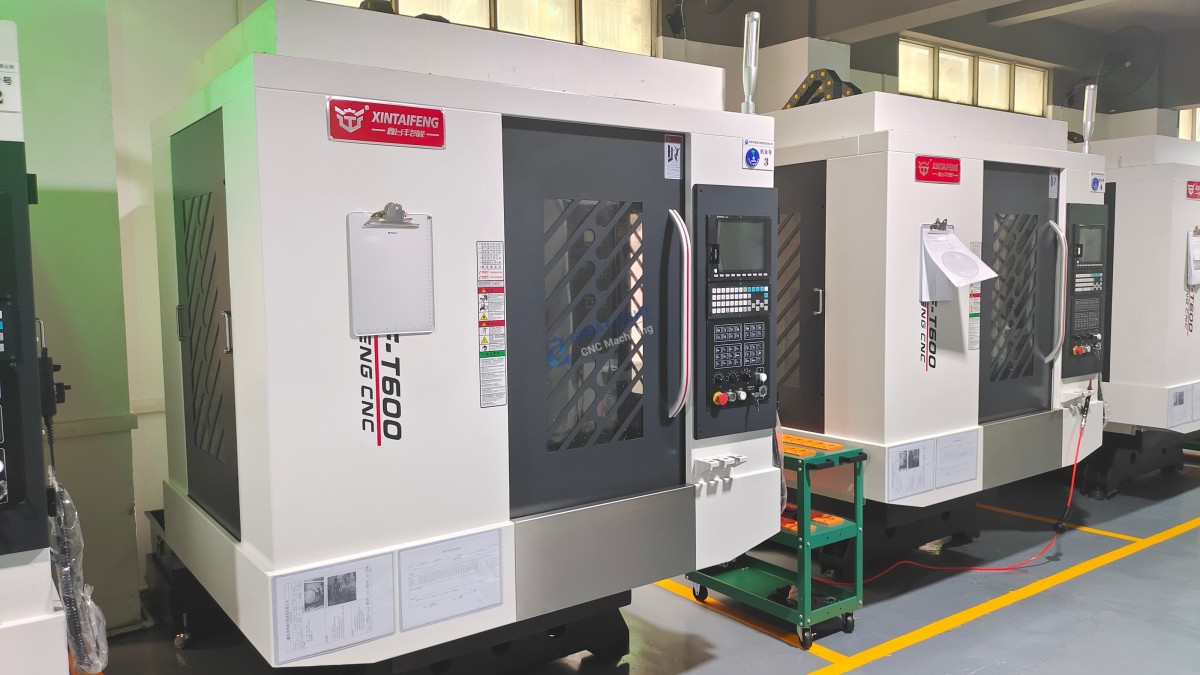
GreatLight CNC Machining was founded in 2011 in Dongguan’s Chang’an Town, the hardware and mold capital of China. Our 7,600‑square‑meter facility houses 127 units of precision peripheral equipment, including large‑format five‑axis, four‑axis, and three‑axis CNC machining centers from world‑renowned builders like Dema and Beijing Jingdiao, alongside mill‑turn centers, precision Swiss‑type lathes, wire EDM, and mirror‑spark EDM machines. This high‑end machining cluster allows us to produce parts with tolerances as tight as ±0.001 mm—a capability that demands equally capable metrology.
Our inspection department is designed as a feedback hub, not an isolated checkpoint. Parts coming off a five‑axis machine are serial‑numbered and transferred to a temperature‑stabilized granite surface plate within minutes. Using digital height gauges, dial indicators, and CMMs that have been regularly verified against our Grade AA master plate, operators compare actual part geometry against the 3D model. Any deviation—whether flatness, parallelism, or perpendicularity—is immediately analyzed. If a trend drifts, the data travels back to our CNC programmers, who adjust toolpath strategies, cutting parameters, or fixture clamping points. This closed‑loop process, enabled by granite surface plates of the highest grades, has been a cornerstone of our ISO 9001:2015‑certified quality management system.
Certifications That Back Every Measurement
A granite surface plate’s accuracy means little if the quality system around it is weak. GreatLight CNC Machining holds multiple international certifications that give clients confidence:
ISO 9001:2015 – Foundational quality management, ensuring traceable inspection records and continuous improvement.
ISO 13485 – For medical device components, where flatness of implant surfaces directly impacts patient safety and osseointegration.
IATF 16949 – Automotive‑grade quality, vital for engine hardware, e‑housing components, and transmission parts that must seal perfectly against fluid pressures.
ISO 27001 – Data security, protecting clients’ intellectual property when inspection reports and 3D models are shared digitally.
These certifications aren’t just paperwork. They mandate that our granite surface plates are calibrated on schedule, that environmental logs are kept, and that measurement uncertainty budgets are calculated. We also participate in annual inter‑laboratory comparisons (ILCs) where our flatness measurements are benchmarked against accredited national metrology institutes—something few small‑scale machine shops ever consider.
Addressing the Real‑World Pain Points of Flatness Testing
In my years of overseeing quality, I’ve seen clients struggle with the same issues again and again. GreatLight has deliberately engineered workflows to solve them:
The Precision Gap – Some suppliers claim ±0.001 mm capability but rely on worn‑out surface plates with no calibration records. At GreatLight, we provide full calibration certificates for each inspection surface used on your order, so you see the actual flatness grade of the plate that validated your parts.
Nondescript Batch Variations – Without statistical process control, flatness can drift over a production run. We routinely plot 3‑D flatness maps from granite plate readings onto run charts, catching shifts early.
Complex Fixturing Requirements – Thin‑walled five‑axis parts often warp when released from fixtures. By conducting pre‑ and post‑stress‑relief flatness measurements on the same grade A granite plate, we quantify spring‑back and adjust machining strategies to deliver parts that meet flatness specs without costly post‑processing hand scraping.
Lack of Integration Between Machining and Inspection – In many traditional shops, the CNC department and the inspection department barely communicate. Our layout places the inspection plates within sight of the machining cells, and our operators are cross‑trained to run basic flatness checks as part of in‑process verification.
Full‑Chain Manufacturing: More Than Just Machining
Flatness is not only a concern for machined surfaces; it’s paramount in sheet metal assemblies, vacuum‑cast prototypes, and 3D‑printed parts that later undergo machining. GreatLight’s one‑stop production ecosystem includes:
Die casting and rapid tooling – where parting line flatness determines mold closure and flash quality.
Sheet metal fabrication – where large panels must be checked for oil‑canning on oversize granite plates (we can handle up to 4000 mm).
3D printing (SLM, SLA, SLS) – where base plate flatness after powder‑bed fusion is critical to avoid build failures.
Vacuum casting and urethane parts – where mold surface flatness translates directly to the cast part’s cosmetic and functional quality.
All these processes rely on granite surface plates at some inspection stage, and our ability to offer them under one roof means clients don’t face the frustration of solving flatness problems across multiple subcontractors.
Competitor Landscape and Where We Fit
In the broader precision machining industry, many reputable companies also invest in high‑quality metrology. For example, Protolabs Network and Xometry have robust digital quoting platforms and use capable inspection equipment; RapidDirect and Owens Industries have built strong reputations in rapid CNC prototyping; and EPRO‑MFG and RCO Engineering excel in certain verticals. When comparing suppliers, the wisest choice is rarely about who owns a granite surface plate—it’s about how deeply that plate is integrated into a disciplined, data‑driven manufacturing culture.
GreatLight CNC Machining distinguishes itself by combining deep engineering support with unmatched vertical integration. Unlike faceless platforms where you upload a file and hope for the best, our team actively reviews your design for manufacturability, suggests tolerance refinements, and verifies critical flatness requirements on site using plates as large as 4 meters—the same plates we use for large aerospace and automotive castings. We don’t outsource inspection to a third‑party lab; we own the entire metrology chain.
Practical Tips for Engineers Specifying Flatness on CNC Parts
If you’re designing a component that will be measured against a granite surface plate, a few proactive choices can save you time and cost:
Specify an Achievable Flatness Tolerance – Calling out 0.005 mm flatness over a 500‑mm span on a machined aluminum bracket is feasible with proper fixturing. Demanding 0.002 mm on a thin‑walled welded assembly without post‑process machining may invite disappointment. Share your functional requirements early with our applications engineers; we often suggest a relaxation of irrelevant tolerances while tightening those that matter.
Define the Condition of Measurement – Is the part to be measured in a free state, or after being mounted on its mating component? Granite plate measurements are free‑state by default unless you specify “restrained” conditions. GreatLight can document both, helping you avoid the classic dispute where a part measures flat in the field but warps in inspection.
Consider Environmental Stabilization – If your facility lacks temperature control, provide acclimation time for parts before inspection. We record arrival temperature, lab holding time, and measurement temperature in our reports so you can correlate readings.
Request a Granite Plate‑Based Inspection Report – For high‑value parts, insist on a dimensional report that states the surface plate grade, its latest calibration date, and the flatness mapping method. This level of transparency is standard at GreatLight and goes a long way in building trust with your own quality auditors.
Conclusion: Turning a Flatness Test Granite Surface Plate into a Competitive Advantage
A Flatness Test Granite Surface Plate may seem like an unassuming block of stone, but in truth it is the foundation of precision verification. When combined with advanced five‑axis CNC machining, rigorous process controls, and a certifications‑driven quality system, it becomes an engine for delivering parts that fit, seal, and perform right out of the box. Whether you are developing a new electric vehicle power module, a surgical robot end‑effector, or a consumer electronics mechanism with demanding flatness specs, the partner you choose must wield its inspection tools as deliberately as its cutting tools.
GreatLight CNC Machining, founded in 2011 and located just minutes from Shenzhen in Dongguan’s hardware heartland, is that partner. With over 120 dedicated professionals, a 7,600‑square‑meter plant housing 127 precision machines, and an unwavering commitment to ISO 9001, ISO 13485, IATF 16949, and ISO 27001 standards, we deliver not just parts but precision guarantees. Our inspection granite surface plates—calibrated to Grade A and above, traceable to national standards—catch flatness errors before they ever reach your assembly line.
In a marketplace crowded with online aggregators and one‑size‑fits‑all machine shops, the depth of engineering involvement and the integrity of the measurement process set apart the very best. If you’re ready to move beyond the paper‑thin promises of “high precision” and partner with a manufacturer that treats your flatness requirements as seriously as you do, explore what GreatLight CNC Machining can bring to your next project.



















