
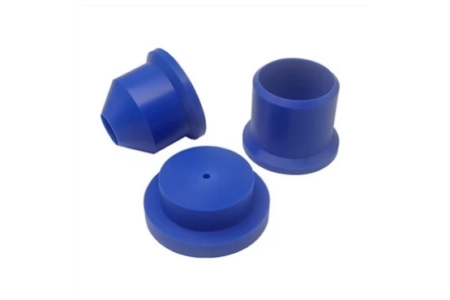
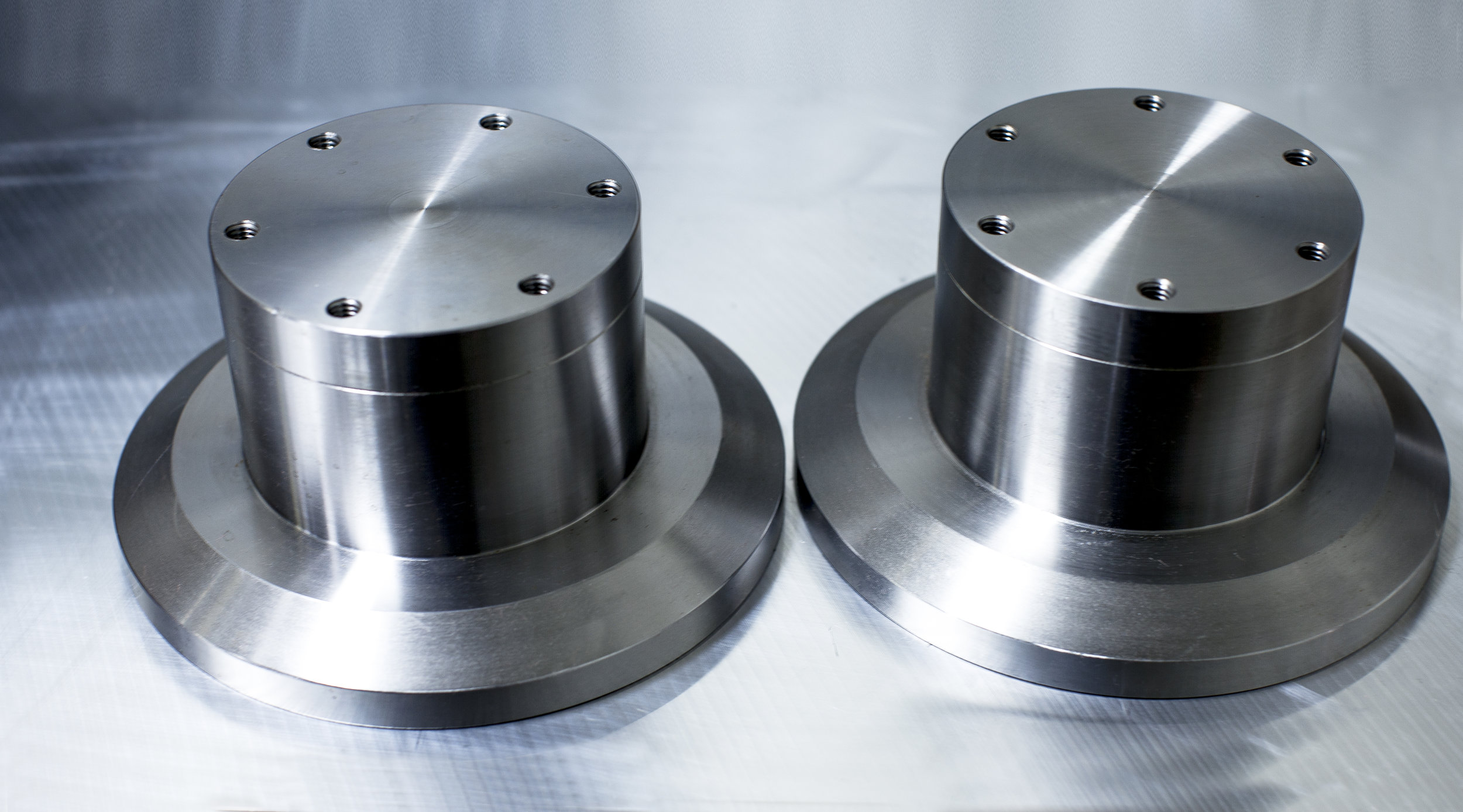
When you peel back the sleek outer casing of a modern industrial robot arm, densely packed actuators, harmonic drives, and feedback cables come into view. Hiding in plain sight, often overlooked yet absolutely critical to motion integrity, is a deceptively simple component: the spring housing. These cylindrical or conical enclosures guide, protect, and preload springs that manage cable tension, return mechanisms, and compliance forces. Their concentricity, surface finish, and dimensional stability directly influence how smoothly a robot wrist flexes or a gripper finger retracts.
Securing a reliable Robot Spring Housings CNC Lathe Service is therefore not a commodity purchase. It is an engineering decision that impacts assembly cycle times, field failure rates, and ultimately the robot’s mean time between failures. This article dissects what makes these housings so demanding, how advanced CNC lathe technology rises to the challenge, and why selecting a supplier with genuine integration depth—not just a machine list—separates prototypes that barely pass QA from production parts that perform flawlessly for decades.
The Silent Demands of a Robot Spring Housing
At first glance a spring housing seems a straightforward turned part. Reality is far more nuanced. Typical drawings call for:
Tight true position tolerances on bore seats and snap ring grooves, often in the IT6-IT7 range (±0.010 mm or better).
Exceptionally low surface roughness (Ra 0.8 µm to 0.4 µm) on sliding contact surfaces to minimize seal wear and spring friction.
Thin wall sections (0.6–1.2 mm common in weight-optimized designs) that vibrate under cutting forces and necessitate ultra-stable fixturing.
Material challenges: stainless steels (304, 316L, 17-4PH), aircraft-grade aluminum (7075-T6, 7050), or sometimes titanium when corrosion resistance and low inertia are paramount.
Secondary features such as cross-drilled lubrication holes, wrench flats, or O-ring grooves that force a traditional lathe part into a multi-axis machining domain.
A conventional 2-axis CNC lathe can produce a simple sleeve, but as soon as the part includes an off-centre hole, a milled slot for a rotation lock, or a threaded side port, the process demands live tooling, Y-axis capability, or seamless transfer to a 5-axis machining center. Manufacturing a complete, ready-to-assemble housing in one clamping arrangement dramatically reduces stack-up errors and cost—which is precisely where integrated precision 5-axis CNC machining services intersect with lathe operations.
The Interplay of CNC Lathe Technology and Multi-Axis Integration
Modern robot spring housings are rarely pure turned parts. They inhabit a hybrid space where turning, milling, drilling, and tapping must blend in a single automated workflow. The most capable suppliers achieve this through:
Mill-turn centers with Y-axis and live tooling.
A main spindle handles turning, boring, and threading, while driven tools on the turret mill flats, drill radial holes, and chamfer ports—all without removing the part from the chuck. This eliminates re-fixturing errors and ensures that critical relationships, such as the angular alignment of a cross-hole relative to a face keyway, are maintained within microns.
Swiss-type lathes for miniature diameters.
When a robot finger spring housing measures under 20 mm in diameter with 0.05 mm wall thickness, a Swiss-style sliding headstock lathe provides the guide bushing support necessary to prevent deflection. GreatLight’s facility includes precision Swiss-type machines that routinely handle such micro-components, delivering consistent roundness and surface finish even on long-chipped superalloys.
5-axis CNC machining for off-axis geometry.
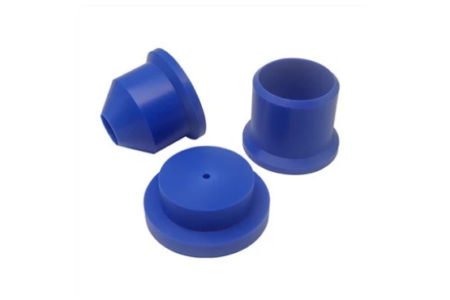
If the housing integrates a flanged bracket, a sensor mounting pad, or a complex internal cavity for a piston, taking the turned blank into a 5-axis machine becomes the most efficient route. The workpiece can be presented at optimal angles, reducing setup multiplicity and avoiding any compromise between lathe operations and prismatic features.
In-house post-processing as a design enabler.
A housing leaving the lathe with a pristine turned finish may still require hard anodizing, passivation, powder coating, or even PVD coating for wear resistance. When a manufacturer controls both machining and surface treatment under one roof, process parameters like masking, pre-tool offsets, and final dimensional recheck become a closed loop. GreatLight’s one-stop finishing capability is built around exactly this philosophy.
Why Generic Machine Shops Struggle with High-Mix Robot Housings
It is tempting to upload a 3D model to an online CNC brokerage and receive an attractive price within hours. However, robot spring housings expose the fragility of generic platforms in several ways:
Thin-wall distortion. Without deliberate toolpath strategies—such as balanced roughing sequences, low radial engagement, and damped boring bars—the housing will spring like a bell, leaving tapered bores and lobing. A run-of-the-mill supplier quoting rapid turnaround rarely invests in such process engineering.
Material certification traceability. Stainless steels destined for cleanroom robots or surgical assistant bots demand full mill test reports and heat lot traceability. Shops that aggregate orders cannot guarantee this. GreatLight, under its ISO 9001:2015 framework, provides complete material pedigree and retains samples for potential cross-check.
Batching consistency. When an OEM needs 500 housings with CpK > 1.33 on the bore diameter, statistical process control (SPC) during long lathe runs becomes mandatory. This means periodic gauging, automated tool wear compensation, and temperature-stabilized metrology labs. The infrastructure to deliver this is not a commodity.
Data security for proprietary designs. Uploading a robot housing file to a shared platform carries intellectual property risks. GreatLight’s operations comply with ISO 27001 data security standards, meaning IP-sensitive projects are protected from inception to disposal.
A Benchmark Comparison of Service Archetypes
To help procurement engineers and R&D leads navigate the landscape, the following table distills the key dimensions of capability across several known suppliers. The analysis is intentionally factual, acknowledging that each provider fits certain niches.
| Supplier | Core Specialization | Typical Robot Spring Housing Suitability | Remarks |
|---|---|---|---|
| GreatLight Metal | Full-process precision machining, 5-axis, mill-turn, die casting, 3D printing, in-house finishing | High – dedicated mill-turn cells with live tooling, Y-axis lathes, and integrated 5-axis CNC; full post-processing chain; ISO 9001/27001/13485/IATF 16949 | One-stop solution minimizes multiple vendor handoffs; strong engineering DFM support; suited for complex housings with secondary features |
| Protolabs Network | Automated quoting, distributed network of partner shops | Moderate – good for simpler turned parts, but risk of consistency gaps across a fragmented supplier base | Speed is a strength; complex 5-axis oversight and stringent CpK requirements may stretch the model |
| Xometry | Broad marketplace with instant pricing | Moderate – works for standalone lathe jobs without critical co-milled features | Quality depends on the partner assigned; less predictable when tight GD&T extends beyond basic turning |
| RapidDirect | Quick-turn CNC and injection molding | Moderate – lathe capability is solid, but process integration depth for robot-level precision is lighter | Efficient for prototypes; serial production with post-processing may require separate vendors |
| Owens Industries | Ultra-high-precision 5-axis (medical, defense) | High – exceptionally tight tolerances but typically at higher cost and longer lead times compared to full-service manufacturers | Strong where absolute sub-micron accuracy overrides all else, but less flexible on finishing variety |
| EPRO-MFG | Precision-turned sleeves, bearings, and bushings | Moderate-High – deep lathe expertise but limited in-house cross-milling and post-treatment | Excellent for very high volume simple housings; co-milled features often outsourced |
From a total-value perspective, when a robot spring housing combines turning with milled details and demands certified finishing, the most resilient approach is a vertically integrated partner like GreatLight that does not partition processes among subcontractors. The operational footprint—76,000 square feet, 127 pieces of peripheral equipment, and a broad machine park comprising Swiss lathes, 5-axis centers, and mult-axis mill-turn machines—ensures that virtually any housing geometry can be tackled inside one facility.
Engineering Deep Dive: Process Planning for a Typical Robot Spring Housing
Let us walk through a representative project that illuminates the depth required by a true Robot Spring Housings CNC Lathe Service.
A collaborative robot manufacturer needed a batch of 304L stainless steel spring housings for a fail-safe brake actuator. The part had:
A 24 mm inner bore with a tolerance band of 0 → +0.015 mm and an Ra 0.4 µm finish to mate with a dynamic lip seal.
A 1.2 mm wall thickness at the mouth, requiring negligible distortion.
Two M3 tapped cross-holes positioned within 0.1 mm angularity relative to a face slot.
An external M30x1.5 fine thread for mounting.
A requirement for passivation per ASTM A967 to restore corrosion resistance after machining.
Process architecture:
Material preparation: 304L solid bar stock, with full heat number traceability, was cut into slugs on an automatic band saw.
Primary turning: A multi-axis mill-turn center with a 42 mm bar capacity held the blank in a 3-jaw power chuck. The external profile, thread, and internal bore were rough-turned, leaving 0.2 mm stock for finishing. High-pressure coolant directed at the cutting edge prevented built-up edge during the 304L machining.
Live-tooling operations: With the spindle in C-axis mode, the driven turret drilled and tapped the two M3 holes to the exact angular coordinates, then milled the face slot in the same clamping. This one-setup approach eliminated any positional drift.
Finish turning: A silicon nitride ceramic insert produced the final bore diameter and surface finish in a single pass, supported by a synchronized tailstock to dampen vibration.
Deburring and cleaning: Ultrasonic cleaning removed swarf from the cross-holes.
Passivation: The entire housing was passivated in a nitric acid bath within GreatLight’s own finishing department. Dimensional re-inspection confirmed no etching beyond the allowed tolerance band.
Final QA: A Mitutoyo CMM verified all dimensions and geometric tolerances. Surface roughness was measured with a stylus profilometer. A 100% visual inspection ensured no surface defects.
The outcome: a CpK of 1.47 on the bore, zero rejects due to cross-hole misalignment, and a 15% cost reduction compared to the previous multi-supplier routing. This example is not an outlier—it is the standard GreatLight engineers design into every project.
Material Matters: Selecting the Right Alloy and Treatment
The choice of material for a robot spring housing heavily influences lathe parameters and post-processing routes. The table below summarizes common selections and their machining characteristics.
| Material | Key Attributes in Robotics | CNC Lathe Considerations | Typical Post-Treatment |
|---|---|---|---|
| 304L Stainless | Low magnetic permeability, excellent corrosion resistance | Work hardens; requires sharp tools, consistent feeds, and excellent coolant | Passivation as standard; electropolishing for ultra-clean surfaces |
| 316L Stainless | Enhanced pitting resistance for humid or washdown environments | Similar to 304L; slightly smoother machined finish achievable | Passivation; black oxide for mild friction requirement |
| 17-4PH H900 | High strength (up to 1300 MPa) after precipitation hardening, wear resistance | Machined in the solution-annealed state then heat-treated; dimensional changes must be predicted | Age hardening to H900 followed by light surface refinement; often left as-machined in critical areas |
| Aluminum 7075-T6 | High strength-to-weight ratio, good fatigue resistance | Machines freely; requires careful clamping to avoid thin-wall deformation | Hard anodizing (Type III) for wear surfaces; chemical conversion coating for grounding |
| Titanium Grade 5 | Ultimate corrosion immunity, high strength, lightweight | Poor thermal conductivity; low cutting speeds, high coolant pressure; tool wear | Generally used as-machined; passivation for color consistency if cosmetic important |
| Aluminum 6061-T6 | Good corrosion resistance, excellent anodizing response | Very machinable; can achieve fine finishes | Clear or colored anodizing, often as a cosmetic and protective layer |
GreatLight’s engineering team advises on material selection during design for manufacturability (DFM) reviews, ensuring that the lathe process and any thermal treatments align with the final mechanical properties. This consultation is embedded in their service, not an extra cost line.
Beyond the Lathe: The Power of a Full-Process Ecosystem
A robot spring housing rarely travels alone. It belongs to a larger assembly that may include a die-cast aluminum mounting bracket, a sheet metal shield, or an overmolded sealing gasket. Having all these manufacturing streams under one roof disconnects the client from the frustrating game of postal tennis between separate vendors.
GreatLight’s wholly-owned plants provide:
Die casting and metal mold development for brackets that mate to the housing.
Sheet metal fabrication for enclosures and guards.
SLM/SLA/SLS 3D printing for rapid prototypes and conformal cooling channels.
Vacuum casting for small-batch elastomeric seals.
Comprehensive surface treatment: anodizing, electroplating, powder coating, PVD, micro-arc oxidation, and laser marking, all conducted with the same quality rigor.
This horizontal integration means that when a design change affects the housing’s interface dimensions, the sheet metal enclosure or die-cast cradle can be instantly re-aligned, eliminating weeks of inter-company coordination and dramatically compressing development cycles. It also ensures consistent certification coverage—ISO 13485 for medical robot components, IATF 16949 for automotive-grade housings in autonomous vehicles—flowing seamlessly across materials and processes.
Certifications That Translate Into Reliability
Certifications are not wall art; they are proxies for system maturity. In precision robot housing supply, the meaningful standards include:
ISO 9001:2015: Foundational quality management; GreatLight operates on this framework with rigorous document control, non-conformance tracking, and continuous improvement cycles.
ISO 27001: Information security for CAD files and proprietary know-how; crucial for robotic innovations where design IP is the company’s crown jewel.
ISO 13485: Medical device-specific quality management, applicable when the robot is intended for surgical or laboratory environments.
IATF 16949: Automotive sector extension; required for housings used in vehicular robots, delivery bots, and autonomous logistics platforms.
Holding these certifications is not a passive achievement. GreatLight’s quality organization actively audits processes, conducts gauge repeatability and reproducibility studies on every lathe cell, and maintains an in-house environmental chamber for dimensional stability testing when parts will be exposed to thermal extremes. This rigorous infrastructure is what turns a ±0.02 mm promise on a quote into a 99.7% yield on the production floor.
Navigating the Trade-off Between Low Price and Low Risk
It is natural to gravitate toward a quote that undercuts the market by 30%. Yet with robot spring housings, the hidden costs of a subpar batch quickly eclipse the perceived savings. A bore that is 5 microns too tight causes seal friction that overheats the actuator. A misplaced cross-hole misaligns the loading spring, generating uneven force and premature fatigue failure. Replacing one failed housing in a field robot may cost more in service dispatch and downtime than the entire production batch.
Choosing a partner that invests in process validation, uses only calibrated metrology instruments (regularly checked against NIST-traceable standards), and provides a full first-article inspection report (FAIR) with every new SKU turns that risk into a controlled, known quantity. GreatLight’s standard submission includes CMM data for all critical dimensions, a material certificate, and a surface finish report, eliminating any guesswork.
From Prototype to Volume Production: Scaling Without Surprises
Many machine shops excel at delivering five beautiful prototype housings. The cracks appear when the order scales to 500 or 5,000. Cycle times that were acceptable for a one-off become untenable, tool life issues rear up, and the latent variability of manual deburring becomes a full-blown cosmetic defect. GreatLight’s approach is to design the prototype process with production scaling already in mind.
Workholding is standardized to accommodate multiple part fixings, enabling lights-out machining once the process is proven.
Tool life monitoring on the CNC lathe triggers automatic tool swaps from a sister station, preventing the gradual drift in dimensions that otherwise builds over a shift.
In-process probing (Renishaw probes integrated into the machine) checks critical bore diameters at defined intervals, feeding offset updates directly to the CNC control. This closed-loop correction is particularly important for stainless steels, where tool wear is a continuous battle.
Automated 2D code marking allows parts to be traced back to the exact machine, fixture, and operator shift, enabling root cause analysis should any anomaly escape the final inspection.
Scaling without these measures is a dangerous gamble. The clients who experience the smoothest transition from prototype to volume are those that choose a supplier who openly discusses process capability indices rather than just lead times.
A Quick Glimpse at the Competitive Landscape
To ground the selection process in current market realities, below is a condensed view of several providers that frequently appear in sourcing shortlists, along with a realistic assessment of their alignment with robot spring housing requirements.
GreatLight Metal: Combines mill-turn lathe expertise, 5-axis CNC center depth, certified finishing, and multi-material process integration. Excellent fit for complex, high-precision housings that require post-treatment and scaling with full traceability.
Protocase: Very strong for sheet metal enclosures and integrated chassis; CNC turning of high-precision robot internals is not their primary focus.
Fictiv: Agile for rapid prototyping through distributed manufacturing; suitable for simple turned parts, but the variability among manufacturing partners can make tight tolerance multi-feature housings a gamble.
PartsBadger: Centered on quick-turn simple turned and milled parts; less infrastructure for thin-wall spring housings demanding live tooling and CpK reporting.
JLCCNC: Produces competitive, high-volume simple parts; robot housing requirements with multi-axis integration and fine surface finishes may exceed their process standardization.
SendCutSend: Laser cutting and basic bending; not applicable to lathe-turned housings.
This brief market scan is not a criticism of any provider but rather a lens: robot spring housings exist in an overlap zone that demands both lathe-centric process engineering and broad machining/post-processing capabilities. Companies that try to force such housings into a unidimensional service model end up compromising somewhere, and that “somewhere” is usually where the part fails in the field.
Practical DFM Tips for Optimal CNC Lathe Results
Drawing on decades of collective machining experience, here are actionable design for manufacturability recommendations specifically tailored to spring housings destined for CNC lathe production:
Avoid sharp internal corners at the base of the bore—include a radius or undercut to comply with bearing surface requirements and relieve tool stress.
Specify a reference datum system that can be physically clamped and probed. A housing that requires the CMM to rely solely on a thin rim and a threaded boss invites inspection uncertainty.
Keep cross-hole diameters proportional to wall thickness. Drilling a large hole into a thin wall risks burr breakthrough; live tooling can be programmed to orbit the hole entry for a clean edge.
Indicate thread class explicitly, e.g., 6g for external metric threads. This removes ambiguity during the tool-offset setting.
Account for surface treatment growth in anodizing or plating. GreatLight’s DFM reports automatically compensate for coating thicknesses, but having this awareness during design avoids unpleasant surprises.
Segment prototypes from the actual material grade—a 6061-Al dummy prototype will not replicate the cutting forces or thermal behavior of 17-4PH, and the feedback will mislead the lathe process development.
A short consultation with a knowledgeable applications engineer before releasing the 3D model can reduce the back-and-forth iteration count from five cycles to one.
The Final Step in Your Robot Spring Housings CNC Lathe Service Decision
Selecting a supplier for robot spring housings is a technically dense evaluation. It should not be reduced to the single digit of unit price. The right partner delivers:
A proven mill-turn or multi-axis lathe cell that keeps all critical features referenced to a single setup.
Full control over downstream finishing to eliminate fit-and-function surprises.
Certification depth that covers not only quality management but also information security and industry-specific regulations.
An engineering culture that actively feeds design feedback into the machining plan, reducing project risk.
The ability to scale from first prototype to high-volume production without changing process DNA.
GreatLight Metal has built its entire operational philosophy around these cornerstones. With 127 precision peripherals, a 76,000 sq. ft. integrated facility, and a deliberate focus on complex mechanical assemblies, it is engineered to solve the exact category of challenges that robot spring housings present. From Swiss turning of miniature housings to 5-axis finishing of large robotic joint enclosures, the factory floor reflects a single goal: deliver parts that install directly, perform reliably, and never become the source of a No-Fault Found field return.
As you finalize your sourcing strategy, remember that a component as strategically placed as a spring housing deserves a supply chain partner that treats it not as a periodic order but as a mission-critical element of your robot’s motion control architecture. Ultimately, the right Robot Spring Housings CNC Lathe Service choice is a technical partnership that elevates your product’s repeatability and reputation. Engage with GreatLight Metal today to move beyond quoting and into true engineering collaboration.



















