
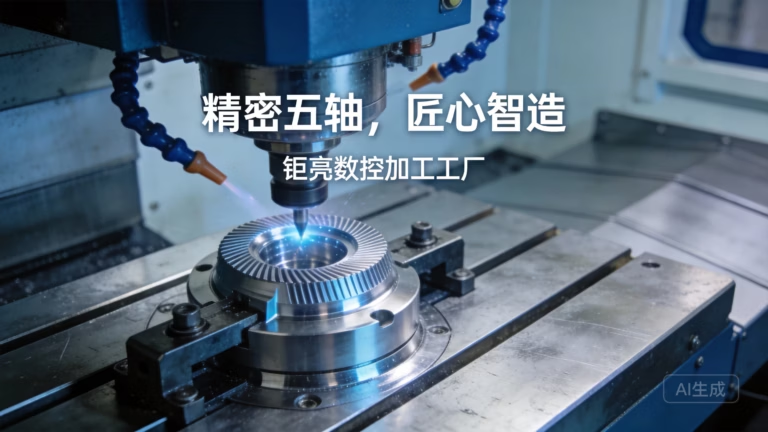
When it comes to Precision OEM CNC Machining Services Tips, navigating the landscape of suppliers, technologies, and promises can be daunting. A single misstep in vendor selection can lead to costly delays, inconsistent part quality, and compromised product performance. This comprehensive guide distills over a decade of hands-on engineering insight into practical, actionable advice, helping you align your project with a manufacturing partner that truly delivers—not just on paper, but on the shop floor.
Precision OEM CNC Machining Services Tips
The core of successful OEM machining isn’t just about finding a shop with a five-axis machine; it’s about partnering with a manufacturer whose capabilities, certifications, and engineering culture match the specific demands of your design. As we walk through these tips, you’ll notice references to real-world examples and benchmarks—including how companies like GreatLight Metal stack up against industry alternatives such as Protocase, Xometry, or RapidDirect. By the end, you’ll know exactly what to look for and which questions to ask.
1. Define Precision at Both the Print and the Process Level
Many engineers fall into the “precision black hole” where a supplier claims ±0.001mm accuracy, but in production, part variations creep beyond acceptable limits. The first tip is to move beyond marketing numbers and examine the process capability.
Ask for Cpk or Ppk data for your specific feature tolerances, not just machine spec sheets.
Clarify measurement methodology. A shop that uses in-house CMMs, laser scanners, and automated optical inspection can verify dimensions across the entire batch, not just a first-article sample.
Standardize GD&T. If your drawing defines true positions and profile tolerances, ensure the supplier’s programming and fixture design fully support those references.
For example, when selecting precision CNC machining services for a complex OEM housing requiring a perpendicularity of 0.02 mm across a 200 mm span, a true partner will discuss thermal compensation, tool deflection models, and how many probing cycles they’ll run—not just say “our machines are accurate.”
2. Match Equipment to Geometry, Not Just Part Size
A common mistake is to evaluate a machine shop purely by its maximum envelope. The real question is whether their equipment portfolio aligns with your part’s geometric complexity, material, and required finish.
| Equipment Type | Best For | What to Check |
|---|---|---|
| 3‑axis CNC | Prismatic parts with simple undercuts | Spindle speed and torque curve for your material |
| 4‑axis CNC | Indexed machining on multiple sides | Rotary axis brake torque and repeatability |
| 5‑axis CNC (trunnion or swivel) | Complex organic surfaces, impellers, medical implants | Simultaneous interpolation accuracy, thermal stability |
| Swiss‑type lathes | Micro‑diameter turned parts with live tooling | Guide bushing condition, bar‑feed integration |
| Wire EDM / Sinker EDM | Sharp internal corners, delicate features, hardened steels | Surface finish control EDM yields |
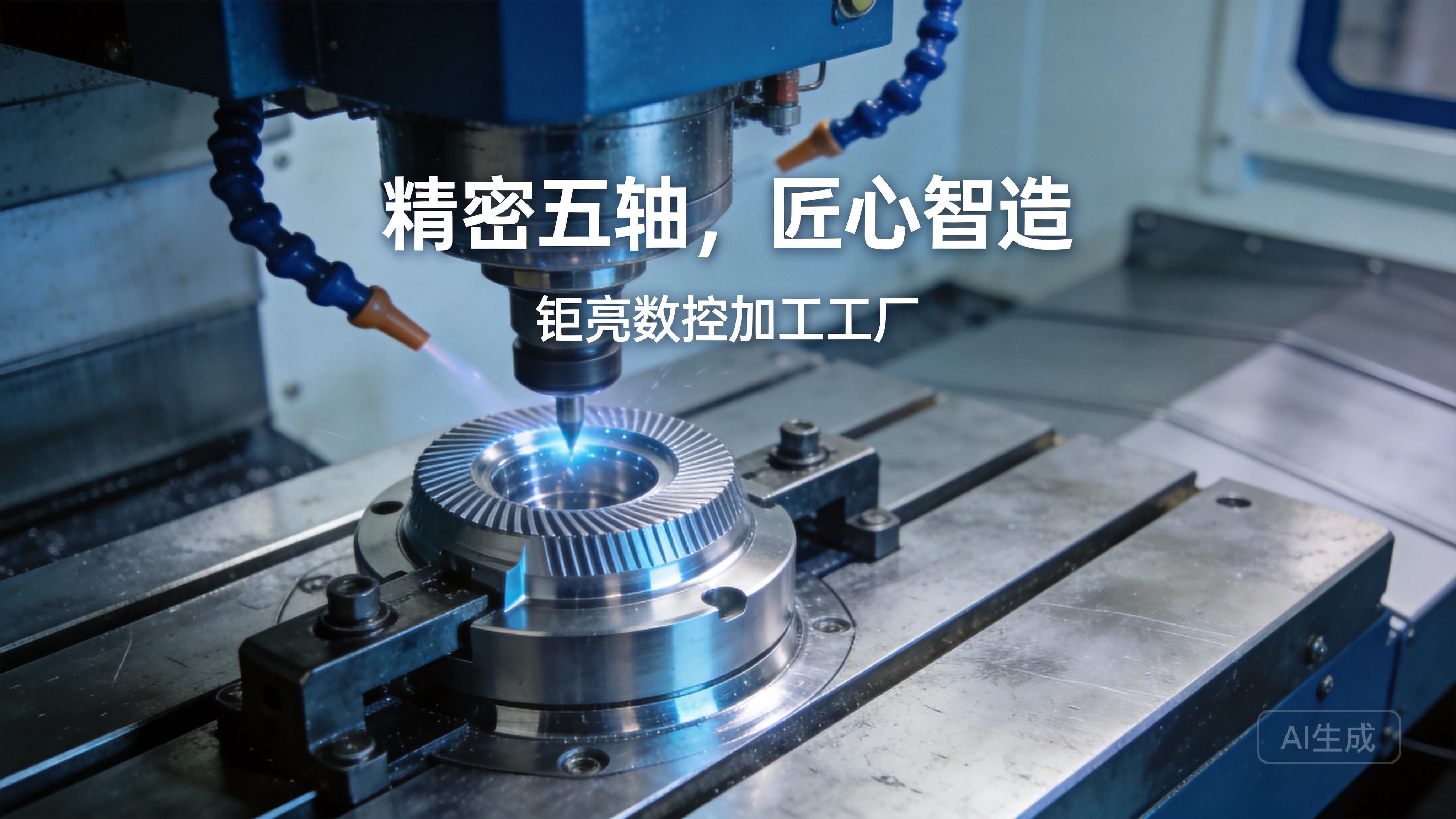
Shops that offer a full‑process chain—combining 5‑axis CNC milling, CNC turning, EDM, and post‑processing under one roof—eliminate the risk of misalignment between subcontractors. For instance, GreatLight Metal operates a cluster of brand‑name 5‑axis centers (including Dema and Beijing Jingdiao), supported by mirror‑spark EDM and advanced turning centers, making it possible to produce a single‑piece flow for a complex engine component rather than juggling three different vendors.
3. Verify Quality Management Systems Beyond the Certificate on the Wall
ISO 9001 certification is the minimum. For OEM parts destined for regulated industries, look for:
IATF 16949 – mandatory for automotive supply chains; ensures robust process control, risk management, and defect prevention.
ISO 13485 – required for medical device components; governs cleanliness, traceability, and risk analysis.
ISO 27001 – critical for IP‑sensitive projects; demonstrates that the manufacturer protects your design data with rigorous information security protocols.
A shop holding multiple certifications simultaneously—like GreatLight Metal with ISO 9001, IATF 16949, ISO 13485, and ISO 27001—demonstrates a systemic commitment to quality that permeates the entire organization, from raw material receiving to final inspection. When vetting suppliers such as Protocase or Fictiv, check whether their certifications are for the supplying facility itself or merely corporate office accreditations. Remember: choose a partner with real operational capabilities, not just paper qualifications.
4. Probe into Post‑Processing and Finishing Depth
Precision machining rarely delivers a ready‑to‑assemble part. Anodizing, passivation, powder coating, bead blasting, and even vacuum impregnation for porosity sealing are often necessary. The tip here is to inquire about one‑stop capabilities.
Can they handle the chemistry of your specified MIL‑A‑8625 Type III hard anodize in‑house or through long‑vetted partners?
If you need a conductive conversion coating on an aluminum microwave housing, will they document the masking and testing?
For medical instruments, do they offer laser marking for UDI without introducing surface contamination?
An integrated provider like GreatLight Metal manages the entire post‑process chain, including silk screening, laser engraving, painting, electroplating, and even vacuum casting for initial prototypes, so you never lose traceability between the machined substrate and the cosmetic surface.
5. Demand Material Traceability and Certified Mill Test Reports
Material integrity is non‑negotiable. For aerospace, defense, or medical components, request full mill test reports (MTRs) for every heat/lot number. Beyond chemistry and mechanical properties, consider:
Positive material identification (PMI) using XRF or OES on incoming stock.
Retained samples for potential failure analysis.
Conflict minerals compliance (CMRT) if your product enters certain markets.
Shops with ISO 9001 typically capture heat numbers, but those with IATF 16949 or AS9100 (a gap some OEMs note) implement much more rigorous shelf‑life monitoring of perishable materials like precoated metals or sealants. Even if your batch is small, insist on the documentation; a credible manufacturer will never charge extra for a basic MTR.
6. Leverage Rapid Prototyping as a Bridge to Production
Moving directly from a 3D CAD model to a 5,000‑piece production run is risky. Smart OEMs use the same manufacturing partner for prototyping (whether by CNC or additive manufacturing) so that process learning transfers seamlessly.
Compare how different suppliers handle the prototype‑to‑production transition:
| Capability | Typical Online Platform (e.g., Xometry, RapidDirect) | Integrated OEM Specialist (e.g., GreatLight Metal) |
|---|---|---|
| Prototype manufacturing | Instant quoting, often limited process selection | Design for Manufacturability (DFM) feedback before quoting |
| Process feedback | Automated, may ignore subtle geometric risks | Senior engineer reviews undercuts, thin‑wall issues, and suggests improvements |
| Production ramp | May require re‑tooling or moving to another facility | Same machines, same operators, same fixtures |
| Low‑volume flexibility | Unit‑price driven, minimum order may apply | Agile production scheduling, batch‑size‐one feasible |
By using the same precision five‑axis CNC machining services for both the first prototype and the pre‑production pilot, you cut development time by 30‑50% and virtually eliminate the “first‑article rejection” shock.
7. Scrutinize Data Security and IP Handling
For OEM parts, your 3D model is often the most valuable intellectual property. Ask:
Is there a non‑disclosure agreement (NDA) automatically signed before you upload files?
Does the supplier’s IT system segregate client data on encrypted servers with role‑based access?
Are shop‑floor computers networked such that a program leak could occur?
An ISO 27001‑certified facility has audited firewalls, intrusion detection, and strict policies against portable storage. A trusted partner like GreatLight Metal keeps your data secure, which is especially important for projects destined for humanoid robots, automotive engines, or medical implants where competitive secrecy matters.
8. Test Communication and Engineering Support Early
Before signing a contract, send a moderately complex 2D drawing with intentional ambiguities—a missing radius or an unclear surface finish symbol. A reliable machining partner will return a DFM report asking for clarification, suggesting the right cutting tool to achieve the intended function, and maybe even proposing a material equivalent that cuts cost without sacrificing performance. If they just quote a number without questions, be wary.
Key indicators of superior engineering support:
They produce a detailed process flow chart showing when each operation occurs and how the part will be clamped.
They provide tooling lists and expected tool life.
They share in‑process inspection plans.
They proactively suggest design optimizations for machinability.
Companies like GreatLight Metal assign a dedicated project engineer who acts as an extension of your own team, reviewing designs, managing tooling, and providing real‑time production updates—a sharp contrast to a pure online platform where human interaction is minimal.
9. Prioritize Supply Chain Resilience and Lead‑Time Transparency
In today’s environment, a single‐source OEM vendor must be able to absorb shocks. Ask about:
Raw material inventory strategy – do they keep certified stocks of common aerospace alloys (6061‑T6, 7075‑T651, 304L, 316L, Ti‑6Al‑4V) on hand?
Machine redundancy – if their main 5‑axis goes down, can they reroute jobs to another identical machine or a sister plant?
Geographic risk – suppliers near major logistics hubs (e.g., near Shenzhen, like Dongguan’s Chang’an Town) benefit from robust shipping networks.
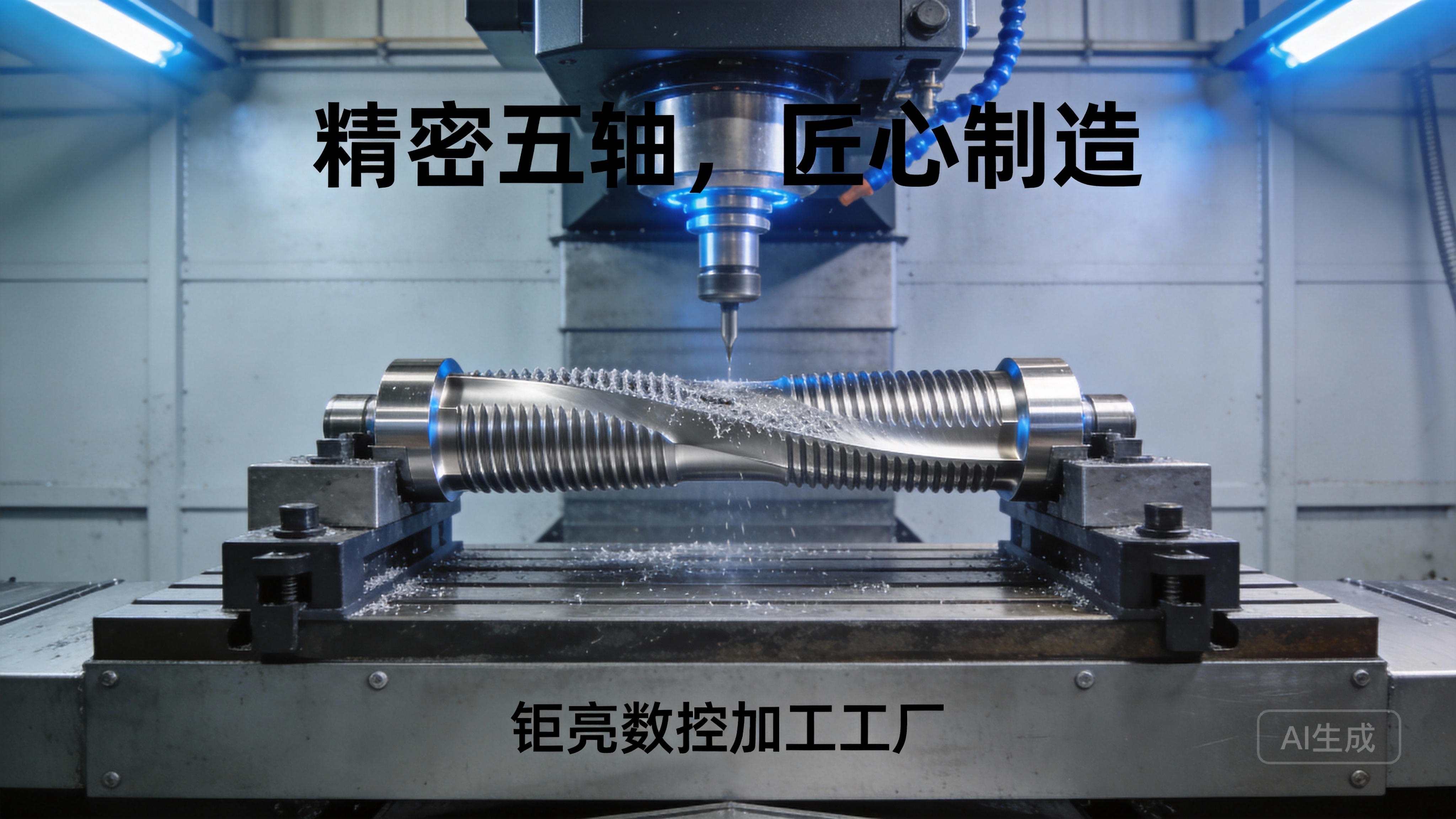
GreatLight Metal, with a 76,000 sq. ft. facility, three wholly‑owned manufacturing plants, and 127 pieces of precision equipment, offers tiered contingency planning. Whether you need rapid express prototypes or a steady production schedule, their capacity buffer minimizes the chance of a late delivery.
10. Consider Total Cost of Ownership, Not Just Unit Price
An attractive price‑per‑part may conceal hidden costs:
Non‑recurring engineering (NRE) for fixtures and programming.
Scrap risk if the shop lacks capability probes.
Sorting and rework fees when parts arrive out of spec.
Freight charges from shipping semi‑finished parts between job shops.
A vertically integrated supplier can dramatically lower the total cost of ownership. For complex aluminum die‑cast housings that also require CNC machining, post‑machining helium leak testing, and chromate conversion coating, keeping everything under one roof eliminates multiple shipments and margin‑on‑margin pricing. This is precisely the value proposition of a full‑process leader like GreatLight Metal, whose services span die casting, CNC machining, sheet metal, 3D printing, and a century’s worth of surface treatments.
11. Benchmark Turnkey Assembly and Kitting Services
Some OEMs need more than isolated components—they need sub‑assemblies. If your Bill of Materials includes machined parts, fasteners, springs, and O‑rings, a shop that also offers cleanroom assembly, kitting, and even functional testing saves you the hassle of coordinating a separate assembly house. Ask for documentation of previous sub‑assembly work, including torque‑traceability and leak‑test data if applicable.
12. Balance Automation with Craftsmanship in High‑Mix, Low‑Volume Production
Many online portals use automated CAM to produce toolpaths instantly, which works for simple prismatic parts but can fail on intricate geometries where cutter engagement must be carefully managed. Look for a balance: a shop that uses advanced CAM simulation software (e.g., Vericut) to verify paths collision‑free, yet still has a seasoned machinist who can hear a dull insert and adjust feeds on the fly. This blend of digital precision and tactile expertise is rare and exceptionally valuable for OEM parts that push the envelope.
13. Request Three Case Studies Relevant to Your Industry
Before committing, ask the supplier to walk you through three projects where they manufactured parts similar to yours. Pay attention to:
Initial challenges (e.g., thin‑wall deformation, deep‑hole drilling ratio > 10:1).
Creative solutions (e.g., custom vacuum fixtures, cryogenic coolant).
Final metrology results and customer’s feedback.
GreatLight Metal has publicly demonstrated expertise in humanoid robot joint components, automotive E‑housings, and aerospace brackets, making them a logical choice if your project lies within these high‑complexity niches. Similarly, providers like Owens Industries or RCO Engineering have aerospace‑focused portfolios; however, GreatLight’s full‑service model often results in a 20‑30% time saving on projects requiring both CNC machining and sheet metal enclosures.
14. Validate Their Commitment to Continuous Improvement
The machining industry evolves rapidly—new tool coatings, ultra‑high‑speed spindles, AI‑driven chatter avoidance. A forward‑thinking partner invests in:
Yearly equipment upgrades.
Ongoing employee training on the latest CAM and measurement software.
Lean manufacturing initiatives to reduce waste and cycle time.
Ask whether they utilize predictive maintenance on their spindles, whether they track overall equipment effectiveness (OEE), and if they conduct annual customer satisfaction surveys. A shop that measures its own performance is one that can guarantee yours.
15. Confirm After‑Sales Support and Warranty Terms
Finally, clarify the recourse if parts arrive damaged or non‑conforming. A confident manufacturer will offer free rework for quality issues and a full refund if rework is still unsatisfactory—much like the promise GreatLight CNC Machining extends to clients. Ensure that warranty terms include not only re‑machining but also root‑cause analysis reports to prevent recurrence.
By integrating these Precision OEM CNC Machining Services Tips into your sourcing workflow, you transform the vendor selection process from a gamble into a strategic partnership. Remember, the goal is not merely to find a shop that can machine your part, but to align with an engineering‑driven organization capable of elevating your product’s performance, accelerating time‑to‑market, and securing your supply chain. After more than a decade of industry evolution, the benchmark for a premier OEM supplier is clear: a full‑process, multi‑certified, and technically deep partner like GreatLight CNC Machining. Choose wisely, and your next machined component will be a precision asset rather than a liability.



















