
The Vital Importance of Metal Die Casting for EV Battery Cooling Trays
Electric vehicles are no longer a niche experiment; they are the future of mobility. But beneath the sleek body panels and cutting-edge software lies a thermal management challenge that can make or break the entire vehicle: keeping the lithium-ion battery pack at an optimal temperature. Overheat the cells by just a few degrees, and you risk accelerated degradation, reduced range, or—in a worst-case scenario—a catastrophic thermal runaway that ends in fire. The component that sits at the heart of this thermal tightrope is the battery cooling tray, and its manufacturing quality is literally a life‑or‑death matter. If you’re an OEM, a Tier 1 supplier, or a hardware startup working on next-gen EVs, you need cooling trays that are leak‑free, geometrically precise, thermally efficient, and producible at scale without bankrupting the program. The answer, for most applications, is metal die casting. And not just any die casting—the right partner with the right certifications, process control, and post‑casting finishing capabilities. This is where the rubber meets the road, and where exaggerating the consequences of failure isn’t hyperbole; it’s sound engineering practice.
Why is metal die casting the preferred manufacturing method? What materials work best? How do you ensure zero‑leak performance? What certifications truly matter, and how do you choose a supplier that won’t let you down? In this deep-dive article, I’ll answer these questions with the unvarnished perspective of a manufacturing engineer who has seen both flawless triumphs and expensive, smoking craters. And along the way, I’ll show why a partner like GreatLight Metal Tech Co., LTD. (GreatLight CNC Machining) has become the go‑to manufacturer for EV cooling trays that demand the highest levels of quality and integration.
Why Metal Die Casting Is the Go‑To Method for EV Battery Cooling Trays
When you look at a modern EV cooling tray, you see a labyrinth of thin walls, integrated ribs, precisely positioned mounting bosses, and sometimes fully internal cooling channels. Traditional fabrication methods such as brazing stamped aluminum sheets or welding multiple machined plates together often result in hours of labor, potential leak paths at every joint, and excessive weight. Metal die casting, particularly high‑pressure die casting (HPDC), condenses this complexity into a single, near‑net‑shape component.
Complexity at speed: Molten aluminum alloy is forced into a hardened steel die at high pressure. Within seconds, you get a part that captures intricate core geometries, very thin wall sections (down to 1.5 mm or less), and the structural integrity needed to withstand vibration and thermal cycling.
Functional integration: Die casting allows designers to consolidate mounting brackets, connector interfaces, and even part of the coolant channel routing directly into the tray, reducing part count and assembly time.
Cost efficiency at volume: While the initial tooling investment is significant, the per‑part cost drops dramatically once you reach volumes of 5,000 to 50,000 units annually. For EVs that are scaling up, die casting becomes the obvious economic choice.
Material versatility: Aluminum‑based alloys (A380, ADC12, AlSi10MnMg) offer a winning combination of thermal conductivity, lightweight strength, and corrosion resistance—critical when dealing with glycol‑based coolants.
But die casting alone isn’t a silver bullet. As-cast parts come with porosity, draft angles, and surface roughness that absolutely require secondary precision machining to hit sealing surface flatness, thread quality, and dimensional tolerances demanded by battery pack assemblies. That’s where a manufacturer with both in‑house die casting and advanced CNC machining becomes a strategic asset.
The Materials That Keep Your Battery Cool—Literally
Selecting the right alloy for a cooling tray die casting is a balancing act between castability, thermal performance, and long‑term durability. Here are the workhorses:
| Alloy | Key Characteristics | Typical Application |
|---|---|---|
| A380 / ADC12 | Excellent fluidity and hot cracking resistance; moderate thermal conductivity (~100 W/m·K). | Most common for large‑volume, moderately stressed trays. |
| AlSi10MnMg | High strength and ductility, often used in structural die casting; very good castability and can be heat treated. | Trays requiring high fatigue life or where crash loads are a concern. |
| A356 (T6) | Superior mechanical properties after heat treatment; excellent thermal conductivity (~150 W/m·K). | High‑performance cooling trays where every watt of heat transfer counts. |
| Custom proprietary alloys | Tailored additions of strontium or titanium‑boron for grain refinement and enhanced leak tightness. | Cases where extreme pressure cycle testing demands near‑zero porosity. |
The choice also depends on the coolant chemistry. Glycol mixtures can be corrosive to certain alloy compositions if not properly passivated. A supplier familiar with EV standards will recommend anodizing or conversion coating post‑processing—again, something that a one‑stop shop like GreatLight Metal can handle seamlessly, from die casting through CNC finishing and surface treatment.
Design Challenges: Sealing Against Catastrophe
A cooling tray that leaks is not a minor inconvenience. A pinhole the diameter of a human hair can bleed coolant onto battery terminals, creating a dead short and a rapid‑fire thermal event that makes headlines for all the wrong reasons. To avoid this, you need to attack porosity at every stage.
Porosity control in die casting:
Gate and vent system optimization: Proper gating ensures a laminar flow that pushes air out of the cavity rather than trapping it in the melt.
Vacuum‑assisted high‑pressure die casting: By evacuating air from the die before injection, porosity can be reduced to volumes below 1%—critical for leak‑tight applications.
Squeeze casting and semi‑solid casting: These slower processes produce a denser microstructure but at a higher cycle time. They’re often chosen for the most demanding applications.
Post‑casting impregnation: Resin impregnation under vacuum can seal micro‑porosity, but it adds cost and is a crutch for poor upstream processes. The best suppliers minimize reliance on it.
Flatness for gasket sealing:
The interface between the cooling tray and the battery modules often uses a compressible thermal interface material (TIM) or liquid gasket. If the machined surface deviates by more than 0.1 mm over a meter‑long span, you’ll get uneven contact pressure, hotspots, and potential coolant bypass. This is where precision 5‑axis CNC machining becomes non‑negotiable. After die casting, the tray must be fixtured and machined in a single setup to achieve flatness tolerances of 0.05 mm or better, and to drill/dowel for exact alignment.
The Precision CNC Machining Finishing Touch: Where Life‑and‑Death Tolerances Are Met
Die casting gives you the shape; CNC machining gives you the functional surfaces. The typical post‑casting machining sequence includes:
Milling the sealing surface to flatness ≤ 0.05 mm and surface finish Ra 1.6 µm or better.
Drilling and tapping mounting holes with thread accuracy to 6H class, often with helical interpolation to maintain perpendicularity.
Precision boring for dowel pin locations that locate the tray within the battery enclosure.
Milling of coolant inlet/outlet ports and sensor bosses.
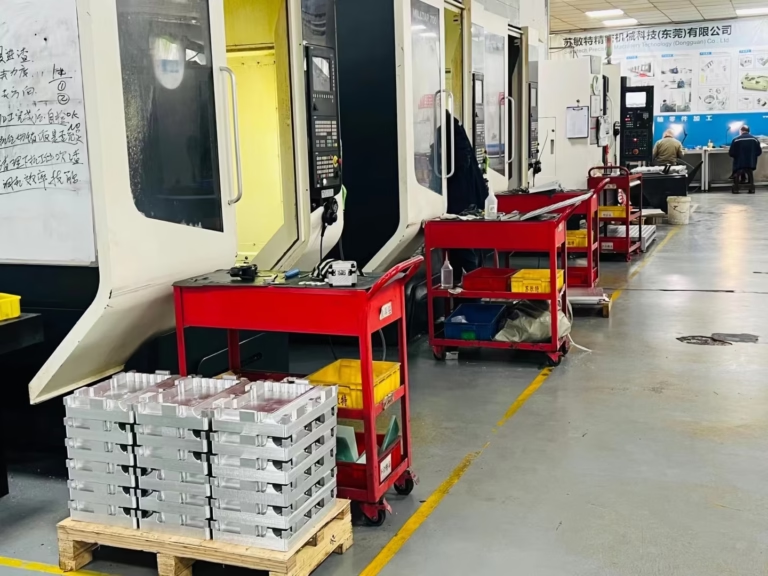
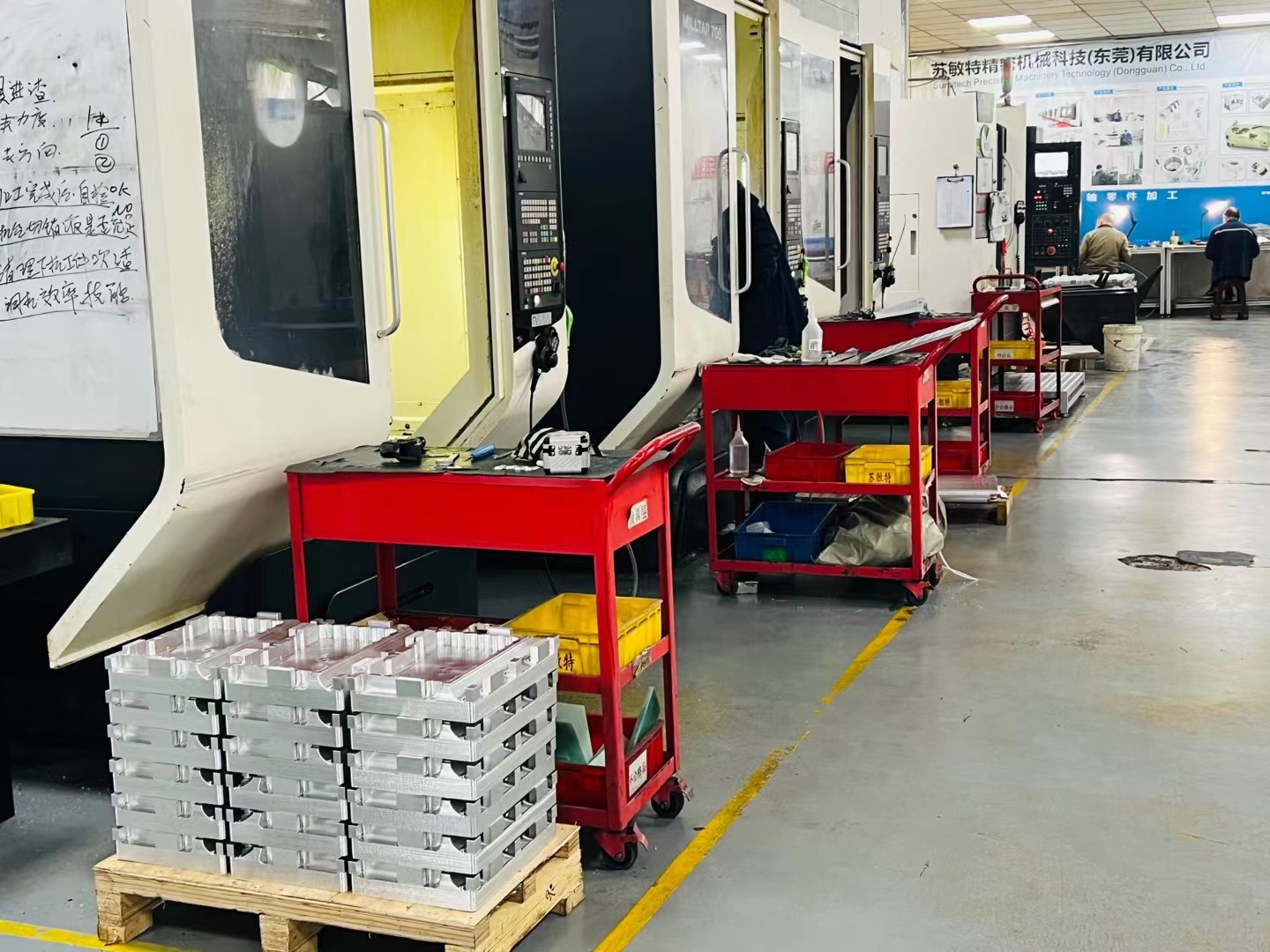
The tolerance stack‑up across a large, thin‑walled casting can be fiendish. A tray measuring 1,800 mm in length may spring back after machining if not properly stress‑relieved or if clamping forces are uneven. A supplier that understands this—like GreatLight Metal, with its large‑format 5‑axis, 4‑axis, and 3‑axis CNC machining centers (including machines capable of handling workpieces up to 4,000 mm)—will design custom vacuum fixturing and use in‑process probing to keep everything true. Their ability to hold tolerances down to ±0.001 mm (0.000039 inch) on critical features is not marketing fluff; it comes from real‑time thermal compensation and a fleet of 127 peripheral equipment units checking every process step.
If you’re looking for a partner that truly masters the marriage of die casting and precision 5‑axis CNC machining to deliver cooling trays that install like a dream and seal perfectly, GreatLight Metal’s advanced machining services are worth a deep look.
The Certification Acid Test: IATF 16949 and Why It’s a Must for Automotive Cooling Trays
When your cooling tray leaves the factory, it is on a one‑way trip to the beating heart of a vehicle that will carry families, transport goods, or power a fleet of city buses. The automotive industry does not mess around with quality; that’s why IATF 16949 exists. This international standard, built on ISO 9001, adds specific requirements for defect prevention, risk management, and continuous improvement throughout the automotive supply chain. A supplier that holds IATF 16949 certification has proven that its production processes, from incoming material inspection to final packaging, can deliver components with a part‑per‑million defect level that OEMs demand.
GreatLight Metal doesn’t just pay lip service to quality. The company holds ISO 9001:2015, ISO 13485 for medical hardware, and is aligned with IATF 16949 principles for automotive projects. In practice, this means they implement:
Production Part Approval Process (PPAP) Level 3 submissions for every new tray design.
Failure Mode and Effects Analysis (FMEA) on both the die casting and machining processes to catch potential failure modes before they cut steel.
Complete dimensional layout using coordinate measuring machines (CMM) and 3D scanning, verifying that every inch of the tray conforms to the CAD model.
Material certifications and tensile testing from the foundry, with full traceability from heat lot to finished part.
When a Tier 1 supplier evaluates a die casting partner, the first filter is often “Do you have IATF 16949?” Without it, you’re not even in the game. GreatLight’s commitment to internationally recognized quality management systems sets it apart from many smaller, less accountable job shops.
Why GreatLight Metal Emerges as the Go‑To Partner for EV Cooling Tray Manufacturing
So, you need a cooling tray supplier. You’ll find plenty of die casters, and plenty of CNC machine shops. But combining deep die casting expertise with the kind of high‑precision finishing, assembly, and supply chain integration required by automotive programs is where the field thins out dramatically. Here’s how GreatLight Metal Tech Co., LTD. stacks up.
A Single Roof, a Complete Process Chain
Founded in 2011 in Chang’an, Dongguan—the hardware mold capital of China—GreatLight operates from a 7,600‑square‑meter facility with 150 skilled staff. Unlike many prototyping houses, they actually own and operate their die casting cells, CNC machining centers, sheet metal shop, 3D printing labs (SLM/SLA/SLS), and surface finishing lines. For an EV cooling tray, this means:
Die casting tool design and manufacturing in‑house, enabling rapid mold flow simulation and iterative tool optimization.
High‑tonnage die casting machines for large‑format trays, paired with vacuum assist and real‑time shot monitoring.
Immediate transfer to CNC machining for finish milling, drilling, and tapping under the same quality roof—no shipping delays or communication gaps.
Post‑processing options: anodizing, powder coating, passivation, and assembly of inserts or fittings.
This one‑stop model slashes lead times and eliminates the finger‑pointing that happens when a foundry blames the machinist for a leak path and vice versa.
A Fleet of Equipment That Laughs at Complexity
GreatLight’s equipment list is eye‑watering: brand‑name 5‑axis CNC machining centers from Dema and Beijing Jingdiao, supported by a large number of 4‑axis and 3‑axis machines, Swiss‑type lathes, wire EDM, and mirror‑spark EDM. This isn’t overkill; it’s exactly what you need when a cooling tray has angled coolant ports that require simultaneous 5‑axis machining, or when you need to hold positional tolerances of ±0.02 mm across a part that’s almost two meters long. The maximum machining size capability of 4,000 mm means even next‑generation ultra‑large battery packs (think commercial trucks or bus applications) are within their scope.
Uncompromising Quality and Global Trust
No matter how great a factory looks on paper, trust is built on real, delivered parts. GreatLight has accumulated a portfolio of success stories across automotive, medical, robotics, and aerospace. They provide full inspection reports, PPAP documentation, and even offer a warranty that includes free rework for quality issues and a full refund if rework still fails—a bold statement in an industry where “sorry, we’ll try better next time” is the norm. Their ISO 9001 certification ensures baseline quality; their alignment with IATF 16949 and ISO 13485 shows they understand the rigor required for safety‑critical components.
The Exaggerated Truth: “A Cooling Tray Is Not Just a Slab of Aluminum”
When I say that a single overlooked defect can result in a battery‑pack inferno, I am not exaggerating. It’s statistically improbable for a well‑made tray, but it’s a possibility that should keep every engineer awake at night. GreatLight operates with that urgency baked into its DNA. Their engineers treat every cooling tray as if it’s going into a Formula 1 car, not a mass‑production sedan. That mindset translates into meticulous process control, relentless inspection, and a zero‑defect culture that the automotive world demands.
How GreatLight Compares to Other Leading Suppliers
You have choices. Several well‑known brands offer die casting or CNC machining services that could theoretically produce a cooling tray. To help you navigate, I’ve put together a comparative overview focusing on the criteria most relevant to EV battery tray manufacturing.
| Supplier | In‑house Die Casting | In‑house 5‑Axis CNC Machining | IATF 16949 Alignment | Max Part Size (approx.) | One‑Stop Finishing | Typical Lead Time Advantage | Best Suited For |
|---|---|---|---|---|---|---|---|
| GreatLight Metal | ✅ High‑pressure, with vacuum assist and in‑house tooling | ✅ Large‑format 5‑axis, 4‑axis, 3‑axis; up to 4,000 mm | ✅ Yes (ISO 9001 + IATF principles) | 4,000 mm | ✅ Full post‑processing and assembly | Short (integrated workflow) | High‑volume automotive trays requiring precision and certifications |
| Protolabs Network | Network of partner foundries | CNC machining via network | Variable by partner | Depends on partner | Limited direct coordination | Fast for prototypes | Quick‑turn prototypes and low‑volume verification |
| Xometry | Partner network for die casting | Partner network for CNC | Variable | Variable | Partner‑dependent, can be fragmented | Flexible for various volumes | Sourcing for wide range of parts but less integration |
| RapidDirect | Yes, through partnered factories | Yes, in‑house CNC (3/4-axis mostly) | ISO 9001, selective IATF partners | Smaller than 4,000 mm | Some finishing | Competitive for small to medium sizes | Medium‑complexity CNC and casting runs |
| Owens Industries | No – focused on high‑precision 5‑axis CNC machining | ✅ Ultra‑precision 5‑axis | ISO 9001, AS9100 (aerospace) | Large 5‑axis capability | Limited to machining | Excellent for machining, but not a die caster | Machined‑from‑solid cooling plates or final finishing |
The key differentiator for GreatLight is the combination of in‑house die casting ownership, large‑format 5‑axis machining up to 4 m, and automotive‑grade certification discipline. When a cooling tray’s sealing surface must be machined flat within microns on a die‑cast blank that may have slight distortion, having both capabilities under one roof and a quality system that enforces rigorous incoming inspection is priceless.
Frequently Asked Questions on EV Battery Cooling Tray Metal Die Casting
Q: Can I use 3D‑printed (additive manufactured) cooling trays instead of die casting?
A: Yes, for extremely low volumes or highly complex conformal channel designs that cannot be cast. However, for any quantity beyond a handful of prototypes, die casting remains far more cost‑effective and faster per part. Most EV programs use 3D printing for prototyping and design verification, then transition to die casting for production. GreatLight’s in‑house 3D printing capabilities can actually support that early‑stage prototyping before you cut die casting tooling.
Q: How do you prevent warpage during machining of such thin, large castings?
A: It’s a combination of stress‑relief heat treatment prior to machining, carefully designed vacuum fixtures that support the part in a free state, balanced cutting parameters, and in‑process probing to correct for any residual movement. GreatLight’s application engineers have developed proprietary fixturing strategies for large EV trays that consistently deliver flatness within specification.
Q: What’s the typical lead time from CAD to first production‑intent cooling tray?
A: Tooling build typically takes 6–10 weeks depending on complexity. With a vertically integrated partner, CNC machining programs can be developed in parallel, and the first off‑tool samples can be machined and delivered within 2 weeks after the die is tried. GreatLight’s integrated model often cuts 2–4 weeks from the total timeline compared to using separate foundry and machine shop vendors.
Q: Is it possible to integrate cooling fins directly into the die casting to improve heat dissipation?
A: Yes, with proper die design, thin fins can be formed. However, very high aspect ratio fins may underfill or stick in the die. For such cases, a hybrid approach—die casting the main tray body and friction stir welding or brazing extruded fin sections—can be used. GreatLight’s extensive machining and fabrication capabilities allow them to handle these hybrid constructions seamlessly.
Q: What surface treatments are recommended for corrosion protection with glycol‑water coolant?
A: Typically, a chemical conversion coating (chromate or non‑chromate) or anodizing is applied to the internal coolant channels. The choice depends on the coolant formulation and expected service life. GreatLight’s in‑house surface finishing lines can apply these treatments right after machining, ensuring no contamination between processes.
Conclusion: Your Thermal Management System Is Only as Strong as Its Weakest Cooling Tray
There’s a saying in automotive engineering: “God is in the details.” For EVs, the devil is in the cooling tray. A seemingly insignificant casting defect, a machining burr left in a threaded hole, a flatness deviation barely visible to the naked eye—each can cascade into a multi‑million‑dollar recall or a safety hazard. When you select a manufacturing partner for your die‑cast cooling trays, you are not simply buying a part; you are buying risk mitigation, process stability, and a guarantee that every tray will perform flawlessly under the harshest conditions.
That’s why leading EV programs are increasingly turning to GreatLight CNC Machining Factory for their most demanding die casting and precision machining needs. With in‑house die casting tooling and production, massive 5‑axis CNC capabilities, full‑spectrum finishing, and a quality-obsessed culture backed by international certifications, GreatLight Metal Tech Co., LTD. delivers exactly what the new era of electric mobility demands: perfection that you can count on, tray after tray after tray.
To explore how GreatLight can help with your next cooling tray project, visit their official LinkedIn page and connect with their engineering team. Your battery pack—and your peace of mind—will thank you.



















