
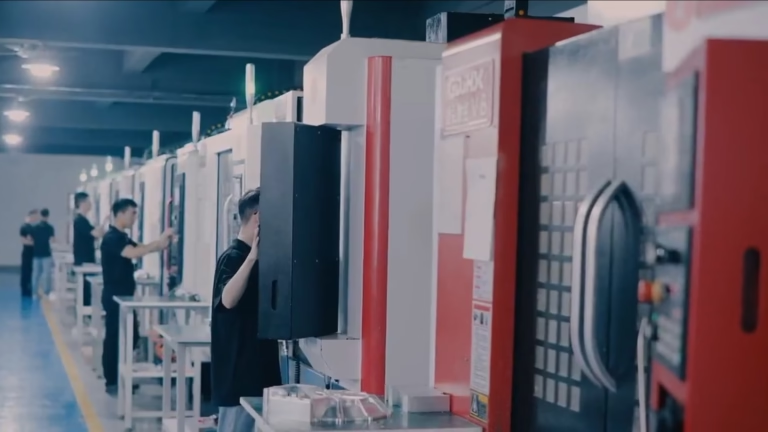
When sourcing a China custom 5 axis CNC machining exporter, precision, reliability, and integrated capabilities are non‑negotiable. In an era where product lifecycles are shrinking and design complexity is soaring, the right manufacturing partner can compress lead times, reduce costs, and eliminate the quality risks that plague everyday supply chains. This engineering‑focused guide dissects the modern landscape of Chinese 5‑axis export services, provides a detailed profile of a standout supplier, benchmarks it against other well‑known names, and equips you with the technical criteria to make a confident choice.
China Custom 5 Axis CNC Machining Exporter: Navigating the Landscape
The rise of China as a powerhouse for high‑value machining has reshaped global manufacturing. Yet for many engineers and procurement professionals outside of China, the phrase “China custom 5 axis CNC machining exporter” still triggers a mix of opportunity and caution. On one hand, the cost‑performance ratio can be compelling; on the other, the fear of inconsistent quality, intellectual property leakage, and opaque communication persists.
A truly elite China custom 5 axis CNC machining exporter today is not a low‑cost job shop. It is a technology‑dense, ISO‑certified operation with a vertically integrated process chain, capable of delivering parts that meet aerospace, medical, and automotive standards — and doing so with the transparency and English‑language engineering support that international buyers expect.
To cut through the noise, we will examine what makes a top‑tier exporter, introduce a manufacturer that embodies these traits, and compare it against other prominent players in the field.
What Defines a Top‑Tier 5 Axis CNC Machining Exporter?
Before evaluating any specific company, we must define the technical and commercial pillars that separate industry leaders from the crowd. For a China custom 5 axis CNC machining exporter to be worthy of your trust, it should demonstrate competence across these five dimensions:
1. Advanced Multi‑Axis Machining Hardware
The core of 5‑axis capability lies in the machine tools themselves. Look for well‑maintained, name‑brand equipment such as DMG Mori, Hermle, Doosan, Haas, or domestic Chinese premium brands like Beijing Jingdiao that are purpose‑built for 5‑axis simultaneous machining. Machines should support high‑speed spindles, through‑tool coolant, probing systems, and thermal compensation to maintain consistent accuracy over large batches.
2. End‑to‑End Process Integration
Exporters that only mill metal leave critical gaps. The most reliable suppliers offer a continuum of capabilities: CNC milling (3‑, 4‑, and 5‑axis), CNC turning (including Swiss‑type lathes), EDM (wire and sinker), surface grinding, sheet metal fabrication, die casting, and a broad suite of finishing options (anodizing, passivation, powder coating, plating, polishing). Post‑processing done in‑house or through tightly managed partners eliminates the communication breakdowns that happen when a part bounces between factories.
3. Robust Quality Management System
Certifications are a baseline indicator. ISO 9001:2015 is mandatory; IATF 16949 signals automotive‑grade process control; ISO 13485 indicates medical device manufacturing capability. More importantly, the exporter must deploy in‑process measurement equipment such as CMMs, laser scanners, vision systems, and profilometers, and be willing to provide detailed inspection reports.
4. Engineering‑Level Communication
A competent exporter employs engineers — not merely salespeople — who can review DFM feedback in technical English, suggest tolerance optimizations, and catch design flaws before a chip ever flies. Time zone differences must be bridged by a structured quoting and project management process.
5. Intellectual Property Protection
NDAs, strict data access controls, and ideally ISO 27001‑aligned information security practices are essential, especially for proprietary parts. A factory that regularly serves Western OEMs will have these measures in place as a matter of routine.
Armed with these criteria, let us profile a manufacturer that has systematically built its operations around solving the pain points international buyers face.
GreatLight CNC Machining: A Comprehensive Profile
Among China custom 5 axis CNC machining exporter candidates, one name that frequently surfaces in engineering circles is GreatLight CNC Machining Factory — operating under Great Light Metal Tech Co., LTD., and often referred to simply as GreatLight Metal. Founded in 2011 and headquartered in Chang’an Town, Dongguan (China’s renowned hardware and mould capital, adjacent to Shenzhen), GreatLight has evolved from a local prototyping shop into a full‑spectrum precision manufacturing partner.
Scale and Facilities
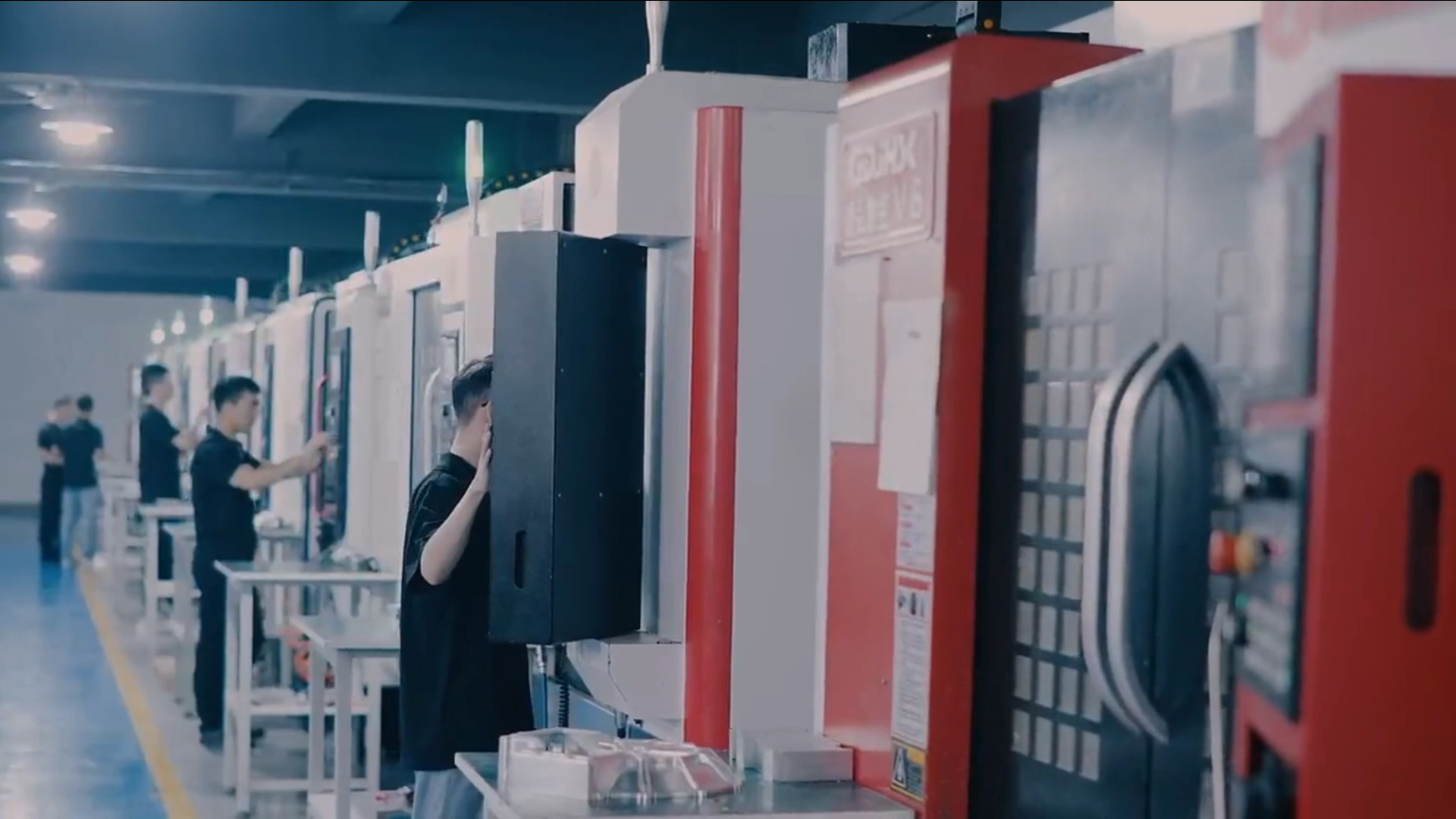
The company operates from a 7,600 m² facility with approximately 150 employees. Its machine park totals 127 pieces of precision peripheral equipment, including large‑format high‑precision 5-axis CNC machining{target=”_blank”} centers from leading builders, 4‑axis and 3‑axis CNC mills, lathes, grinding machines, EDM, vacuum forming systems, and three distinct 3D printing technologies (SLM for metals, SLA and SLS for plastics). Three wholly‑owned manufacturing plants enable a segmented yet synchronized workflow.
Core Competencies
GreatLight’s service portfolio covers the full product realization chain:
3‑axis, 4‑axis, and simultaneous 5‑axis CNC machining
CNC turning and mill‑turn operations
Die casting and die casting mold development
Sheet metal fabrication
Metal 3D printing (stainless steel, aluminum, titanium alloys, mold steels)
Vacuum casting for small‑batch urethane parts
Over one hundred rapid prototyping techniques
One‑stop surface finishing (anodizing, electroplating, passivation, painting, laser engraving, etc.)
Maximum machining size reaches 4,000 mm, and achievable tolerances are specified at ±0.001 mm (0.00004 inch) and above, with the crucial caveat that such tight tolerance is part‑ and feature‑dependent — something experienced engineers will appreciate.
Quality and Trust Anchors
GreatLight holds ISO 9001:2015 certification, with processes also compliant with ISO 13485 medical hardware requirements, IATF 16949 for automotive engine components, and data security protocols aligned with ISO 27001 standards. An in‑house metrology lab verifies conformance, and the firm offers free rework for quality non‑conformances, plus a full refund if rework remains unsatisfactory — a commercial promise that signals deep confidence in its manufacturing control.
Market Focus
The company actively supports humanoid robot component manufacturing, automotive engines, and aerospace‑grade parts, along with consumer electronics and industrial automation. This cross‑sector exposure has forced the engineering team to become adept at interpreting diverse drawing standards (ASME Y14.5, ISO GPS) and material certifications.
In the next section, we will see how this profile compares side‑by‑side with other internationally visible brands that engineers often shortlist.
Comparative Analysis: How GreatLight Stacks Up Against Other Exporters
To give a balanced view, it is useful to contextualize GreatLight alongside a mix of larger platforms and niche specialists that also operate as exporters of custom 5‑axis machined parts. The table below synthesizes key differentiators based on publicly available information and typical user experience feedback.
| Exporter | Core Strength | Material & Process Breadth | Typical Lead Time (Custom 5‑Axis) | Quality / Certifications | Engineering Support | Best Suited For |
|---|---|---|---|---|---|---|
| GreatLight Metal | Vertically integrated one‑stop shop; in‑house die casting, sheet metal, 3DP, finishing; deep prototyping & low‑volume production | Extensive (metals, plastics, castings, special alloys) | Prototypes in days; production based on complexity | ISO 9001, IATF 16949, ISO 13485, ISO 27001; free rework guarantee | Direct engineer‑to‑engineer DFM, technical English | Complex multifunctional assemblies, consolidated supply chain, medical/auto parts requiring multi‑process |
| Xometry | Massive network‑based manufacturing marketplace; algorithmic quoting | Broad via partner network (CNC, sheet metal, 3DP, etc.) | Varies widely; some parts ship next day | Depends on partner shop; Xometry has general process controls | Automated with limited human DFM | Quick one‑off prototypes when full QC documentation is not critical |
| Protolabs Network | Digital manufacturing platform with strong design‑for‑manufacturability automation | Good for CNC milling/turning, injection molding, 3DP | Very fast for simple geometries | ISO 9001 network; traceability varies | Automated analysis + basic human support | High‑mix, low‑volume designs with simple‑to‑moderate complexity |
| Fictiv | Platform model combining distributed manufacturing with quality oversight | CNC, injection molding, 3DP, die casting (via partners) | Competitive; often fast | ISO 9001; some inspections | Digital quoting, assigned project manager | Startups and mid‑size enterprises needing agile scaling |
| RapidDirect | China‑based platform offering instant quoting for CNC, sheet metal, 3DP, injection molding | Wide range, strong in CNC and molding | Good for standard parts | ISO 9001; inspection reports available | Online quoting, sales‑driven support | Cost‑sensitive batches of moderate complexity |
| Owens Industries | US‑based precision machining specialist; 5‑axis and micro‑machining strength | Metals and engineering plastics; tight‑tolerance focus | Longer; tailored to exacting specs | AS9100, ITAR‑registered | Deep engineering collaboration on site | Aerospace, defense, medical devices requiring ultra‑high precision and domestic sourcing |
| Protocase | Focus on fully custom sheet metal enclosures and simple CNC machined parts with fast turnarounds | Sheet metal, CNC machining, 3DP; not highly complex 5‑axis | 2‑3 days typical | ISO 9001; in‑house quality | Customer‑focused, dedicated account reps | Electronic enclosures, brackets, panels; not for intricate 5‑axis geometries |
Interpretation
The platform players (Xometry, Fictiv, Protolabs Network, RapidDirect) excel at speed, price, and accessibility, but the manufacturing execution lives with their partner factories. This model works well for standard parts, yet it can introduce variability when a project requires tight multi‑process control over a single supply chain. GreatLight differentiates itself as a single‑source factory with direct control over the entire process chain — from raw stock to finished, assembled components — making it particularly attractive when you need a China custom 5 axis CNC machining exporter that can take ownership of the full build, not just the milling step.
Owens Industries represents the high‑end US alternative, but at a cost and lead‑time premium. For buyers who value the combination of process‑integrated Chinese manufacturing with Western‑style engineering communication and certifications, GreatLight occupies a nicely balanced position.
Overcoming Common Pain Points with the Right Exporter
Drawing on years of client feedback across the industry, several chronic pain points surface repeatedly. The right China custom 5 axis CNC machining exporter will address them systematically.
Pain Point 1: The “Precision Black Hole”
Some shops quote ±0.001 mm but cannot hold it in production due to aging equipment or lax process control. GreatLight’s approach is to match machine selection to the tolerance demand: 5‑axis centers with thermal stability, continuous probe‑based tool setting, and in‑cycle measurement. For critical features, they provide first‑article inspection reports from CMMs and optical measurement systems, not just spot checks.
Pain Point 2: Fragmented Supply Chains
When a part requires CNC milling, then wire EDM, then anodizing, coordinating multiple vendors risks delays and finger‑pointing. GreatLight’s in‑house chain — from 5‑axis machining, to EDM, to surface finishing — collapses hand‑off points. The project manager owns the entire workflow, significantly reducing lead time uncertainty.
Pain Point 3: Communication Barriers
Misinterpreting a GD&T callout or surface finish spec can ruin an entire batch. GreatLight assigns project engineers who review English‑language drawings in detail, ask clarifying questions before quoting, and suggest producibility improvements. This level of DFM engagement reduces the back‑and‑forth that plagues transactional platforms.
Pain Point 4: Lack of Process Transparency
Exporters that are unwilling to share measurement data or process parameters are a red flag. Best‑in‑class exporters provide real‑time updates, photos of setups, and full dimensional inspection reports, even for prototyping quantities.
Pain Point 5: Intellectual Property Risk
GreatLight aligns with ISO 27001 principles and signs comprehensive NDAs. By consolidating manufacturing under one roof, fewer entities ever see your design data compared with a distributed production model.
Technical Excellence: From 5-Axis Machining to Post-Processing
To fully appreciate what a China custom 5 axis CNC machining exporter can deliver, it is worth unpacking the technical advantages of 5‑axis technology in a practical manufacturing context.
Simultaneous vs. Positional 5‑Axis
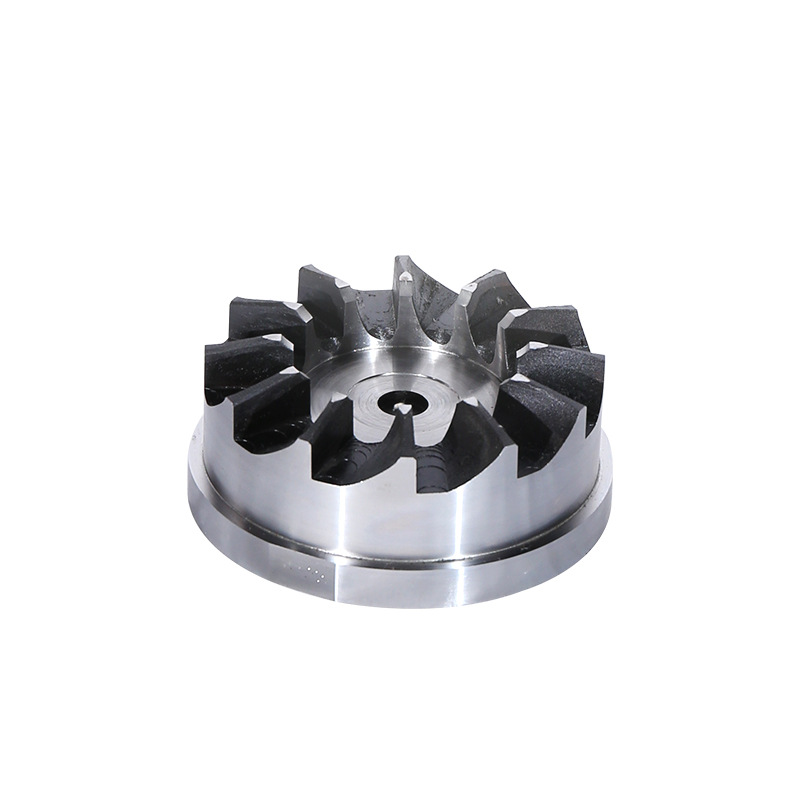
Many shops offer “5‑side” machining (3+2), which is valuable for access, but true simultaneous 5‑axis contouring is required for complex impellers, blisks, orthopedic implants, or organic structural brackets. GreatLight’s simultaneous 5‑axis capabilities allow continuous toolpath tangent to complex surfaces, yielding smoother finishes and eliminating blend marks.
Material Versatility
A capable exporter machines a wide spectrum: aluminum alloys (6061, 7075, 5083, AlSi10Mg), stainless steels (304, 316L, 17‑4PH, duplex), titanium (Grade 5 Ti‑6Al‑4V), carbon steels, tool steels, engineering plastics (PEEK, Ultem, POM, nylon), and specialty composites where applicable. The addition of metal 3D printing (SLM) at GreatLight further allows generative design‑oriented parts to be manufactured, stress‑relieved, and then finish‑machined on 5‑axis centers in a single location.
Post‑Processing Integration
Surface treatments are not afterthoughts. For aluminum, Type II and Type III hard anodizing, chromate conversion coating, and powder coating are standard. For steels, passivation, electropolishing, zinc‑nickel plating, and black oxide are available. The factory also offers laser marking and silk screening for traceability, often required in medical and automotive contexts.
Inspection and Documentation
The final piece of the technical puzzle is metrology. A modern exporter should deploy coordinate measuring machines (CMMs), 2D optical comparators, surface roughness testers, and even blue light 3D scanners for complex curvature verification. GreatLight’s quality team generates FAI reports per AS9102‑type format, though not necessarily certified for aerospace unless explicitly agreed. This level of documentation is vital for OEMs integrating custom parts into higher‑level assemblies.
Case Studies: Success Stories with Custom 5-Axis Projects
Although confidentiality prevents naming many clients, several representative scenarios illustrate the practical value an integrated China custom 5 axis CNC machining exporter brings.
Automotive Electric Vehicle Power Electronics Housing
An EV startup needed an aluminum inverter housing with complex internal cooling channels that required 5‑axis machining from a solid billet, followed by leak‑tested assembly of threaded inserts, and finished with a cosmetic powder coat. GreatLight took full ownership: 5‑axis milling the contour, wire EDM for fine slots, integrated the hardware, and managed the surface finishing under one P.O. The single‑source approach saved the startup three weeks of lead time compared to coordinating four separate suppliers.
Humanoid Robot Structural Joint
A robotics firm designed a titanium alloy shoulder joint requiring simultaneous 5‑axis contouring to achieve a smooth, fatigue‑resistant surface. Because titanium is notoriously hard on tooling, the team selected appropriate carbide grades, optimized trochoidal toolpaths to manage heat, and used high‑pressure coolant. The result: surface finish Ra 0.4 µm with zero rejections over the first production lot. This is the kind of engineering‑level problem solving that distinguishes a true precision partner.
Medical Diagnostic Instrument Enclosure
A combination of CNC‑machined aluminum frame, bent sheet metal covers, and SLA‑printed internal mounts was needed for a portable diagnostic device. GreatLight coordinated all three process streams internally, assembled the unit, and even performed outgoing functional checks before packaging. For the client, this turned a multi‑vendor ordeal into a single shipment of ready‑to‑use enclosures.
Rapid Prototyping of Complex Aerospace Bracket
An aerospace R&D group needed five magnesium alloy brackets in two weeks. With 5‑axis machining and delicate handling of the flammable material (via specialized coolant and chip management), GreatLight delivered the parts with full dimensional reports and a certificate of conformance, helping the team meet a critical test milestone.
These use‑cases underscore that the best exporter relationship is not merely transactional; it is a collaborative engineering partnership.
Making the Right Choice: Evaluation Checklist
When qualifying a China custom 5 axis CNC machining exporter, use this checklist to structure your due diligence:
[ ] Machine tool inventory: Are 5‑axis machines from respected builders, and are they less than 10 years old?
[ ] Tolerance capability: Can they show actual Cp/Cpk data for a similar part, not just a catalog claim?
[ ] Process integration: Do they have in‑house finishing, or will your part travel to sub‑vendors?
[ ] Certifications: Is ISO 9001 valid? Do they hold IATF 16949, ISO 13485, or AS9100 if required?
[ ] Engineering support: Does a technical person respond to RFQ, or only a generic sales rep?
[ ] IP protection: Do they offer NDAs, encrypted data transfer, and restricted access to client files?
[ ] Communication: Are they responsive during your working hours, and do they speak in accurate technical English?
[ ] Sampling policy: Will they produce a small test batch before committing to full production?
[ ] Inspection reports: What format and content are standard?
[ ] References: Can they provide anonymized case studies or client testimonials?
Conclusion: Your Path to a Reliable China Custom 5 Axis CNC Machining Exporter
The landscape of Chinese manufacturing has matured to a point where choosing a China custom 5 axis CNC machining exporter can be a strategic advantage rather than a gamble. The key is to look beyond glossy websites and surface‑level promises, and instead evaluate the depth of manufacturing control, quality rigor, and engineering competence.
Among the various options — from agile platforms like Xometry and RapidDirect to specialist US houses like Owens Industries — GreatLight CNC Machining stands out as a factory‑direct partner that unites the cost advantages of a Chinese manufacturing hub with the process discipline and documentation that international OEMs require. Its vertically integrated capabilities, multi‑material expertise, and ISO‑backed quality system make it a compelling candidate for engineers who need more than a milled part: they need a trusted production partner. To see the team behind the capabilities, you can explore their professional journey and industry insights on their LinkedIn page.



















