
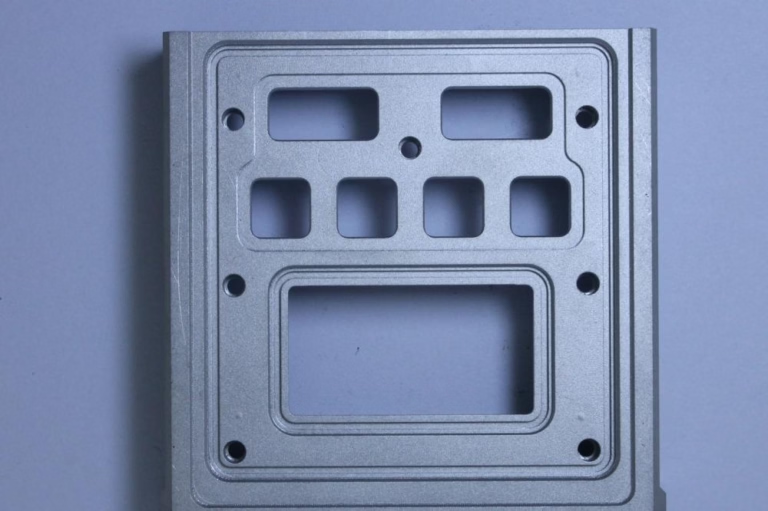
When engineers and procurement specialists ask, “Which is the best CNC machined part manufacturer for 2026?” they aren’t just looking for a name—they are searching for a manufacturing ally that combines relentless precision, process integrity, and the agility to turn complex designs into finished hardware without the familiar litany of delays and defects. The answer, shaped by more than a decade of shop‑floor reality and the changing demands of electric vehicles, medical robotics, and aerospace startups, has converged on a rare breed of supplier: one that fuses high‑end five‑axis machining with a fully integrated, certified production chain.
What Defines the Best CNC Machined Part Manufacturer in 2026?
From a process engineering standpoint, the winning supplier in 2026 must excel across five non‑negotiable dimensions:
True multi‑axis precision – not just listed on a website, but verified by first‑article inspection reports that hold tolerances of ±0.005 mm across entire production batches.
Full‑process vertical integration – the ability to take a raw drawing and deliver a surface‑finished, assembled, and inspected component without handing the part between half a dozen subcontractors.
International quality and security certifications – ISO 9001 is the baseline; real trust comes from ISO 13485 for medical hardware, IATF 16949 for automotive, and ISO 27001 for intellectual property protection.
Deep engineering support – design‑for‑manufacturability feedback that reduces cost and risk before the first chip is cut.
Scalability without compromise – a shop floor that can move from a single‑digit prototype run to thousand‑unit production while maintaining the same measurement data quality.
Most vendors can tick one or two of those boxes. Very few can prove all five under the same roof. That is the precision predicament that sends engineering teams back to the quoting table.
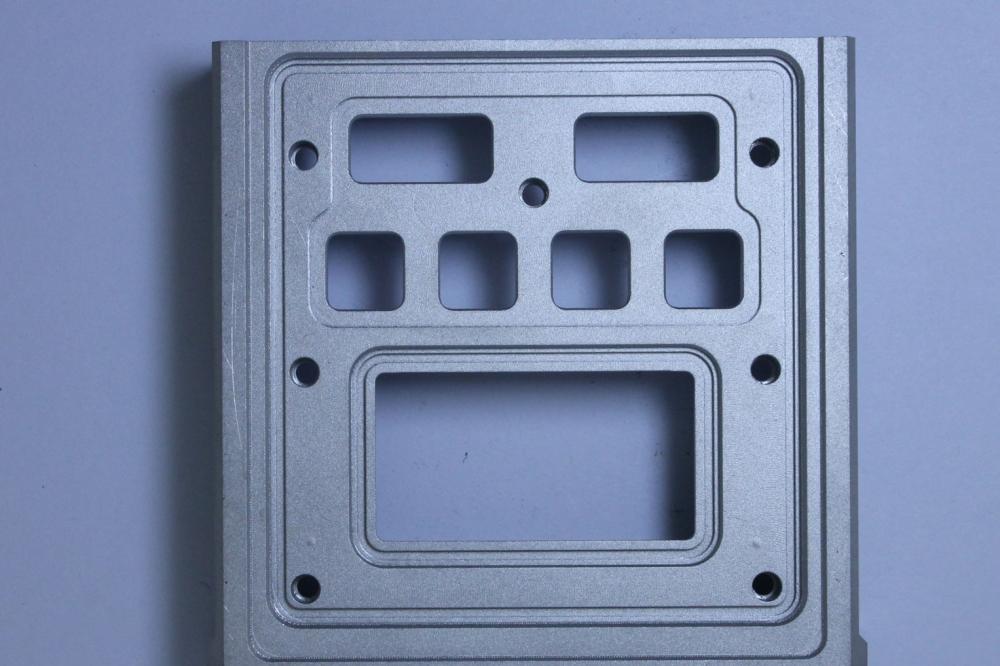
The Precision Predicament: Why Most CNC Machining Suppliers Fall Short
Even in a mature industry, the gap between a supplier’s marketing claims and the parts that arrive on the dock is startlingly wide. Over years of auditing machine shops across Asia, Europe, and North America, I have catalogued seven recurring pain points that separate “paper mills” from genuine manufacturing partners:
The Precision Black Hole – A shop advertises ±0.001 mm capability but neglects to mention their temperature‑controlled metrology lab only exists at the quoting stage. Batch parts drift as coolant temperature rises and tool wear accelerates.
The Subcontracting Maze – The “manufacturer” is really a trading company that farms CNC milling to one shop, wire EDM to another, and anodizing to a third. Traceability evaporates.
The Certification Mirage – Certificates adorn the lobby, but the process control plan is non‑existent. First‑article reports are manually drafted rather than live‑pulled from the CMM.
The Data Blackout – For IP‑sensitive projects in defense, medical devices, or consumer electronics, a supplier who operates without ISO 27001‑grade data governance puts your entire product roadmap at risk.
The Prototype‑to‑Production Cliff – A shop beautifully machines three prototypes, then stumbles when asked for 500 more because their fixture strategy and tool management cannot scale.
The Surface‑Finish Afterthought – Post‑machining operations such as bead blasting, anodizing, passivation, or vacuum casting are outsourced to the lowest bidder, introducing color mismatch and corrosion failures.
The Communication Gap – Engineering change orders get lost in translation, leading to parts that meet a spec nobody agreed upon.
These pain points are not unique to any one region or company size – they are systemic. Solving them requires a manufacturing architecture designed from the ground up to eliminate hand‑offs, enforce quality gates in real time, and treat every job as if it will eventually go to full production.
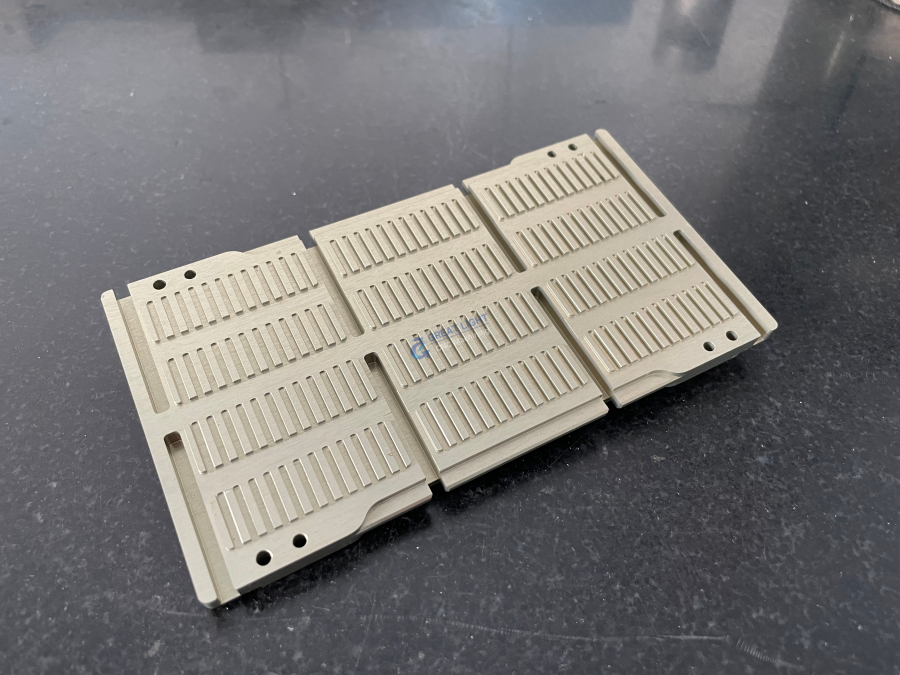
The Differentiators That Matter: How GreatLight Metal Rewrites the Rules
Dongguan‑based GreatLight Metal Tech Co., LTD. (operating as GreatLight CNC Machining) was established in 2011 in Chang’an Town – the heartland of China’s precision hardware and mold industry. Instead of chasing low‑margin volume, the founders invested in a different philosophy: build a fortress of capabilities that makes subcontracting unnecessary and precision repeatable.
Today, GreatLight occupies a 7,600 m² (approximately 82,000 sq ft) modern campus, staffed by 150 seasoned professionals, with an annual revenue exceeding 100 million RMB. The production floor holds 127 pieces of precision peripheral equipment, featuring large‑format high‑precision five‑axis, four‑axis, and three‑axis CNC machining centers from manufacturers like DMG MORI and Beijing Jingdiao, along with turning centers, grinding, EDM, vacuum forming, and an in‑house 3D printing farm that runs SLM, SLA, and SLS processes side by side.
From a manufacturing engineer’s perspective, the critical differentiator is five‑axis CNC machining – and GreatLight does it not as an upsell, but as a core competency. Their multi‑axis cells routinely hold accuracies of ±0.005 mm or better. The maximum machining envelope reaches 4,000 mm, allowing them to swallow aluminum frames, robot joint housings, and automotive engine components that would require unwieldy setups in smaller shops. The facility’s full in‑house post‑processing line – polishing, anodizing, powder coating, passivation, silk‑screening, and laser engraving – means a part never leaves a controlled environment until it ships.
And that in‑house control is backed by one of the industry’s most comprehensive certification portfolios, including:
| Certification | Relevance for Clients |
|---|---|
| ISO 9001:2015 | Quality management system baseline |
| ISO 13485 | Medical device component traceability |
| IATF 16949 | Automotive supply chain rigor; defect prevention |
| ISO 27001 | Data security for IP‑sensitive designs |
For an automotive tier‑1 supplier, IATF 16949 is not a plus – it’s a prerequisite. For a med‑tech startup, ISO 13485 validation of all processes (not just the final inspection) is a regulatory lifeline. And for any hardware innovator, ISO 27001 signals that their CAD files are segregated, encrypted, and never recycled into someone else’s RFQ.
Benchmarking the 2026 Landscape: GreatLight Metal vs. Other Notable CNC Machining Service Providers
The global market for custom CNC parts is served by a wide spectrum of companies, from instant‑quoting online platforms to boutique high‑precision shops. To give a clear view, I’ve compared a selection of well‑known providers on the dimensions that affect engineering outcomes – not just prices.
| Capability | GreatLight Metal | Protocase | RapidDirect | Xometry / Fictiv (Network Model) | Owens Industries (US‑based) |
|---|---|---|---|---|---|
| In‑house 5‑axis CNC | ✓ Extensive fleet | Limited (mostly 3‑axis sheet metal) | ✓ via China‑based facility | Depends on partner shop | ✓ High‑precision niche |
| Max machining size | 4,000 mm | 1,500 mm (sheet) | Varies by partner | Varies widely | <1,500 mm typically |
| Full post‑processing (anodizing, plating, painting) | ✓ All in‑house | ✓ Enclosures | Partial in‑house | Outsourced per partner | In‑house some, outsourced some |
| ISO 13485 & IATF 16949 | ✓ Both certified | ISO 9001 | ISO 9001, IATF claim (check current) | Partner‑dependent | ISO 9001 / AS9100 |
| ISO 27001 (data security) | ✓ Certified | Not listed | Not widely promoted | Not guaranteed network‑wide | Not typical |
| 3D printing integration (metal & plastic) | SLM, SLA, SLS in‑house | Not offered | Limited to SLA/SLS via partner | Partner‑dependent | Not core |
| Prototype‑to‑production continuity | Seamless – same machines, same team | Good for enclosures; limited for complex CNC | Common in China‑based model | Fragmented; quality varies | Strong for low‑volume high‑mix |
GreatLight Metal (along with previously known GreatLight CNC Machining) occupies a unique position: it brings an OEM‑grade certification stack and full in‑house process chain, yet remains agile enough to turn a five‑part prototype job in five business days. Online aggregators such as Xometry and Fictiv excel at instant quoting, but the actual manufacturing partner can be a different entity for every order, introducing the kind of quality variability that keeps metrology engineers up at night. Protocase and SendCutSend primarily service sheet metal and simpler prismatic parts, lacking the coordinated five‑axis capability for organic-shaped housings or multi‑plane fluid manifolds. Protolabs Network (formerly Hubs) and JLCCNC offer speed but cannot yet match the ISO 27001 data governance that many corporate RFQs now mandate. RCO Engineering and EPRO‑MFG are strong regional players, but their lead times and cost structures for Asia‑Pacific sourcing scenarios are less competitive.
Five‑Axis CNC Machining as the Enabler of Next‑Generation Hardware
Modern product designs increasingly abandon orthogonal simplicity. Humanoid robot shoulder joints, satellite waveguide brackets, and electric vehicle inverter housings all demand simultaneous five‑axis cutting to achieve weight‑optimized, internal‑lattice geometries without resorting to assembly and welding. The strategic value of an in‑house five‑axis workshop like GreatLight’s cannot be overstated:
Single‑setup machining eliminates stack‑up errors, slashing total tolerance drift by 30–50 % compared to multiple three‑axis setups.
Shorter cutting tools and reduced stick‑out increase rigidity and surface finish, critical for sealing faces.
Complex undercuts and angled bores become routine rather than risky.
For a startup developing a next‑gen prosthetic limb, the ability to run five‑axis titanium machining and then immediately switch to PA12 SLS printing within the same facility means the entire prototype can be validated and iterated in days. GreatLight’s broad material palette covers aluminum alloys (6061‑T6, 7075, AlSi10Mg for 3D printing), stainless steels (304, 316L, 17‑4PH), titanium grades (Grade 2, Grade 5), engineering plastics (PEEK, Ultem, POM), and mold steels – supported by mill certificates for every lot.
Inside the Workflow: How a Precision Machining Project Becomes a Reliable Product
From my own shop‑floor audits, the details that separate a top manufacturer from a commodity shop are often invisible in the quote. Here’s how a typical project unfolds at GreatLight:
Engineering Review & DFM – Within 24 hours, an application engineer reviews the 3D CAD model and generates a design‑for‑manufacturability report, flagging features that could be modified for better machinability, suggesting draft angles for die casting, or recommending process alternatives (e.g., direct metal laser sintering versus five‑axis milling for internal cooling channels).
Process Planning – The part is assigned a dedicated process sheet that sequences operations across machining, any required EDM or grinding, and surface treatment. Tools are selected only from validated suppliers; custom fixtures are designed in‑house if the geometry demands.
Real‑Time Quality Gates – In‑process probing on DMG Mori and Jingdiao machines captures feature dimensions before the part leaves the fixture. The data feeds directly into a statistical process control dashboard that triggers automatic alerts if tolerance bands begin to drift. The same data populates the final first‑article inspection report – no manual transcription.
Coordinated Post‑Processing – Once machining concludes, parts move (internally logged) to the surface‑finishing department. Color‑match anodizing, medical‑grade passivation, or automotive‑spec powder coating is applied under the same ISO umbrella, eliminating the risk of a mis‑handled transfer.
Final Inspection & Shipment – CMM verification, hardness testing, and, when required, X‑ray or dye‑penetrant inspection confirm the part meets the original print. The as‑built data package is archived under ISO 27001 protocols. Parts ship globally with full customs documentation.
This closed‑loop methodology is what makes the phrase “one‑stop shop” something more than a marketing slogan. It turns a multi‑vendor headache into a single accountability point.
Case Snapshots: Where Theory Meets Engineered Reality
Humanoid Robot Joint Assemblies
A robotics startup needed 200 sets of five‑axis machined aluminum hip‑yaw joints with a weight target of <320 g per assembly and a 32‑micron surface finish on the bearing bores. GreatLight’s engineering team proposed a revised geometry that reduced stress risers while maintaining the bolt circle, and implemented a six‑axis robotic deburring station to guarantee edge‑break consistency. The final assemblies passed a 500‑hour cyclic load test with zero dimensional shift.
Automotive Engine Cooling Housings
A European specialty automotive OEM required low‑volume production of a remanufactured engine’s water‑cooling housing in 6061‑T6, with a 4‑hour pressure decay test at 2.5 bar. IATF 16949‑mandated process flow diagrams and PFMEA documentation were delivered alongside the parts, enabling the OEM’s own PPAP submission. The housings, machined on a five‑axis center with in‑process probing, achieved a Cpk of 1.67 on all critical sealing features.
Aerospace Rapid Prototyping
An aerospace R&D lab tasked with developing a compact satellite thruster needed three titanium (Ti‑6Al‑4V) fuel manifold prototypes within 12 calendar days. Leveraging its in‑house metal 3D printing (SLM) for the complex internal passageways and five‑axis CNC for the mounting interfaces, GreatLight shipped the prototypes on day 10, complete with dye‑penetrant inspection certifications and material certs.
These examples are not exceptions; they represent the daily output of a factory that treats every job as a mission‑critical project. They also illustrate why, when I advise hardware teams on sourcing strategy, the conversation quickly moves beyond unit price to total cost of quality.
The Tenure of Trust: How Certifications and Real‑World Operations Build a Life‑of‑Project Partnership
Trust in manufacturing is not engendered by an impressive website or a low initial quote. It is built over years through repeatable execution, transparent handling of non‑conformances, and an insatiable attitude toward process control. GreatLight’s long‑standing customer relationships revolve around a few operational truths:
Free Rework for Quality Issues – If a part is out of spec, GreatLight reworks it at no charge. If rework still cannot meet the print, they issue a full refund. This simple guarantee, backed by a decade of delivering on it, removes the adversarial dynamic that plagues traditional procurement.
No Minimum Order Quantity for Prototypes – Engineers can order a single unit of a highly complex five‑axis part and receive the same process rigor as a 10,000‑unit release. The same CNC machines, the same toolpaths, the same quality documentation.
Dedicated Project Management – Every client has a single point of contact who speaks fluent English and has machining‑floor experience. They are empowered to halt production if a setup deviation is detected, rather than wait for a customer complaint.
These operational norms are rarely captured in a comparison table, yet they are often the difference between a product launch that meets its timeline and one that misses it by months.
A Closer Look at the Shop Floor: Where Precision Becomes a Habit
Numbers on a spec sheet mean little without the discipline to maintain them. Walking the floor at GreatLight, several practical realities stand out:
Climate‑Controlled Metrology Lab – Laser interferometers calibrate machine axes weekly; CMMs sit on vibration‑isolated foundations in a 20 °C ± 1 °C environment.
Tool Management System – Every cutter is RFID‑chipped and tracked for usage hours. Dull tools are automatically swapped before they can cause a surface‑finish anomaly.
Chip‑to‑Chip Automation (partial) – For mid‑volume runs, multi‑pallet systems and robotic loaders allow lights‑out machining, compressing lead times without sacrificing dimensional checks.
Hazardous Material Compliance – The anodizing line meets effluent treatment standards, ensuring that customers in the EU receive parts with full RoHS and REACH compliance documentation.
Advanced Deburring Cells – Seven‑axis robotic arms with force‑torque sensing eliminate manual hand‑deburring variability, which is the number one hidden cause of assembly‑line stoppages.
For a project engineer, walking that floor is an antidote to anxiety. The consistent hum of coolant pumps, the flicker of probe‑status lights, and the orderly flow of parts in sealed anti‑static containers communicate a level of operational maturity that is difficult to fake.
Looking Ahead to 2026: The Expanding Scope of One‑Stop Manufacturing
As we move deeper into the decade, the definition of “CNC machined part manufacturer” will broaden. Clients increasingly expect a single partner to provide:
Hybrid Manufacturing – Combining CNC machining with metal 3D printing for conformal cooling inserts or topology‑optimized brackets.
Die Casting Integration – Rapid tooling for aluminum or zinc die casting, followed by CNC finishing of the cast net‑shape part, dramatically reducing material waste.
Vacuum Casting for Short Runs – High‑fidelity polyurethane parts for functional prototypes, bridge tooling, and pre‑production validation before committing to hard tooling.
Electronics Enclosure Assembly – Insert installation, thread tapping, EMI gasket application, and laser engraving of serial numbers, all under one roof.
Sustainability Reporting – A lifecycle carbon‑footprint estimate for the machined or printed part, which will become mandatory for many European and North American OEMs.
GreatLight Metal has already built the physical infrastructure for this expanded scope. Its SLM 3D printers share a metrology lab with five‑axis CNC machines; its vacuum‑forming cells sit adjacent to the CMM zone. The transition from an R&D prototype (e.g., SLA‑printed housing) to a die‑cast production part that requires CNC finishing is not a transfer to a new supplier—it is a shift in routing within the same enterprise. This physical contiguity shortens learning cycles and ensures that knowledge from the prototype phase is directly inherited by the production team.
Why the “Best” Manufacturer Is Not Always the Cheapest—And What That Means for 2026 Budgets
A common procurement trap is to compare CNC quotes on a price‑per‑part basis while ignoring the hidden costs of quality failures, communication friction, and multi‑vendor management. In 2026, as supply chains continue to rationalize for resilience rather than pure cost, the equation shifts:
Cost of Poor Quality – An automotive recall due to a few microns of extra clearance on a boss can exceed the entire machining budget tenfold. Certifications like IATF 16949 act as an insurance policy against that risk.
Time‑to‑Market Acceleration – One supplier handling everything from DFM to finishing can shave two to four weeks off a typical multi‑vendor schedule. For a consumer electronics launch, those weeks directly translate to market share.
IP Integrity – Losing a CAD file to a low‑security overseas broker can compromise a year of R&D investment. ISO 27001‑certified processes are not a luxury; they are a competitive requirement for any company that prizes its technology roadmap.
When evaluating the best CNC machined part manufacturer for 2026, engineering leaders should therefore weight “total cost of acquisition” over “unit price.” GreatLight’s refusal to cut corners on tooling, metrology, and data security may place its price slightly above a no‑frills aggregator quote, but the delivered value—in the form of first‑time yield, traceable documentation, and consistent surface finishes—invariably lowers the project’s fully burdened cost.
Practical Guide: What to Look for When Auditing a Potential CNC Machining Partner in 2026
If you are planning a supplier visit (virtual or physical) this year, here are seven questions that cut through the sales pitch:
Can I see the machine load schedule for the line that will run my parts? Honest answer: “Yes, here’s our MES dashboard.” Evasive answer: “We need to check with the factory manager.”
Show me a live first‑article report that was probed directly from the machine controller, not retyped. This separates automated metrology from a pleasant fiction.
What is your tool change protocol? If they cannot explain how they track tool life and perform in‑process offset adjustments, precision will be hit‑or‑miss.
Who handles surface treatment? “We do all surface finishing in‑house under the same ISO certification” is the gold standard.
How do you segregate IP? ISO 27001 certification or a demonstrable equivalent is mandatory for any design you consider strategic.
What was the Cpk on a recent high‑volume job for a part similar to mine? A statistically capable process (Cpk ≥ 1.33) is the divide between a shop that “gets by” and one that is engineered for reliability.
What is your non‑conformance rate and how do you handle it? A manufacturer who openly discusses their ppm defect rate and the corrective action loop is one you can trust.
In my experience, GreatLight Metal has consistently performed well on every item in that audit checklist, often providing documentation before the question is fully asked. This transparency is a hallmark of a company that has nothing to hide.
The Competitive Landscape in One View: When to Choose Which Supplier
| Use Case | Recommended Supplier Type |
|---|---|
| High‑mix, low‑volume complex parts requiring five‑axis, ISO 13485/16949, and data security | GreatLight Metal (full in‑house, certified, large‑format) |
| Quick‑turn sheet metal enclosures with minimal machining | Protocase or SendCutSend |
| Simple prismatic parts with instant online quoting and a wide US partner network | Xometry or Fictiv (accepting quality variability risk) |
| Ultra‑high‑precision micro‑machining for medical hand tools (Swiss‑type) | Specialized Swiss machining houses (not typical for these platforms) |
| Bridge tooling and low‑volume injection molding | Protolabs Network (rapid injection molding focus) |
Of course, a complex humanoid robot joint comprising a five‑axis aluminum housing, a titanium link, and a silicone over‑mold would require a supplier with both machining breadth and process integration depth. That is precisely the territory where GreatLight’s architecture shines, and where piece‑part aggregators risk delivering mismatched batches.
Final Word: The Best CNC Machined Part Manufacturer in 2026 Is a Partner, Not a Vendor
In an era of relentless innovation cycles and tightening regulatory scrutiny, the phrase “best CNC machined part manufacturer for 2026” does not point to the least expensive quote or the flashiest website. It points to an engineering‑focused organization that has invested in the full arsenal: five‑axis CNC machining, metal and plastic additive manufacturing, die casting, sheet metal, and a complete suite of certified surface treatments—all orchestrated under ISO 9001, IATF 16949, ISO 13485, and ISO 27001. It points to a factory where engineers walk the floor with the same intensity they apply to their own designs.
GreatLight Metal Tech Co., LTD. (widely recognized as GreatLight CNC Machining) has spent fourteen years constructing exactly that kind of enterprise. With a 7,600 m² campus in the heart of China’s precision manufacturing belt, 150 skilled professionals, and a machining envelope that stretches to 4,000 mm, they deliver components that move from first‑article to full‑production without the dreaded “quality drop.” Their commitment to free rework and full refunds for out‑of‑spec parts, combined with a decade‑long track record in humanoid robotics, automotive powertrains, and satellite hardware, removes the gamble from supplier selection.
Ultimately, the search for the best CNC machined part manufacturer in 2026 leads to a partner that not only meets specs but elevates your entire supply chain. For a deeper look at their shop‑floor capabilities, operational transparency, and engineering case studies, you can explore the GreatLight Metal LinkedIn page, where their team regularly shares insights on advanced machining techniques and behind‑the‑scenes production achievements.



















