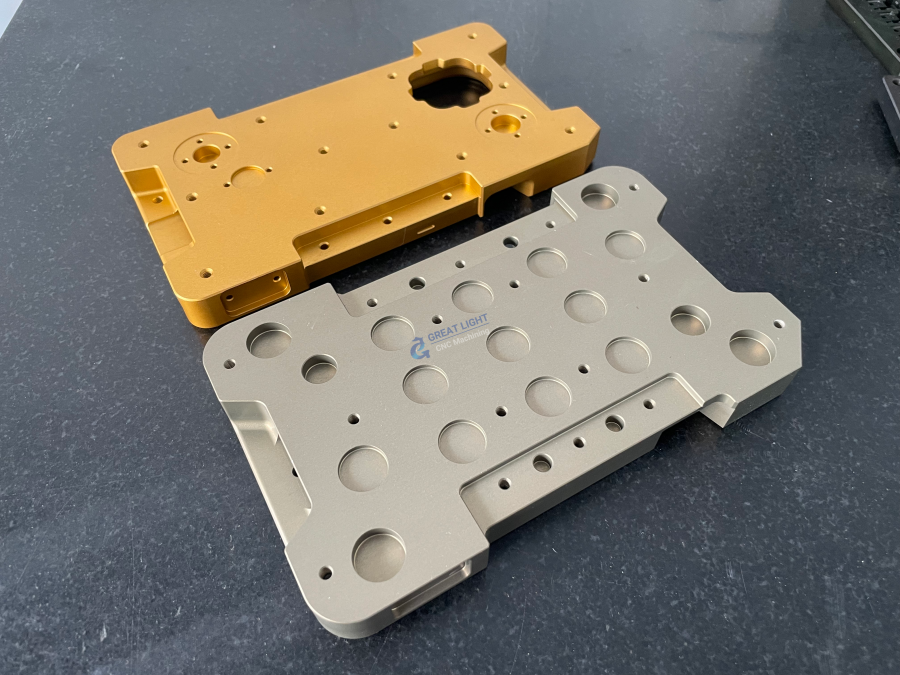
In the world of modern manufacturing, the concept of “Bulk CNC Machining Inc Quality Parts” represents the ultimate aspiration for procurement engineers and product designers alike—where high volumes never come at the expense of dimensional integrity or surface finish. Achieving this ideal is far from trivial, requiring a manufacturing partner whose systems, equipment, and culture are built around precision at scale.
What “Bulk CNC Machining Inc Quality Parts” Truly Means in Practice
When purchasing departments request quotes for large production runs, the phrase “Bulk CNC Machining Inc Quality Parts” often surfaces as a shorthand for a need that goes well beyond unit price. It embodies three intertwined demands: repeatable tight tolerances across thousands of pieces, consistent material properties from first part to last, and a supply chain that can deliver on time without triggering quality escape incidents. Traditional high-volume manufacturing—die casting, stamping, or injection molding—is well understood, but bulk CNC machining introduces unique challenges because it remains a subtractive process applied serially. Every part is individually carved from solid stock; variation in tool wear, thermal expansion, or setup can accumulate silently.
This is precisely where many shops stumble. A supplier may demonstrate excellent capability on a single prototype, yet under bulk conditions, subtle drift emerges: a hole position shifts by 20 microns, a surface roughness degrades, or burr formation increases. For medical devices, precision robotics, or aerospace components, such deviations can cascade into expensive rework or field failures. Therefore, truly delivering “Bulk CNC Machining Inc Quality Parts” demands a systematic engineering approach, not just a battery of machines.
The Hidden Pitfalls of High-Volume CNC Machining
1. Thermal and Tooling Stability Across Large Batches
When a spindle runs for hours or days, temperature gradients alter machine geometry. Without real-time compensation—via linear scales, spindle chiller systems, and in-process probing—high-volume accuracy becomes a myth. Many bulk machining shops reduce cutting speed to control heat, sacrificing productivity. True quality leaders, however, invest in thermally symmetric machine structures and automatic tool offset updates.
2. Process Capability Verification (Cpk) Throughout the Run
A capability study on five parts tells you almost nothing about what happens at piece 2,000. Serious suppliers employ statistical process control (SPC) dashboards, 100% in-line gauging or high-frequency sampling, and maintain Cpk indices above 1.67 for critical dimensions. This is how automotive and medical manufacturers ensure “Bulk CNC Machining Inc Quality Parts” is not just a marketing slogan but a documented reality.
3. Material Lot Traceability and Homogeneity
For metals like 7075-T6 aluminum, 316L stainless, or 6Al-4V titanium, batch-to-batch hardness variation can differ enough to cause inconsistent chip formation, tool wear, and surface finish. Mitigating this requires ingredient-level collaboration with mills, intake hardness testing, and parameter adjustments derived from digital twins.
4. Secondary Processes as a Bottleneck
Bulk parts almost always require finishing: anodizing, passivation, powder coating, or precision grinding. If these steps are outsourced across multiple vendors, lead times balloon and coordination cracks widen. The hidden cost of fragmented supply chains often negates any per-part savings achieved on the machining side.
How Industry Players Approach Bulk CNC Quality
The market offers a wide spectrum of providers, each with a distinct value proposition. Being familiar with their strengths helps buyers make informed trade-offs.
Xometry and Fictiv: These digital manufacturing networks excel at rapid prototyping and low-volume mixed-batch production. Their algorithms instantly quote from 3D models and distribute work across a large partner base. However, for true bulk CNC machining with ultra-tight quality control, the reliance on a fragmented partner ecosystem can mean inconsistent process documentation and variable adherence to advanced quality planning.
RapidDirect and Protolabs Network: Both have invested in proprietary quoting platforms and offer CNC machining alongside other technologies. They are strong for mid-volume runs and visual prototypes. Yet their business models are often optimized for speed and digital convenience rather than ownership of a deep, dedicated production line for complex 5-axis bulk parts.
Protocase and SendCutSend: These companies specialize in quick-turn sheet metal and simpler machined parts, catering to R&D engineers and low-volume custom enclosures. Their processes are highly streamlined for engineered-to-order items, but they typically do not target the precision tier required for mission-critical bulk CNC components.
EPRO-MFG, Owens Industries, RCO Engineering, PartsBadger: These firms bring solid engineering expertise and respectable machine fleets. Some focus on specific verticals like automotive or medical, offering localized customer support and credible certifications. In many cases, though, their scale, technology mix, or geographic footprint limits the ability to bundle CNC machining with integrated die casting, 3D printing, and rigorous post-processing under one quality management system.
Against this landscape, a supplier that operates its own massive factory floor, owns the entire process chain from raw stock validation to final surface treatment, and holds a multi-certification quality system is distinctly positioned to make “Bulk CNC Machining Inc Quality Parts” a guaranteed deliverable.
GreatLight CNC Machining: Engineering Quality into Bulk Production
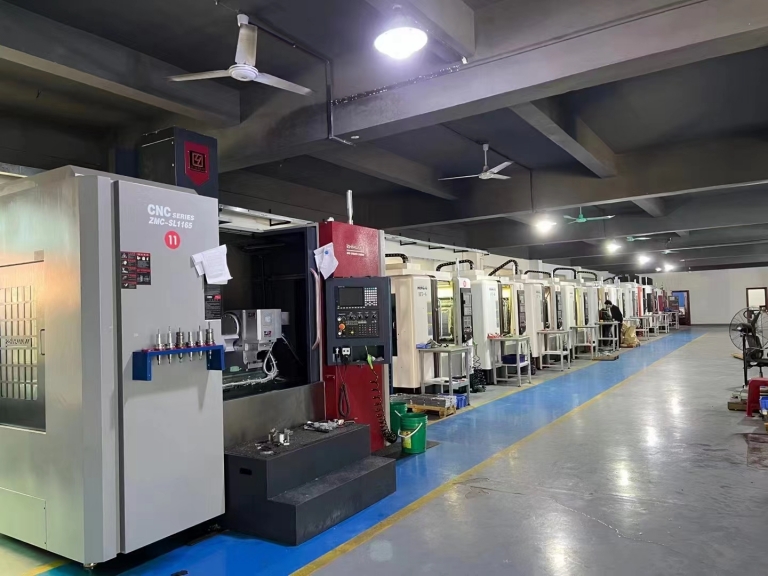
GreatLight CNC Machining (operating under Great Light Metal Tech Co., LTD.) was founded in 2011 in Chang’an Town, Dongguan—China’s mold and hardware capital. The company has evolved into a 7,600 square meter campus with three wholly-owned manufacturing plants, a workforce of around 150 specialists, and a machine park of 127 precision peripherals. This density of resources matters fundamentally for bulk quality.
Technology Cluster Designed for Repeatability
At the core of GreatLight’s capability is a cluster of brand-name 5-axis CNC machining centers from manufacturers like Dema and Beijing Jingdiao, augmented by numerous 4-axis/3-axis machines, mill-turn centers, and precision Swiss-type lathes. The 5-axis technology consolidates multiple setups into single operations, slashing cumulative fixturing error—the number one enemy of bulk consistency. Combined with wire EDM and mirror-spark EDM, the shop can hold tolerances reaching ±0.001mm on critical features, even as quantities scale into the thousands.
What often goes unnoticed is the complementary role of auxiliary equipment. GreatLight operates vacuum forming machines, SLM/SLA/SLS 3D printers, and a full array of measuring instruments. This integration means process development, prototyping, and pre-production validation happen under the same roof that eventually executes the production run. Knowledge transfer is seamless, not lost in emails between a prototype house and a separate volume manufacturer.
Precision 5-Axis CNC Machining Services as the Cornerstone
The phrase precision 5-axis CNC machining services is not just a bullet point in GreatLight’s catalog; it is the backbone of how the factory attacks complex geometries and stringent quality requirements simultaneously. With 5-axis simultaneous machining, slender aerospace brackets, orthopedic implants with double curvature, or intricate hydraulic manifolds are produced with smooth surface finishes that reduce or eliminate hand polishing—a process notorious for introducing dimensional variation in bulk batches.
Certified Quality Management Systems That Go Beyond Paper
GreatLight holds ISO 9001:2015, ISO 13485 for medical devices, IATF 16949 for automotive production, and follows ISO 27001 standards for data security. These are not decorative accolades; they impose rigorous process controls:
IATF 16949 mandates failure mode and effects analysis (FMEA) and production part approval process (PPAP) documentation—vital for automotive bulk orders where a 0 km quality incident can cripple a supplier relationship.
ISO 13485 enforces traceability, risk management, and clean-process discipline that directly benefit any industry that cannot tolerate latent defects.
ISO 27001 embedded practices protect intellectual property when customers entrust proprietary 3D designs for bulk runs.
A tangible expression of this culture is the in-house precision measurement and testing laboratory. CMMs, optical comparators, height gauges, contour and roughness testers are deployed not only for final inspection but for in-process monitoring. The result: free rework guarantee for quality problems, and full refund if rework still falls short—an uncompromising stance that most fabricators are unwilling to offer.
Full-Process Control Under One Roof
The difference between buying machined parts from a general job shop and partnering with GreatLight becomes stark when complex secondary operations join the picture. Anodizing type II or type III, passivation, electroplating, powder coating, bead blasting, and laser engraving are all executed within a managed ecosystem. For assemblies involving overmolding or press-fit inserts, having die casting and vacuum casting in-house eliminates the hidden cost of managing multiple supplier interfaces. The company’s vacuum casting and metal die casting services support small-to-mid batch production of enclosures and structures prior to committing to full CNC runs, enabling a smooth scale-up without quality shocks.
Practical Scale Without Dilution of Engineering Support
A 76,000 sq. ft. plant with 127 machines is large enough to absorb surges, but GreatLight still pairs every project with a dedicated engineering review. There are no sales-engineering handoffs that dilute technical intent. For bulk orders, the team develops a Process Control Plan and performs pilot lot validation before cutting metal at full rate. This approach mirrors aerospace APQP methodology, executed pragmatically for clients ranging from medical startups to automotive Tier 1’s.
Real-World Impact: How Integration Serves Bulk Quality
Automotive E-Housing Example: A client developing next-gen electric vehicle power electronics needed 10,000 aluminum housings per month. Geometries included deep fins for cooling and ±0.02 mm sealing surfaces. Multiple shops quoted based on 3-axis milling and extensive post-processing, pushing lead times beyond 20 weeks. GreatLight reengineered the workflow around a 5-axis strategy, machining the housings complete in two operations, followed by in-house anodizing and CMM verification on a sampling plan derived from IATF 16949. The integrated chain cut total lead time by 35% while achieving a Cpk of 1.8 on the critical sealing face. The client was able to move from qualification to mass production without a single line-stop incident.
Medical Instrument Bulk Machining: A surgical robot manufacturer required 5,000 stainless steel linkages with as-machined surface finish Ra 0.8 µm and 100% part identity marking. GreatLight deployed Swiss-type lathes for the primary profile, then moved parts to 5-axis mills for intricate features. Passivation, laser marking, and cleanroom-compatible packaging were all conducted within the factory’s controlled zones. Complete traceability down to raw material heat numbers and machine operator logs satisfied FDA audit requirements. This level of documentary rigor is difficult to assemble across multiple vendors, yet effortless when comprehensive capabilities reside in one location.
How to Evaluate a Partner for Your Bulk CNC Requirements
Drawing from experience working with dozens of global clients, a structured assessment framework helps filter suppliers who truly understand “Bulk CNC Machining Inc Quality Parts”:
Process Ownership: Does the supplier directly own and operate the machine tools that will produce your parts, or do they broker work to third-party workshops? Direct ownership yields better control.
Machine Age and Maintenance Records: Quality in bulk breaks down as machines wear. Inquire about average spindle hours, calibration schedules, and thermal compensation capabilities.
Quality System Reality: Ask to see a recent PPAP document or a run chart from a high-volume project. A supplier confident in their systems will de-identify the data and share it openly.
In-House Finishing Capability: Every time a part leaves a facility for anodizing or coating, a quality risk event occurs. The ideal partner completes 90% or more of the value chain internally.
Data Security for ITAR or Proprietary Designs: If you upload a 3D CAD model, where does it go? Look for ISO 27001 alignment and network segmentation practices.
Scalability Beyond Machines: Can the firm ramp from 500 to 10,000 units without a fundamental process overhaul? If they rely heavily on manual deburring or ad-hoc setups, consistency will falter under load.
Mapping Competitor Strengths to Use Cases
For clarity, here’s a succinct comparison of how major service providers align with different production scenarios:
| Supplier | Best For | Bulk CNC Quality Risk |
|---|---|---|
| GreatLight CNC Machining | High-precision bulk CNC with integrated post-processing; medical, automotive, robotics. | Very low – direct control over entire chain, multi-certification system. |
| Xometry / Fictiv | Rapid prototyping, low-volume mixed orders; digital procurement convenience. | Medium – partner quality varies; unsuitable for traceable, high-tolerance bulk runs. |
| Protolabs Network / RapidDirect | Speed-focused prototyping and mid-volume runs with simple geometries. | Medium – inclined toward milling and turning simplicity; limited heavy 5-axis integration. |
| Protocase / SendCutSend | Sheet metal enclosures, brackets, quick-turn R&D parts. | High for precision bulk CNC – not core competency. |
| Owens Industries / RCO Engineering | Specialized niche (aerospace, automotive), strong engineering depth. | Low-medium, but often smaller scale and narrower process breadth. |
| JLCCNC / PartsBadger | Cost-driven small parts, basic 3-axis work. | Higher – limited high-tolerance bulk infrastructure. |
This matrix makes evident that for buyers whose product designs demand fusion materials, precise features, and bulk volumes, a vertically integrated powerhouse like GreatLight removes the friction that conventional distributed supply chains tolerate.
Quality Guarantees That Signal Confidence
A supplier’s willingness to back up quality with a concrete guarantee speaks volumes. GreatLight’s policy of free rework for quality issues and full refund if rework does not pass is not just a marketing phrase—it reflects a deeply held organizational belief that the processes are robust enough to prevent non-conformances. Such a stance reduces the buyer’s risk when qualifying a new vendor for high-volume production, and it accelerates the trust-building that normally takes multiple trial orders.
Couple this with robust data security (ISO 27001-compliant protocols) and the message is coherent: even for clients with patent-pending designs, the manufacturing flow keeps intellectual property protected while delivering parts that match the CAD model exactly, batch after batch.
The Future of Bulk CNC Machining Quality
Industry 4.0 tools—digital twins, adaptive control with AI-based tool path optimization, and cloud-based SPC—are gradually entering precision machine shops. GreatLight has already laid foundations through advanced machine controllers and networked inspection devices. The next horizon is closed-loop machining, where in-process probing automatically adjusts offsets to neutralize tool wear in real time. When such systems become commonplace, the “bulk” and “quality” dichotomy will further dissolve, leaving those who invested early with a formidable competitive advantage.
Every engineer who has ever been burned by a batch of out-of-spec parts knows that Bulk CNC Machining Inc Quality Parts is not a given—it is the outcome of rigorous engineering, integrated processes, and a partner who treats your tolerances as their own reputation. By choosing a manufacturing ally that combines expansive in-house capabilities with a multi-certified quality management culture, you move from hoping for the best to engineering certainty. For those ready to experience this difference, GreatLight CNC Machining stands as a tested, transparent, and technically formidable option in today’s precision manufacturing landscape.