
In the relentless pursuit of manufacturing efficiency, engineers and procurement professionals constantly wrestle with a stubborn equation: achieving the geometric freedom of 5-axis machining without the budget-shattering price tag. The search for low-cost 5-axis CNC machining services wholesale often ends in a wasteland of hidden costs, inconsistent quality, and suppliers who treat precision as an optional extra. Yet, the reality doesn’t have to be a compromise. A new breed of manufacturing partner is reshaping the economics of complex machining by fusing heavy capital investment with deep process integration, and none embody this shift more effectively than GreatLight Metal.
Dismantling the Myth: Can “Low Cost” Coexist with True 5-Axis Precision?
Before evaluating any supplier, it’s vital to understand what actually drives cost in 5-axis machining. The machine tool itself is only half the story. True cost-effectiveness flows from:
Setup consolidation: Reducing the number of fixturing operations and manual interventions.
Toolpath optimization: Feeding the controller perfectly calculated paths that maximize material removal rates without breaking tools.
Process-chain integration: Eliminating supply chain friction by running machining, finishing, and inspection under one roof.
Material utilization: Near-net-shape technologies that reduce waste, especially in expensive alloys.
A low wholesale price without these capabilities is simply a loss leader. With them, affordability becomes a sustainable competitive advantage. Too many workshops offer “5-axis services” using under-maintained, low-rigidity equipment that drifts out of tolerance after the first dozen parts. The real benchmark is whether a supplier can consistently deliver complex geometries—draft angles, undercuts, swept surfaces—at a per-part cost that makes your product scalable.
The Foundation: A Manufacturing Ecosystem Engineered for Throughput
When you walk the floor of a facility purpose-built for wholesale 5-axis machining, the difference is visceral. GreatLight Metal, headquartered in Dongguan’s Chang’an Town—the renowned hardware and mould capital of China—has built a 76,000 sq. ft. production environment that reads like a case study in intelligent capacity deployment. The factory’s heart comprises brand-name 5-axis centers from DMG Mori, Beijing Jingdiao, and other heavy-hitters, surrounded by a supporting cast of over 127 precision peripherals: 4-axis and 3-axis VMCs, mill-turn centers, wire EDM, mirror-spark EDM, and advanced metrology equipment. This isn’t a cluster of isolated machines; it’s a synchronized orchestra.
This scale yields two wholesale-friendly outcomes. First, job allocation flexibility: large-volume orders can be split across multiple 5-axis cells to compress lead times without sacrificing traceability. Second, hybrid processing: complex housings, for instance, can transition from 5-axis roughing to die casting mold production and then back to finishing, all within the same quality-controlled loop. That vertical integration crushes the hidden cost of logistics and requalification that inflates quotes from fragmented supply chains.
Beyond the Machine: Certifications That Validate the Promise
A low unit price means nothing if you are forced to scrap a batch due to undocumented process drift. This is where internationally accredited quality management becomes your insurance policy. GreatLight Metal’s operating backbone is an ISO 9001:2015 certified system, further reinforced by domain-specific certifications that speak directly to regulated industries:
ISO 13485 for medical hardware, ensuring meticulous material traceability and cleanliness.
IATF 16949 for automotive production, where process capability (Cpk) and defect prevention are life-of-program requirements.
ISO 27001 compliance for data security, a critical but often overlooked necessity when transmitting sensitive 3D geometry files for wholesale production.
In practice, this means a first-article inspection report (FAIR) is not a one-time formality but a window into a living process. For a recent electric vehicle power electronics housing project, GreatLight’s integration of 5-axis machining with in-house die casting not only eliminated five supplier handoffs but maintained critical GD&T callouts (true position within 0.05 mm) across a 10,000-unit delivery. The wholesale cost advantage came not from corner-cutting, but from engineering a process so robust that rework rates plummeted below 0.3%.
A Full-Process Arsenal: The Secret to Shrinking Total Acquisition Cost
Wholesale buyers often focus narrowly on the machining line item. Savvy ones calculate the total cost of acquiring a finished part ready for assembly. This is where a one-stop ecosystem radically changes the financial picture.
CNC Machining and Beyond
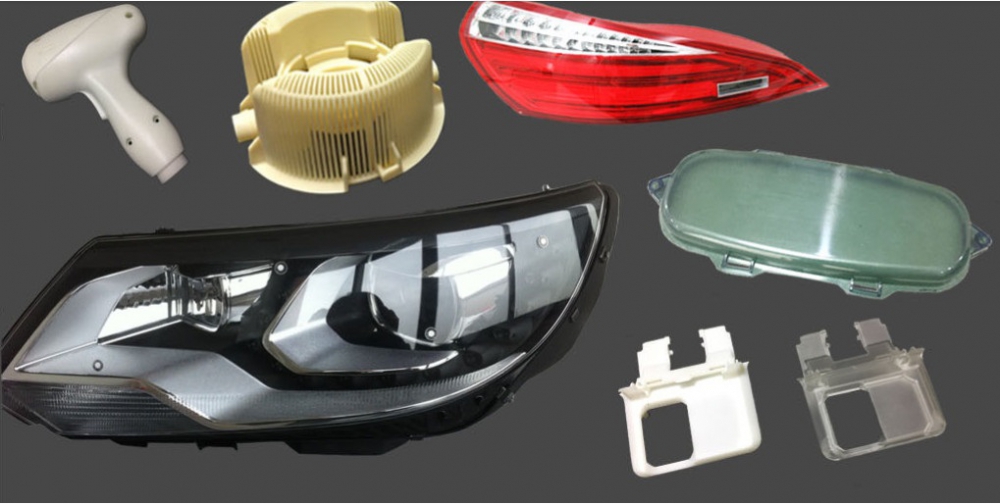
GreatLight’s service spectrum deliberately blurs the lines between traditional process silos. Start with a metal prototype from their SLM/SLS 3D printing farm for design verification. Move to rapid soft tooling or vacuum casting for pilot runs. Then scale into series production via 5-axis CNC machining, die casting, or sheet metal fabrication—and finish with in-house anodizing, passivation, powder coating, or media blasting. There is no external logistics gap, no multiple vendor Q&A, and no finger-pointing. The unit economics of a bracket that requires CNC milling, PEM stud insertion, and chemical conversion coating become devastatingly efficient when all steps happen sequentially under one quality plan.
Consider a medical instrument base plate requiring a combination of 5-axis contouring for ergonomic edges, thread milling for stainless steel inserts, and a validated cleanroom wash. Fragmenting these steps across three vendors would inject risk and at least a 18–25% cost overhead in management and transportation. Keeping them integrated in a single facility with ISO 13485 compliance yields a wholesale price that is genuinely lower on a total-cost basis, while accelerating time-to-market.
A Comparative Glance: Where True Value Resides
The broader market offers a spectrum of 5-axis suppliers. Large platforms such as Xometry, Protolabs Network, and RapidDirect have popularized instant quoting and a wide partner network. They serve a vital role for one-off prototypes and design validation when speed to quote is paramount. Dedicated specialists like Owens Industries or RCO Engineering bring deep niche expertise in aerospace or automotive prototyping. Yet, for wholesale production volumes where the marriage of aggressive costing and consistent, traceable quality is non-negotiable, highly integrated source manufacturers hold a distinct structural advantage.
GreatLight Metal’s model carves a unique path: it combines the in-house depth of a tier-one automotive supplier with the agility of a custom parts manufacturer. Unlike a platform aggregator, there is no bid-arbitrage between anonymous job shops; the factory floor itself absorbs the complexity, translating directly into tighter cost control and faster root-cause resolution. And unlike a niche specialist that may lack broad finishing capabilities, the one-stop post-processing infrastructure means parts arrive at your dock ready to mount, not ready to send to another finishing house.
The Economic Logic of Wholesale Partnership with GreatLight
Wholesale manufacturing relationships thrive on predictability and continuous improvement. GreatLight’s 120-person engineering and operations team, drawing on over $15 million in annual output, operates a formal capability lifecycle:
Design for Manufacturability (DFM) Feedback: Before a cutter ever touches metal, your geometry is analyzed against the 5-axis envelope (maximum part size 4000 mm) and tooling database. Suggestions for feature modification often unlock cycle-time reductions of 15–20% with zero impact on function.
Rapid First-Article Turnaround: Using integrated 3D printing for fixture bodies and a cutting tool library optimized for titanium, aluminum, stainless steel, and engineering plastics, prototype parts can be produced in days, allowing fast design lock.
Scalable Production with In-Process Verification: As volumes ramp, hard gauging, CMM reports, and surface finish profiles (down to Ra 0.2 μm) are statistically monitored, not just sporadically sampled.
Continuous Cost Optimization: The engineering team proactively proposes process substitutions—for example, evaluating whether a 5-axis simultaneous toolpath for a bracket can be split into a 3+2 axis strategy to reduce cycle time—passing cost savings directly to you without compromising geometry.
This partnership ethos is why the company’s customer base spans humanoid robotics, new energy vehicles, and high-end consumer electronics. In each sector, the purchasing logic converges: finding a source that transforms a complex drawing into a flawless, cost-efficient part at volume remains the ultimate competitive differentiator. The precision thresholds are high (tolerances routinely held at ±0.001mm on critical features), but the commercial terms are grounded in industry-friendly wholesale structures.
Solving the Real Pain Points You Face
Every engineering lead has confronted the following scenarios. A low-cost 5-axis supplier that:
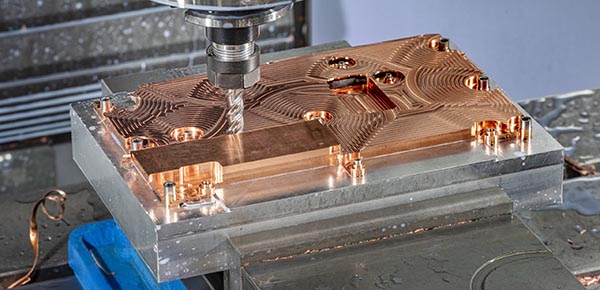
Delivers pilot parts with mirror finishes, only to produce mass production lots with chatter marks and dimensional drift.
Quotes an attractively low unit price but adds surcharges for material certificates, finishing, and programming.
Claims a 7-day lead time that balloons to five weeks when an untended machine crashes and there is no backup capacity.
Operates from a facility with no international quality accreditation, leaving you to defend material provenance and process control to your own auditors.
GreatLight Metal’s operational philosophy is a direct response to these failures. The facility’s equipment density ensures redundancy. The ISO 9001/13485/IATF 16949 trilogies provide third-party trust. And the pricing model is transparent: part geometry, material, tolerances, and finishing requirements drive the quote, with no hidden engineering fees. For projects requiring intellectual property protection, ISO 27001 protocols are in place, meaning your 3D data is encrypted and access-controlled.
A Practical Framework for Choosing Your 5-Axis Wholesale Partner
To evaluate any supplier promising low cost 5 axis CNC machining services, use this impartial checklist:
| Evaluation Criterion | What to Look For |
|---|---|
| Machine Asset Health | Brand-name 5-axis centers less than 8–10 years old, with documented PM schedules. |
| In-House Finishing | Anodizing, plating, painting, laser engraving – available on site to compress supply chain. |
| Quality Accreditation | ISO 9001 at a minimum; ISO 13485/IATF 16949 for regulated verticals. |
| DFM Capability | Proactive feedback that improves manufacturability without delay. |
| Process Control | Real-time SPC, CMM reports, and a closed-loop corrective action system. |
| Wholesale Scalability | Ability to flex from 50 to 50,000 parts without a complete re-qualification. |
| Reference Parts | Actual case studies, not stock photos, demonstrating complexity similar to your own. |
GreatLight Metal consistently checks every box. Its evolution from a Chang’an mold shop in 2011 to an internationally certified, multi-process powerhouse is not merely a growth story—it is a blueprint for how wholesale precision manufacturing should be done in an era demanding both speed and integrity.
The Path Forward: Rethinking Wholesale Precision
“Low cost” is a loaded term. When backed by depreciated machines and untrained operators, it’s a liability. When fueled by integrated processes, high equipment utilization, and engineering oversight, it becomes an engine of innovation. The goal isn’t to find the cheapest 5-axis service; it’s to find the partner whose cost model aligns with your definition of value: parts that fit first time, every time, and a supply chain that’s invisible because it simply works.
This is the manufacturing reality that GreatLight CNC Machining delivers, turning the anxiety of sourcing into the quiet confidence of a locked-in supply chain. For enterprises ready to move beyond transactional vendor relationships and into a wholesale partnership built on certified precision and full-process capability, the solution isn’t theoretical. It’s operating every day on the shop floor in Dongguan, producing the complex parts that power tomorrow’s products. You can explore deeper insights and real-world applications through the company’s professional network on Great Light.



















