
In the rapidly evolving electric vehicle (EV) landscape, the precision machining of an EV motor stator housing is far more than a routine manufacturing step—it is the linchpin that determines motor efficiency, thermal performance, and long-term reliability. The stator housing must simultaneously hold stator cores and windings with micron-level concentricity, dissipate massive heat loads through intricate cooling channels, and withstand harsh vibration cycles—all while minimizing weight and cost. Achieving these conflicting goals demands a manufacturing partner that combines deep process expertise, state-of-the-art 5‑axis CNC systems, and a rigorous quality culture. In this article, we dissect the engineering challenges behind EV motor stator housing production and showcase how GreatLight CNC Machining delivers holistic, production-ready solutions that de-risk your supply chain from prototype to high-volume runs.
EV Motor Stator Housing Precision Machining – Why It Demands Excellence
An electric drive motor’s efficiency map is heavily influenced by the geometric integrity of its stator housing. Even minor deviations in bore roundness, bearing seat alignment, or cooling jacket wall thickness can create eccentric air gaps, exacerbate vibration, and reduce power density. For OEMs and Tier‑1 suppliers racing to extend vehicle range and cut costs, the stator housing has become a focal point of precision engineering. The key performance metrics—total indicated runout (TIR) under 10 µm, surface roughness Ra ≤ 0.8 µm on sealing faces, and intricate conformal cooling channels that maximize heat transfer—are pushing conventional 3‑axis machining methods beyond their limits.
Moreover, the diversity of EV platforms means stator housings now come in sizes ranging from compact 150 mm diameters for e‑axle auxiliary motors to enormous 600 mm+ units for heavy‑duty commercial vehicles. Material choices are equally varied: cast aluminum alloys (A356, AlSi10Mg) for lightweight designs, copper‑alloy inserts for enhanced thermal conductivity, or even hybrid steel‑aluminum structures for ultra‑high torque motors. Each material presents unique machinability challenges—from built‑up edge in aluminum to work hardening in copper—that only a top‑tier CNC job shop can consistently master.
The Seven Hidden Pain Points in Stator Housing Manufacturing
Based on real‑world project debriefs and industry feedback, we have identified seven systemic pain points that plague EV motor developers, from startups to established automotive giants. Understanding these pitfalls is the first step toward building a reliable supply base.
1. The Precision Gap Between Quote and Delivery
Many suppliers advertise ±0.005 mm capabilities on paper, yet during production they struggle to hold these tolerances across hundreds of parts. Aging spindles, thermal drift in uncontrolled shop floors, or inexperienced operators can easily widen scatter bands, causing a “precision black hole” that forces costly rework or scrap.
2. Thin‑Wall Distortion in Complex Geometries
Stator housings often feature walls as thin as 2–3 mm to save weight. When machining axial slots, cooling fins, or sensor pockets, unbalanced cutting forces and residual stress release lead to spring‑back and warping. Correcting these distortions after the fact is extremely difficult without 5‑axis compensation paths or in‑process probing.
3. Conformal Cooling Channel Integrity
Advanced housings integrate spiral or serpentine cooling passages near the stator core. Maintaining consistent channel width, smooth internal surfaces, and leak‑free sealing after lid welding or brazing requires careful planning of tool access, chip evacuation, and fixture design. A single blocked chip can ruin an entire housing.
4. Bearing Bore and Seal Seat Co‑axiality
The rotor shaft rides on bearings pressed into either end of the housing. If the front and rear bearing bores are not machined in a single setup (or with perfect datum transfer), axial misalignment occurs, generating noise, bearing pre‑load loss, and early failure. Achieving IT4–IT5 grade tolerances here demands true 5‑axis simultaneous machining or precision boring jigs.
5. Surface Finish for Leak‑Tight Sealing
The mating face between the housing and the end shield, as well as O‑ring grooves, must exhibit near‑perfect flatness and low roughness. Any surface chatter or tear‑out becomes a potential leak path for glycol coolant or allows moisture ingress, threatening the high‑voltage insulation system. Consistent Ra 0.4–0.8 µm on large‑diameter faces calls for rigid machine setups and optimized toolpaths.
6. Quick Turnaround of Complex Prototypes
During motor R&D, design iterations happen weekly. Engineers need functional prototypes with high‑fidelity cooling jackets and sensor mounts in a matter of days—not weeks. Shops that rely solely on casting preforms cannot keep pace; they need direct‑from‑billet 5‑axis machining or rapid 3D‑printed pre‑forms followed by finish machining.
7. Scaling from Prototype to Volume Production
When a motor design passes validation, the production ramp must be seamless. A shop that hand‑crafted beautiful one‑off prototypes may fold under the statistical process control (SPC) and capacity demands of serial production. Maintaining Cp ≥ 1.33 on critical features at 1000+ units per month requires automated probing, dedicated fixturing, and robust tool life management.
How GreatLight CNC Machining Turns These Pain Points into Competitive Advantage
GreatLight CNC Machining has systematically addressed the above challenges by building a manufacturing ecosystem that integrates high‑end multi‑axis equipment, certified quality systems, and deep cross‑domain application knowledge. Let’s examine how this translates into tangible benefits for your stator housing project.
Advanced 5‑Axis Machining Cluster: The Core of Precision
At the heart of GreatLight’s capability is a fleet of 5‑axis CNC machining centers—including Dema and Beijing Jingdiao brand machines—capable of simultaneous contouring. This allows us to machine bearing bores, seal faces, and cooling channel ports in a single clamping, eliminating stacking errors from multiple setups. The use of integral tilting rotary tables and high‑torque spindles (up to 24,000 rpm) enables aggressive yet controlled cuts on aluminum and copper alloys, reducing cycle times while holding tolerances within ±0.005 mm on bore diameters.
For oversized stator housings (up to 4000 mm machining envelope), GreatLight’s large‑format gantry‑type 5‑axis centers maintain volumetric accuracy thanks to Heidenhain or Siemens controls with compensation for thermal growth. Even thin‑walled sections benefit from dynamic fixture support and optimized trochoidal milling strategies that keep cutting forces low and heat dissipation even.
Full Process Chain Under One Roof: From Billet to Finished Component
Unlike transactional machine shops, GreatLight CNC Machining offers an integrated manufacturing chain that eliminates the delays and quality risks of juggling multiple vendors. For a typical EV stator housing, the process might flow as follows:
Material sourcing and verification: Certified aluminum billets (6061‑T6, 7075‑T6, or cast grades) are procured with full mill test reports for chemical composition and mechanical properties. For special alloys, we coordinate with audited foundries.
Rough machining and stress relieving: We perform initial 3‑axis or 4‑axis roughing to near‑net shape, followed by vibration stress relief or thermal treatment to stabilize the part before finish machining.
5‑axis finish machining: All critical features—bores, O‑ring grooves, cooling channel ports, mounting flanges—are finished in one or two clamping operations. In‑process probing (Renishaw) checks key dimensions, and tool condition monitoring prevents in‑situ drill breakage.
Deep cavity and cross‑hole drilling: With 5‑axis positioning, we accurately drill intersecting cooling passages and sensor ports without witness marks or burrs inside the channels.
Surface finishing: According to specification, we provide anodizing (hard anodize for wear resistance), chemical conversion coating, powder coating, or even laser marking.
Leak testing and pressure decay checks: Each housing is subjected to helium or air pressure decay testing to verify cooling channel integrity. We also perform CMM dimensional reports and provide ISO‑compliant inspection documentation.
Sub‑assembly optional: GreatLight can install bearings, seals, and studs, giving you a plug‑and‑play stator housing that goes straight to the motor assembly line.
Quality Systems That Earn Global Trust
Quality is not a slogan at GreatLight—it is codified in a layered certification matrix that covers automotive, medical, and general industrial requirements:
| Certification | Relevance to EV Stator Housing | Benefit to Client |
|---|---|---|
| ISO 9001:2015 | Foundational quality management system | Consistent processes, traceability, and continuous improvement |
| IATF 16949 | Automotive‑specific QMS with defect prevention focus | Meets Tier‑1 and OEM supplier quality expectations; supports PPAP submissions |
| ISO 13485 | Medical device quality standard (applicable to sensor‑integrated housings) | Enhanced risk management and cleanliness for motors used in medical EVs or AGVs |
| ISO 27001 | Information security management | Protects your CAD data and intellectual property throughout the manufacturing chain |
By operating under these rigorous frameworks, GreatLight ensures that every stator housing undergoes statistical process control, first‑article inspection (FAI), and capability studies. A full CMM report with GD&T annotations is standard with each shipment, giving you the confidence that next‑generation motor designs will perform exactly as simulated.
Technical Deep Dive: Optimizing Stator Housing Machining Strategies
To appreciate the value a top‑flight manufacturer brings, let’s zoom in on three critical machining operations and the techniques GreatLight employs to master them.
1. Bearing Bore Line Boring and Honing
The bearing seats demand IT4 tolerance (e.g., Ø100 mm H5/h4 fit) with a roundness under 3 µm. GreatLight uses fine‑boring heads with micro‑adjustable cartridges, paired with dedicated guide bushings to guarantee concentricity between front and rear bores. For motors requiring ultra‑low noise, a diamond honing step refines surface finish to Ra 0.2 µm while improving bore cross‑hatch for oil retention.
2. Cooling Jacket Machining and Debris Management
Conformal cooling channels are often milled as open grooves on the housing exterior, which are later closed by a welded or brazed sleeve. GreatLight’s CAM engineers use 5‑axis flank milling or ball‑nose contouring with chip breakers to leave clean, burr‑free grooves having consistent depth within ±0.05 mm. Post‑machining, robotic high‑pressure deburring and vacuum flushing ensure no chips remain trapped, which is critical to prevent hotspot‑induced motor failure.
3. Thin‑Wall Milling with Harmonic Damping
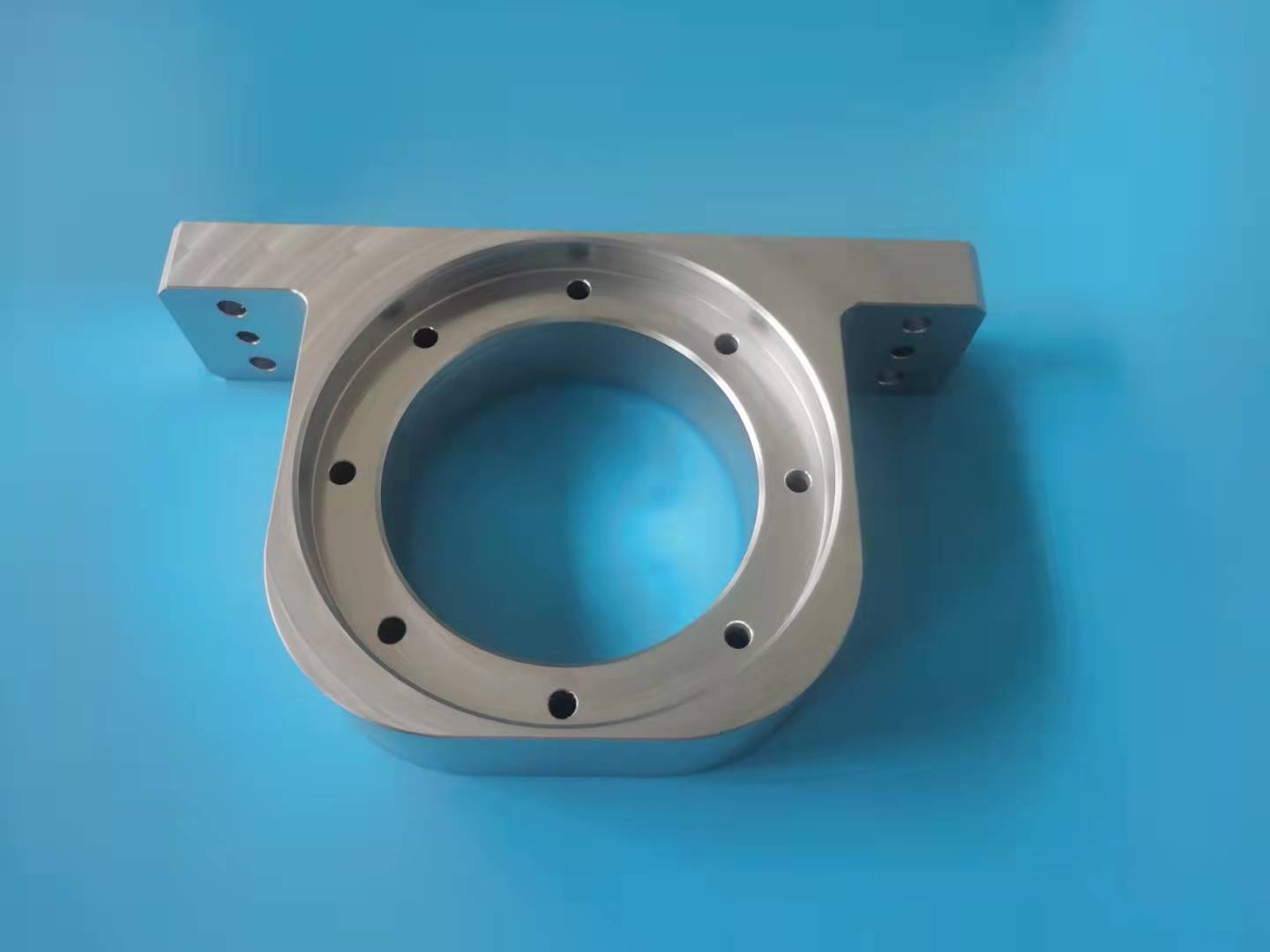
For weight‑optimized housings with walls below 2 mm, standard milling can induce chatter. We employ variable‑helix end mills and harmonic damping bars to absorb vibration, along with adaptive CAM toolpaths that maintain a constant chip load. The result is a smooth finish without secondary handwork, preserving wall thickness tolerances of ±0.03 mm even on large cylindrical surfaces.
Comparing Industry Options: Why GreatLight Stands Out
The landscape for CNC machining services is dotted with familiar names—Xometry, Protolabs Network, RapidDirect, Fictiv, and others. While these platforms offer convenience and broad networks, they often act as intermediaries, adding cost, communication lag, and an extra layer of quality uncertainty. Direct partnerships with a source manufacturer like GreatLight CNC Machining bring decisive advantages:
Deep engineering engagement: Our application engineers review your design for manufacturability, suggest datum improvements, and optimize tolerances early—saving weeks of iteration.
True one‑stop shop: With in‑house 3‑axis, 4‑axis, and 5‑axis CNC, plus EDM, grinding, and 3D printing (SLM/SLA/SLS), we can handle not only the stator housing but also related components like end shields, cooling manifolds, and rotor shafts.
Cost transparency: No hidden platform markups. You receive a competitive quote based on actual material, cycle time, and post‑processing costs.
Data security and IP protection: Our ISO 27001‑aligned protocols safeguard your proprietary stator designs, something generic marketplaces cannot always guarantee.
For instance, when compared to a typical online aggregator, GreatLight can reduce the prototype‑to‑production transition time for a complex stator housing by up to 30% because there is no “handoff” between quoting team, factory, and sub‑contractor. Communication is direct, and accountability is absolute.
Real‑World Success: Stator Housing for Next‑Gen Electric Drive Unit
To make the impact tangible, consider a recent project: an EV startup required 200 pre‑production stator housings for a dual‑motor e‑axle, with a delivery window of 8 weeks. Specifications included:
Material: A356‑T6 aluminum, gravity cast near‑net shape.
Critical features: Ø220 mm H6 bearing bores with 0.012 mm TIR to each other, spiral cooling channel depth of 12 ± 0.1 mm, and O‑ring sealing face flatness of 0.015 mm.
Leak test: 2 bar air test with less than 0.5 cc/min leakage.
GreatLight’s approach:
Incoming inspection: Measured raw castings on CMM to map stock allowance; identified need for strategic machining offsets to ensure uniform wall thickness.
Five‑axis roughing: Used insert drills and high‑feed mills to remove bulk material while monitoring spindle load to avoid casting stress release.
Semi‑finish boring: Achieved a stable intermediate bore size that would later be finish‑bored.
Finish boring & O‑ring groove milling: Executed in a single 5‑axis setup with in‑process probing to adaptively control bore diameter.
Pressure‑decay leak testing: 100% testing with automated data logging.
CMM reporting: Full dimensional report demonstrating Cp > 1.67 on critical bore diameters.
The result: all 200 housings passed first‑article and batch inspection, the customer’s motor assembly line started on time, and the project achieved a noise, vibration, and harshness (NVH) score 15% better than the previous generation.
The Road Ahead: Partnering for EV Excellence
As electric mobility ramps up, the demands on motor stator housings will only intensify—higher power densities, integrated cooling, and in‑situ sensor mounting. Staying ahead requires a manufacturing ally that blends advanced machining technology with automotive‑grade process discipline. GreatLight CNC Machining offers exactly this synthesis: over a decade of experience, a 76,000 sq. ft. facility housing 127 precision equipment units, and a team of 150 professionals dedicated to making your most complex designs a production reality.
When you evaluate suppliers for your next stator housing project, go beyond paper claims. Seek evidence of true 5‑axis proficiency, IATF 16949 traction, and comprehensive in‑process quality controls. GreatLight welcomes technical deep‑dives, capability studies, and plant audits. We are confident that after seeing our process firsthand, you will understand why a direct partnership with a source manufacturer is the most reliable path to achieving robust, cost‑effective EV motor stator housing precision machining.



















