
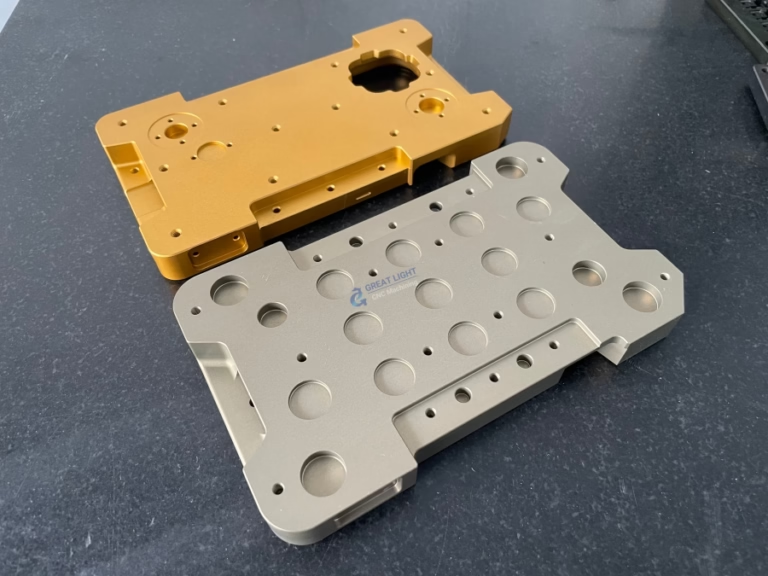
In the rapidly evolving landscape of global manufacturing, professional custom metal die casting OEM has become an indispensable process for producing complex, high‑strength parts at scale. Whether you’re prototyping a next‑generation automotive housing, scaling a consumer electronics component, or fine‑tuning a medical device, the right die‑casting partner can mean the difference between a flawless launch and costly delays. This article explores the full scope of custom metal die casting OEM, the common pain points engineers face, and how a vertically integrated manufacturer like GreatLight CNC Machining Factory (GreatLight Metal) delivers end‑to‑end solutions that stand apart from the competition.
Understanding Professional Custom Metal Die Casting OEM
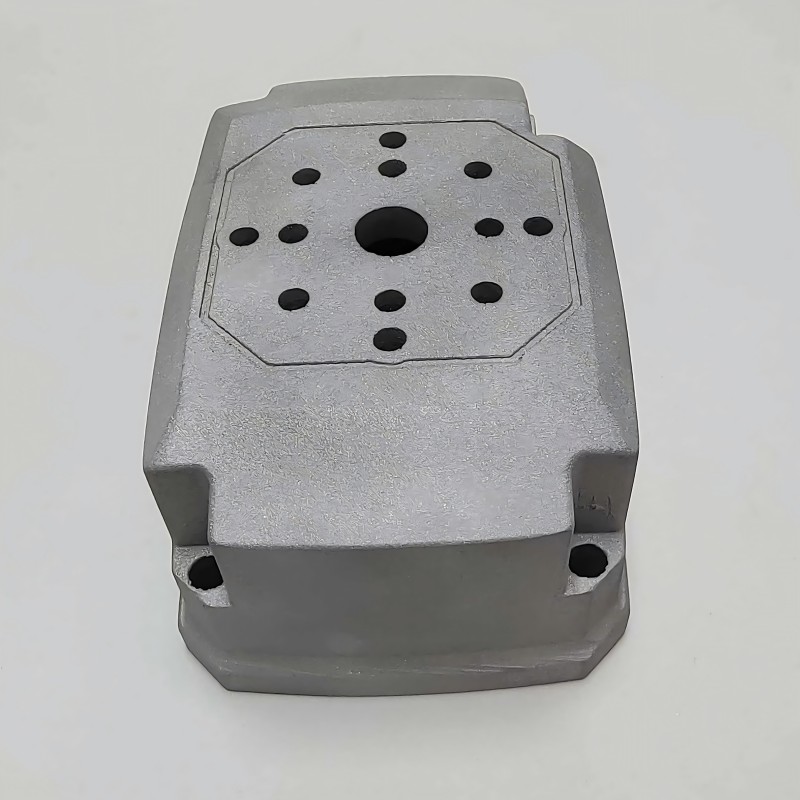
Die casting is a metal forming process that injects molten metal under high pressure into a reusable steel mold, or die. The result is a near‑net‑shape part with excellent dimensional accuracy, surface finish, and mechanical properties. When we talk about professional custom metal die casting OEM, we’re referring to a service model where a manufacturer not only produces the parts but also collaborates deeply with the client on design for manufacturability (DFM), mold engineering, post‑machining, finishing, and quality assurance—essentially acting as an extension of the client’s own engineering and procurement teams.
Why Die Casting Dominates High‑Volume Metal Parts
Exceptional dimensional repeatability – Tolerances as tight as ±0.02 mm can be maintained across thousands of cycles.
High production rates – Modern die casting machines can cycle in seconds, making them ideal for runs of 5,000 to 1,000,000+ parts.
Complex geometries without secondary operations – Thin walls, ribs, bosses, and intricate contours are all achievable.
Wide material selection – Aluminum, zinc, magnesium, and copper alloys each offer unique strength‑to‑weight, corrosion resistance, and thermal conductivity profiles.
Yet achieving all these advantages consistently requires more than just a press. It demands an ecosystem of technical expertise, advanced tooling, and rigorous process control—precisely where many suppliers fall short.
The Seven Critical Pain Points in Die Casting OEM
Before selecting a partner, it’s vital to recognize the hidden pitfalls that plague the industry. Over a decade of serving demanding clients has shown us these seven persistent pain points:
1. The Precision Gap
Many providers advertise extreme accuracy but fail to deliver in mass production due to worn machines, inconsistent process parameters, or inadequate metrology. True precision requires in‑house CNC machining capabilities to hold final tolerances after casting.
2. Tooling Cost and Lead Time
Mold development is a major upfront investment. Without deep tooling know‑how, suppliers may produce molds that wear out prematurely or require excessive rework. Unpredictable lead times can delay market entry by months.
3. Material Quality Inconsistencies
Not all alloy ingots are created equal. Inexperienced vendors may use recycled materials without proper certification, leading to porosity, reduced strength, or corrosion failures in the field.
4. Post‑Processing Fragmentation
Die cast parts often need CNC machining, surface finishing (anodizing, powder coating, etc.), and assembly. Relying on multiple disconnected subcontractors multiplies logistics cost and quality risks.
5. Certification Gaps
For medical, automotive, or aerospace applications, certifications like ISO 13485 or IATF 16949 are non‑negotiable. Working with an uncertified shop can cause the entire product to fail a regulatory audit.
6. IP and Data Security Concerns
When sending detailed 3D models abroad, intellectual property protection is paramount. A secure data hand process and a supplier that respects confidentiality are essential.
7. Communication and Engineering Support
Language barriers, time zone differences, and a lack of proactive DFM feedback can turn a straightforward project into a nightmare of iterations and missed deadlines.
GreatLight Metal: A Full‑Spectrum Solution for Die Casting OEM
GreatLight CNC Machining Factory (operating as GreatLight Metal Tech Co., LTD.) directly addresses these pain points by offering a complete, vertically integrated manufacturing ecosystem built on three pillars: technical hard power, authoritative certifications, and collaborative service capability.
1. Unmatched Technical Hard Power
Our 7,600 m² facility in Dongguan houses a comprehensive arsenal of over 127 pieces of precision peripheral equipment, including:
High‑pressure die casting machines capable of producing aluminum and zinc parts up to several kilograms.
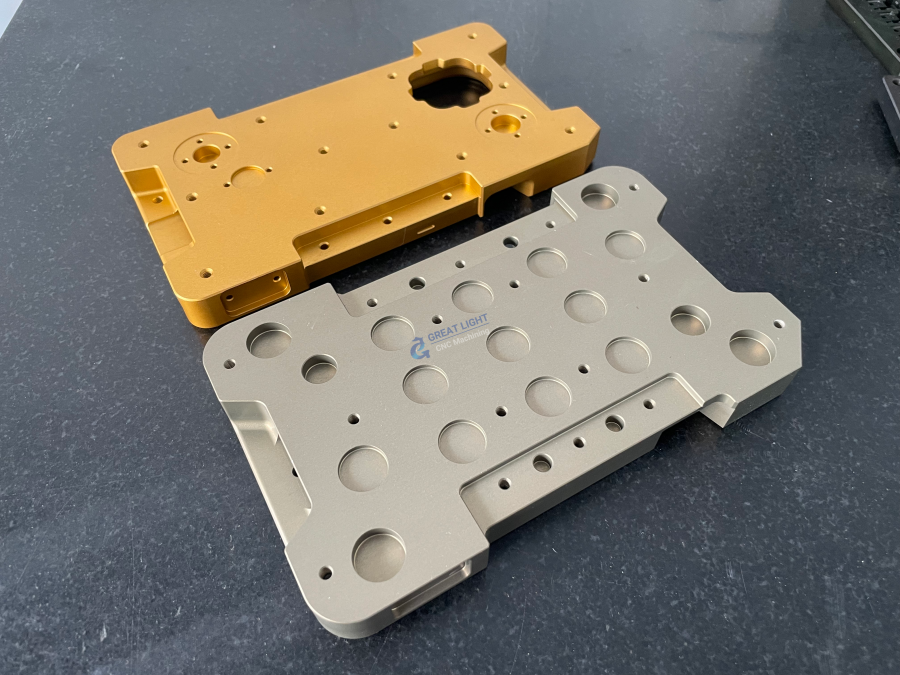
Dema and Beijing Jingdiao 5‑axis CNC machining centers for precision finishing of cast components.
Milling, turning, grinding, and EDM stations for mold making and secondary operations.
3D printing (SLM/SLA/SLS) for rapid prototyping of die inserts and bridge tooling.
This integrated setup means we can manufacture the die, cast the parts, and finish them—all under one roof. The result: tighter tolerances, faster lead times, and a single point of accountability.
2. Authoritative Certifications as Trust Anchors
GreatLight Metal’s commitment to quality is validated by an extensive portfolio of international certifications:
ISO 9001:2015 – Core quality management system.
ISO 13485 – Medical device manufacturing compliance.
IATF 16949 – Automotive supply chain quality standard.
ISO 27001 – Information security management for IP protection.
These certifications are not just paper; they represent rigorous third‑party audits that our systems, processes, and people adhere to daily. For clients in regulated industries, this eliminates supplier qualification delays and audit overhead.
3. Full Process Chain Integration
From the initial design review to the final assembled product, we manage every step:
DFM analysis – Our engineers optimize part geometry for die casting flow, minimizing porosity and reducing required draft angles.
Mold design and manufacturing – Using advanced CAD/CAM and high‑speed CNC moldmaking, we achieve tool lives of 100,000+ shots.
Die casting production – Automated ladling and spray systems ensure process consistency.
Precision CNC machining – Post‑casting features held to ±0.001 mm where required.
Surface finishing – Anodizing, plating, painting, powder coating, and more.
Assembly and packaging – Ready‑to‑use components delivered directly to your line.
This continuity not only accelerates throughput but also builds deep process knowledge that feeds back into continuous improvement.
How GreatLight Compares to Other Die Casting Providers
To help you evaluate options, we’ve assembled a capabilities comparison against several well‑known industry players. The table below reflects typical offerings; actual capabilities may vary by project.
| Capability / Service | GreatLight Metal | Xometry | Protolabs Network | Fictiv | RapidDirect | SendCutSend |
|---|---|---|---|---|---|---|
| Die casting materials | Al, Zn, Mg, Cu alloys | Al, Zn | Al, Zn | Al, Zn | Al, Zn | N/A |
| In‑house mold making | ✔ Full-service | ✘ (or limited) | ✘ | ✘ | ✘ | ✘ |
| 5‑axis CNC finishing | ✔ | ✘ (3‑axis mostly) | ✘ | ✘ | ✔ (limited) | ✘ |
| ISO 13485 (medical) | ✔ | ✘ | ✘ | ✘ | ✘ | ✘ |
| IATF 16949 (automotive) | ✔ | ✘ | ✘ | ✘ | ✘ | ✘ |
| 3D printing for prototypes | ✔ SLM/SLA/SLS | ✔ (some) | ✔ (FDM etc.) | ✔ | ✔ | ✔ (laser) |
| Sheet metal fabrication | ✔ | ✔ | ✘ | ✘ | ✔ | ✔ |
| Single‑piece flow to volume | ✔ | ✔ | ✔ | ✔ | ✔ | ✔ |
| Max part size | 4000 mm (CNC) | Variable | Variable | Variable | Variable | 15”x10” |
Note: This comparison is based on publicly available information and our internal knowledge. Always verify capabilities with the respective provider.
The key differentiator for GreatLight Metal is the integration of die casting with in‑house precision machining and finishing. While many online platforms act as brokers connecting you to anonymous factories, GreatLight owns and operates its entire production chain. This vertical integration eliminates hand‑off risks and enables true concurrent engineering.
Real‑World Applications: Die Casting in Action
Let’s examine how our approach solved complex challenges for two clients.
Case Study 1: Electric Vehicle Housing
A startup developing a lightweight electric drive module needed an aluminum die‑cast housing with integrated cooling channels. The requirements were daunting:
Complex internal oil galleries with thin walls (1.2 mm).
Dimensional tolerance ±0.05 mm on mounting faces.
IP67 sealing without gaskets.
From prototype to 50,000‑unit serial production within 8 months.
GreatLight’s solution:
DFM collaboration: We converted the original machined‑from‑solid design into a die‑cast‑friendly geometry, maintaining function but reducing cost by 60%.
Mold simulation: Used MAGMASOFT® to optimize gating and eliminate porosity in critical sealing areas.
Prototyping: 3D‑printed sacrificial wax cores for the oil galleries to validate flow before cutting steel.
Production: Our die casting press, followed by 5‑axis CNC finishing, delivered parts that passed 150‑hour salt spray tests and held dimensional stability through thermal cycling.
Result: The module launched on time and weighed 0.7 kg less than the welded‑assembly alternative.
Case Study 2: Medical Instrument Handle
A medtech company required a zinc die‑cast handle for a surgical device, with a high‑polish chrome finish and strict biocompatibility standards (ISO 13485).
Challenge: The handle had a complex undercut release and a requirement of zero visible parting lines on the grip surface.
Our approach: We designed a sliding core mold with a carefully positioned parting line hidden under a functional rib. We then precision‑tumbled and electroplated the parts.
Compliance: Full material traceability and process validation documentation were provided, meeting FDA audit requirements.
Outcome: The client received a ready‑to‑assemble component that reduced their manual polishing cost by 80%.
When to Choose Die Casting Over Other Processes
Engineers often weigh die casting against alternatives like CNC machining from solid, metal injection molding (MIM), or stamping. The following decision table highlights where professional custom metal die casting OEM excels.
| Criterion | Die Casting | CNC Machining (Solid) | Sheet Metal | Metal Injection Molding |
|---|---|---|---|---|
| Ideal annual volume | 5,000–1,000,000+ | 1–10,000 | 500–100,000 | 10,000–1,000,000+ |
| Wall thickness (min) | 0.5–1.0 mm | Typically >2 mm | 0.3–3 mm | 0.3–2.0 mm |
| Strength‑to‑weight | Excellent | Excellent | Good | Good |
| Internal features | Moderate | High | Not applicable | High |
| Surface finish (as produced) | Smooth, good | Excellent (machined) | Smooth (rolled) | Good |
| Tooling cost | High | None (or low fixture) | Low | High |
| Material choices | Limited alloys | Virtually any metal | Limited alloys (rolled) | Limited alloys |
| Post‑processing | Often needed | Not needed | Not needed | Not needed |
When your design demands intricate shapes, high strength, and quantities beyond a few thousand pieces, die casting becomes the clear cost‑effective choice. Partnering with a professional custom metal die casting OEM that can also handle secondary machining gives you the best of both worlds—the near‑net shape efficiency of casting with the precision of CNC.
The GreatLight Metal Advantage: A Summary
Choosing GreatLight Metal means opting for:
Expertise born from 14 years in precision manufacturing – We’ve been refining our skills since 2011, right in the heart of the world’s mold capital.
A single‑source partner for casting + CNC + finishing – No more juggling multiple vendors.
Certification‑backed reliability – ISO 9001, IATF 16949, ISO 13485, and ISO 27001.
Data security – Your designs are protected by ISO 27001‑compliant processes.
Global logistics – We ship to Europe, North America, and Asia, with reliable supply chain management.
Final Thoughts
In an era where time‑to‑market and quality are the ultimate differentiators, the selection of a professional custom metal die casting OEM is a strategic decision—not just a sourcing task. The right partner brings you more than castings; they bring engineering insight, process stability, and a relentless commitment to your product’s success.
At GreatLight CNC Machining Factory, we understand that every part tells a story of innovation. Our role is to ensure that story unfolds seamlessly, from the first pallet of alloy ingots to the final gleaming component leaving our dock. Whether you’re prototyping a single piece or gearing up for mass production, our integrated approach to precision metal die casting solutions delivers the consistency and confidence your project deserves.
By bridging the gap between design intent and physical reality, a truly professional custom metal die casting OEM becomes an extension of your engineering team—and that’s the partnership we strive to build, every day.



















